
Kitchen cabinet trends for 2027 lean toward warmer colors, natural-looking wood, tactile door details, and storage designed for everyday use. That does not mean every kitchen needs a dramatic makeover. Use trend ideas as a starting point, then weigh appearance against your room, routines, existing finishes, and budget. This guide explains the cabinet directions being discussed for 2027 and how to turn them into choices you can evaluate before you order.
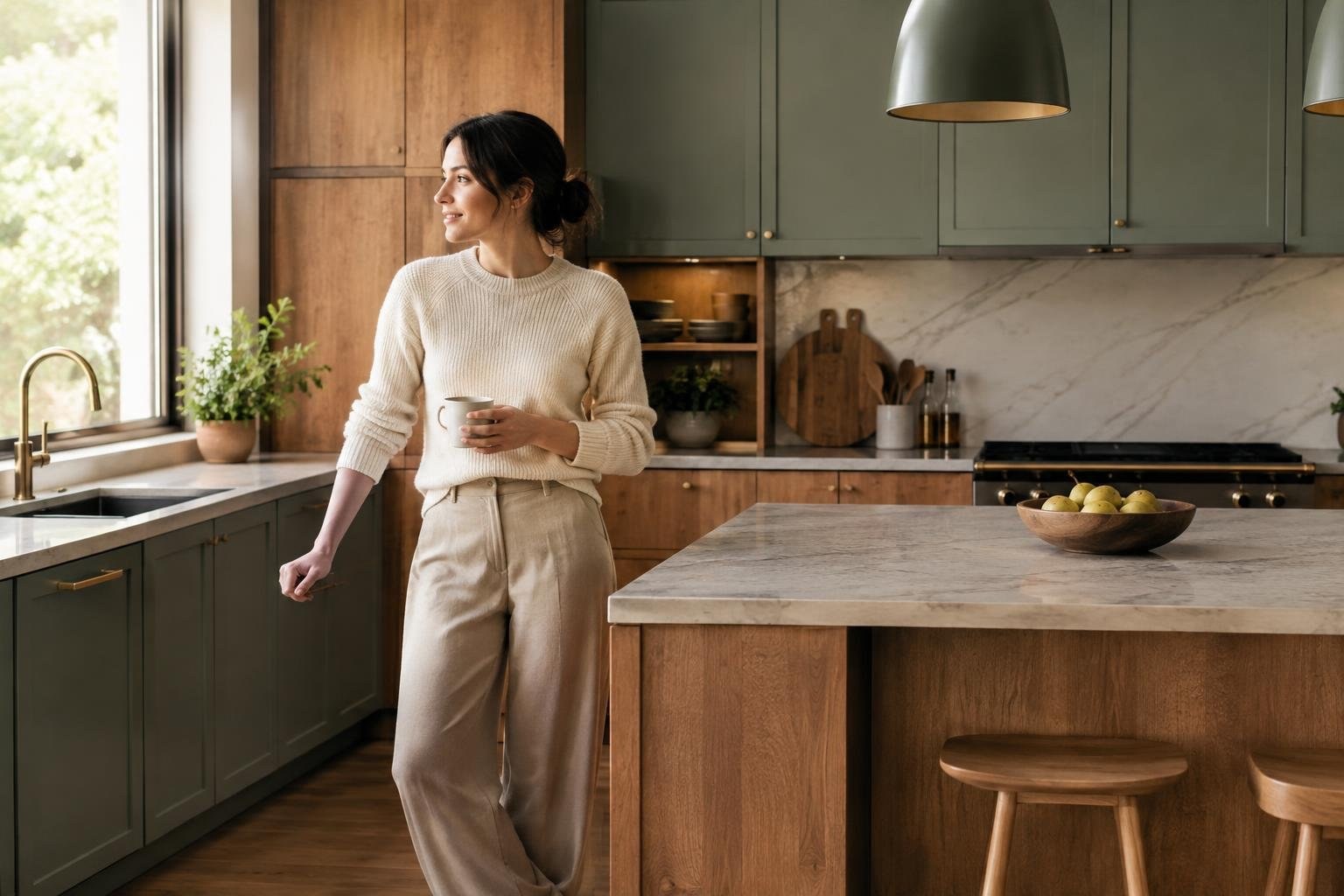
Kitchen cabinet trends for 2027: what to know
Trend reporting for 2027 points to a warmer, more natural feel in kitchens, with cabinetry considered as part of the room rather than as a separate finish choice. Reported directions include warm wood, matte finishes, mixed materials, complementary cabinet colors, tactile door details, and storage tailored to use.
These are observations about design interest, not predictions that every homeowner should remodel. A practical way to use them is to ask three questions: Does the idea suit the kitchen’s existing finishes? Does it solve a real storage or workflow problem? Will you still like it if it is no longer fashionable?
For a project, first establish the goal. You might want a different color, a more cohesive look, better access to cookware, or a new layout. A trend-led choice is most useful when it supports one of those goals rather than becoming the goal on its own.
Warm colors, natural wood, and two-tone cabinets
Warm wood tones and richer colors are prominent in the 2027 trend coverage. Other reporting describes a move toward warmer color choices and away from treating an all-white kitchen as the only current look. That does not make white cabinets a poor choice; it makes the range of ideas broader.
To decide on color, consider the full room. Note the floor, countertop, backsplash, wall color, and any wood or metal finishes you plan to keep. Obtain physical samples where possible and view them in the kitchen at different times of day. A color that looks appealing by itself may feel different beside existing materials.
A two-tone scheme can add contrast without assigning a different color to every surface. For example, compare a restrained combination across one main cabinet run and an island, or across upper and lower cabinets. The exact arrangement should suit the layout. Keep a written selection list so that cabinet, trim, and panel finishes are clearly specified in estimates.
When choosing wood, look at the actual sample and finish rather than relying only on a species name or screen image. Grain and color variation can be part of the visual effect. Ask the supplier how the sample represents the ordered product.
Cabinet door trends: flat, raised, reeded, and glass fronts
Flat-panel and raised-panel doors remain among the styles being discussed, alongside reeded fronts, arched details, glass inserts, and wire-mesh panels. The choice affects the kitchen’s visual character, so compare a complete door sample rather than judging a trend from a small photograph.
Flat-panel doors have a simple face that can support a restrained or contemporary look. Raised-panel doors introduce more visible shaping and can suit a more traditional direction. Reeded or other textured faces add surface detail. Glass and mesh fronts expose some cabinet contents, so consider what you would store behind them and whether you want those items on display.
Ask what material and finish are used for the door, how the edge is finished, and what care the manufacturer recommends. Trend coverage does not establish that one door style is more durable or easier to clean than another. Request product-specific information and compare the cabinet construction, hardware, and warranty separately from appearance.
Before approving an order, check that the quote identifies the door profile, finish, color, and any special inserts or panels. Similar-looking sample names are not a substitute for a complete written specification.
Practical storage and multifunctional islands
Smarter storage and multifunctional islands are among the kitchen directions highlighted for 2027. The useful question is not whether a particular pullout or island is fashionable. It is whether the design makes items you use easier to reach and leaves the room workable.
List what currently frustrates you: crowded drawers, inaccessible corner space, limited pantry storage, or a lack of landing space. Then identify where those items are used and how much room each proposed feature needs. Ask a designer or cabinet provider to show the planned storage on the layout, rather than accepting a feature name without seeing its location and dimensions.
An island may provide more than one function, but do not assume that every kitchen has enough space for one. Check movement routes and the relationship between the island, cabinet doors, appliances, and seating. A feature that blocks a drawer or interrupts a normal task is not an improvement.
Include storage accessories in the written specification. Compare their placement, dimensions, and cost with a simpler cabinet arrangement. Prioritize features you will use regularly over extras added only because they appear in trend coverage.
Coordinate cabinets with lighting, backsplash, and flooring
Layered lighting and textured backsplashes are also part of the wider 2027 kitchen direction. These choices affect how cabinetry reads in the room: light can reveal color and surface detail, while the backsplash forms a visual boundary between cabinets and counter.
Review cabinet samples alongside countertop, backsplash, flooring, and lighting selections. A coordinated palette does not require every finish to match. Instead, decide which element is the visual focus and which materials should support it. If the cabinet finish is richly colored or has a pronounced grain, a quieter surrounding finish may help keep the composition balanced. If the cabinetry is simple, a textured backsplash can add interest.
Kitchen flooring coverage has also highlighted wide-plank flooring and large-format porcelain tile for their appearance of fewer seams and a more expansive surface. Flooring is not a cabinet feature, but changing it can affect how the cabinet color and overall room appear. Include the floor in finish decisions if it is part of the project, and confirm how flooring changes relate to cabinet installation and finished heights with the project team.
Do not select finishes from trend descriptions alone. Use samples in the actual room and confirm product details with the supplier.
Kitchen cabinet trend costs and what affects the price
There is no reliable single price for “2027 trend cabinets.” Cost depends on the actual project specification. Get quotes for the products and work you are considering rather than budgeting from a style label.
For meaningful comparisons, give each provider the same information: cabinet layout and quantity, door style, finish, storage accessories, panels and trim, and whether you expect existing cabinets to remain. Ask each provider to state what is included in the cabinet supply and what is separate, such as installation, removal of old cabinets, delivery, countertop work, or changes to other parts of the kitchen. Do not assume an estimate covers work that it does not list.
When comparing materials or finishes, ask for product specifications, samples, care guidance, and warranty terms. A trend in matte finishes or natural wood does not by itself tell you what a specific cabinet costs or how it will perform.
Review the total alongside the itemized scope. If one proposal is substantially different, ask whether it includes the same cabinetry, accessories, and responsibilities before treating it as a like-for-like offer.
Factors that shape the project beyond the trend
The main project factors are the condition of the current kitchen, the amount of cabinetry involved, the desired layout, the selected door and finish, and the storage features and other work included. Trends can influence selections, but a decorative detail and a change to the cabinet plan are different kinds of decisions. Ask providers to price them clearly.
Before requesting proposals, write down what you want to keep and what you may change. Identify appliances, plumbing, electrical fixtures, counters, backsplash, and flooring that could affect the cabinet plan. Project costs, installation schedules, and applicable local requirements depend on the scope and location, so confirm those details for your own project rather than applying a generic figure.
It can help to separate selections into three groups: essential function, preferred appearance, and optional extras. This makes it easier to discuss tradeoffs if a proposal exceeds your planned budget. Keep the final specifications consistent across quotes so a change in door style or storage is not mistaken for a price difference on the same scope.
Keep, update, or replace: compare the right options
Decide whether you need a new look, a new layout, or both. A trend can be introduced through cabinet color, hardware, door details, or surrounding finishes, but those approaches do not have the same scope. If existing cabinets remain under consideration, ask a qualified provider to assess whether the intended change is suitable for their condition and construction.
Compare options in writing:
- Keep the existing cabinets: may suit a project focused on other finishes or details, if the cabinets meet your needs.
- Change the cabinet appearance: compare the appropriate repair, refinishing, or refacing approach with the condition of the existing cabinets.
- Replace cabinets: consider this when the project requires different cabinetry or a new layout, and compare the complete scope rather than only the door style.
These are decision paths, not a diagnosis of your cabinets. Trend articles cannot establish whether a cabinet box is sound or whether a specific finish can be altered. Ask for an inspection and a written explanation of the recommended work.
For new cabinetry, compare the product and installation responsibilities, not just the style. Ask what construction details, hardware, finish, and warranty apply to the exact option in the proposal.
What to expect: planning and project timing
Expect the process to involve agreeing on the project goal, confirming the layout and selections, obtaining a written scope, and coordinating the work with whoever supplies or installs the cabinets. The trend sources describe design directions, not project schedules, so ask each provider for a timeline based on the actual order and work involved.
- Define the goal. Decide whether you are changing appearance, storage, layout, or more than one of these.
- Review the kitchen. Record what is staying, what is changing, and the appliances or finishes that affect the cabinet plan.
- Compare selections. Review colors, door samples, storage features, and the complete written specification.
- Confirm responsibilities. Ask who supplies, delivers, installs, and handles any related work, and how changes will be documented.
- Agree on timing. Request the expected sequence and schedule directly from the project provider, including what could change it.
Do not make assumptions about delivery or installation dates from a 2027 trend article. Get the provider’s current schedule and confirm it before making dependent plans.
How to choose a qualified cabinet provider
Choose a provider who can explain the proposed cabinet plan, specifications, responsibilities, and schedule clearly. Ask to review relevant project examples and references, and verify any licensing or insurance that applies to the work in your area.
Use questions that make proposals easier to compare:
- Which cabinet product, door style, finish, and storage features are included?
- Who measures, supplies, delivers, and installs the cabinets?
- What work is excluded from this estimate?
- How are changes, delays, and unexpected conditions handled?
- What written warranty applies to the cabinets, finish, and installation?
- Who should I contact if a product arrives damaged or an issue appears after installation?
Ask for an itemized proposal and keep selections, changes, and approvals in writing. A low total is difficult to evaluate if the scope is incomplete. Compare the provider’s communication and problem-resolution process as well as the price.
Permits, warranties, credentials, and project safety
Cabinet trend coverage cannot tell you whether your project needs a permit, what credentials a provider must hold, or which safety rules apply. Those requirements depend on the work and location. Ask the relevant local authority and project professionals before work begins, especially if the plan includes changes beyond cabinet selection.
Request product-specific warranty information and care instructions. Confirm what the warranty covers, who handles a claim, and whether installation or finish work is covered separately. A general trend label such as “matte” or “natural wood” is not a product specification or a warranty.
Have qualified professionals assess work involving utilities or other regulated tasks. Include responsibility for coordination in the written project scope so it is clear who is handling each part of the job. Avoid relying on assumptions about local rules or product performance.
Ways to save without making risky compromises
You can control spending without compromising essential planning by deciding which changes matter most before selecting extras. Start with the function you need, then set priorities for the visual choices. For example, decide whether a new color, more useful storage, or a different door profile matters most to you.
- Ask for a base proposal and separately priced optional features.
- Compare the same cabinet specifications across providers.
- Use physical samples to reduce the risk of choosing a finish based only on a photograph.
- Keep attractive details, such as textured fronts or glass inserts, focused where they support your design rather than adding them everywhere automatically.
- Ask whether an existing cabinet update is feasible before assuming full replacement is necessary.
Do not reduce cost by skipping measurements, written specifications, or provider checks. A trend-driven finish choice is only one part of the purchase; make sure the price comparison also accounts for the cabinet product and responsibilities included.
Common mistakes, red flags, and a pre-order checklist
Trend-led remodels can go wrong when appearance takes priority over the way the kitchen works. Avoid ordering before the layout and selections are fully documented. Do not assume a cabinet feature will fit, that a finish will match a screen image, or that an estimate includes related work unless the provider confirms it.
Use this checklist before approving a project:
- Have I defined the functional problem I want to solve?
- Have I compared colors and door samples with the finishes in my kitchen?
- Do I know which storage features are included and where they will go?
- Does the estimate identify cabinet products, finish, quantity, installation, and exclusions?
- Have I asked about schedule, warranty, local requirements, and who handles concerns?
- Have I separated essential choices from optional trend details?
Be cautious if a provider cannot explain what the quote includes, discourages written specifications, or treats a trend as a reason you must replace otherwise suitable cabinets. Ask for clarification and compare another proposal before proceeding.
Make the 2027 trends work for your kitchen
Use 2027 cabinet trends as prompts for a more deliberate design, not as a deadline to remodel. Warm wood, richer color, complementary two-tone schemes, matte finishes, textured fronts, glass details, and practical storage are all directions appearing in the trend coverage. The right combination depends on your kitchen, priorities, and the product details you confirm with a supplier.
Before you commit, define the goal, compare samples in context, check that proposed storage fits the way you use the room, and request itemized quotes with clear responsibilities.
Frequently asked questions
What are the kitchen cabinet trends for 2027?
Warm wood tones, richer colors, matte finishes, mixed materials, and storage planned around practical use are among the directions highlighted for 2027. They are design ideas, not requirements; choose what suits your home and preferences.
Are white kitchen cabinets out in 2027?
No. Sources discussing 2027 describe a shift toward natural wood and saturated color, but that does not mean white cabinets are unusable or automatically dated. A palette should suit the kitchen, adjoining rooms, and your long-term preferences.
Are two-tone kitchen cabinets still in style?
Consider two complementary colors when you want contrast without making every cabinet a focal point. Decide which cabinets will carry each color, then review samples together in your kitchen before ordering.
Which cabinet door styles are popular for 2027?
Flat-panel doors, raised-panel doors, reeded fronts, arched details, glass inserts, and wire-mesh panels are all discussed as design options. Compare their appearance and care needs with the style and function you want; the cited trend reporting does not establish that one is more durable than another.
How much do trendy kitchen cabinets cost?
There is no single useful price for a 2027 trend or cabinet project without details such as cabinet quantity, construction, finish, layout, and installation scope. Compare itemized proposals for the same specifications instead of relying on a trend-based price estimate.
Should I replace my cabinets to follow 2027 trends?
No. A trend can help you explore possibilities, but it cannot establish whether cabinets are damaged or whether a full replacement is needed. Compare repair, refinishing, refacing, and replacement based on the condition of your existing cabinets and the scope of changes you want.
People Also Ask
What is the biggest kitchen cabinet trend for 2027?
The prominent directions include warm wood, saturated or complementary colors, matte finishes, mixed materials, textured door details, and more practical storage. Treat them as inspiration rather than a checklist.
Are wood kitchen cabinets coming back in 2027?
Yes. Trend coverage for 2027 includes natural wood and rich, saturated colors, while also discussing two complementary cabinet colors. Select a combination that works with your kitchen and nearby rooms rather than chasing a predicted palette.
What cabinet door details are trending in 2027?
Reported details include reeded fronts, arched doors, glass inserts, and wire-mesh panels, alongside flat-panel and raised-panel styles. Compare samples in context before deciding which details suit your kitchen.
Are matte kitchen cabinets a good choice?
Some design coverage highlights matte finishes, but trend status does not establish how a particular finish will perform. Ask about the actual finish, care instructions, and warranty for the cabinet product you are considering.
How do I update my kitchen cabinets without replacing them?
A trend report cannot determine whether your existing cabinets should be replaced. First assess their condition and whether you need a new layout, then compare repair, refinishing, refacing, and replacement with a qualified provider.
What should be included in a kitchen cabinet estimate?
Ask providers to quote the same cabinet scope, layout, door style, finish, storage features, and installation responsibilities. Itemized, comparable proposals are more useful than a single total without specifications.
Kitchen cabinet trends for 2027 point toward warmer colors, visible natural materials, considered details, and storage designed around daily routines. Treat these as design directions, not rules. Choose colors and finishes you can live with, confirm that cabinet and hardware choices fit your kitchen, and compare complete project proposals before committing.
Your next step
Explore cabinet options at CabinetSupply.com for your next project.
Last reviewed and updated November 2, 2026 by the CabinetSupply Editorial Team.
Sources
- Kitchen Design Ideas 2027: Trends, Colors & Modern Styles – Decor Kingdoms
- Kitchen Trends 2027: What's In, What's Out, According to Designers
- 2027 Kitchen Cabinet Design Trends: 9 Trends to Watch – ProCraft Cabinetry DC
- 12 Kitchen Cabinet Trends for 2027: Colors, Materials and Storage Ideas
- Kitchen Trends 2027: The Future of Kitchen Design Is Here
- Interior Designers Predict These 12 Kitchen Trends Will Be Everywhere in 2027
- 6 Cabinet Trends Designers Say Will Make All-White Kitchens Feel Dated in 2027
- Kitchen Cabinet Trends for 2027: What You Need To Know – The Boutique Handle Co
- Kitchen Cabinet Colors: How to Choose the Right Shade for Your Home
- Kitchen Cabinet Ideas: Styles, Colors, and Planning Tips