
Kitchen cabinet ideas can shape the look of an entire room, but attractive photos are only a starting point. The right plan also has to suit your storage habits, kitchen layout, budget, and the finishes already in the space. Consider color, door style, natural wood, open shelving, and hardware together, then check that your preferred look can be specified and installed within the project you actually want. Use this guide to compare design directions and prepare useful questions before selecting cabinets or hiring help.
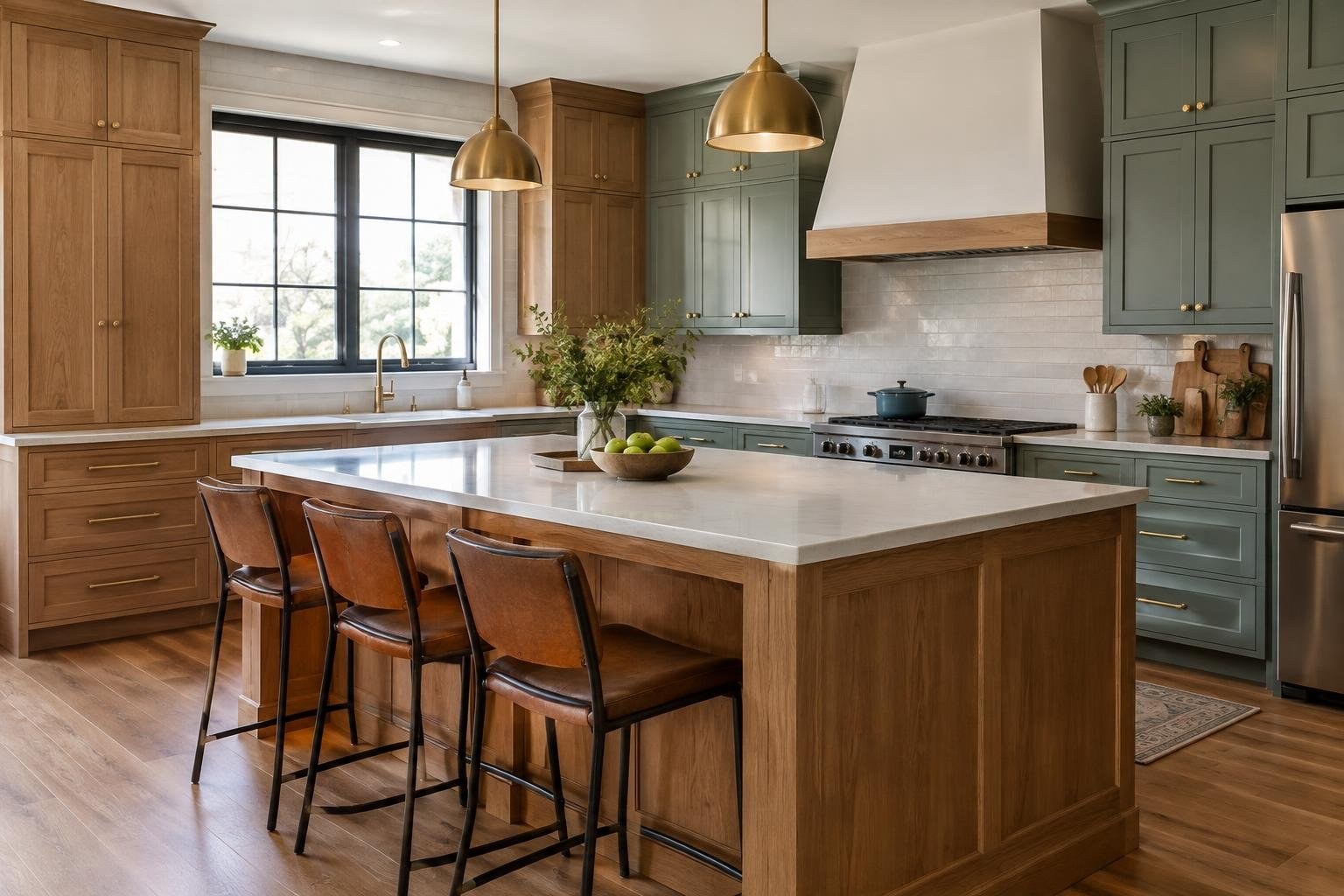
What kitchen cabinet ideas include and how to use them
Kitchen cabinet ideas are design directions you can adapt to a real room, not a ready-made project specification. They can help you decide whether you prefer a traditional or modern look, a quiet neutral palette or stronger color, wood grain or paint, and open display shelves or closed storage. Cabinet choices have a visible effect on the kitchen’s overall design, so treat them as part of a room-wide plan rather than an isolated purchase.
Use inspiration to identify details, not to copy a complete photo without checking whether its layout and selections suit your own kitchen. Design galleries show a range of styles for different spaces, while color inspiration can help you compare approaches from off-white to more monochromatic looks. Make a shortlist of the features you actually want before discussing products or project scope.
- Appearance: Note the door profile, color, wood tone, finish sheen, and hardware.
- Use: Write down what you store and which areas you access most.
- Fit: Check how the idea relates to your room dimensions and existing finishes.
Signs it may be time to rethink your cabinets
A cabinet redesign may be worth exploring when the current look no longer suits you, when you are planning a broader kitchen update, or when you need to reconsider how the room’s storage is arranged. Those are reasons to assess options, not proof that every cabinet must be replaced. First separate a style problem from a storage or layout problem: changing color may address one concern, while a new arrangement may be needed to address another.
Look for practical signs in your own routine. Do you often move items to reach what you need? Are everyday objects competing for counter space? Do you want to display selected dishes, or would you rather conceal most items? Are you updating nearby finishes and unsure how the cabinet color will work with them? Answering these questions helps turn broad inspiration into a project brief.
Write down what is not working and what you want to improve. If the cabinets work well but feel visually dated to you, explore color, hardware, or finish changes before assuming a full replacement is necessary. If the layout or storage is the concern, ask a cabinet professional to evaluate the room and explain which parts of the plan would change.
Cost and estimate considerations
Kitchen cabinet ideas do not have a standard price. An inspiration photo gives you a look to discuss, not enough information to produce a reliable project total. Request a written estimate after the cabinet scope and related responsibilities have been identified. If you are comparing providers, ask them to price the same plan rather than comparing unlike proposals.
Ask whether each estimate includes the cabinets, selected finish, hardware, delivery, installation, removal or disposal of existing materials, and any work needed to prepare the room. Clarify who handles measurement confirmation and who coordinates any work outside the cabinet scope. Ask providers to list exclusions and explain how requested changes will be priced.
Keep a comparison sheet with the same categories for every proposal:
- Cabinet selection, quantity, and specified sizes
- Door style, color or wood finish, and hardware
- Delivery and installation responsibilities
- Removal, disposal, and any related work
- Expected schedule, payment terms, and warranty information
Where a proposal is unclear, request an explanation in writing before accepting it. A lower total is not automatically the better choice if it covers less work or leaves important responsibilities undefined.
Factors that affect the project
Project scope, cabinet quantity, color and finish selections, hardware, and how much existing work you intend to change all affect what needs to be planned and priced. The room, its dimensions, and your chosen design also influence whether an idea can be translated directly or needs adjustment. A gallery image may be inspirational without showing enough information to judge the full work involved.
Before asking for a quote, gather room measurements and photographs, note the locations of doors and windows, and record appliance details if they affect the cabinet plan. Make a list of existing finishes you expect to keep, such as flooring, counters, or backsplash, and flag anything you plan to replace. A professional should confirm the dimensions needed for the final order instead of relying on informal notes alone.
Expect to make tradeoffs. A distinctive finish or a more elaborate design may be important to you, while another area may be better kept simple. Decide which features are priorities before reviewing options so that the conversation focuses on the choices that matter most to your room.
Options and tradeoffs: compare the main design directions
Compare kitchen cabinet ideas by the experience they create and the decisions they require. A strong look can come from painted color, natural wood, open shelves, door fronts, or a considered mix of materials and hardware. Each approach has tradeoffs in how much it emphasizes display, contrast, or visual consistency.
| Design direction | Potential benefit | Questions to consider |
|---|---|---|
| Painted cabinets | Supports a chosen color palette, from off-white to stronger hues. | Does the color work with the room’s fixed finishes and desired mood? |
| Natural wood | Lets wood tone and grain contribute to the design. | Which wood tone and finish sheen coordinate with the rest of the room? |
| Open shelving with cabinets | Combines display space with enclosed storage. | What will be displayed, and how much do you want visible? |
| Two-tone cabinetry | Introduces color contrast across cabinet areas. | Do the selected colors feel balanced alongside the counter and backsplash? |
| Mixed metal accents | Allows cabinet hardware and other metal details to contribute different accents. | Where will each finish appear, and does the combination feel deliberate? |
These are design approaches rather than guarantees of a particular result. Look at several examples, then identify the details that suit your own preferences and kitchen instead of relying on a trend label alone.
How to coordinate cabinet color, wood, finish, and hardware
Color and finish decisions are easier to judge when you consider them beside the surfaces they will live with. Bring together the cabinet color or wood tone, counter, backsplash, flooring, and visible metal finishes when reviewing options. A cabinet color that looks appealing on its own may feel different in the context of the whole room.
Two-tone cabinetry is one possible way to add contrast. One documented example pairs white upper cabinets with sage green lower cabinets, a white subway-tile backsplash, and a quartz countertop. Treat that combination as an example, not a formula: your own preferred colors and materials may call for a different balance.
For natural wood, examples include white oak and dark walnut, with finishes described from matte to high gloss. For painted cabinets, inspiration ranges from traditional off-white to sleek monochromatic looks. Consider whether you want cabinets to blend into the background or become a feature, then compare samples or visual references with the surrounding finishes before settling on a scheme.
Hardware matters as both a visible detail and a choice you handle regularly. Compare its finish with the faucet, lighting, and other metal accents. A kitchen can include more than one metal finish; plan their placement so the mix reads as intentional rather than accidental.
Open shelves or closed cabinets: how to decide
Open shelving can be paired with fronted cabinets to balance display and concealed storage. Before including shelves, decide what you want visible and whether those items help create the look you want. Shelves work best as a deliberate part of the design, not as a last-minute substitute for storage you still need behind doors.
Think through the contents, position, and surrounding cabinet fronts before specifying open areas. If you plan to display frequently used pieces, consider whether their appearance fits the room’s palette. If you prefer an uncluttered view, use closed cabinets for items you do not want on display. Looking at kitchens that combine shelves and fronted cabinets can help you understand the visual relationship, but the specific arrangement should be based on your room and habits.
Ask your designer or provider to show the intended balance on a plan or elevation. Confirm how shelves relate to nearby cabinets and other elements before final selections. This simple review can reveal whether the open area feels purposeful and whether you have enough enclosed storage for the way you use the kitchen.
What to expect from planning through installation
There is no universal timeline for a cabinet project in the supplied design information, so ask providers for a schedule tied to your specific scope. The process generally needs decisions about the design, measurements, product selections, estimate, ordering, delivery, and installation responsibilities. Confirm the sequence and dependencies with the provider rather than relying on a broad verbal estimate.
- Describe the goals. Explain what you want to change and what should remain.
- Review the room. Share measurements, photos, appliance information, and known constraints.
- Develop the design. Compare color, door style, wood or paint finish, shelves, and hardware.
- Confirm the written scope. Check quantities, selections, exclusions, responsibilities, and payment terms.
- Agree on schedule and next steps. Ask what must happen before ordering and what the installation plan includes.
Request updates if selections or site conditions change. Keep a written record of approved choices and changes so everyone is referring to the same plan.
How to choose a qualified cabinet provider
Choose a cabinet provider or designer who can explain how your preferred look will be translated into a clear scope. Review relevant project examples, ask who confirms measurements, and find out who is responsible for delivery and installation. You should understand which selections are included, what is outside the proposal, and whom to contact if plans change.
Useful questions include:
- What information do you need to confirm the cabinet plan and dimensions?
- Can I review the specific door style, finish, hardware, and cabinet quantities before approving?
- Who handles ordering, delivery, installation, and any work outside the cabinet scope?
- What is the expected schedule, and how will delays or changes be communicated?
- What warranty information applies, and how do I raise a concern after installation?
- Are you insured, and are any licenses or approvals required for the work in my area?
Check references and reviews, where available, and compare the actual scope as well as the price. A provider who answers questions clearly and puts responsibilities in writing can make it easier to understand what you are agreeing to.
Permits, qualifications, warranties, and safety
Permit requirements, licensing rules, and the approvals that apply to a kitchen project depend on the work and location. Confirm local requirements with the relevant local authority or qualified professional before work begins. Do not assume a cabinet-only change and a project involving other building work have identical requirements.
Ask the provider which tasks are included and which may require other qualified trades. If the project involves work beyond cabinet selection and installation, clarify who coordinates it and how you can verify that the appropriate qualifications and approvals are in place. Avoid undertaking work that you are not equipped or authorized to perform.
Review written warranty information for the products and work being offered. Ask what is covered, for how long, how to make a claim, and whether responsibilities differ between the cabinet product and installation. Keep the final selection documents, contract, and change approvals together for reference.
Ways to control cost without unsafe shortcuts
To manage spending safely, define the project before requesting bids and compare the same scope across providers. Prioritize the changes that matter most to you, such as a particular cabinet color, natural wood look, or shelving arrangement. Simplifying secondary design details may help you focus the budget on your main priorities, but ask providers what each proposed change actually saves before deciding.
Consider keeping existing finishes only if they suit the new cabinet plan and are in acceptable condition. Avoid changing selections after approval unless you understand the effect on price and schedule. Do not reduce cost by skipping necessary measurements, unclear installation responsibilities, or appropriate local approvals. Those shortcuts can create uncertainty rather than a dependable saving.
Get written answers about the scope, exclusions, change process, and warranty before authorizing work. If two estimates differ, ask each provider to explain what is included instead of choosing by total alone.
Mistakes, red flags, and a practical approval checklist
Use this checklist before approving a cabinet plan:
- Have you written down the storage and appearance problems you want to solve?
- Have you compared colors, wood tones, door styles, shelving, and hardware as a coordinated set?
- Have you checked the proposed choices against the counter, backsplash, flooring, and other finishes you plan to keep?
- Have measurements and appliance details been reviewed by the person responsible for confirming the order?
- Does the written estimate identify selections, quantities, installation responsibilities, exclusions, and changes?
- Do you understand the project schedule, payment terms, warranty information, and who to contact with concerns?
- Have you confirmed whether local approvals or qualified trades are needed for work beyond cabinets?
Common mistakes include selecting from an image without checking room fit, choosing color before considering surrounding finishes, adding open shelves without planning what will be displayed, and accepting an estimate that leaves responsibilities unclear. Pause if a provider pressures you to approve before explaining the scope, avoids written answers, or cannot say who is responsible for key parts of the project.
Turn your kitchen cabinet ideas into a practical plan
Collecting kitchen cabinet ideas is a useful first step, but a successful decision depends on connecting appearance with storage, room constraints, and a clearly defined scope. Compare a few distinct design directions, choose the details that matter to you, and confirm how they coordinate with the rest of the kitchen. Then review measurements, estimate inclusions, timing, responsibilities, and warranty information before approving the work.
Explore cabinet options at CabinetSupply.com for your next project. Use what you have learned to compare choices, prepare questions, and decide which cabinet direction best fits your kitchen and priorities.
Frequently asked questions
How do I choose kitchen cabinet ideas that will work in my home?
Start by listing what you need to store and how you use the kitchen. Then choose a cabinet style, color, and finish that work with the room’s fixed features, such as counters, flooring, and backsplash. Decide where you want closed storage, drawers, and any open shelves before selecting decorative details.
Are open kitchen shelves still a good design option?
Yes. Open shelves can add display space and create a lighter visual effect, especially when paired with fronted cabinets. Consider what you will put on them and whether you are comfortable keeping those items organized and visible. Use closed cabinets for items you would rather keep out of sight.
What are some practical two-tone kitchen cabinet ideas?
Two-tone cabinetry can create contrast without relying on one strong color throughout the kitchen. For example, a lighter upper cabinet color paired with sage green lowers is one documented design approach. Test how your preferred colors work with the room’s other finishes before deciding.
Should I choose painted or natural wood kitchen cabinets?
Natural wood, painted cabinets, and different sheen levels offer distinct looks. White oak or dark walnut can provide visible wood character, while painted cabinetry gives you a wider range of color choices. The best option depends on the look you want and how the cabinet finish coordinates with nearby materials.
How much do new kitchen cabinets cost?
There is no single price for kitchen cabinet ideas because an idea is not a defined project scope. Ask providers to price the same cabinet quantity, sizes, finish, hardware, installation responsibilities, and related work. Confirm which items are excluded so you can compare bids fairly.
Do I need a professional to plan a kitchen cabinet project?
A designer or cabinet provider can help develop a plan, but first gather room measurements, photos, appliance details, and a list of storage priorities. Ask who is responsible for confirming dimensions, coordinating cabinet selections, and identifying any work that requires qualified trades or local approvals.
People Also Ask
How do I start collecting kitchen cabinet ideas?
A simple way to begin is to gather reference images, then note what you like about each one: color, door shape, wood tone, shelving, or hardware. Translate those preferences into a short list of choices and compare them with the kitchen’s layout, existing finishes, and storage needs.
How can I mix open shelves and kitchen cabinets?
Pairing open shelves with closed cabinets is one way to create display space while keeping some items behind doors. Decide what belongs on view and reserve shelves for items you are willing to arrange and maintain as part of the room’s appearance.
What cabinet colors look good together in a kitchen?
A two-tone scheme can use contrast between upper and lower cabinets, such as white uppers with sage green lowers. Keep the rest of the palette in view, including the counter, backsplash, flooring, and hardware, so the colors feel intentional together.
Can I mix metal finishes with kitchen cabinet hardware?
Consider the cabinet finish, faucet, lighting, and visible appliances as a group. Different metal accents can be combined, but plan where each finish appears and repeat it thoughtfully rather than selecting each piece in isolation.
What wood tones are popular for kitchen cabinets?
If you like a wood-forward look, compare samples and images of species such as white oak or walnut with the finish sheen you prefer. Check how the wood tone relates to the other large surfaces in your room before choosing.
What should a kitchen cabinet estimate include?
A cabinet idea is not enough information to price a job. The estimate needs a defined scope, including cabinet selection and quantity, finish, hardware, installation, and any related work. Ask each provider to clarify inclusions and exclusions before comparing totals.
The strongest kitchen cabinet ideas are the ones that make your kitchen easier to use while expressing a style you will enjoy living with. Start with your storage needs and layout, then compare cabinet colors, door profiles, open shelves, wood finishes, and hardware as parts of one coordinated plan. Before committing, confirm that your measurements, selections, project scope, timing, and estimate all line up. Explore Cabinet Supply to compare cabinet options and take a more informed next step for your kitchen.
Your next step
Explore cabinet options at CabinetSupply.com for your next project.
Last reviewed and updated October 15, 2026 by the CabinetSupple Editorial Team.
Sources
- 13 Kitchen Cabinet Ideas That Will Make Your Design Feel Elevated and Effortlessly Classy
- 63 Beautiful Kitchen Cabinet Ideas, Straight From Designers
- 15 kitchen cabinet ideas to inspire every style and design | Homes and Gardens
- 21 Kitchen Cabinet Ideas | Paint Colors & Inspiration | Benjamin Moore
- KraftMaid Cabinet Gallery – Kitchen & Bath Inspiration
- 69 Stylish Kitchen Cabinet Ideas for 2026
- 62 Kitchen Cabinet Ideas That Instantly Elevate Your Space With Style, Storage, and a More Polished Look
- 38 Kitchen Cabinet Ideas for Every Design Style