
Kitchen cabinet colors affect the mood of a room and how its counters, flooring, backsplash, and appliances come together. The right choice is not necessarily the current trend or the color that looks best on a screen. Start with the finishes you plan to keep, consider the light in your kitchen, and compare physical samples in the space. Whether you are painting existing cabinets or choosing new ones, a deliberate color-selection process can help you avoid an expensive mismatch.
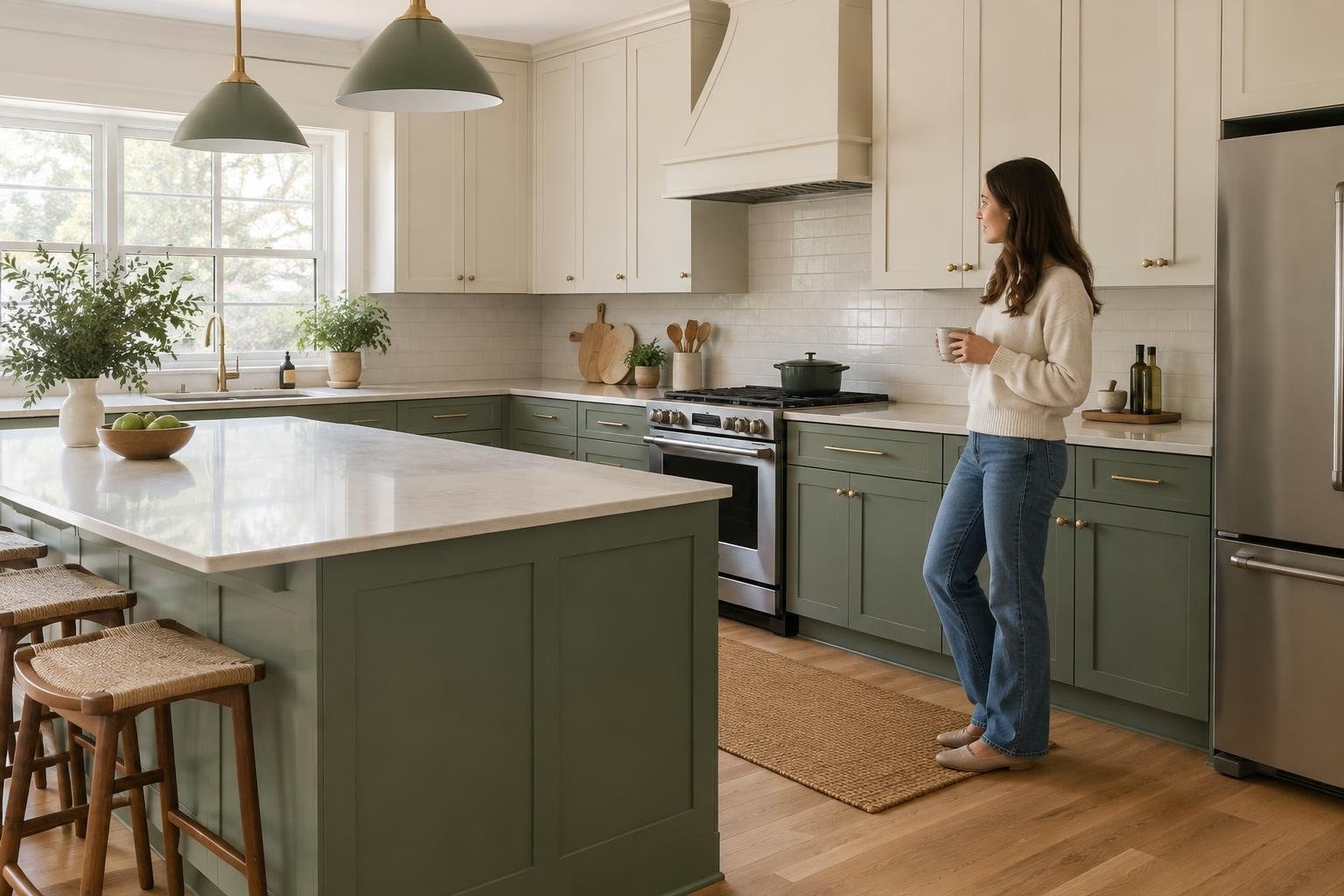
What to know before choosing kitchen cabinet colors
Kitchen cabinet color is part of a larger finish combination. A cabinet shade can look different beside a warm wood floor than beside a cool gray counter, and a sample viewed online cannot show how it will look in your own room. Begin by listing what will stay: countertops, backsplash, flooring, wall color, appliances, and any visible woodwork.
Then decide what you want the cabinets to do. They might blend into a calm background, brighten the room, or provide contrast through an island or lower run. There is no universally correct choice. Current design coverage includes soft greens and dusty sages, navy, warm beige, creamy white, powder blue, and black, showing the range of directions available rather than a rule about what every kitchen should use.
Write down two or three color families to test. This keeps the decision manageable and makes it easier to compare actual samples with the rest of the kitchen.
Signs a cabinet color update may be worth considering
A color update can make sense when you like the kitchen’s layout and cabinets but want a different look. It may also be worth exploring when a new cabinet color would help coordinate the room’s existing finishes. Color alone, however, does not fix damaged boxes, failing doors, poor storage, or a layout that no longer works.
Before choosing paint or a replacement finish, check the condition of the cabinet surfaces and identify what is included in the project. Note peeling or damaged areas, loose doors, worn drawer fronts, and any water-related damage. Ask a qualified provider whether the proposed work addresses those conditions or only changes appearance.
If the cabinets are in poor condition or the kitchen needs a different layout, compare a color update with a broader cabinet project. A new shade is most useful when the underlying cabinets and room arrangement still meet your needs.
What a cabinet color project includes and how the process works
Color work can mean very different projects: painting existing cabinets, replacing doors or drawer fronts as part of a finish change, or buying new cabinets in a selected color. Those approaches should not be treated as interchangeable. Ask each provider to state exactly which parts are included and which will remain unchanged.
- Set the visual goal. Decide whether you want a quiet neutral, a color accent, or a stronger overall change.
- Inventory the room. Record the finishes and appliances that will stay, and note any planned changes.
- Test color samples. Compare samples beside the fixed finishes in the kitchen, not only in a showroom or on a screen.
- Confirm suitability and scope. Ask how the selected finish applies to your cabinet material and what preparation is included.
- Approve the details in writing. Document the color, surfaces, hardware handling, schedule, cleanup, and any exclusions before work begins.
Color inspiration galleries can help generate ideas, but a curated photo is not a substitute for checking a sample against your own materials and light.
Kitchen cabinet color options and their tradeoffs
Color trends are useful for finding possibilities, not for predicting what will suit every home. The supplied design coverage points to several families: earthy or soft greens, blue shades, warm beige and other sandy neutrals, creamy whites, and black or other dark choices. Green appears in coverage of both 2025 and 2026; newer trend articles also emphasize softer, nature-inspired neutrals and greens.
| Color direction | What to consider | Potential tradeoff |
|---|---|---|
| Warm white or cream | Compare the undertone with counters, backsplash, and flooring. | A white that looks right alone may feel mismatched beside a warmer or cooler fixed finish. |
| Beige or sandy neutral | Consider it when you want a softer neutral than stark white. | Check that the shade does not compete with existing wood or stone tones. |
| Green | Try a softer sage or a deeper earthy shade, on an island or across the kitchen. | A strong color commitment may be easier to manage on a smaller cabinet area. |
| Blue | Compare light and dark blue samples with the room’s other finishes. | A blue that looks gentle in a product image may read differently in the room. |
| Black or another dark shade | Test how much contrast you want and view a large sample in place. | Dark cabinetry can become the dominant visual element. |
These are starting points, not performance rankings. The best choice is the one that works with the kitchen and remains appealing to the people who use it.
How lighting, counters, and finishes affect color
Color samples should be judged as part of the whole kitchen. Put them beside the countertop, backsplash, floor, and any wood finish that will remain. If possible, use a large enough sample to see the color over a meaningful area, and move it around the room. Look at it under the lighting conditions you normally experience rather than making the decision from one brief viewing.
Pay attention to undertones. Two shades both called white, beige, or gray can appear different next to one another. Compare options directly with the fixed finishes and narrow the selection to a small group. Ask whether the cabinet color should blend with those materials or create a deliberate contrast.
For a two-tone plan, view the colors together. A sample of the island color alone does not show how it will interact with the perimeter cabinetry. Design references show that color may be used on an island, lower cabinets, or a full kitchen. The right extent depends on the look you want and how the kitchen connects to nearby rooms.
Common mistakes and an actionable color-selection checklist
Use this checklist before you approve an order or start work:
- List all the kitchen finishes and appliances that will remain.
- Choose a short list of color families before requesting samples.
- Compare physical samples with fixed finishes in the kitchen.
- View two-tone selections together, not in isolation.
- Confirm whether the project paints existing cabinets, changes cabinet parts, or supplies new cabinets.
- Ask what preparation, surfaces, hardware handling, cleanup, and repairs are included.
- Get the exact color and finish in writing.
- Compare provider estimates with matching scopes and exclusions.
- Confirm the schedule, payment terms, warranty, and process for changes.
Common mistakes include choosing from a small screen image, overlooking undertones, selecting a trend before checking it against fixed finishes, and assuming a color update will correct damaged cabinets or an inconvenient layout. Avoid these by separating the color decision from the condition and function of the cabinetry.
Browse cabinet options and compare the look you want
Use trend coverage to build a shortlist rather than make a final decision. The references supplied for 2025 and 2026 feature green in multiple forms, while other cited ideas include creamy whites, beige, powder blue, black, and a mix of nature-inspired colors. Those examples can help you identify what you like, but they cannot account for your counters, lighting, cabinetry, or personal taste.
Once you have a shortlist, compare samples in the room and ask a provider how the proposed finish will be specified. If you are replacing cabinets, review the selection before the order is finalized. If you are updating existing cabinetry, confirm which surfaces will receive the finish and whether the condition of the cabinets is suitable for the planned scope.
Explore cabinet options at CabinetSupply.com for your next project.
Cost or pricing considerations
For a useful price comparison, request a written estimate that identifies the selected color and finish, the cabinets or cabinet areas included, and any related work. Ask providers to price the same scope so you can compare the proposals fairly. If you are considering a color on an island, lower cabinets, or the full kitchen, ask for the options to be priced separately rather than assuming one approach will cost less.
Review what each estimate includes and excludes before comparing totals. A design choice should be clear in the quote, not left to interpretation after work begins.
Factors that affect the project
The project scope depends in part on how much cabinetry will receive the selected color. Design examples show color used on an island, lower cabinets, or a full kitchen, so decide which areas you want to change before requesting estimates.
Other decisions to make clear include the exact color, the cabinet areas involved, and whether the project is a visual update or part of a broader redesign. Ask each provider whether those choices affect the quoted price, proposed work, or schedule. Compare the same choices across proposals instead of judging estimates that describe different projects.
What to expect, including timing
Before approving the work, ask for a written schedule with the planned start and completion dates and any major project stages. Confirm which cabinet areas are included, when the color and finish will be finalized, and what arrangements you should make for using the kitchen during the work.
Do not assume a standard duration from the color choice alone. Ask the provider to explain the schedule for the specific scope and to tell you how changes to the selected color or project areas would be handled.
Ways to reduce cost or save safely
To keep the project focused, decide whether you prefer color on an island or lower cabinets, or across the full kitchen. Ask for estimates for the alternatives you are genuinely considering, then compare them with the same inclusions and exclusions. A smaller color area may suit your design goal, but do not assume it guarantees a lower price.
Make the color decision carefully before approving the order or work. Use design coverage to build a shortlist, then compare the options with the finishes that will remain in your kitchen. Avoid choosing a color solely because it is featured in an inspiration image or trend article.
Frequently asked questions
How do I choose a kitchen cabinet color that will work with my countertops?
Start with the colors and materials that will stay, such as countertops, flooring, backsplash, and appliances. Compare cabinet samples beside them in the kitchen at different times of day, then choose a color whose undertone and contrast feel right in the whole room.
What kitchen cabinet color is best for a small kitchen?
There is no single best color for every small kitchen. A light cabinet color may help create a brighter impression, while a darker island or lower cabinets can add contrast. Test samples in your actual lighting rather than relying on a color name or an online photo.
Are green kitchen cabinets still in style?
Green is a prominent color direction in the supplied 2025 and 2026 design coverage, with shades ranging from soft sage to deeper, earthy tones. That makes it an option to consider, not a guarantee that it will suit your room or remain your preference.
Are white kitchen cabinets out of style?
No. White, warm white, and cream remain options, alongside beige, green, blue, and darker choices. Choose a shade that works with the room’s fixed finishes and the look you want.
Should kitchen cabinets be one color or two?
A two-tone scheme can add definition by using one color on the island or lower cabinets and another on the rest. Before committing, view both samples together and check how they relate to the countertop, flooring, and adjacent rooms.
How much does it cost to change kitchen cabinet colors?
Cabinet-color project costs depend on whether you are painting existing cabinets, ordering new cabinets, or making broader kitchen changes. Compare written scopes that identify preparation, materials, doors and drawer fronts, installation, and any related work; ask for a project-specific estimate rather than relying on a generic price.
Can I paint my kitchen cabinets any color?
A color sample helps you check the appearance, but it does not establish that a coating is suitable for your cabinet material or use. Ask the provider what preparation and finish are included and what care or warranty terms apply.
How long does it take to change cabinet colors?
It depends on the work included, product availability, preparation, and the contractor’s schedule. Ask for expected start and completion dates, work stages, and how the kitchen can be used while work is underway. Do not assume a fixed duration without a written project plan.
People Also Ask
How do I match kitchen cabinet colors to countertops and floors?
Review the finishes that are not changing, then bring cabinet samples into the kitchen and look at them beside the countertop, backsplash, floor, and appliances. Compare them in the room’s available light before choosing.
Are white kitchen cabinets going out of style?
No. White and other light neutrals remain options, but current design coverage also highlights warm beige, earthy green, navy, and other shades. Choose based on the room and your own preferences, not a claim that one color has replaced all others.
What is the most popular two-tone kitchen cabinet combination?
A two-tone approach can distinguish an island or lower cabinets from the perimeter. Keep the palette intentional by comparing both colors with the same countertop and floor samples before ordering or painting.
Do light kitchen cabinets make a kitchen look bigger?
A lighter cabinet can contribute to a brighter-looking palette, but the result depends on the room, its lighting, and surrounding finishes. Try a sample in place before assuming a color will make the space feel larger.
What are the options for changing kitchen cabinet color?
Possibilities include painting existing cabinets, selecting a different finish when replacing them, or coordinating new cabinet colors with other planned kitchen changes. The right route depends on cabinet condition, desired result, and project scope.
What should a cabinet painting estimate include?
Ask for a written description of preparation, surfaces being coated or replaced, products and color selection, hardware handling, cleanup, schedule, payment terms, and warranty. Compare like-for-like scopes rather than totals alone.
The best kitchen cabinet color is one that works with the room’s fixed finishes, your preferred amount of contrast, and the way you want the kitchen to feel. Trends can help you discover options, but testing real samples in your own lighting is a more reliable way to make the final choice. Decide whether you are painting existing cabinets or selecting new ones, confirm the finish and color on a sample, and get a written scope before work begins.
Your next step
Explore cabinet options at CabinetSupply.com for your next project.
Last reviewed and updated October 15, 2026 by the CabinetSupple Editorial Team.
Sources
- The Hottest Trends in Kitchen Cabinet Colors for 2026
- The Best Kitchen Cabinet Colors to Try in 2025, According to Designers
- Kitchen Cabinet Colors | Sherwin-Williams
- 31 Popular Kitchen Cabinet Colors with Long-Lasting …
- Most Popular Kitchen Cabinet Colors in 2026 | Plain & Fancy Cabinetry
- 7 Best Kitchen Cabinet Color Ideas to Consider in 2026
- Kitchen Cabinet Color Gallery – The Home Depot
- 21 Kitchen Cabinet Ideas | Paint Colors & Inspiration | Benjamin Moore