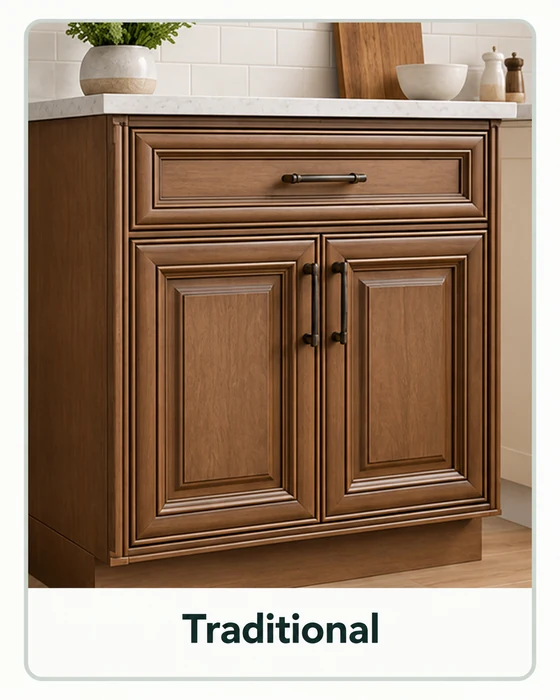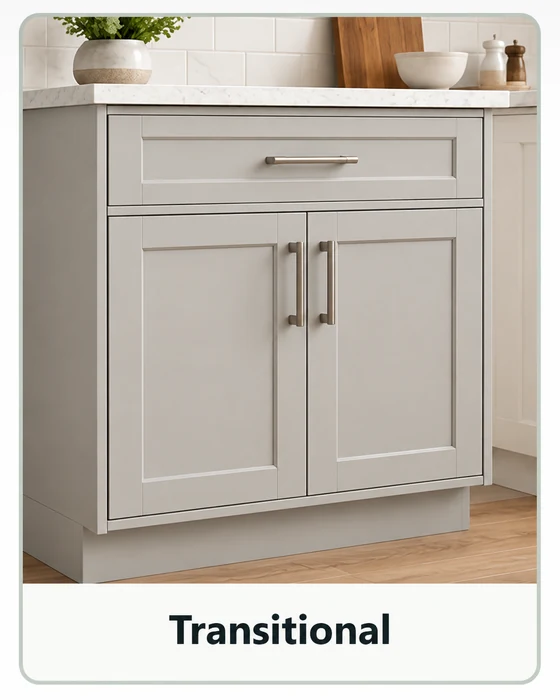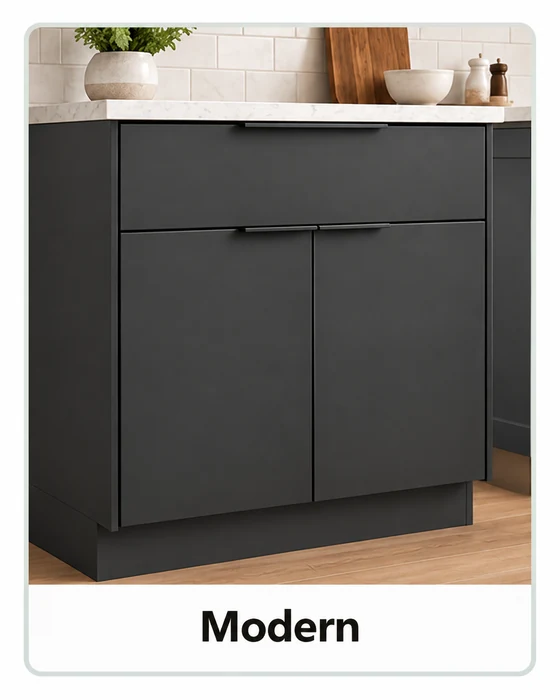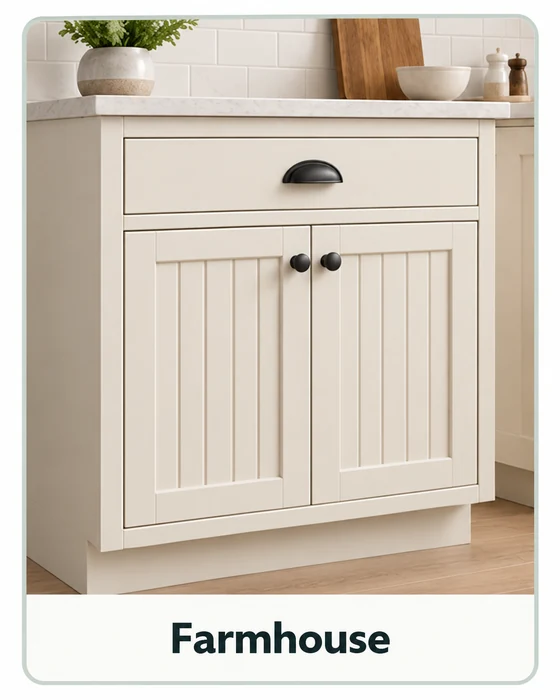
Cabinet style describes what you see on the door or drawer front. It is separate from the cabinet box, material, finish, and hardware. Save photos of styles you like, then compare physical samples in the lighting of your room.
Common door styles
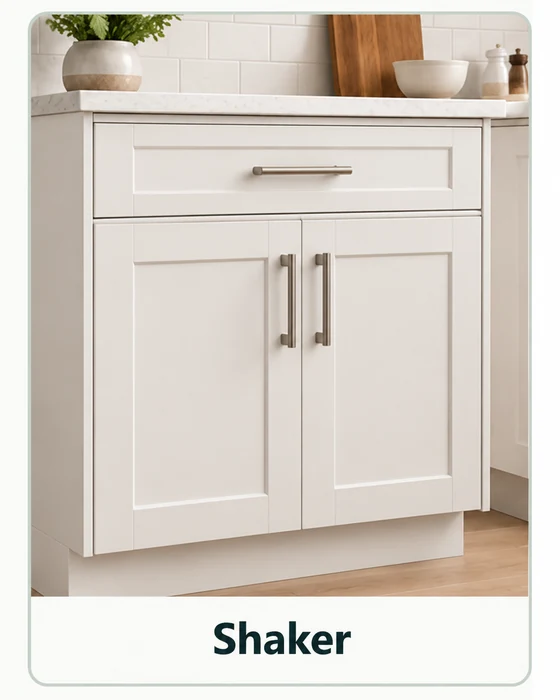
- Shaker: a simple recessed center panel with a frame.
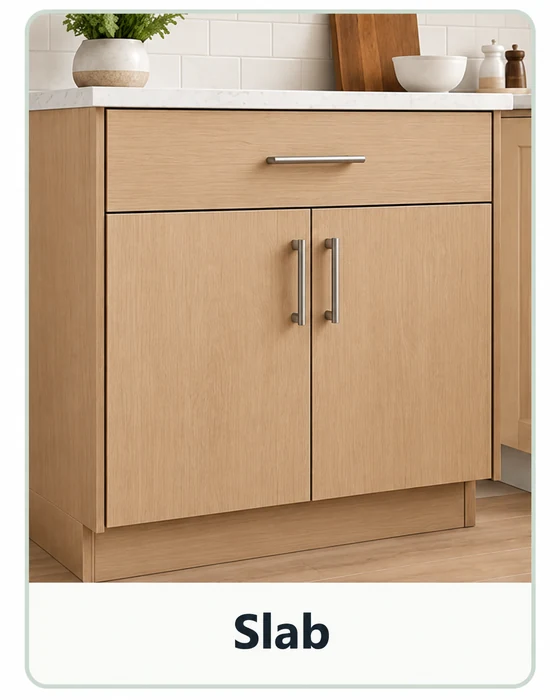
- Slab: a flat front without a raised or recessed panel.
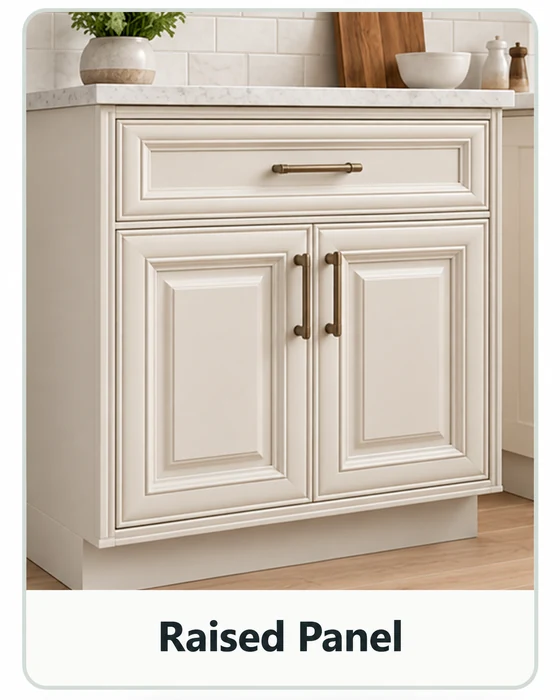
- Raised panel: a center panel that projects forward from its surrounding frame.
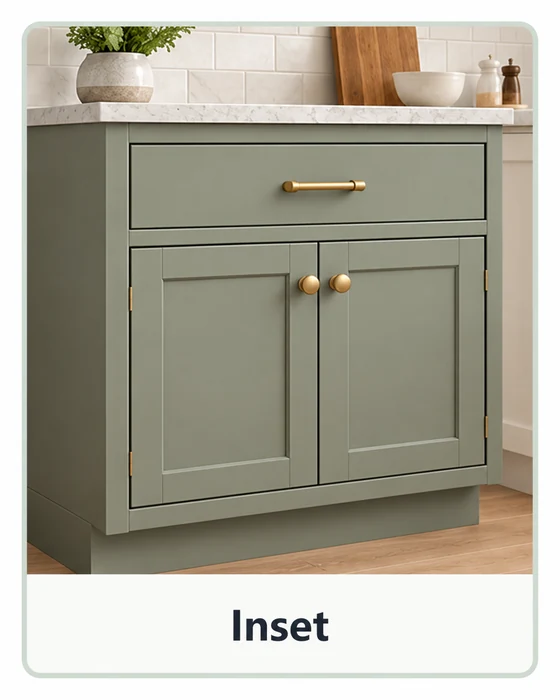
- Inset: the door sits within the face frame opening; fit and clearances are especially important.
- Traditional: a broad design category that often uses more detailed profiles and trim.
- Transitional: combines simpler forms with selected traditional details.
- Modern: commonly emphasizes clean lines and minimal ornament.
- Farmhouse: a broad look that may use painted finishes, simple frames, or beadboard details.
Choose a finish and hardware together
A style can change substantially with color, sheen, wood grain, pulls, and hinges. Ask for a sample of the actual door profile and finish. Check how the finish looks beside countertops, flooring, and wall colors.
Use the image choices in our project planner to share your preferences, and compare cabinet types before requesting quotes.
Check what is behind the finish
The same door style can be made with different materials and coatings. Review cabinet materials and finishes, then ask for a sample of the exact door and finish in your quote. Use the cabinet quote comparison checklist to confirm the construction, hardware, installation, and warranty behind the look.
See the door styles