
Granite is not simply “brown,” “black,” or “white.” A slab can include a dominant base color, smaller veins, flecks, and other tones that change how a cabinet finish looks beside it. To choose kitchen cabinet colors with granite, look closely at the countertop you actually have, decide which colors you want to emphasize, and test cabinet samples in the room. Warm cabinet colors can complement earthy granite, while cooler tones can balance cooler stone. The aim is not to match every fleck. It is to create a deliberate relationship among the counters, cabinets, backsplash, floor, and hardware.
Quick answer: start with the granite’s undertone and pattern
Choosing cabinet color is a design decision about the whole kitchen, not a search for one universal match. Granite varies from slab to slab, and its base color may be accompanied by beige, gray, gold, brown, or other visible details. A finish that suits one piece of granite may not suit another that shares the same broad color label.
Begin with the installed countertop or the specific slab being considered. Identify its dominant color and the secondary colors that are visible from a normal viewing distance. Then decide whether the cabinets should blend with those tones, provide contrast, or add a controlled color accent. Granite with a light base and subtle veining can work with a wide range of cabinet colors. A highly patterned stone may be easier to balance with a less visually busy cabinet finish.
Key takeaway: Coordinate with the granite’s overall temperature and pattern, not with one isolated fleck.
What to know before choosing a cabinet color
Color decisions can be difficult because the countertop is a large, visually prominent surface. Cabinets occupy a broad area too, so their finish can change whether the granite feels warm, cool, calm, or dramatic. A coordinated combination helps the stone and cabinetry read as parts of one room instead of unrelated selections.
Use a simple three-part check:
- Find the granite’s base. Is it mainly cream, white, brown, gray, black, or another color?
- Notice its undertone. Look for recurring warm or cool notes in the veins and smaller details.
- Choose the relationship. Decide whether you want cabinets that harmonize with those notes, contrast with them, or keep a bold countertop in the foreground.
Warm colors tend to make sense with granite that has earthy hues, while cooler-toned granite can work with cooler cabinet colors. Treat this as a starting point rather than a rigid rule; the specific stone and finishes determine the result.
Cabinet color options and tradeoffs by granite type
There is no single cabinet color that works with every granite countertop. Use the stone’s base and pattern to narrow the possibilities, then compare actual finishes in the room.
| Granite appearance | Cabinet direction to consider | Design consideration |
|---|---|---|
| Light base with subtle veining | Light, medium, or dark finishes | This stone family can offer flexibility; decide whether you want a close tonal look or contrast. |
| Bold, multicolored pattern | Quieter, more neutral cabinets | A restrained cabinet finish can keep the stone’s pattern from competing with another strong pattern. |
| Earthy brown or beige notes | Warm wood, soft greens, or other earthy colors | Choose a warmth level that connects to the stone without making the entire room feel overly brown. |
| Cooler or blue-leaning notes | Cooler neutrals or related cool tones | Check that the cabinet undertone does not appear unexpectedly yellow, pink, or green next to the granite. |
| Black granite | Light neutrals for contrast, or deep green and blue for a darker scheme | Compare the countertop and cabinet samples together; a dark-on-dark scheme is a deliberate visual choice. |
These are directions, not guarantees. A pale cabinet can look stark next to warm brown stone, and a dark cabinet can feel too heavy beside a busy countertop. Make the comparison with the actual granite wherever possible.
What a cabinet color project includes and how the process works
A cabinet color project may mean selecting finishes for new cabinets, painting existing doors, or changing the cabinet appearance as part of a wider kitchen update. Those are different project scopes, so define the goal before requesting an estimate or choosing products.
For a color-only refresh, decide whether you are keeping the existing cabinet layout and doors or considering other changes too. For new cabinetry, consider color together with door style, wood grain, hardware, and the countertop. The key design question remains the same: how should the cabinets relate to the granite?
Before you start, write down what should change and what should stay. For example, you might want to keep the granite and cabinet layout but update the cabinet finish and hardware. Or you might be planning new cabinets while retaining the existing counter. A clear scope makes design comparisons and proposals easier to evaluate.
Signs you may want to reconsider the cabinet color
Consider a color update when the existing cabinets feel out of step with the granite, when a remodel is changing other finishes, or when you are selecting cabinets for a new kitchen. You do not need to replace or repaint cabinets solely because the countertop has a strong color; first check whether changing the surrounding finishes or hardware would achieve the look you want.
Look for design problems such as several competing patterns, a cabinet undertone that appears mismatched beside the stone, or a palette that makes the granite feel more prominent than intended. These are visual concerns, not proof that the cabinets need repair or replacement. If the cabinet boxes, doors, or finish also have physical problems, assess those separately before deciding on a color-only solution.
Ask yourself: Is the granite the feature I want to emphasize? Do I want the cabinets to blend or contrast? Are the floor and backsplash helping or making the combination harder to judge? The answers can help distinguish a color preference from a broader kitchen-planning issue.
Cost and pricing considerations for a cabinet color update
There is no responsible universal price for choosing a cabinet color with granite. The cost depends on whether you are selecting finishes for new cabinets, changing existing cabinets, or coordinating color as part of a larger renovation. Ask for an estimate that describes the actual work instead of comparing totals without matching scope.
For a color-selection or cabinet-finish project, ask whether the proposal includes design help, sample or finish selection, preparation, labor, materials, hardware changes, and cleanup. For a larger remodel, ask whether the estimate also includes cabinet removal or installation and work that may be needed around the countertop, backsplash, or other room finishes. Do not assume that every proposal includes the same tasks.
When comparing choices, request separate pricing for optional work. That can help you understand the cost difference between keeping the existing cabinets and selecting new ones without relying on an unsupported per-cabinet or per-square-foot figure. Ask what changes would affect the price and how additional work will be approved.
Factors that affect the project and expected result
Several decisions can change the scope of a color project. The most important first distinction is whether you are changing only the appearance of existing cabinets or purchasing new cabinetry. Other choices include the number of finishes, the selected cabinet style, whether hardware is changing, and whether the countertop, backsplash, or other surfaces are part of the same plan.
- Granite pattern: A busy stone may call for a simpler cabinet finish; a quieter stone may leave more room for contrast.
- Color direction: A single neutral, warm wood, and a dark accent create different design plans that should be compared against the stone.
- Project scope: A finish choice alone is not the same scope as cabinet replacement or a wider kitchen update.
- Coordination needs: If other surfaces are also changing, compare the proposed finishes together rather than approving each in isolation.
Ask anyone preparing a proposal to list assumptions and exclusions. That gives you a clearer way to compare the work and discuss changes before committing.
How to compare colors and test samples
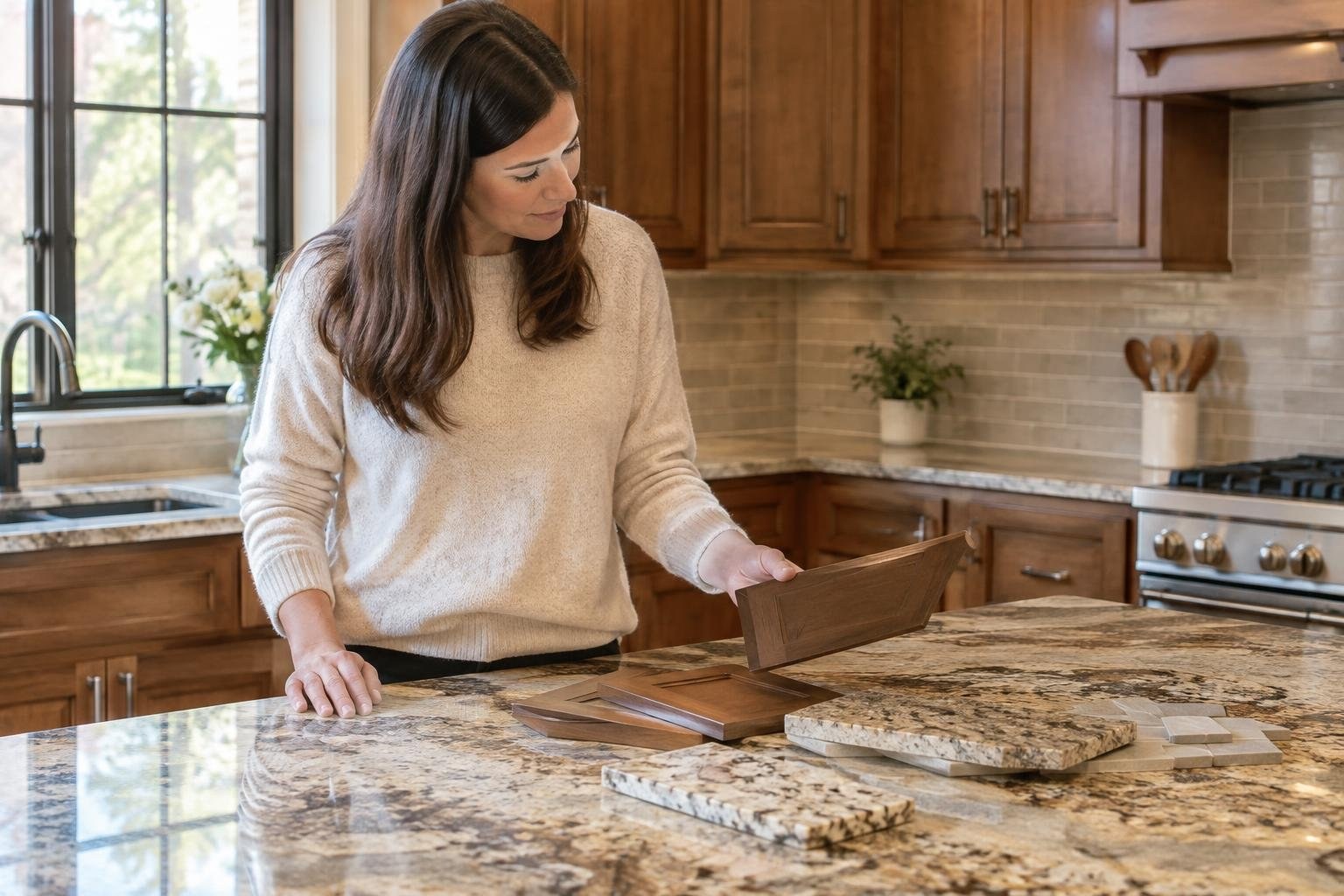
Color choice is best treated as a comparison process, not a guess. Use a real cabinet sample, finish sample, or door where available, and place it beside the granite. Compare the combination with the other finishes that will remain in the room.
- Collect the granite’s main and secondary colors.
- Select a small range of cabinet directions, such as warm neutral, cool neutral, wood tone, or a deeper accent.
- Compare each option directly with the countertop and the existing or proposed floor and backsplash.
- Remove options that compete with a strong granite pattern or clash with the stone’s undertone.
- Review the remaining choices in the kitchen before making a final selection.
For brown granite, soft greens and earthy tones can echo the stone’s warmth; Minimal & Modern recommends these as options for brown granite. Rich wood grain can bring out beige veining, and MSI Surfaces suggests a soft blue backsplash as an accent with warm wood and beige-veined granite. Treat these as starting points, not requirements for every kitchen.
What to expect, including timing
Timing depends on what you are doing, so ask for a project-specific schedule rather than relying on a generic promise. Selecting a finish for new cabinets, changing the color of existing cabinets, and coordinating a wider remodel are not identical tasks. The proposal should state what must happen before work begins, what work is included, and how changes to selections affect the schedule.
Before approving a color, make sure the relevant decision-makers have reviewed the same samples and that the chosen finish works with the actual granite. If you are ordering new cabinetry, confirm selection and delivery milestones with the provider. If you are updating existing cabinets, ask how preparation, work in the kitchen, and completion will be sequenced.
Request a written schedule with important dates or milestones, and ask who will notify you if the plan changes. Avoid treating an unqualified estimate of timing as a guarantee; the agreed scope and project conditions matter.
How to choose a qualified cabinet or remodeling provider
If you hire help, choose a provider who can explain the color plan and the project scope clearly. Ask to see examples of relevant cabinet and countertop combinations, and ask how the provider will compare your selected finish with the granite in your kitchen. A polished showroom image is useful for inspiration, but it cannot confirm how your specific countertop will look with a proposed finish.
- Who is responsible for selecting or supplying samples?
- What work is included, and what is excluded?
- Who performs the cabinet work and handles any related trades?
- How are changes to the finish, scope, or schedule documented?
- What written warranty or workmanship terms apply to the work?
- Can the provider supply references or examples relevant to your project?
Where licensing or insurance applies to the work in your area, ask for the applicable information and verify it through the appropriate local source. Compare providers by scope, communication, and written terms, not price alone.
Permits, credentials, warranties, and safety
A cabinet color decision by itself does not establish whether a permit is needed. If the project expands into other work, ask the provider what local requirements apply and confirm uncertain requirements with your local building authority. Do not assume that licensing or permit rules are identical in every location.
Before work begins, get the scope, payment terms, schedule, change process, and warranty information in writing. For work involving products or finishes, ask what the written product and workmanship terms cover and how concerns should be reported. If the project includes electrical, plumbing, structural, or other regulated work, use appropriately qualified professionals and confirm local requirements rather than attempting work beyond your qualifications.
Ways to reduce cost or save safely
You can make a color project more efficient by narrowing the design before requesting bids. Decide which parts of the kitchen are staying, identify the granite’s dominant tones, and compare a few purposeful cabinet directions rather than asking a provider to price an undefined makeover.
- Keep the existing countertop if it is part of the plan, and use it as the reference for every cabinet sample.
- Separate essential work from optional changes, such as new hardware or other finish updates.
- Ask for alternatives to be priced separately so you can compare scopes.
- Confirm what is excluded before accepting a lower-priced proposal.
- Make color decisions before ordering or starting work, and document any later change.
Saving safely means reducing or clarifying scope, not skipping necessary qualifications or agreeing to work you do not understand. A low total may not represent the same work as a more detailed proposal.
Mistakes, red flags, and a practical checklist
Avoid choosing from a photo alone, treating all granite as one color, or selecting cabinet finishes before considering the countertop’s pattern. Another common design risk is letting several bold surfaces compete. When the granite is strongly patterned, a simpler cabinet finish may help maintain balance. Conversely, lighter granite with subtle veining can support a wider range of cabinet colors.
Before you commit, check these items:
- Have I identified the granite’s base color and visible undertones?
- Have I compared a cabinet sample directly with the countertop?
- Have I considered the floor, backsplash, and hardware in the same palette?
- Does the cabinet color complement the granite or intentionally contrast with it?
- Does the estimate say exactly what work, materials, and cleanup are included?
- Are schedule, change terms, and applicable warranty details in writing?
Pause if a provider pressures you to choose before you have reviewed the relevant samples, cannot explain what is included, or will not document changes. Ask questions and resolve unclear terms before work begins.
How to coordinate wood, hardware, and backsplash choices
Choosing between warm, cool, light, dark, or wood-tone cabinets is easier when you use a consistent sample comparison. Put the candidate finish next to the granite and ask what each option does to the room: Does it emphasize the stone’s warmth? Does it calm a busy pattern? Does it create contrast without making the countertop feel disconnected?
Rich wood grain can emphasize beige veining in granite and add warmth and texture. MSI Surfaces suggests chrome hardware and a chrome faucet for a clean, contemporary look, with a soft blue backsplash as an accent. These details are optional; check them with your own cabinet and countertop selections rather than adopting a complete look based on a single example.
For a darker scheme with black granite, deep green or blue is one direction to consider. For a lighter or more patterned granite, compare neutral cabinet options as well. Choose the combination that suits the whole kitchen, not just a trend or an isolated color sample.
Explore cabinet options for your granite countertop
Once you have identified the granite’s undertones and selected a few promising cabinet colors, explore cabinetry options and finishes that fit the look you want. Review the choices alongside your countertop rather than making a decision from color names alone.
Make a confident cabinet color decision
Before you finalize a cabinet color, bring your preferred options together with the granite and the other finishes that will remain in the kitchen. Compare the actual samples, confirm the project scope, and ask for a written estimate and schedule if you are hiring help. A clear decision process can help you avoid a color choice that looks appealing on its own but feels disconnected in the finished room.
Ready to compare cabinetry for your kitchen?
Frequently asked questions
What color cabinets go with granite countertops?
Start with the granite’s overall undertone and most visible secondary colors. Warm, earthy granite can pair naturally with warm cabinet finishes, while cooler granite may suit cooler neutrals. Compare samples with the actual countertop before deciding.
Do white cabinets go with granite countertops?
White or cream, gray, wood tones, and deeper colors can all work, depending on the granite. Light granite with subtle veining can provide flexibility, while strongly patterned granite may be easier to balance with a quieter cabinet color.
What cabinet colors work with brown granite?
They can. Brown granite may work with soft greens and earthy cabinet colors, which echo the stone’s warmth without making the palette feel overly busy. Sample a few tones against the countertop to find the right balance.
What color cabinets look good with black granite?
Dark green or deep blue can create a bold, modern-looking pairing with black granite. Whether it suits your room depends on the specific stone, cabinet finish, lighting, and other surfaces, so test samples before choosing.
How do I choose a cabinet color that matches my granite?
Use a sample or door finish beside the actual countertop, rather than choosing from a screen or a small color chip alone. Look at the combination in the kitchen’s lighting and alongside the flooring, backsplash, and hardware.
Can I use two cabinet colors with granite countertops?
A two-tone design can work if each cabinet color relates to a color in the granite and the overall combination feels intentional. Compare the proposed finishes together with the countertop and nearby surfaces before ordering or painting.
People Also Ask
How do I identify the undertones in granite?
Look for the stone’s overall undertone, then note its most noticeable veins, flecks, or secondary colors. Use those clues to compare warm or cool cabinet finishes and avoid choosing from the countertop’s broad color label alone.
Do wood cabinets work with granite countertops?
They can. Rich wood grain can bring out beige veining in granite and add warmth and texture. Compare the wood’s undertone and grain with the actual slab so the natural patterns feel compatible rather than competing.
Should cabinet color be warmer or cooler than granite?
Consider whether the granite’s main colors lean warm or cool. Earthy granite can suit warm finishes, while granite with cooler tones may work with cooler cabinet colors. The specific slab matters more than a general color category.
What cabinets look best with busy granite?
For granite with strong, varied patterning, consider a more restrained cabinet color so the countertop can remain visually prominent. For lighter granite with subtle veining, darker cabinets may provide contrast.
What backsplash colors go with wood cabinets and granite?
A soft blue backsplash can introduce a controlled accent beside warm wood cabinets and granite with beige veining. Check it with the countertop and cabinet sample together before selecting tile or paint.
Can dark cabinets work with light granite?
They can. Light granite with subtle veining can offer flexibility, including the option of darker cabinets for contrast. Compare a cabinet sample with the actual countertop and the other finishes in the room before deciding.
The best kitchen cabinet color with granite is the one that responds to the countertop’s actual undertones and pattern, not just its broad color name. Start by identifying the granite’s most noticeable base and accent colors, then compare cabinet samples against the stone and the rest of the room. Warm, earthy granite often works with warm cabinet colors, while cooler granite can suit cooler neutrals. If the stone has bold movement, a quieter cabinet finish can let it remain the focal point. Take time to test combinations before committing, and make sure any painting or replacement quote clearly describes the work and products included.
Your next step
Explore cabinet options at CabinetSupply.com for your next project.
Last reviewed and updated November 2, 2026 by the CabinetSupply Editorial Team.
Sources
- 9 Best Cabinet Paint Colors to Match Brown Granite
- Expert Tips for Pairing Granite Countertops & Cabinets
- What Color Cabinets Go With Black Granite Countertops?
- r/kitchenremodel on Reddit: What kitchen cabinet color or stain would go well with these granite countertops?
- r/DesignMyRoom on Reddit: Cabinet paint colors with brown granite?
- What Color Cabinets Go Best with Granite?
- How To Choose Kitchen Cabinet Colors That Work With Granite Countertops – Tasting Table
- Kitchen Cabinet Colors That Pair With Granite Countertops
- Kitchen Cabinet Colors: How to Choose the Right Shade for Your Home