
Modern kitchen cabinets are defined less by one specific color than by a restrained, purposeful look. Flat-front doors, simple shapes, smooth surfaces, and clean lines are common starting points, while wood tones, white, gray, black, and other finishes can create very different moods. The best choice is the one that balances the appearance you want with practical storage, a well-planned layout, and a written scope that makes the product and installation responsibilities clear. This guide explains what to compare, what to ask, and how to plan before committing to a cabinet order.
What modern kitchen cabinets are and why the style matters
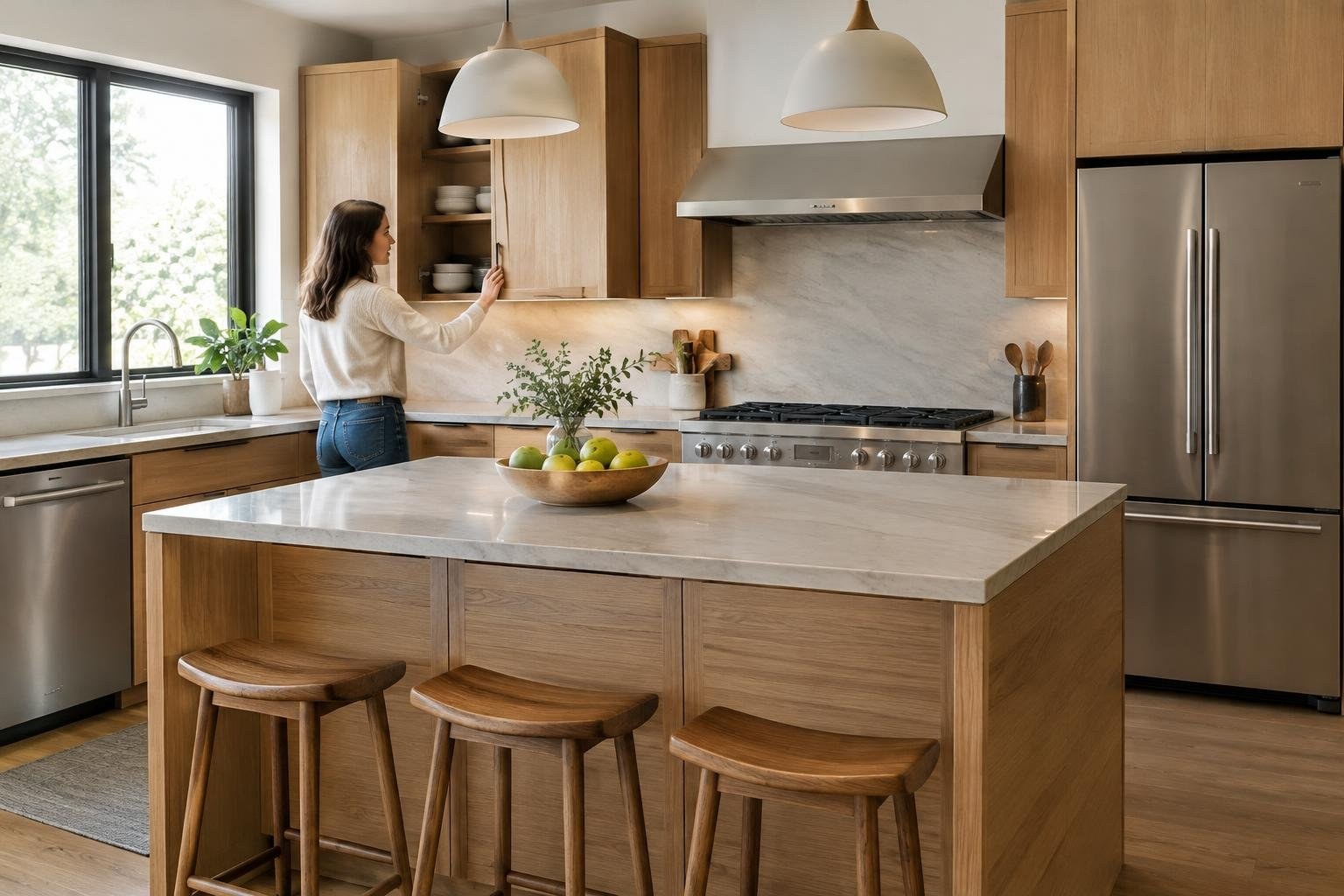
Modern kitchen cabinets are a style direction, not one fixed product. They are often described through clean lines, simple shapes, and smooth surfaces; flat-front doors are one recognizable expression of that approach. Color and material choices can shift the result from crisp and high-contrast to warm and natural.
Examples include flat-front walnut with light stone surfaces, rift-cut white oak with dark accents, and cabinets in white, black, gray, or other wood tones. These are inspiration points, not rules. Decide what you want the room to feel like, then evaluate the cabinets as part of the full kitchen rather than as an isolated door sample.
A practical definition of a successful modern kitchen is a space where the visual simplicity does not come at the expense of useful storage and a workable layout. Plan both at once: identify what needs to be stored, how you use the kitchen, and which cabinet details support the look you want.
What a modern cabinet project includes
Cabinet work can mean more than selecting door fronts. A complete project may involve planning the cabinet arrangement, choosing a product and finish, confirming storage features, ordering, delivery, assembly where needed, installation, and coordination with other kitchen work. Ask the provider to state exactly which of these tasks are included.
Use the first design conversation to explain how you cook, what you store, which appliances you plan to use, and what is not working in the current kitchen. Bring existing appliance information, any available room plans, and photographs of the space. Ask the designer or provider to show how the proposal handles corners, drawers, pantry storage, and the transition between cabinets and appliances.
Before approving a plan, review elevations or other drawings that show cabinet positions and openings. Confirm that the cabinet list, finish selection, hardware, panels, fillers, and trim align with what you believe you are buying. A visually persuasive rendering is not a substitute for a written product and work specification.
Signs your kitchen may need a cabinet update
Consider new cabinets or a larger kitchen update when the current arrangement no longer supports your needs, storage is difficult to use, or the existing cabinet appearance conflicts with the design you want. These are decision prompts, not proof that every cabinet must be replaced. First identify whether the problem is the layout, storage organization, worn appearance, or a specific damaged component.
Walk through the kitchen and make a short list. Which items are hard to reach? Do drawers and doors work for the way you use the room? Are the appliances, sink, and work areas positioned in a way that makes daily tasks awkward? Is the desired change mainly visual, or do you need different storage and cabinet sizes?
If the existing layout works and the cabinets are in acceptable condition, ask whether a limited design change or a different finish approach could meet your goals. If the layout itself is the problem, compare a broader cabinet plan before spending money on appearance alone. A clear diagnosis helps keep the proposed scope aligned with the problem you want to solve.
Modern kitchen cabinet cost and estimate considerations
A useful estimate must be tied to the actual cabinet list, selected product, project location, and work included. Treat a cabinet-only price and a complete installed-project price as different scopes until the provider confirms otherwise.
Ask for the estimate to separate cabinet products from delivery, assembly, installation, demolition and disposal, countertops, and any related finishing or utility work. Request quantities and descriptions for the cabinet components, not only a single total. If two bids use different products or leave different tasks out, they are not direct comparisons.
Review payment terms and ask how revisions are priced before approving changes. Record any excluded work and decide who will arrange it. For a meaningful comparison, send each provider the same plan, product expectations, and scope questions. This helps expose differences in what the bids cover without relying on an unexplained low headline price.
Factors that affect the project and final price
The final project total depends on the cabinet choices and work included. As you compare proposals, look for the number and sizes of cabinets, the selected door and finish, interior storage features, hardware, any special sizing, and the work needed to prepare and complete the room. Delivery, assembly, installation, removal of existing cabinets, and related countertop or utility work may be separate line items.
Ask providers to explain which decisions can change the estimate. Request a clear description of the product collection and finish rather than relying on a general label such as “modern.” Confirm whether accessories, panels, fillers, trim, and adjustments are included. Verify whether the quote assumes the existing walls, floor, appliances, and utility locations remain unchanged.
Use current, itemized estimates for your location and project scope rather than relying on a generic online figure. Ask each provider to state what the estimate includes and excludes before setting a final budget.
Cabinet options and tradeoffs: RTA, stock, semi-custom, and custom
Compare cabinet options by how they are supplied and what the specific product includes. Ready-to-assemble, or RTA, cabinets require assembly as part of the purchasing or installation plan. Ask who assembles them, what instructions and components are supplied, and whether assembly is included in the quote. Flat-front and RTA cabinets are among the options associated with modern-style kitchens.
Also compare stock, semi-custom, and custom offerings by the actual dimensions, available configurations, finish choices, order details, and written terms. Labels alone do not tell you whether a cabinet fits your room or what level of modification is available. Request a cabinet schedule or equivalent product list for each option.
Ask to inspect the exact construction and hardware being quoted. Compare details you can verify, such as the interior, drawer action, door alignment, finish consistency, and the provider's written product information.
For any option, weigh the full package: fit, appearance, storage, assembly requirements, installation responsibility, and support if a component arrives damaged or does not match the order.
Choosing modern cabinet colors, doors, finishes, and hardware
Modern cabinet finishes can be matte or high-gloss, and the design examples span light and dark neutrals as well as wood tones. Use these possibilities to create a coordinated palette, not a checklist of trends you must follow. A restrained door profile can be paired with warmer wood, a dark accent, or a light countertop depending on the effect you want.
Collect samples of the proposed cabinet finish, countertop, backsplash, and flooring. View them together in the kitchen and under the lighting you expect to use. Ask the seller how the specific finish should be cleaned and what care instructions apply. Do not assume that two products with similar color names will look identical beside one another.
Think carefully about contrast. A dark cabinet can provide a strong visual anchor, while a lighter surface can make the combination feel more open; a wood tone can add visual warmth to a simple composition. Treat these as design options to evaluate in your own room. The room's actual light, colors, and materials determine how the selections read together.
Before finalizing, check the chosen hardware against door and drawer details. If the goal is an uncluttered face, ask how pulls, knobs, or integrated-looking details affect both appearance and everyday use.
Measurements, layout, storage, and appliance planning
Plan cabinets around the kitchen's real dimensions and the items that must fit. Record wall lengths, ceiling height, doors, windows, and the locations of appliances and visible utilities. Collect appliance model or opening information where available. Treat these notes as planning inputs, not a substitute for a final field check by the people responsible for design and installation.
Map the intended cabinet runs and list what each area must hold. Include everyday dishes, cookware, food, small appliances, and less frequently used items. Consider whether drawers, adjustable shelves, or dedicated storage would better serve each category. Some cabinet products feature adjustable shelves and drawer storage, but confirm the details for the exact model rather than assuming they come with every cabinet.
Review the drawings for doors and drawers that may meet an appliance, wall, or another cabinet. Ask the provider to verify opening and clearance conditions, including any space needed for appliance access. If the design changes plumbing, electrical, ventilation, or other regulated work, consult qualified professionals and check local requirements before proceeding.
Accurate measurements and a checked plan reduce the risk of ordering cabinets that conflict with the actual room. Do not place an order based only on a rough sketch or an assumed standard dimension.
What to expect: ordering, installation, and timing
Timing depends on the product selected, ordering and delivery arrangements, whether assembly is required, site preparation, and the wider renovation scope. Ask each provider for a project schedule tied to your specific order rather than relying on a general promise.
Request the expected sequence: final measurement and design approval, order placement, delivery, site preparation, cabinet work, countertop coordination, and completion checks. Confirm what must be finished before delivery and who is responsible for keeping the product protected and accessible. Ask how the schedule changes if a selection is revised or a delivery is delayed.
Clarify whether the kitchen will be usable during each stage and what areas will be unavailable. If other contractors are involved, ask who coordinates the handoffs. Put dates or timing assumptions in the written agreement, along with the process for communicating changes.
Before signing, make sure the cabinet list and finish choices are final. Late revisions can require new coordination, so distinguish required corrections from optional upgrades and document any approved change to scope, cost, or timing.
How to compare cabinet providers
When comparing cabinet providers, focus on whether the proposed design and written scope match your project. Ask who will plan the cabinet arrangement, verify measurements, place the order, handle assembly, and install the cabinets. Request clear answers about how delivery, fit concerns, and changes will be handled.
Ask for a written estimate tied to the cabinet choices and work being proposed. Review the product details, quantities, finish, hardware, included services, exclusions, payment terms, timing assumptions, and process for approving changes. If you are considering a design estimate, clarify what the estimate covers and what decisions or costs remain separate.
Compare proposals using the same project information and scope questions. A lower total may reflect different products or excluded work, so check the details before deciding. Keep approved selections, drawings, estimates, and changes in writing.
Permits, credentials, warranties, and safety checks
Permits and trade requirements depend on the project and location. Do not assume that cabinet work automatically does or does not require a permit. Ask the provider what work is included, confirm applicable requirements with your local authority, and use qualified professionals for electrical, plumbing, structural, or other regulated tasks.
Review the written warranty before ordering. Identify who provides it, which products or work it covers, how long the stated coverage applies, what exclusions exist, and how to request help. Ask for care and maintenance information for the exact cabinet finish. Keep the final cabinet schedule, receipts, warranty documents, and approved changes together.
Safety and site protection should be discussed in advance. Confirm how the work area will be managed, who handles removal and disposal if included, and how delivery and installation will be coordinated around occupants and appliances. If the planned work affects utilities, ask the responsible qualified trade to explain the necessary preparation and safe sequence.
These checks are useful even for a design-focused project. A modern appearance does not replace the need for clear scope, appropriate credentials where required, documented product details, and a plan for resolving defects or installation concerns.
Ways to manage the budget without risky shortcuts
Reduce unnecessary cost by solving the design problem before ordering. Decide which storage changes matter most, which appearance choices are priorities, and what can remain in place. Ask the provider to show the cost effect of optional features or product alternatives so you can make an informed tradeoff instead of removing useful items without understanding the difference.
Keep the approved layout and product list consistent while you compare estimates. Give each provider the same project information, and request that each quote state inclusions and exclusions. Compare a complete scope, not just a starting price. If assembly or some preparation is proposed as owner-performed work, confirm exactly what is required, what tools or skills are needed, and how it affects delivery, installation, and warranty responsibilities.
Do not save money by guessing at measurements, omitting necessary site checks, changing specified products without approval, or asking an unqualified person to handle regulated work. Those shortcuts can create problems that are difficult to resolve once cabinets are ordered or installed.
Consider phasing only after discussing how separate stages affect the final design and work sequence. Have the provider explain which decisions need to be made now and which can safely wait.
Common mistakes, red flags, and a final checklist
Use this checklist before you approve a cabinet order:
- Confirm the layout against current measurements, openings, appliances, and utility locations.
- Review the cabinet list, sizes, finish, door style, hardware, accessories, panels, and trim.
- Check what is included for delivery, assembly, installation, removal, and related work.
- Ask who verifies site conditions and who is responsible for correcting a mismatch.
- Read the payment schedule, change-order rules, timing assumptions, and warranty.
- Confirm local requirements and qualified trade responsibilities for any regulated work.
- Keep approved drawings, estimates, selections, and changes in writing.
Common mistakes include choosing from a small image without reviewing a sample, focusing on the cabinet face while ignoring storage, assuming a product label explains construction, and comparing totals with different exclusions. Another avoidable problem is treating a preliminary measurement as final when the site or appliances may change.
Red flags include reluctance to put product details in writing, unclear responsibility for installation, unexplained substitutions, pressure to approve before you understand the scope, and vague answers about warranty or changes. Pause and ask for clarification. If the provider cannot explain the proposal in a way you can verify, compare another written option before committing.
Frequently asked questions
What makes kitchen cabinets look modern?
Modern kitchen cabinets usually emphasize simple shapes, clean lines, and smooth or flat-front surfaces. The overall look can also include wood tones, painted colors, or contrasting accents.
Are flat-panel cabinets always the best choice for a modern kitchen?
Flat-panel doors are a common choice for a modern look, but they are not the only option. Compare door proportions, finish, color, and nearby materials to select a style that works as a complete kitchen.
What is the best material for modern kitchen cabinets?
There is no single material that is best for every kitchen. Compare the full cabinet specification, including box and drawer construction, finish, hardware, care guidance, and warranty, before choosing.
Are ready-to-assemble cabinets a good choice for a modern kitchen?
RTA means ready-to-assemble. Compare the product's assembly instructions, included components, delivery terms, and who will assemble and install the cabinets before deciding whether this option suits your project.
How much do modern kitchen cabinets cost?
A reliable total depends on the selected cabinets and the work included in the project. Ask for an itemized estimate that separates cabinet costs from delivery, assembly, installation, demolition, countertops, and any utility or finish work.
How long does it take to install modern kitchen cabinets?
The schedule depends on the chosen cabinet line, order readiness, delivery, site preparation, and the full renovation scope. Ask the provider to identify milestones and explain which conditions could change the schedule.
Can I install modern kitchen cabinets myself?
Yes, but the kitchen must be planned around real measurements and appliance, plumbing, electrical, and ventilation constraints. Confirm the design and installation approach with qualified professionals where the work involves regulated trades or safety concerns.
What should a cabinet estimate include?
Compare the written scope, product specifications, installation responsibility, schedule, payment terms, change-order process, and warranty. A lower total is not directly comparable if it excludes work included in another estimate.
People Also Ask
What cabinet door style is most modern?
Flat-front or slab-style doors are a frequent choice because their smooth faces and simple lines suit a minimalist look. Compare samples in your kitchen lighting before choosing a finish.
Are modern kitchen cabinets better in wood or paint?
Modern kitchens can use painted finishes, wood tones, or combinations. Choose based on the look you want and ask the seller for written care instructions for the specific finish.
What does RTA mean for kitchen cabinets?
RTA describes cabinets sold for assembly by the buyer or installer. Check what is included, who handles assembly, and how delivery and installation are managed before comparing it with assembled cabinets.
What should I measure before ordering kitchen cabinets?
Start by recording wall dimensions, ceiling height, openings, appliance sizes, and visible utility locations. Have the final plan checked against the actual site before ordering.
How do I compare kitchen cabinet quotes?
Request a line-by-line quote covering the cabinet order and every related service. Confirm whether assembly, delivery, demolition, installation, countertops, and finish details are included or excluded.
Can modern kitchen cabinets be warm rather than all white?
Modern styling can be created with different colors and materials. Look at door samples beside the planned countertop, floor, backsplash, and appliance finishes to judge the full combination.
Modern kitchen cabinets are most successful when clean, simple styling is matched with a layout and storage plan that suit daily use. Compare cabinet options by the complete specification, not appearance alone: review the interior, construction details, finish, hardware, included services, and written warranty. Before ordering, confirm measurements, appliance information, installation responsibility, and the full project scope. Then use an itemized estimate to compare comparable choices and decide what fits your priorities and budget. Explore cabinet options at CabinetSupply.com for your next project.
Your next step
Explore cabinet options at CabinetSupply.com for your next project.
Last reviewed and updated November 1, 2026 by the CabinetSupply Editorial Team.
Sources
- Mod Cabinetry – Modern Kitchens for Intentional Living
- Modern Kitchen Cabinets
- Modern & Contemporary Kitchen Cabinet | AllModern
- 64+ Modern Kitchen Cabinets – ( MODERN TREND ) Metal, Glass more!
- 75 Modern Kitchen Ideas You'll Love – October, 2026 | Houzz
- Shop Modern Kitchen Cabinets Online – Assembled & RTA
- Modern Kitchen Cabinets: Pictures, Ideas & Tips From HGTV | HGTV
- Modern Kitchen Cabinets – Contemporary Kitchen Style – IKEA
- Contemporary Kitchen Cabinets: Styles, Costs, and Planning