
Light wood kitchen cabinets can make a room feel warm without relying on a dark stain or a painted finish. Oak, maple, and birch are among the woods associated with this look, but species is only one part of the decision. Grain, finish, cabinet style, lighting, counters, and backsplash all influence the final result. Use this guide to compare looks, plan the project, and ask better questions before you choose cabinets or request an estimate.
What light wood kitchen cabinets are and why the choice matters
Light wood kitchen cabinets are cabinetry finished or made to show a pale, natural-looking wood appearance. Oak, maple, and birch are common choices associated with this look. The visual result varies with the species, the grain, the finish, and the door design, so the phrase “light wood” does not identify one standard color or product.
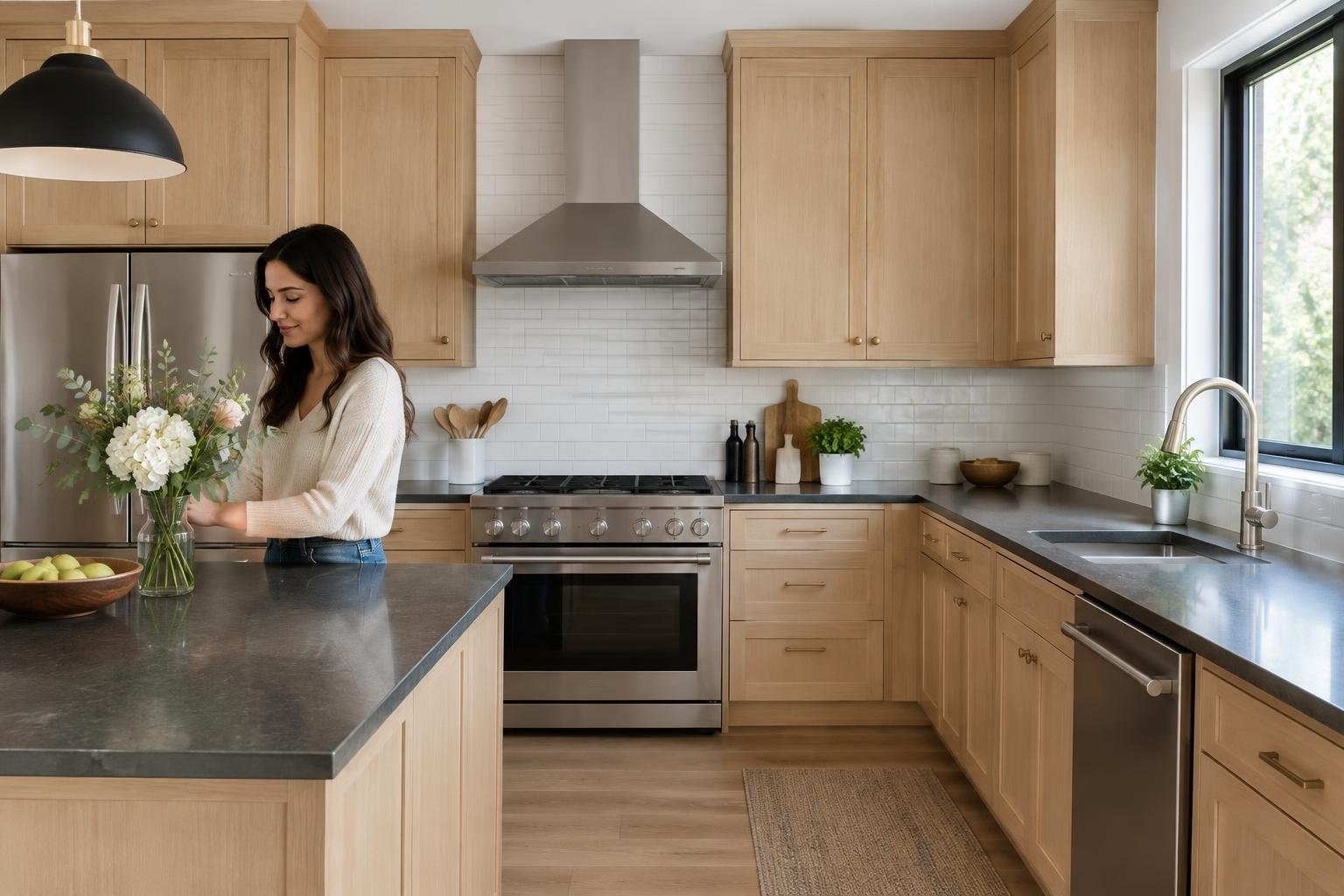
Examples of light wood kitchens range from flat-slab doors with visible horizontal grain to Shaker and recessed-panel fronts. Other design examples pair light wood with white backsplash materials, marble counters, stainless steel appliances, islands, peninsulas, and open wood shelving. These are useful starting points, not requirements for every kitchen.
The practical decision is whether a specific cabinet sample works with your room and project. Select the cabinet appearance alongside major surfaces and the storage layout, rather than choosing a color in isolation.
Signs a cabinet update or kitchen remodel may be needed
Consider changing or updating cabinets when their condition, storage arrangement, or appearance no longer suits the kitchen. A remodel may also be prompted by a planned change to the layout, such as replacing a wall with a peninsula, or by a desire to coordinate cabinets with new counters, appliances, or backsplash. Those changes can affect more than cabinet color, so consider them together.
- Storage does not suit your routine: Identify the items that lack a practical home and where you use them.
- The existing look feels disconnected: Decide whether cabinets, counters, backsplash, or lighting are the main source of the mismatch.
- You are changing the room plan: Map out appliance locations, seating, and cabinet runs before selecting products.
- You are considering a surface-only refresh: Find out whether the cabinet boxes and layout can remain part of the plan before assuming replacement is necessary.
These are project-planning prompts, not a diagnosis of cabinet damage. If you see leaks, soft or deteriorated material, or unstable cabinets, have the condition assessed before choosing a finish or ordering new fronts.
Options and tradeoffs: wood, door style, and mixed finishes
Light wood can be used with several door appearances. Compare examples and samples rather than assuming the wood tone determines the style.
| Look | What to consider | Useful when |
|---|---|---|
| Shaker or recessed panel | Look at the frame and panel proportions as well as the wood tone. | You want a defined door profile; light wood Shaker cabinetry is one available style. |
| Flat slab | Grain direction and consistency may be especially noticeable across broad fronts. | You prefer a simple, uninterrupted door face. A documented kitchen example uses flat-slab fronts with horizontal grain. |
| Mixed materials or colors | Decide which finish should be the focal point and which should support it. | You want contrast, such as light wood cabinetry alongside a different color on an island. |
In kitchen inspiration, light wood has been paired with a green island, organic materials, a dark statement light, white backsplash materials, and marble counters. Treat these combinations as ideas to test. Select the actual materials and finishes together because individual samples and lighting can change how the palette reads.
Open shelving can add a visible wood element, but it should be planned for the items you intend to store and display. If you prefer closed storage, do not add shelves simply because they appear in an inspiration photo.
How to plan the look and cabinet layout
Before requesting a quote, set priorities in three groups: appearance, function, and project boundaries. This makes it easier to compare proposals and helps prevent a sample or photo from driving decisions that do not fit your kitchen.
- Collect finish references. Save examples of wood tones, grain, door profiles, and combinations you like. Note what you would change in each one.
- List storage needs. Write down what needs to fit in drawers, cupboards, and pantry storage, and where it is used.
- Record the fixed elements. Note appliances, sinks, plumbing, windows, doors, and any features that may limit cabinet placement.
- Choose a direction for the palette. Decide whether cabinets should blend with light surfaces, contrast with them, or sit between a painted color and another wood tone.
- Request a complete scope. Ask what is included in cabinet supply, removal, installation, finishing details, and coordination with other trades.
For design inspiration, light oak cabinetry has been shown with a green island and a natural clear coat, while other examples use pale wood with white backsplash materials and stainless steel appliances. Review these as possible directions, not templates to copy without checking your space.
Cost and estimate considerations for light wood cabinets
Request a project-specific, written estimate instead of relying on a generic per-cabinet or whole-kitchen figure.
To make bids comparable, ask each provider to identify the cabinet line or specification, wood or finish description, door style, included storage features, quantity, delivery, installation, removal, and any finishing pieces. Ask whether countertop, backsplash, plumbing, electrical, flooring, and appliance work are included or excluded. Do not assume the same scope is covered by every proposal.
Questions worth asking include:
- Does the estimate identify the cabinet materials and finish, or only describe them as “light wood”?
- Are fillers, panels, trim, hardware, and adjustments included?
- Who is responsible for protecting the work area, removing old cabinets, and disposing of debris?
- What conditions or selection changes could alter the price?
- Is there a written process for reviewing changes before work proceeds?
A lower total may reflect a different product, fewer included services, or a different project boundary. Compare line items and exclusions, not just the final number.
Factors that affect the project and its price
The total project depends on the choices and work included, not simply on whether the cabinets look light. The most useful way to identify cost drivers is to ask for the estimate to separate products from labor and related work.
- Cabinet quantity and configuration: Ask the provider to show the planned cabinet count, sizes, and any special pieces.
- Wood appearance and finish: Confirm the stated species or surface description, finish, and how grain or color variation will be handled.
- Door and storage selections: Record door profile, drawer and shelf configuration, hardware, and any added storage features.
- Layout changes: A change involving an island, peninsula, or different appliance position can affect the scope beyond the cabinet order. Ask which associated work is priced.
- Existing-room work: Clarify removal, wall or floor repair, delivery, and installation responsibilities.
- Material coordination: Identify whether counters, sink, faucet, backsplash, and appliances are included or separately supplied.
Examples of light wood kitchens combine cabinetry with counters, sinks, faucets, backsplash, appliances, islands, and shelving. That range of possible components is one reason to spell out what each estimate does and does not cover.
What to expect, including timing and results
A dependable installation schedule must be based on the actual product, design approvals, delivery, site preparation, and work included. Ask for a schedule specific to your order and kitchen.
Before approving the plan, confirm when measurements will be checked, when finish and hardware selections become final, what must be ready before cabinets arrive, and who will coordinate installation with countertop or other work. Ask how the provider will communicate schedule changes and what decisions you must make by each milestone.
As a homeowner, expect to review drawings, cabinet specifications, samples, and the final scope before ordering. During installation, keep a written list of questions or items that need attention. At completion, check that the delivered selections match the approved documents and that agreed adjustments and cleanup are addressed.
How to choose a qualified cabinet provider
Choose a provider who can explain the specific cabinets, finish, layout, and installation scope in terms you can compare. A design image alone does not tell you what product will be supplied or what work is included.
Ask each prospective provider for:
- A written cabinet specification, including door style, finish description, storage components, and any available product documentation.
- A drawing or plan showing the intended cabinet locations and dimensions.
- An itemized estimate with inclusions, exclusions, and a process for approving changes.
- A schedule covering selections, ordering, delivery, installation, and related work.
- References or examples relevant to the kind of project you are planning.
- Written warranty information and a clear point of contact for questions or problems.
Compare how clearly providers answer questions and how they handle project responsibilities. Do not select a proposal solely because its total is lowest. A useful proposal should let you understand the product, work, and assumptions behind the price.
Ready to explore options and compare what may suit your kitchen?
Permits, credentials, warranties, and safety
Before signing, ask for written details about the product warranty, the installation responsibility, and how concerns will be handled. Do not infer coverage from a showroom display or a verbal statement. Confirm who provides each warranty, what documents apply, and whom to contact if a problem appears.
Permits, licensing, and other local requirements depend on the work and location. Confirm applicable requirements with the local building department and ask the provider which parts of the project they are responsible for. If the plan affects plumbing, electrical, structural elements, or other regulated work, use appropriately qualified professionals and do not treat cabinet installation as permission to perform that work yourself.
Ask how the work area will be protected and how cabinets will be secured and adjusted for the room. For any work involving utilities or structural changes, agree on the qualified party responsible before the project starts.
Ways to save without creating avoidable problems
You can control spending without choosing a cabinet solely by its advertised appearance. First establish what needs to change and what can remain. If the layout and existing cabinet components meet your needs, ask whether a smaller-scope option is appropriate before committing to a full replacement. Have the condition assessed rather than assuming reuse is possible.
- Keep the layout if changing it does not solve a specific problem.
- Prioritize storage features you will use and remove extras that do not support your routine.
- Choose the cabinet finish, counters, backsplash, and hardware as a coordinated set before ordering to reduce late changes.
- Compare the same scope from more than one provider, including exclusions and installation responsibilities.
- Ask whether alternative door profiles or product specifications can meet your appearance and function priorities.
- Do not cut costs by skipping measurements, written specifications, or qualified work for utilities and structural elements.
Saving safely means simplifying choices or scope, not leaving essential work undefined. Put any agreed substitutions or changes in writing.
Mistakes, red flags, and a practical checklist
Use this checklist before placing an order or approving installation:
- Compare the actual cabinet sample with the floor, counter, backsplash, and wall colors in the kitchen.
- Confirm whether the desired look is oak, maple, birch, veneer, or another specified surface, rather than relying on a generic “light wood” label.
- Review the grain direction and door profile on samples or product documentation.
- Check that the plan accounts for appliances, sink, faucet, storage needs, and any island or peninsula.
- Confirm dimensions and the responsible party for verifying them before ordering.
- Ask for a written schedule, estimate, exclusions, warranty, and change process.
- Confirm who handles removal, delivery, installation, cleanup, and coordination with other work.
Common avoidable problems include choosing from a screen image alone, treating all light wood finishes as the same, overlooking how the countertop and backsplash interact with the grain, and approving a bid without confirming what is excluded. Kitchen examples show that light wood can be paired with very different materials and layouts, so use inspiration to guide testing rather than to replace project-specific decisions.
Care, maintenance, and finish questions
Ask for care instructions specific to the cabinet finish you select. Keep the product documentation and warranty information with your project records, and follow the supplier’s guidance for cleaning and maintenance. Avoid assuming that advice for one finish applies to another.
For a natural-looking wood appearance, inspect the sample and written finish description before approving the order. If future touch-up or repair matters to you, ask the provider how the finish is maintained and what options exist if a cabinet front is damaged. Request a clear answer in writing rather than relying on a general promise that the surface is easy to repair.
Frequently asked questions
What types of wood are used for light wood kitchen cabinets?
Common light wood choices include oak, maple, and birch. The right choice depends on the grain, tone, finish, and overall look you want. Review actual samples alongside your counters, floor, and backsplash before deciding.
Can I mix light wood cabinets with painted cabinets?
Yes. Light wood can be paired with white, green, or other contrasting cabinetry. Decide whether you want a subtle difference or a noticeable focal point, and compare the colors together before selecting finishes.
What countertops and backsplashes go with light wood cabinets?
Start with the undertone and grain of the cabinet sample, then compare it with the countertop and backsplash samples in the kitchen. A white backsplash, marble countertop, or glass tile can create different effects, so choose combinations you have seen together rather than relying only on small online images.
Should light wood cabinets have a natural or stained finish?
There is no single best finish for every kitchen. A clear or natural-looking finish can emphasize the wood’s appearance, while a different finish may shift its color. Ask to see a sample of the actual cabinet finish and check it in your kitchen’s lighting.
How can I compare the construction quality of light wood cabinets?
The appearance alone does not establish a cabinet’s construction quality. Ask for the written specifications for cabinet boxes, doors, shelves, drawers, hardware, finish, and warranty, and compare those details across proposals.
How long does it take to install light wood kitchen cabinets?
Timing depends on the specific cabinets, design decisions, ordering, site preparation, and installation plan. Ask the provider for a written schedule that identifies selections and approvals, delivery, installation, and any work that must happen first.
People Also Ask
What style of kitchen goes with light wood cabinets?
Light wood cabinets can suit a range of looks, from simple flat-slab doors to Shaker and recessed-panel styles. Choose the door profile and surrounding finishes to match the feel you want, rather than treating light wood as one fixed style.
Should countertops be lighter or darker than light wood cabinets?
Think about the effect you want. A light countertop and backsplash can create a quiet, coordinated palette; a darker or more visually distinct surface can make the cabinets stand out. Compare material samples together before making a final selection.
Do stainless steel appliances work with light wood cabinets?
Light wood cabinets are shown with stainless steel appliances in kitchen examples, and they can also be paired with contrasting finishes elsewhere in the room. Consider appliance appearance alongside cabinet hardware, faucet, sink, lighting, and countertop choices.
Can light wood cabinets work with an island or peninsula?
A peninsula, island, or floating shelves can be part of a light wood kitchen, but their usefulness depends on the room layout and how you use the space. Plan seating, storage, and appliance locations together before committing to a change.
How do I keep light wood cabinets from looking too yellow?
Use samples of the cabinet finish and the main neighboring surfaces. Check them together in the kitchen at different times of day and with the lighting you plan to use. A showroom or screen image may not show how the combination reads in your own space.
Light wood kitchen cabinets can work in a range of kitchen styles, but the best result depends on more than choosing a pale wood tone. Compare samples in your own lighting, decide how much visible grain and contrast you want, coordinate the cabinets with counters and backsplash, and plan storage and appliance locations before ordering. When you compare proposals, make sure they describe the same scope, materials, finish, installation, and exclusions.
Your next step
Explore cabinet options at CabinetSupply.com for your next project.
Last reviewed and updated November 2, 2026 by the CabinetSupply Editorial Team.
Sources
- 75 Kitchen with Light Wood Cabinets Ideas You'll Love – October, 2026 | Houzz
- Light Wood Cabinets: The Latest Trend in Kitchen Design (And How Kitchen Tune-Up Can Help You Achieve It) | Kitchen Tune-Up
- Light Wood Finish Shaker Kitchen Cabinets | Diamond Cabinets
- Light Wood Kitchen Cabinets: The Best Ideas for Your Home
- 26+ Light Wood Kitchen Cabinets – Natural & Modern Ideas
- r/kitchenremodel on Reddit: Light Wood Cabinets?
- CliqStudios | Shop Light-Colored Kitchen Cabinets
- 25 Kitchens With Light Wood Cabinets You’ll Want to Copy in Your Home
- Wood Kitchen Cabinets: How to Choose the Right Style, Materials, and Project Plan