
Wood kitchen cabinets can make a kitchen feel warm and natural, but “wood cabinets” does not describe one uniform product. Species, visible grain, stain or paint, door style, cabinet construction, and order format all affect the look and the project plan. Before choosing a sample, decide what matters most: a particular grain, a specific color, flexibility in sizing, or a simpler ordering process. Then compare written specifications and complete project estimates rather than relying on a label or a showroom image.
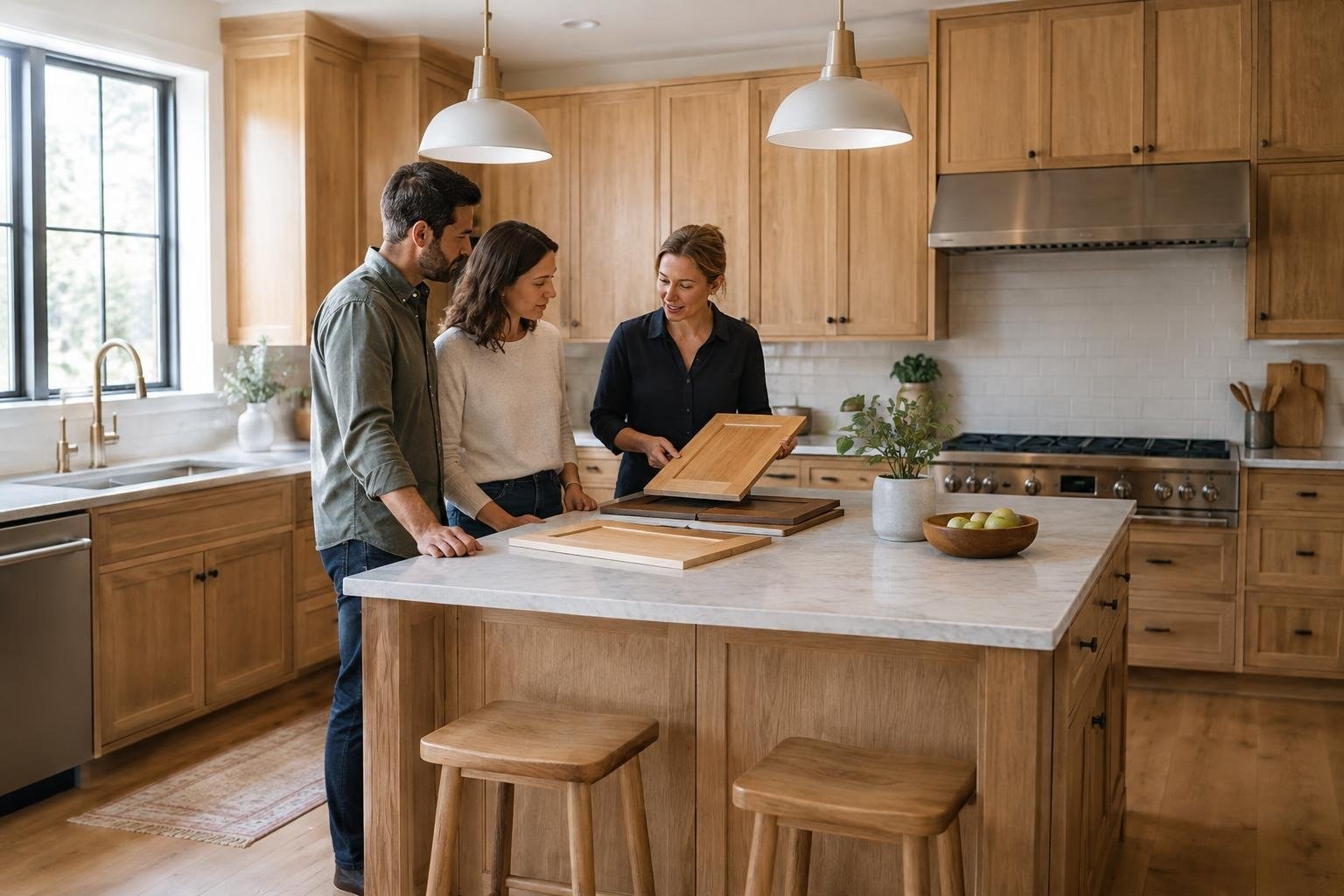
What to know about wood kitchen cabinets
Wood kitchen cabinets are cabinets selected for the look of wood, which may come from a natural wood surface, a stained finish, or a wood-grain appearance. The phrase alone does not tell you what the cabinet box, shelves, doors, and drawer fronts are made from. Ask the seller or cabinet professional for a component-by-component specification.
Wood can work in more than one design direction. A collection described in the research includes classic Shaker doors as well as contemporary slab designs, and styles in light, medium, and dark tones. That range makes it useful to start with the overall mood and function you want rather than assuming wood means a traditional kitchen.
Cabinets are a major visual and practical decision in a kitchen plan. Their finish and door style sit alongside the counters, backsplash, flooring, hardware, and appliances. A sample viewed in the room can help you assess whether the cabinet choice works with those other selections.
Signs it may be time to reconsider your cabinets
Consider replacing or updating cabinets when their condition, storage, or appearance no longer fits the way you use the kitchen. A decision to replace is not automatic: first identify whether the concern is limited to a finish or door appearance, or whether you also need a different cabinet layout, size, or storage arrangement.
- Appearance: You want a different wood tone, grain, or door style.
- Function: The current arrangement does not provide the storage or access you want.
- Project scope: You are already planning a broader kitchen update and need cabinets coordinated with other selections.
These are decision prompts, not a diagnosis of cabinet condition. If you are unsure whether an existing cabinet can be repaired or refinished, ask a qualified cabinet professional to inspect it and explain the alternatives before assuming replacement is necessary.
Wood kitchen cabinet cost: what to ask an estimate to include
There is no reliable single price for wood kitchen cabinets without knowing the product, quantity, sizes, finish, and work included.
Ask each provider to show what the quoted amount covers. A useful comparison identifies cabinet types and sizes, the materials in doors and boxes, finish, interior fittings, delivery, assembly if applicable, installation, removal of existing cabinets, and any related work included or excluded. Do not assume two totals cover the same scope.
Common estimate questions to resolve before comparing totals include:
- Are fillers, finished ends, panels, trim, and hardware included?
- Does the quote include measuring, delivery, assembly, and installation, or are any of these separate?
- Are countertop, plumbing, electrical, wall, or flooring changes part of the proposal, if needed?
- How will added work, changes, or damaged items be documented and priced?
Request a revised written estimate if an answer changes the project scope. A lower total may reflect fewer included items, not better value.
Factors that shape the project and the estimate
Cabinet cost and suitability depend on the exact specification, not just the wood name. Before comparing products, make a short list of priorities: door appearance, finish, cabinet sizes, order format, storage features, and how much of the work you want a provider to handle.
- Species and appearance: White oak and walnut are noted in design coverage; other collections advertise options such as oak and hickory. Ask which species or wood appearance is actually offered for the specific door and finish you selected.
- Door design: Shaker and slab fronts create different visual effects. Review a physical sample where possible.
- Finish: Compare natural-looking, stained, and painted options using samples. A source notes that white oak’s grain can be stained in a range of colors, but confirm the available finish with the seller.
- Order and service scope: A ready-to-assemble product may require assembly and installation planning. Confirm who handles each task.
- Quantity and sizing: The cabinet count, dimensions, and any nonstandard requirements affect what you need to order. Verify the plan before purchase.
Options and tradeoffs: stock, ready-to-assemble, and tailored cabinets
Compare product categories and specifications rather than treating “wood” as a quality grade. A stock or ready-to-assemble option can offer defined selections; a more tailored order may be worth considering if the available sizes or design choices do not fit the plan. The supplied product examples establish that stock and ready-to-assemble wood cabinet lines exist, but do not establish a universal quality ranking among them.
| Option | Potential advantage | What to verify |
|---|---|---|
| Stock or ready-to-assemble | May suit a plan that works with the offered sizes and selections. | Component materials, available sizes, assembly needs, delivery terms, and installation responsibility. |
| More tailored selection | May better suit a design that needs specific choices or dimensions. | What is actually customized, what it costs, and how the schedule is confirmed. |
| Wood-look or wood-grain finish | Can provide a wood appearance in a product offered in selected styles and tones. | Whether the surface is natural wood or another specified material; do not infer construction from appearance. |
Ask for the written materials list, not just a product name. One retailer listing describes solid-wood options, while other listings use broad wood-cabinet or wood-grain language. Those labels are not interchangeable proof that every component is solid wood.
Choosing wood species, color, and door style
Choose a wood tone and door style together. White oak is described in design coverage as having a clean grain that can be stained in a range of colors, and white oak and walnut are identified there as popular choices. These are design observations, not a rule that either species is right for every room.
Review samples under the kitchen’s lighting and alongside key finishes. A small sample can help you compare grain and color, but ask whether the sample matches the exact wood, finish, and door design being quoted. If you are deciding between a natural look, a stain, and paint, ask what choices are available for that specific product.
Wood cabinets also appear in varied settings. A design example from a Colorado home uses bespoke all-wood cabinetry to complement a wood-clad room and mountain surroundings. Treat such images as inspiration, not as a specification: a successful result depends on the particular room and the selections made for it.
Planning measurements, layout, and kitchen coordination
Cabinet planning starts with a verified room plan and a clear list of what the order must accomplish. Before requesting a final quote, document wall dimensions, ceiling height, openings, and the locations of appliances and existing services. Confirm who is responsible for measuring and who checks the plan against the site.
Review how doors and drawers will work in the intended layout, where storage is needed, and how cabinet selections relate to counters and appliances. If plumbing, electrical, structural, or other regulated work is involved, consult appropriately qualified local professionals rather than treating it as a cabinet task.
Before purchase, ask the provider to confirm the cabinet schedule, sizes, finish, and any panels or fillers shown in the plan. Resolve differences between the drawing and the written order before production or shipment. Keeping one approved version helps reduce confusion if selections change.
What to expect from ordering through installation, including timing
Expect the process to involve selection, measurement, specification, ordering, delivery, and installation or assembly, depending on the product. The sequence and duration vary by seller and project; do not schedule demolition based only on a general lead-time claim.
- Define the scope. Decide whether the project is a cabinet-only update or part of a wider kitchen remodel.
- Compare samples and specifications. Confirm species or appearance, door style, finish, cabinet components, sizes, and accessories.
- Verify the plan. Have the responsible person check measurements and the cabinet schedule before ordering.
- Confirm logistics. Get written delivery, assembly, installation, and problem-resolution details.
- Coordinate work. Agree on the order of cabinet work and any other trades before setting start dates.
A supplier in the research advertises a two-week shipment for its own ready-to-assemble products and separately mentions a longer industry lead-time figure. These are seller statements, not a dependable schedule for another order. Ask for the current expected ship and arrival dates for the exact cabinets you are buying.
How to choose a qualified cabinet provider
Choose a cabinet provider by comparing the written scope, product information, and responsibility for each stage. Ask who measures, checks the final order, handles delivery, assembles cabinets if needed, installs them, and resolves issues. If the project includes work outside cabinetry, clarify which qualified professional is responsible for that work.
Before signing, request answers in writing to these questions:
- What are the doors, drawer fronts, boxes, and shelves made from?
- Which finish and door style are included, and is the sample representative?
- What sizes and accessories appear in the order?
- What delivery, assembly, removal, and installation tasks are included?
- What is excluded, and how are changes approved?
- What schedule is currently expected, and how will delays or problems be communicated?
- What warranty applies to each part of the product and the installation, and where are its terms?
Review references, relevant project examples, insurance, and licensing where applicable to the work and location. Compare the details, not only the price. The lowest bid is not necessarily the best fit if it leaves important responsibilities unclear.
Permits, credentials, warranties, and safety checks
Confirm local requirements for permits and regulated work before construction begins. Ask the local building department or a qualified professional whether proposed changes require permits.
Cabinet product statements and installation promises are not substitutes for written warranty terms. Request the actual warranty documents and check what products, finishes, hardware, and labor are covered, for how long, and what conditions or exclusions apply. Do not assume that a feature described in a product listing guarantees a particular lifespan.
For work involving electrical, plumbing, structural changes, or other safety-sensitive tasks, use appropriately qualified professionals and confirm local requirements. Keep cabinet installation responsibilities distinct from work that needs separate expertise.
Ways to save carefully without increasing project risk
To control spending without compromising the plan, make selections early, compare equivalent quotes, and avoid paying for features you do not need. Savings should come from a clear scope and careful ordering, not from skipping measurement checks or assigning safety-sensitive work to someone without the right qualifications.
- Ask whether an offered stock size can meet the design before requesting special sizing.
- Compare a ready-to-assemble option with a more complete service option, including your own assembly and installation responsibilities.
- Prioritize useful storage and essential accessories before adding decorative extras.
- Use samples to settle the finish and door choice before placing an order.
- Ask for a complete itemized estimate and check delivery or installation charges.
- Confirm the measurements and final order in writing to reduce the risk of avoidable corrections.
Do not cut costs by leaving delivery, assembly, or installation responsibility vague. A lower purchase price may not represent a lower total project cost if important work is not included.
Mistakes to avoid and a final pre-order checklist
Use this short checklist before approving an order:
- Verify that the written specification identifies the materials for each cabinet component.
- Confirm the exact wood or wood appearance, door style, finish, sizes, and accessories.
- Review physical samples in the kitchen and compare them with other planned finishes.
- Check the measurement plan and cabinet schedule against the room.
- Get delivery, assembly, installation, removal, and warranty responsibilities in writing.
- Ask how changes, delays, damaged products, and unresolved issues will be handled.
- Confirm local permit and professional requirements for any work beyond the cabinets.
Common avoidable problems include treating “wood” as proof that every component is solid wood, selecting a finish from a small online image alone, comparing estimates with different inclusions, and relying on a generic shipping estimate to set the project date. Resolve uncertainties before ordering, when the written plan can still be reviewed.
Explore cabinet options for your project
Explore cabinet options at CabinetSupply.com for your next project. Compare possibilities as you refine your preferred wood look, door style, finish, and kitchen plan.
Frequently asked questions
Are wood kitchen cabinets always made entirely of solid wood?
Not necessarily. “Wood cabinet” can describe a door or visible finish rather than every cabinet component. Ask for a written materials breakdown covering the doors, drawer fronts, cabinet box, shelves, and finish.
Which wood is popular for kitchen cabinets?
White oak and walnut are among the species highlighted in recent design coverage. The best choice for your kitchen depends on the look you want, the sample in your lighting, and the cabinet maker’s available finishes.
Can wood cabinets look modern?
Yes. Wood cabinets are offered in both traditional and contemporary looks, including Shaker and slab-door styles. Compare actual door samples and the full cabinet specification rather than choosing from a style name alone.
How much do wood kitchen cabinets cost?
There is no single price that applies to every wood-cabinet project. Ask for an itemized estimate that identifies the cabinet materials, sizes, finish, accessories, delivery, installation, and any work excluded from the quote.
How long does it take to get wood kitchen cabinets?
Timing depends on the specific product, order, shipping, and project coordination. Ask the supplier for a current written schedule and confirm when the cabinets will be available before setting demolition or installation dates.
Are ready-to-assemble wood cabinets a good option?
It can be, if the cabinet system is a good fit for your measurements and you are comfortable assembling and installing it. Confirm what assembly, delivery, fitting, and installation work is included or left to you.
What should I compare in cabinet estimates?
Compare the exact materials and scope, not just the total. Check cabinet components, finish, included accessories, delivery, installation responsibility, exclusions, schedule, and how changes or problems will be handled.
How can I avoid mistakes when ordering wood kitchen cabinets?
Use samples, ask what each cabinet component is made from, review the written specifications, and confirm finish and delivery details. Verify dimensions and project responsibilities before placing an order.
People Also Ask
Do wood kitchen cabinets work in a modern kitchen?
Wood cabinets can suit either a traditional or contemporary kitchen. The door design, color, hardware, counters, and surrounding finishes help determine the overall look.
What wood is trending for kitchen cabinets?
White oak and walnut are identified as popular choices in recent kitchen-design coverage. Look at samples in your own space before deciding, since the appearance depends on the specific grain and finish.
What is the difference between wood grain and solid wood cabinets?
A wood-grain cabinet describes an appearance, not necessarily a solid-wood cabinet. Check the material specification for each component, including doors, drawer fronts, boxes, and shelves.
Can I buy ready-to-assemble wood kitchen cabinets?
Some retailers offer ready-to-assemble wood cabinet lines, while other collections include multiple styles and finishes. Compare product specifications, sizing, assembly, delivery, and installation responsibilities.
What should a wood cabinet estimate include?
Ask for an itemized quote and compare the same cabinet quantities, sizes, materials, finish, accessories, shipping, and installation work. Review exclusions and the written schedule as well as the total.
What should I check before ordering kitchen cabinets?
Use samples and confirm the specific finish, door style, and materials in writing. Check the kitchen measurements and the plan for delivery and installation before placing an order.
Wood kitchen cabinets can bring visible grain, warmth, and a wide range of design possibilities to a kitchen, but the right choice depends on more than wood species. Compare the cabinet construction, finish, sizing, storage, delivery plan, and full project scope before committing. Use samples and written estimates to judge what you are buying, then coordinate cabinet decisions with the rest of the kitchen plan.
Your next step
Explore cabinet options at CabinetSupply.com for your next project.
Last reviewed and updated October 25, 2026 by the CabinetSupple Editorial Team.
Sources
- 26 Wooden Kitchen Cabinet Ideas That’ll Add Natural Warmth To Any Home
- Wood Kitchen Cabinets Are Back — And More Charming Than Ever | HGTV
- Wood Grain Stock Cabinets
- Wood Kitchen Cabinets | Natural & Stained Wood Styles
- Wood Cabinets – RTA Wood Kitchen Cabinets by Lily Ann
- Wood Kitchen Cabinets – Wooden Kitchen Cabinets – IKEA
- Wood Kitchen Cabinets | Ready-to-Assemble Wood Cabinets for Your Kitchen – RTA Wood Cabinets
- Wood Kitchen Cabinets | RTA Cabinet Store