
Plywood kitchen cabinets are often considered by shoppers looking for a cabinet box made from layered wood panels. But the word plywood on a listing does not explain which parts use it, how the cabinets are assembled, what the doors are made from, or what the total project includes. Before buying, check the written specifications, compare the cabinet and installation scope, and make sure the design fits your kitchen. This guide explains what to ask, how to compare options, what can affect the quote and schedule, and when to bring in a qualified professional.
What are plywood kitchen cabinets?
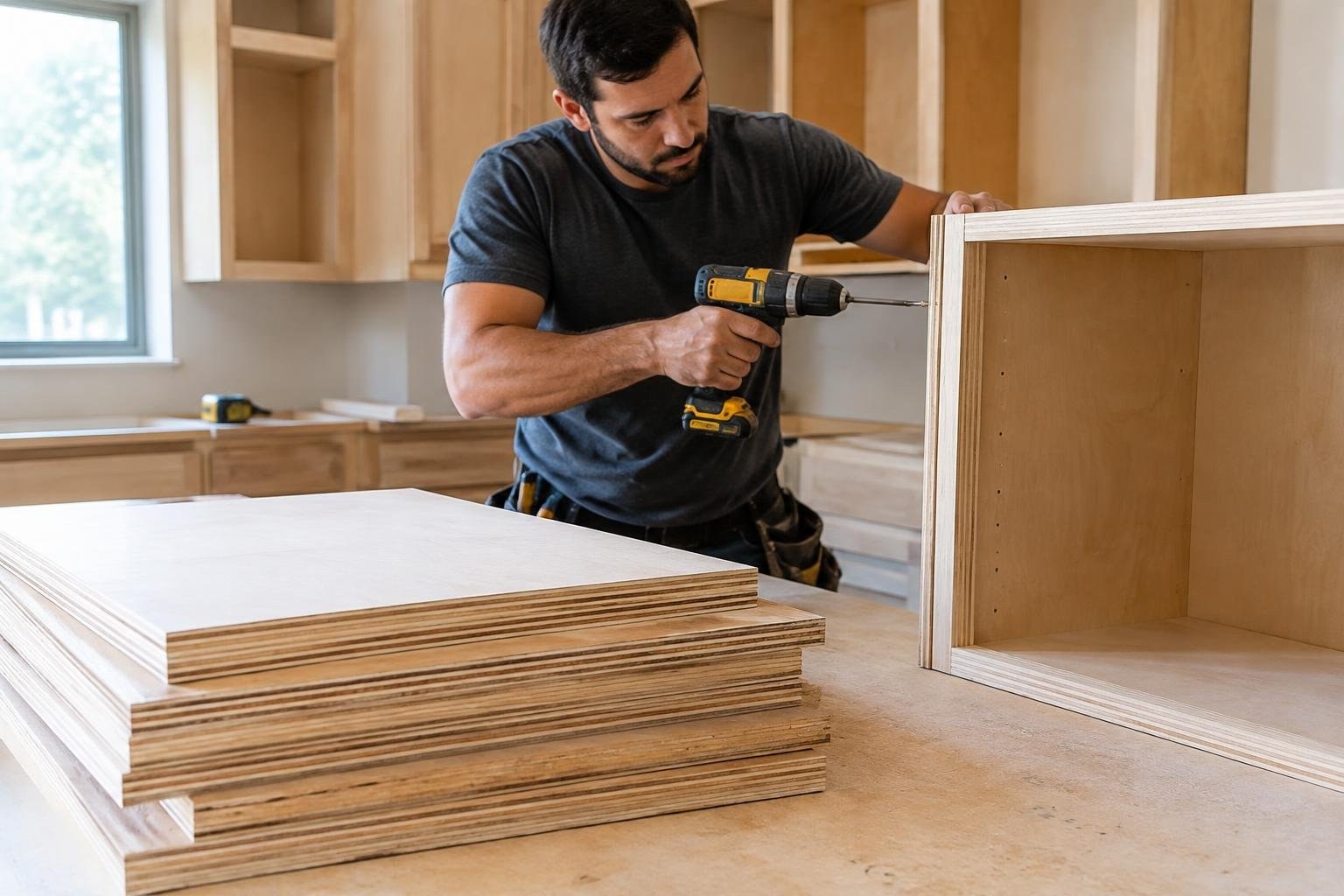
Plywood is a panel made from layers of wood arranged with their grain directions crossing. Cabinet suppliers describe this cross-grain construction as supporting stability and cabinet loads, but the material label is only one detail in a complete specification.
Ask whether plywood is used for the sides, bottom, back, fixed or adjustable shelves, and drawer components. Find out separately what the doors, drawer fronts, face frame, and finished panels are made from. A product can include plywood in one part without using it throughout.
Cabinet boxes hold shelves and drawers and attach to neighboring cabinets or walls. Their construction, joinery, hardware, and installation all contribute to the finished result. Do not assume that solid wood throughout is necessary, or that any one panel material proves the whole cabinet is well made.
When shopping online, save the specification page or request a written document from the seller. Confirm dimensions, included components, finish, and whether the product is assembled or requires assembly. That record helps you compare options and gives you a reference if the delivered product differs from what you ordered.
What does a plywood cabinet project include?
A plywood cabinet project may include selecting a cabinet line, planning a layout, ordering the units, preparing the room, installing and adjusting cabinets, and coordinating related work. The scope depends on whether you are replacing a few units, furnishing a new kitchen, or buying cabinets only.
- Define the scope. List the cabinets and panels needed, note what is staying, and decide whether demolition, disposal, installation, counters, or utility work is included.
- Measure and plan. Record wall lengths, ceiling height, openings, appliances, and existing utility locations. Have the installer or designer verify measurements before the order is finalized.
- Compare specifications. Confirm materials by component, dimensions, finish, hardware, included trim, and assembly status.
- Order and prepare. Review delivery arrangements and the planned work sequence. Avoid removing functioning cabinets until product and project timing are confirmed.
- Install and inspect. Check cabinet placement, doors, drawers, panels, and agreed finishing work before signing off.
Some sellers list in-stock or assembled plywood cabinets, while custom plywood cabinetry is also offered. These are different purchasing paths, not guarantees of a particular scope or schedule.
When should you consider changing your cabinets?
Consider a cabinet update when the existing layout or storage no longer meets your needs, when you are planning a broader kitchen renovation, or when you want to change the cabinet appearance. These are reasons to evaluate options, not proof that plywood is the only suitable answer.
Before choosing replacement cabinets, inspect the existing units and identify the actual problem. Is storage poorly organized, are doors or drawers not working as intended, is the finish no longer what you want, or are you changing the kitchen layout? Each concern can lead to a different project scope. A finish concern, for example, is not automatically a reason to replace every cabinet.
Make a short list of must-haves: the storage you lack, the appliances or fixtures that need to fit, the preferred look, and the amount of disruption you can accept. If only certain cabinets are being changed, check whether replacement dimensions, finish, and style can work with what remains.
Ask a cabinet professional to distinguish between a product limitation and a planning issue. If the cabinet boxes work for your needs, changing the layout or selecting inserts may be worth discussing before committing to a full replacement. Compare the proposed scope and outcome in writing.
Plywood cabinets versus other options: what should you compare?
Plywood’s layered construction is presented by cabinet suppliers as a source of stability and support for cabinet loads. It is one material worth comparing for cabinet boxes, but that alone does not establish that every plywood cabinet outperforms every alternative.
| Option | Potential advantages | Questions to resolve |
|---|---|---|
| Plywood cabinet components | Layered panel construction; available in stock, assembled, and custom offerings. | Which components are plywood? What are the finish, edge, assembly, and hardware specifications? |
| Other cabinet-box materials | Another potential price, finish, or product choice for a particular project. | What is the exact panel material and construction? How does it suit the intended use and seller’s care guidance? |
| Custom plywood cabinets | Can be specified for a particular style or built-in design. | What sizing, design, order, and installation details are included? |
| In-stock or assembled plywood cabinets | Ready-made product lines may be available, subject to current selection and terms. | Do sizes and components fit the plan? What are the delivery, assembly, and return terms? |
Custom plywood offerings can include white and colorful finishes and styles described as mid-century modern, Scandinavian, or European-inspired. Confirm the available choices for the exact cabinet line rather than assuming every look is offered in every size.
How do you assess plywood cabinet quality?
Judge a cabinet by its written specification and the parts you can inspect, not only by a material label or showroom appearance. Use this checklist to compare cabinet lines on the same basis.
- Box panels: Identify the material and thickness for sides, bottoms, backs, and shelves. Confirm whether plywood is used throughout the box or only in selected pieces.
- Edges and finish: Ask how exposed panel edges are finished and what care the surface requires. Look at samples in the room’s lighting if possible.
- Doors and fronts: Confirm their material, finish, style, and whether replacement parts are available through the seller.
- Drawers: Ask what the drawer box and bottom are made from, how they are joined, and which glides are included.
- Hardware: Identify hinges and glides by product specification. Verify whether soft-close features are included or are an upgrade.
- Assembly and backs: Ask how the cabinet is assembled and how its back is configured for the planned installation.
- Warranty and care: Request the written terms, exclusions, and maintenance instructions before ordering.
Ask how the specific product you are buying is made and inspected.
How should you plan the layout, storage, and style?
Choose a cabinet appearance and configuration that supports the way you use the kitchen. Plywood is a box-material choice, not a complete design decision. The cabinet line, door style, finish, storage arrangement, and dimensions still need to work together.
Map where you want everyday dishes, cookware, food, cleaning items, and small appliances to go. Match the storage plan to the items rather than adding features just because they are displayed in a showroom. For a corner, compare the available cabinet dimensions and access before selecting a unit; some in-stock product lines include corner cabinets, but fit depends on the plan and product sizes.
Record appliance widths and locations, windows, doors, and the routes you need to keep clear. Check that proposed drawers and doors can open without colliding with nearby cabinets, appliances, or walls. If a layout change affects plumbing, electrical, ventilation, or other building systems, have the relevant qualified professional review the work.
For finishes and colors, request samples or view examples of the exact product. Custom plywood cabinet collections may offer different colors and style directions, but availability should be confirmed with the provider. Decide whether you want cabinets to blend with existing floors and counters or create contrast, then coordinate selections before ordering.
How much do plywood kitchen cabinets cost?
There is no reliable single price for plywood kitchen cabinets without knowing the product, quantity, location, and project scope. Request current, itemized estimates for the specific products and installation scope rather than relying on a broad per-kitchen number.
Ask each provider to separate, where applicable:
- Cabinet units, panels, trim, hardware, and accessories.
- Delivery, pickup, assembly, and installation.
- Removal and disposal of existing cabinets.
- Countertops, backsplash, plumbing, electrical, and other work outside the cabinet order.
- Measurement, design, finishing, and custom sizing.
- Taxes, fees, and the process for approving changes.
Compare quotes for the same layout and component specification. One estimate may include assembled cabinets while another covers cabinet boxes only. A lower total may exclude installation or site work. Ask providers to label exclusions and list the quantities and dimensions used for the quote.
Request a current quote for the specific products and services you are considering.
What factors affect the project and estimate?
Project price and complexity depend on more than the cabinet material. The number and dimensions of units, the layout, product availability, finish choices, accessories, delivery arrangements, and installation scope can all change what a provider needs to include in an estimate.
Bring providers the same project information so their bids can be compared: a cabinet list or plan, appliance locations, preferred product line, finish, hardware choices, and a description of work to be removed or retained. If you do not yet have a finished plan, ask each provider to state what assumptions the estimate uses.
Clarify whether the quote covers fillers, finished end panels, toe kicks, trim, and adjustments needed for the chosen layout. Ask how changes are priced after approval. For custom cabinetry, confirm how dimensions and design selections are documented before production. For in-stock products, verify the actual sizes and quantities available for the plan rather than assuming a listing covers every required piece.
Do not compare only the grand totals. Write down the cabinet construction, included services, exclusions, schedule assumptions, and payment terms for each proposal. The more closely the scopes match, the more useful the comparison will be.
What should you expect for timing and installation?
Expect the schedule to depend on the cabinet product, the provider’s current availability, the amount of design or custom work, delivery, and the work required at the site.
Request a written sequence that identifies when measurements are final, when the order is expected, who confirms delivery, how the room will be prepared, and when installation and adjustments are planned. Ask whether countertop or other trade work follows cabinet installation and who coordinates those steps.
In-stock products may be listed for pickup or shipping, and some assembled plywood cabinet products are offered. That does not guarantee that every item, quantity, or delivery date is available in your area. Check current stock, fulfillment terms, and the status of every required cabinet before scheduling related work.
Do not make irreversible demolition or utility arrangements based only on an estimated delivery date. Confirm the order and project sequence with the seller and installer, and ask how delays or missing parts will be communicated and handled.
How do you choose a qualified cabinet provider?
Choose a provider who can explain the product and document the project scope clearly. Ask for prior examples that resemble your project, references where available, and proof of licensing or insurance when these apply to the work and your location.
Use these questions in a consultation:
- Which cabinet components are plywood, and what are the other parts made from?
- Who measures, orders, delivers, assembles, and installs the cabinets?
- What is included in the estimate, and what is excluded?
- How are product substitutions and changes approved?
- What is the expected schedule, and who updates me if it changes?
- What written warranty and care information apply?
- Who handles missing, damaged, or incorrectly sized parts?
Compare communication and problem-resolution processes as well as price. A provider should be able to explain how the proposed cabinets meet your needs without treating a plywood label as the only evidence of quality. Review the estimate and product documents before paying a deposit, and keep the approved selections and changes together.
Permits, qualifications, warranties, and safety
Before hiring an installer, ask for current qualification and insurance information. Check applicable licensing requirements with the local building department or consumer protection agency, and verify the credentials relevant to the work proposed.
Confirm whether the project needs permits and record who will obtain them and arrange any required inspections. A cabinet material description alone does not establish what requirements apply to the wider kitchen project. Resolve these responsibilities before work begins.
Get product and installation warranty terms in writing. Identify who handles a claim, the coverage period, exclusions, and any care or reporting conditions. Keep the cabinet specifications, signed scope, change orders, receipts, and warranty documents together.
Follow the manufacturer's installation instructions. Assign unfamiliar fastening, utility changes, or structural work to appropriately qualified professionals, as discussed in the installation guidance, rather than treating it as part of routine cabinet assembly.
How can you save without creating problems?
Look for ways to control the scope before choosing a lower-priced cabinet. Compare in-stock or assembled plywood cabinets with custom options, but treat them as different purchasing paths: the listed sizes and components may not match your plan, while custom offerings may provide different style and finish choices.
- Start with the cabinet list. Confirm the dimensions and components you need before comparing products, so you can identify any gaps between a listing and the planned layout.
- Compare the full order. Check whether each option is assembled, what parts are included, and what delivery or pickup terms apply.
- Decide whether customization matters. Custom plywood collections may offer varied colors and styles; verify which choices are available for the specific product.
Use these checks to find an option that fits the project scope rather than assuming a lower product price means a lower overall project cost.
Common mistakes, red flags, and a buyer checklist
Use this checklist before placing an order or approving installation:
- Confirm each cabinet’s dimensions and the total layout against the room and appliance plan.
- Get a component-by-component material specification rather than relying on the word plywood.
- Verify finish, door style, drawer details, hardware, panels, trim, and accessories.
- Check that openings, appliances, and nearby doors do not conflict with planned cabinet doors or drawers.
- Ask whether the order is assembled, requires assembly, or includes installation.
- Compare itemized estimates and mark exclusions, delivery terms, and change-order procedures.
- Confirm current availability and the written project schedule before arranging demolition or related work.
- Review warranty, care, and problem-reporting instructions.
- Confirm local requirements and which qualified providers will handle regulated work.
- Inspect delivered items and completed work against the approved order and scope.
Warning signs include vague material descriptions, unclear dimensions, a quote with no stated exclusions, pressure to approve without written details, or an installer who cannot explain responsibility for delivery and defects. Pause and request clarification before committing.
Explore cabinet options at CabinetSupply.com as you compare choices for your kitchen.
Frequently asked questions
What does plywood mean in kitchen cabinets?
Plywood kitchen cabinets use plywood for some or all of the cabinet box components. Ask the seller to specify whether the sides, bottom, back, shelves, and drawer parts are plywood, and what the doors and fronts are made from.
Are plywood kitchen cabinets strong?
Plywood is made from layers arranged with their grain directions crossing. A cabinet seller describes this construction as providing stability and support for loads, but the full cabinet design and installation still matter. Compare specifications rather than relying on the material label alone.
How much do plywood kitchen cabinets cost?
There is no single price for plywood kitchen cabinets. Compare itemized estimates that identify cabinet style, dimensions, construction, finish, accessories, delivery, installation, and any work outside the cabinet order. Ask providers to clarify what is excluded.
Are plywood cabinets better than particleboard cabinets?
Not necessarily. Compare the actual box materials, backs, shelves, drawer construction, hardware, finish, sizing, and included services. A plywood label by itself does not establish that every component or feature is higher quality.
What specifications and care information should I request for plywood cabinets?
Ask the provider for written product specifications and care instructions. Confirm the materials used for the cabinet box, back, shelves, doors, and drawer parts, and request the warranty terms. Compare the complete cabinet specification rather than relying on the plywood label alone.
Can I buy assembled plywood kitchen cabinets?
Some plywood cabinets are sold as in-stock or assembled products, while custom options are also available. Check the exact product dimensions, included components, delivery or pickup terms, and the provider’s current schedule before committing.
Can plywood kitchen cabinets be painted or customized?
Plywood construction does not determine the cabinet style by itself. Custom plywood cabinet offerings include varied looks such as white, colorful, mid-century modern, Scandinavian, and European-inspired designs. Confirm which finishes and door choices are available for the specific product.
Can I install plywood kitchen cabinets myself?
Yes, experienced DIYers may be able to install cabinets if they can accurately lay out, level, secure, and adjust them. Get professional help if the work involves unfamiliar fastening, utilities, structural changes, or local requirements, and follow the cabinet maker’s installation instructions.
People Also Ask
What does an assembled plywood cabinet quote need to clarify?
Confirm whether the price covers cabinet units, delivery, assembly, installation, and any site work. Ask the provider to list exclusions and identify the quantities and dimensions used in the quote before comparing it with another proposal.
Who coordinates countertops and utility work with cabinet installation?
Ask the seller and installer to identify which work follows cabinet installation and who coordinates each step. Record the sequence and responsibility for countertops, plumbing, electrical work, and other services outside the cabinet order.
What should I confirm before scheduling cabinet removal?
Confirm the order, delivery arrangements, site preparation, and project sequence with the seller and installer. Ask how missing parts or delays will be handled before making irreversible demolition or utility arrangements.
How should changes to a plywood cabinet order be documented?
Request a written change order that identifies the revised products, quantities, dimensions, finish, or services. Confirm the price and schedule effects and keep the approved change with the original scope, specifications, and receipts.
How long does it take to install plywood kitchen cabinets?
The material does not set the installation schedule. Ask for a written timeline covering measurement, product availability, delivery, installation, adjustments, and any countertop or utility coordination.
Plywood kitchen cabinets are worth considering when you want cabinet boxes made from a layered wood panel, but the material name alone cannot tell you how well a kitchen will perform. Verify which parts use plywood, inspect construction and finish details, compare a complete scope and quote, and choose cabinets that fit your layout and budget.
Your next step
Explore cabinet options at CabinetSupply.com for your next project.
Last reviewed and updated November 1, 2026 by the CabinetSupply Editorial Team.
Sources
- Cabinet Grade Plywood | Unfinished Kitchen Cabinets
- Custom Plywood Kitchen Cabinets | Boxco Studio
- Plywood – Assembled Kitchen Cabinets – The Home Depot
- r/kitchenremodel on Reddit: Thoughts on Plywood Cabinets?
- Express Ship Plywood Cabinets | Floor & Decor
- Plywood Kitchen & Bathroom Cabinets – House Of Cabinet
- Plywood – In Stock Kitchen Cabinets – The Home Depot
- Plywood Kitchen Cabinet Construction
- Wood Kitchen Cabinets: How to Choose the Right Style, Materials, and Project Plan
- Hiring a Contractor