
A cabinet color can shape the whole kitchen, so it is worth looking beyond whatever is currently popular. White remains a familiar classic, while slate blue, sage, dark finishes, and earthy colors offer alternatives for people who want more character. The most reliable choice is one that works with your fixed finishes and feels right to you, not simply one labeled timeless. This guide explains how to compare color families, assess samples, discuss finish choices with a provider, and make a decision without treating color as a substitute for cabinet quality or project planning.
What makes a kitchen cabinet color feel timeless?
“Timeless” describes a design choice that can remain appealing beyond a short-lived trend, not a promise that every homeowner will always like a specific color. White is frequently described as a classic cabinet color, and neutral choices such as bright white and cool off-white are often recommended for a restrained palette. But a durable design decision is personal: the color should make sense beside your counters, flooring, backsplash, and the style of the room.
Color coverage in design sources also includes blues, sage, black, and earthy shades. Those choices move beyond a plain neutral without requiring a highly saturated color. Think of the color as one part of a coordinated room, not a standalone product or a guaranteed way to improve resale.
White and off-white: the classic neutral
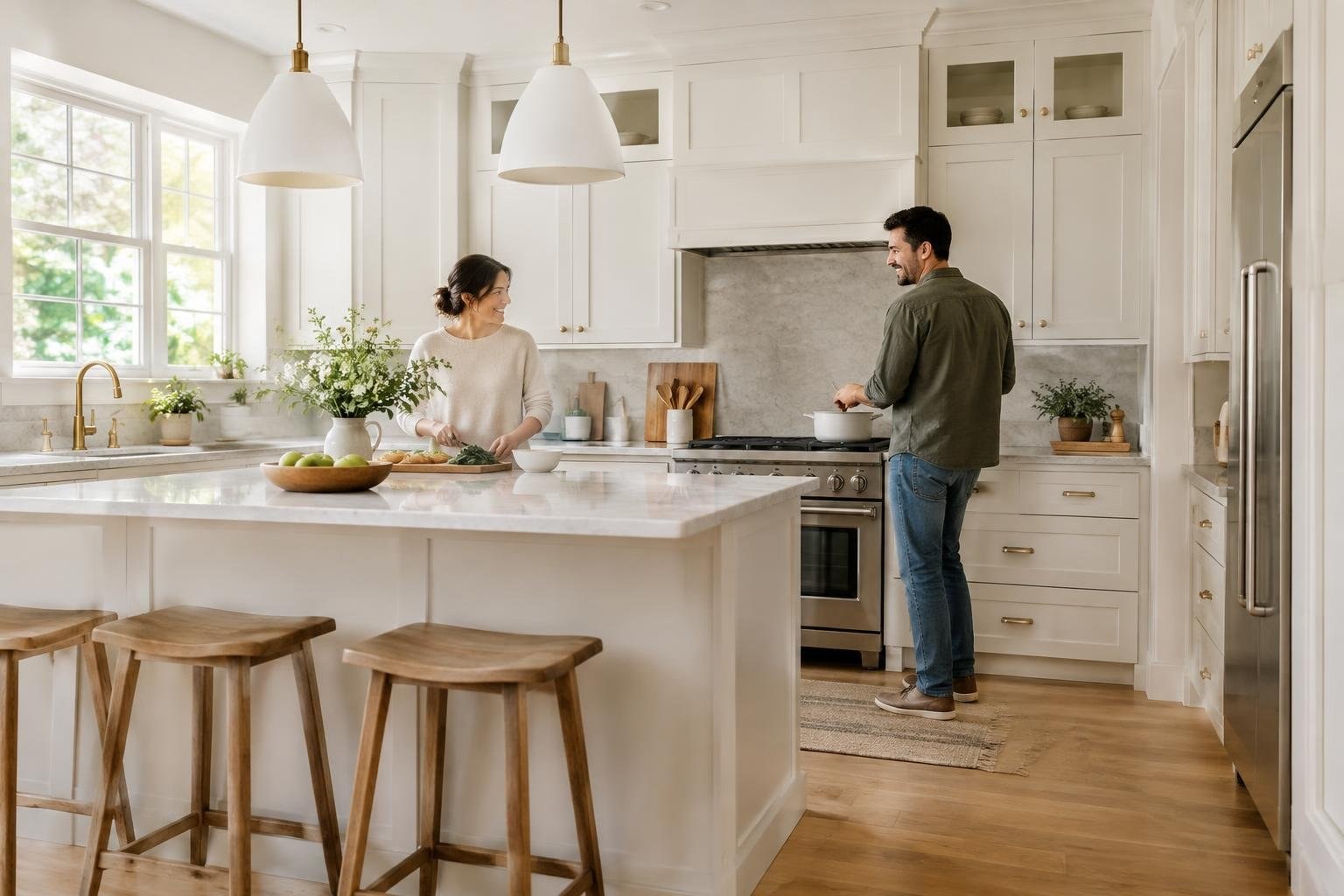
White is a versatile starting point if you want cabinets that do not compete with the rest of the kitchen. It can work as an opaque paint or as a color wash, depending on the finish approach. White also gives you room to introduce personality through other choices, such as wall color and decor.
There is no single white that looks right in every palette. When comparing options, place samples beside the actual countertop, backsplash, and flooring selections. Decide whether you prefer a bright white or a softer off-white, and look at the combined result rather than selecting from a small screen image. If you are keeping existing finishes, use those as the reference point. Ask the cabinet provider how the displayed sample relates to the finish being quoted.
Best for: readers who want a neutral foundation and flexibility in the rest of the room. Consider another direction if: white does not suit your taste or the overall effect feels too plain to you.
Blue cabinets: slate tones and deeper shades
Blue offers a middle ground between a neutral cabinet and a more assertive color. Slate blue is a lighter, restrained choice; darker blues can create a moodier impression. Either can bring character to a kitchen while keeping the overall palette controlled.
To decide between them, consider how much contrast you want and whether the cabinets should be the room’s main color statement. Compare a blue sample to the largest surfaces you are keeping, especially counters and flooring. You can also think about whether you want the same color on every cabinet or prefer a more limited application, such as using color on one set of cabinets. Treat that as a design option to discuss with your provider, not an assumption that a particular layout is automatically suitable.
Best for: a homeowner who wants color with a measured, classic feel. Potential drawback: a blue that looks appealing on a sample may not work with the fixed finishes in the kitchen, so check the complete palette before ordering.
Sage and earthy colors: a warmer alternative
Sage green and earthy colors can bring warmth or softness to a kitchen without relying on bright, high-saturation shades. Guidance on sage varies: some discussions present it as a lasting option, while others favor neutrals and caution against sage. For a warmer direction, terracotta and ochre may suit kitchens with Southwestern or Mediterranean influences.
Use the rest of the room to decide whether these colors belong. A sample should be judged next to the counter, flooring, backsplash, and any wood tones you plan to keep. Ask yourself whether you like the color itself or only like it in a particular styled photograph. If the room already has strong colors or patterns, a neutral cabinet may provide a calmer counterpoint. If the kitchen is simple, a more distinctive cabinet color could become the focal point.
These are options, not universal rules. A color being recommended as timeless does not mean it will suit every architectural style or personal preference.
Dark cabinets: a confident choice that needs a plan
Black or another dark cabinet finish can create a dramatic, high-contrast look. It may be a good fit if you want the cabinets to feel bold and intentional, but it is not automatically the safest choice simply because some design guidance includes black among classic neutrals.
Plan the whole palette before committing. Light-colored counters can offset dark cabinets and help create contrast, but the right pairing depends on the materials and appearance you prefer. Compare the cabinet sample with your actual countertop and backsplash choices. Ask whether the effect feels balanced in the full room, not just attractive in a close-up photo.
Choose dark finishes when: you want a strong visual feature and are comfortable coordinating the rest of the kitchen around it. Pause when: you are choosing dark cabinetry only because it is fashionable or you have not considered how it relates to the other large surfaces. A carefully selected neutral is a reasonable alternative.
Cost and pricing: what to ask before choosing a color
Cabinet color decisions can involve more than selecting a shade. Ask what finish is included in the proposal, how the sample relates to the quoted product, and whether the price changes with a different color or finish.
Compare bids with the same scope and selections. Ask the provider to identify the cabinet product and finish, what is included in installation, and whether related work is included or separately priced. If you are also changing counters, backsplash, or other kitchen elements, ask for those items to be clearly separated. That makes it easier to see whether two estimates are genuinely comparable.
A color name alone is not enough to judge value. Review the proposed finish, cabinet specifications, installation responsibilities, and any applicable warranty terms before comparing totals.
How to compare colors and plan the selection
Start with what will stay. List the kitchen finishes you are keeping, then compare cabinet samples against those materials. If the room is being remodeled, choose the major components in a coordinated sequence so that the cabinet color is not selected without reference to the counter, backsplash, and flooring.
- Set a direction: decide whether you want a neutral foundation, a soft color, or a darker focal point.
- Compare a small shortlist: include a neutral and at least one alternative you genuinely like.
- Review full-size context where available: place the sample beside the materials it needs to work with.
- Ask for the exact finish information: confirm what is being quoted, not just the general color family.
- Make the final decision before the order is confirmed: keep the selected color and finish in the written project documents.
As a next step, explore cabinet options at CabinetSupply.com and use the selections you like to frame a discussion with a cabinet professional.
Signs it may be time to reconsider your cabinet color
Consider a color change when your current cabinets are usable but the existing finish no longer fits the room you want. Color selection may also be part of a larger cabinet replacement or kitchen update. First decide whether your goal is to change the look alone or to address cabinet condition, storage, or layout. A new color does not by itself resolve a functional problem or establish that the cabinets are otherwise suitable.
Before seeking quotes, write down what is not working. Is the issue that the color feels dated to you, that it clashes with finishes you are keeping, or that the cabinets themselves need broader attention? Take photos and make a list of the surfaces that will remain. This gives providers a clearer basis for discussing whether your project is limited to a finish choice or involves more extensive work.
There is no requirement to replace a color simply because it appears in a list of less favored shades. If you like your kitchen, personal satisfaction is a valid reason to keep it.
What to expect from the selection and project process
The project process should make the proposed color, finish, and scope clear before work begins. A useful sequence is to define what is changing, identify the cabinets and finish involved, review samples with the other selections, receive a written estimate, and confirm the final decisions in writing. If the project is part of a larger remodel, clarify how the cabinet decision relates to counters, backsplash, and other finish selections.
Ask the provider to explain what happens between approval and completion, including who handles the cabinet work and which other trades or tasks are included. Get the planned schedule in writing and ask what could affect it.
Do not assume that approval of a color sample also confirms the cabinet specifications, installation plan, or related work. Review each separately before authorizing the project.
How to choose a qualified cabinet provider
Choose a provider who can explain the cabinet and finish being proposed, show how the selection will be documented, and answer questions about the work included. Ask for a written estimate and a clear description of who is responsible for each part of the job. If you are comparing providers, give each the same scope and color selections so the bids can be compared fairly.
- Ask for relevant project examples and references you can contact.
- Confirm who will perform the work and who will be your point of contact.
- Request an itemized scope, schedule, payment terms, and process for approving changes.
- Ask what warranty applies and who handles a concern after completion.
- Confirm licensing and insurance requirements that apply in your location and for the work proposed.
These are questions to verify, not assumptions about any provider. The lowest total may omit tasks or use different selections, so compare scope and responsibilities along with price.
Permits, credentials, warranties, and project safety
Cabinet color selection ordinarily does not answer whether a particular project needs a permit, what credentials a contractor must hold, or which safety rules apply. Those requirements depend on the work and location. If the project changes utilities, affects building components, or includes work beyond cabinet finishes, ask the provider which local requirements may apply and confirm them with the appropriate local authority.
For the cabinet work itself, request the written product and finish details, the applicable warranty information, and a clear statement of installation responsibility. Ask what is excluded, how changes are approved, and how problems are handled. Do not rely on an informal color description when the contract can identify the selection more precisely.
Keep the approved color and finish information with the estimate and project documents. This is a practical record for confirming that the order and completed work match what you selected.
Ways to save without making risky shortcuts
You can save time and reduce avoidable uncertainty by deciding what you want to keep before requesting estimates. Make a list of existing finishes, identify the cabinet color families you are considering, and share the same information with each provider. Avoid making repeated late changes without first asking whether they affect the proposal, order, schedule, or other selections.
Keep the scope focused. If your goal is a color refresh, ask whether the proposed work addresses that goal without adding unrelated changes. If the cabinets or layout need attention too, include that in the scope from the start rather than expecting a color choice to solve a different problem.
Do not save money by skipping the sample review or by assuming that two estimates include the same finish and work. A careful comparison of written selections is safer than choosing solely by the lowest total. Ask providers to explain any price difference you cannot reconcile.
Common mistakes and a final decision checklist
Use this checklist before you approve a cabinet color or project estimate:
- Have I compared the sample with the counters, backsplash, and flooring that will remain?
- Do I prefer the color in the room, not only in an online image?
- Is the exact cabinet finish identified in the written proposal?
- Do the estimates describe the same selections and the same scope?
- Have I confirmed what installation and related work are included?
- Do I understand the schedule, payment terms, warranty, and change process?
- Have I checked which local requirements apply to the work being proposed?
Common avoidable missteps include picking a color before considering the other large finishes, treating a trend list as a rule, and comparing totals that describe different work. Another is assuming that a color decision establishes cabinet quality. Keep the aesthetic choice and the construction, installation, and warranty review as separate parts of the decision.
Take the next step with a clearer cabinet plan
Once you have a shortlist, bring your color ideas, photos, and notes about the finishes you plan to keep to a cabinet discussion. Ask the professional to confirm the proposed finish, explain the project scope, and identify questions that still need answers before you approve an estimate. A useful conversation should leave you clearer about your options and what is included, not pressured to choose a color on the spot.
How room finishes shape cabinet color choices
Several choices shape how a cabinet color works in a kitchen. Start with the finishes and style already in the room: a color that looks appealing by itself may not coordinate with the counters, backsplash, or flooring. The visual effect also depends on the color family. Slate blue offers a lighter alternative to deeper, moodier blues, while white or light-colored counters can offset the depth of dark cabinets.
The finish matters too. White cabinets may use opaque paint or a color wash, so consider the specific finish rather than relying on a general color name. Finally, decide whether you want a neutral foundation, a restrained color, or a stronger focal point. Comparing those factors together can help you narrow your choices without assuming one shade works for every kitchen.
Frequently asked questions
What is the most timeless color for kitchen cabinets?
White is often treated as a classic choice, but no color is guaranteed to suit every kitchen or remain every homeowner’s favorite. Consider the room’s materials, lighting, and the look you want, then view samples in context before deciding.
Are blue kitchen cabinets timeless?
Yes. Slate blue is a lighter, more restrained blue option, while darker blues can create a moodier look. Compare samples with the room’s counters, flooring, and backsplash before choosing.
Are sage green cabinets a timeless choice?
Sage can work for some kitchens, but design guidance is mixed: some sources present it as lasting, while others favor neutrals and caution against sage. It is less neutral than white or off-white, so compare a sample with your fixed finishes and consider whether you expect to enjoy it over time.
Are black kitchen cabinets timeless?
Black can be a classic cabinet color, but its effect depends on the whole palette. Consider whether you want a high-contrast design and compare it with your counters, walls, and flooring in the actual room.
Can white cabinets look warm rather than stark?
White cabinets can be paired with opaque paint or a color-wash finish. The right selection depends on the look you want and how the finish works with the rest of the kitchen; ask to review a sample of the proposed finish.
How do I choose a cabinet color that matches my countertops?
Compare both samples next to your countertop, backsplash, and flooring, and view them in the kitchen at different times. Choose a sample that helps you judge the complete palette rather than selecting a cabinet color in isolation.
Do cabinet colors affect durability?
Color alone does not establish a cabinet’s construction quality or durability. Compare the cabinet specifications, finish details, hardware, warranty terms, and project scope separately from the color selection.
How much does it cost to choose a different cabinet color?
Ask providers to itemize the cabinet finish and scope separately from other work, such as cabinet installation or changes to counters and walls. Compare bids with matching specifications rather than relying on a single total.
People Also Ask
Should I choose a cabinet color from an online photo?
Use online photos to narrow your options, not to make the final choice. Compare a cabinet sample with the actual countertop, backsplash, and flooring in your kitchen, since the combined palette may look different from a screen image.
What cabinet color is best for resale?
No cabinet color guarantees a resale benefit. Choose a color that works with the kitchen’s fixed finishes and the look you want, rather than treating a trend or color label as a resale guarantee.
Are dark kitchen cabinets a good idea?
They can be a practical design choice for someone who likes a dark, high-contrast kitchen. Review dark cabinet samples alongside the counters, backsplash, and flooring so you can judge the overall effect.
What shade of blue is best for kitchen cabinets?
Blue can be used in lighter or darker versions. Slate blue offers a softer look, while darker blues create a moodier palette; choose based on the atmosphere you want and the materials already in the room.
What information should be written into a cabinet order?
Record the selected cabinet product, color, and exact finish in the written project documents before the order is confirmed. Review installation responsibilities and related work separately so the order and project scope are clear.
Are colorful kitchen cabinets a passing trend?
A color’s popularity does not determine whether it suits your kitchen. Compare the color with your home’s style and the other large surfaces, and choose a palette you expect to enjoy.
Timeless kitchen cabinet colors are less about following a fixed list and more about choosing a finish you will enjoy with your kitchen’s materials, light, and overall style. White and soft neutrals offer a classic foundation; blue, earthy tones, and carefully balanced dark colors can also make a lasting impression when they suit the room. Compare real samples with your counters, flooring, and backsplash before committing, and ask for a written estimate that separates cabinet work from related project costs.
Your next step
Explore cabinet options at CabinetSupply.com for your next project.
Last reviewed and updated November 2, 2026 by the CabinetSupply Editorial Team.
Sources
- Timeless kitchen cabinet colors – 7 endlessly classic shades | Homes and Gardens
- Timeless Kitchen Cabinet Colors for Everyone
- Timeless Kitchen Cabinet Colors That Never Go Out of Style
- 5 Timeless Kitchen Cabinet Paint Colors Designers Love
- Timeless Kitchen Cabinet Colors – This Old House
- r/kitchenremodel on Reddit: Timeless, not “boring” cabinet colors? Full wood tone not an option.
- 10 Timeless Kitchen Cabinet Colors That Never Go Out of Style – USA CABINETS
- The 6 Most Timeless Kitchen Cabinet Colors –
- Kitchen Cabinet Colors: How to Choose the Right Shade for Your Home