
Kitchen pantry cabinets can add dedicated storage for food, dishes, and other household items, but selecting one involves more than choosing a tall cabinet that looks right. First decide what needs to fit, where the cabinet will go, and whether a built-in or freestanding unit makes sense. Then check dimensions, storage features, installation needs, and the full project price. This guide explains how to compare options, plan measurements, and ask useful questions before you buy.
What Is a Kitchen Pantry Cabinet?
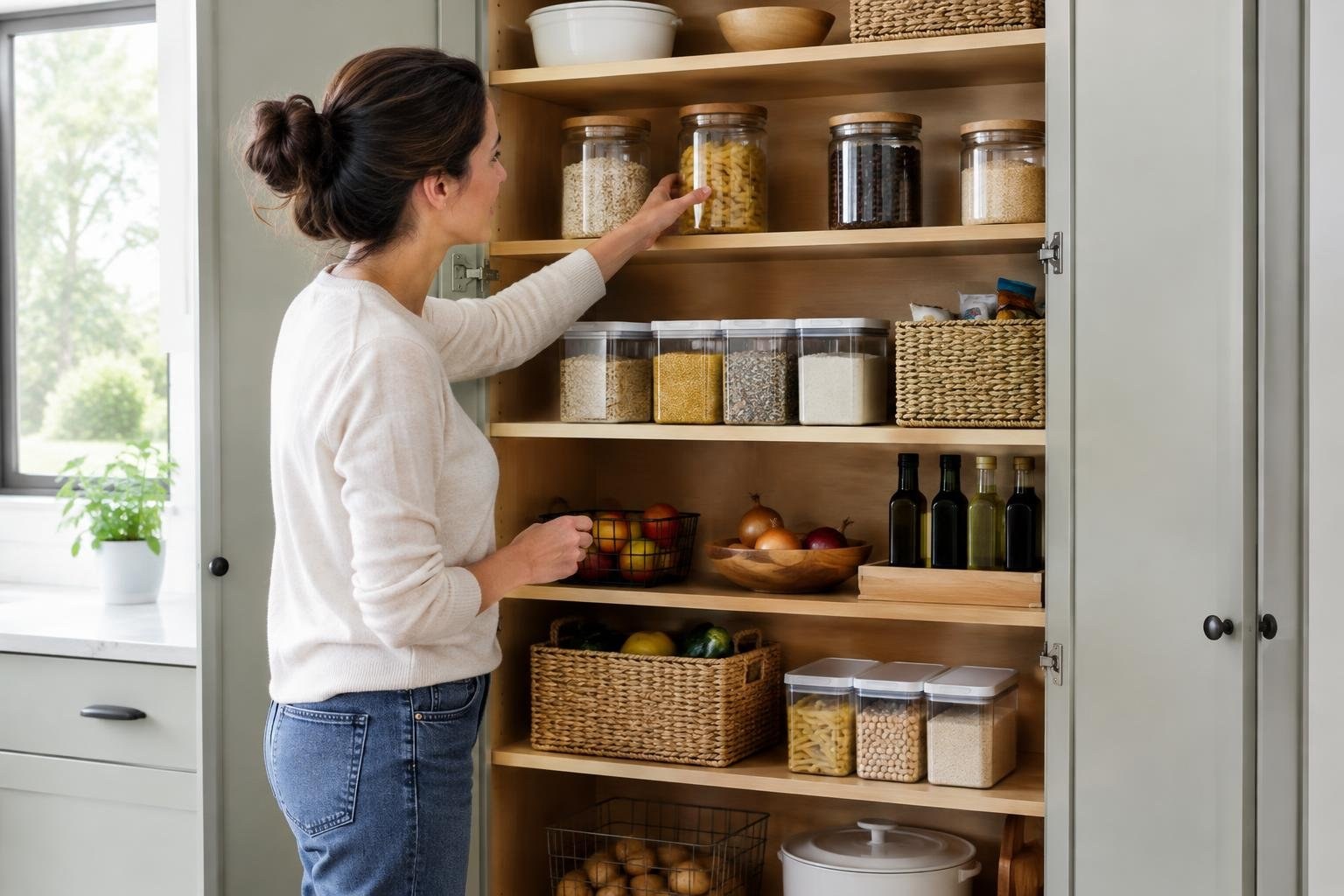
A kitchen pantry cabinet is a storage unit intended for food, dishes, and other kitchen items. Some pantry cabinets are designed to fit into a kitchen cabinetry plan; freestanding versions work as separate storage furniture. Designs may include tall cabinets, adjustable shelving, drawers, and door shelves, though specific features vary by product.
The useful question is not simply whether a cabinet has enough volume. It is whether you can store the items you use, see what is there, and reach them without creating a new obstacle in the kitchen.
What Should a Pantry Cabinet Store?
- List what needs a home. Include dry goods, dishes, serving items, and any small appliances you may want to store.
- Group items by use. Separate everyday items from occasional-use supplies before deciding how many shelves or drawers you need.
- Look at your current storage. Note what is hard to see or reach, what is taking up counter space, and what already fits well elsewhere.
- Plan for access. A shelf that holds a lot may still be inconvenient if items at the back are difficult to reach.
Pantry cabinets are used for dry foods such as pasta, rice, and canned goods, and adjustable shelves can help organize items by type. A pantry may also serve broader household storage needs, but decide on the intended use before comparing products.
Signs You May Need a Pantry Cabinet
A new pantry cabinet may be worth considering when existing kitchen storage does not suit the way you use the room. Look for recurring problems rather than assuming that adding the largest available cabinet will solve them.
- Food or dishes are spread across several cupboards, making them difficult to locate.
- Frequently used items are awkward to reach or are stored in inconvenient locations.
- Small appliances or other kitchen items regularly occupy work surfaces because no suitable storage has been planned.
- The available shelving does not suit the mix of items you keep.
- You want a separate storage unit, but your layout does not call for an integrated cabinet.
These are planning signals, not proof that you need a particular product. First review whether rearranging existing storage would solve the problem. If not, use the list to set requirements for a new cabinet.
Built-In vs. Freestanding Pantry Cabinets
Start with the location, then compare a built-in cabinet with a freestanding unit. A built-in choice is part of a broader cabinetry plan; freestanding pantry products are sold as separate storage units and may include different combinations of doors, shelves, drawers, and other features. Pantry cabinets come in a range of designs, so verify each cabinet’s specifications rather than assuming features are standard.
| Option | Potential advantages | Questions to check |
|---|---|---|
| Built-in pantry cabinet | Can be planned alongside the kitchen’s other cabinets and storage. | How will it fit the layout? What work, delivery, and installation are included? |
| Freestanding pantry cabinet | Provides a standalone storage unit; some products include shelves, drawers, or door storage. | Do the dimensions suit the location? What assembly, placement, and safety instructions apply? |
| Adjustable-shelf design | Allows shelf spacing to be changed for different stored items. | How many shelves adjust, and does the interior fit your actual containers? |
| Cabinet with drawers or door shelves | Offers additional ways to separate and organize items when included. | Do those features improve access, and are they part of the product being quoted? |
Choose the least complicated option that fits your storage needs and space. A freestanding product may also suit another room, but a listing’s suggested uses do not guarantee it will fit your kitchen or serve as a substitute for purpose-planned cabinetry.
Kitchen Pantry Cabinet Cost: What to Compare
Pantry cabinet prices cannot be compared reliably by a product name alone. Cabinets vary in size, design, and features, so compare exact product specifications; prices may also vary by product size or color. A single project total may combine items or work that another quote leaves out. Get a written, itemized estimate rather than relying on a general price label.
Ask whether each quote includes:
- The cabinet model, dimensions, finish, and included shelves, drawers, or door storage.
- Delivery and any assembly or installation.
- Removal or disposal of an existing unit, if needed.
- Any additional fitting or finishing work discussed for the location.
- Taxes, payment schedule, expected dates, and written warranty terms, where applicable.
Compare like with like: the same cabinet type, dimensions, features, and scope of work. If one provider quotes a freestanding cabinet and another prices a built-in solution, clarify the differences before deciding which costs less.
Factors That Affect the Project
Project complexity depends on the cabinet and the place it will occupy. Before seeking a quote, record the opening or wall space, nearby doors and appliances, the available floor area, and any existing features that could affect access or placement. Do not estimate fit from a product photo.
Other project details to discuss include:
- Whether the cabinet is freestanding or part of a larger kitchen cabinetry project.
- The requested height, width, depth, finish, and interior configuration.
- Whether delivery, assembly, placement, or installation is needed.
- Whether the intended storage includes food, dishes, or small appliances.
- Whether the cabinet will stand beside other units or be used in a different room.
Product examples include tall pantry units, adjustable shelves, and cabinets with drawers or door shelves. Treat those as options, not guarantees: confirm the exact model and included features in the written estimate or product information.
How to Measure and Plan the Location
Accurate measurements help prevent ordering a cabinet that does not fit its intended location. Measure the usable height, width, and depth, and note nearby obstacles such as doors, appliances, and neighboring cabinets. Check how the pantry door will open and whether people can move through the kitchen comfortably when it is open.
- Measure the location in more than one place, especially if the available space is bounded by walls or existing cabinetry.
- Write down the smallest usable dimensions, not just the largest measurement.
- Compare those measurements with the cabinet’s stated exterior dimensions.
- Check door swing, handles, drawers, and access to adjacent storage.
- For a built-in or complicated fit, have the responsible provider verify dimensions before ordering.
Keep a simple plan or photos with your measurements when requesting estimates. A provider can use them to discuss suitable options, but do not treat a preliminary conversation as confirmation that a cabinet will fit.
What to Expect and How Long It May Take
Expect to choose a cabinet, confirm dimensions and features, establish who handles delivery and assembly, and agree on the project scope. For a freestanding unit, the process may focus on product selection, delivery, assembly, and placement. A built-in cabinet may involve additional coordination with the wider kitchen cabinetry project.
Installation timing varies with the cabinet and the work included. Ask the seller or installer to provide a schedule that separates ordering, delivery, assembly, installation, and any related work. Confirm what must be completed before installation and whether the date depends on the cabinet arriving first.
Do not schedule other work around an unconfirmed delivery date. Keep written records of product selections, dimensions, included work, agreed dates, and changes.
How to Choose a Qualified Provider
If you hire someone to advise on or install a pantry cabinet, compare the written scope and the person responsible for each task. Ask about relevant project experience, references or examples, insurance, and any license required for the work in your location. Verify credentials with the appropriate local authority when applicable; requirements differ by place and project.
Ask each provider:
- Which exact cabinet and features are included?
- Who verifies measurements and confirms fit before ordering?
- Who handles delivery, assembly, installation, and cleanup?
- What is excluded from the estimate?
- How will changes or unexpected fit issues be handled and priced?
- What written warranty applies to the product and to any installation work?
- What is the payment schedule, and when is the work expected to happen?
Compare answers as carefully as the bottom-line amount. The lowest quote may cover a different product or leave out work another provider includes.
Permits, Safety, Credentials, and Warranties
Check applicable safety instructions, installation directions, local permit requirements, and credential rules before work begins. Whether a permit or licensed professional is required depends on the location and the specific work, so confirm with the relevant local authority rather than assuming a pantry cabinet always does or does not require one.
For freestanding products, follow the manufacturer’s assembly and safety directions and ask whether any anchoring is required. Do not improvise installation steps or ignore a product’s stated limitations. For a built-in project, clarify who is responsible for confirming fit and completing the agreed work safely.
Request warranty information in writing. Confirm what the warranty covers, who provides it, how to make a claim, and whether the product and installation have separate terms. Avoid treating a verbal assurance as a replacement for written conditions.
Ways to Save Without Creating Problems
To manage the budget without compromising fit or function, identify essential features before shopping. Compare the cabinet’s usable storage and included components rather than paying for options you will not use.
- Measure before requesting prices so providers can quote the same space and cabinet dimensions.
- Decide whether a standalone cabinet meets the need or whether built-in cabinetry is important to the plan.
- Choose between fixed and adjustable shelving based on the items you actually store.
- Compare simple configurations with added drawers or door storage, and confirm which features are included.
- Request itemized estimates and ask for the cost effect of each proposed change.
- Keep existing storage if it works rather than replacing it solely for a coordinated look.
Save safely by simplifying choices, not by skipping measurement checks, required installation steps, or written scope. Do not assume a lower advertised product price includes delivery, assembly, or installation.
Mistakes, Red Flags, and a Buying Checklist
Before ordering, work through this checklist:
- Have you listed what the cabinet needs to store?
- Do you know the usable height, width, and depth at the intended location?
- Have you checked access, door swing, neighboring cabinets, and nearby appliances?
- Have you compared the exact dimensions and included features of each option?
- Does the written quote explain delivery, assembly, installation, and exclusions?
- Have you confirmed who checks the fit and who is responsible for the work?
- Have you requested a schedule, payment terms, and written warranty information?
- Have you checked applicable product safety directions and local requirements?
Common buying mistakes include selecting by appearance alone, assuming adjustable shelves or accessories are included, overlooking how an open door affects the room, and comparing quotes with different scopes. Treat vague answers, undocumented changes, and pressure to commit before details are clear as reasons to pause and ask for clarification.
Conclusion
A successful pantry cabinet project starts with a clear storage plan, reliable measurements, and a quote that describes the exact product and work. Decide what you need to store, compare built-in and freestanding options, and verify dimensions, features, delivery, installation responsibility, schedule, and warranty terms before committing.
Frequently asked questions
What is a kitchen pantry cabinet?
A kitchen pantry cabinet is a storage unit for food, dishes, and other kitchen items. It may be built into the kitchen cabinetry or freestanding, depending on the design and installation.
How do I choose the right size pantry cabinet?
The right size depends on the available space and the items you plan to store. Measure the full height, width, and depth available, then check door and drawer clearances and the cabinet’s actual dimensions before ordering.
Are adjustable shelves useful in a pantry cabinet?
Adjustable shelves make it possible to change shelf spacing for different items. Before choosing a cabinet, consider whether you need space for tall containers, small appliances, or a mix of pantry goods.
Is a built-in or freestanding pantry cabinet better?
Built-in cabinets are planned as part of a room’s cabinetry, while freestanding cabinets can be placed as standalone storage. Compare the fit, stability, available space, and whether the unit suits your kitchen layout.
How much do kitchen pantry cabinets cost?
There is no single price that applies to every pantry cabinet project. Compare quotes that identify the cabinet, delivery, assembly or installation, and any additional work, and verify that each provider is pricing the same scope.
How long does it take to install a pantry cabinet?
Timing depends on the cabinet and the work included. Ask the seller or installer to confirm ordering, delivery, assembly, installation, and any other project dates in writing before scheduling related work.
People Also Ask
What is a kitchen pantry cabinet used for?
A pantry cabinet provides enclosed or open storage for food and other kitchen items. Depending on the design, it may also be used to store dishes or small appliances.
What should I look for when buying a pantry cabinet?
Start by measuring the intended space and listing the items you need to store. Compare the cabinet’s exterior dimensions, interior storage, shelf adjustability, and door swing against that space and your routine.
Should I choose a freestanding or built-in pantry cabinet?
A freestanding unit offers a standalone storage option; a built-in cabinet is planned as part of the room’s cabinetry. The better fit depends on your layout, desired appearance, available space, and installation plan.
What affects the price of a kitchen pantry cabinet?
The project price depends on the cabinet selected and what the quote includes. Request an itemized estimate that separates the cabinet from delivery, assembly, installation, and other work, then compare the same scope across bids.
How do I measure for a pantry cabinet?
Measure the available height, width, and depth, and account for doors, nearby appliances, and the space needed to open the cabinet. Verify product dimensions rather than relying only on a listing’s general description.
What features can pantry cabinets include?
Pantry cabinets can have adjustable shelves, drawers, or door storage, depending on the specific product. Choose features based on what you will store and how easily you need to see and reach it.
A pantry cabinet can make kitchen storage easier to see, reach, and organize, but the best choice depends on what you store, the space available, and whether the cabinet is built in or freestanding. Measure carefully, compare complete project quotes rather than headline prices, and check installation responsibility and warranty terms before buying. When you are ready to explore possibilities, visit CabinetSupply.com.
Your next step
Explore cabinet options at CabinetSupply.com for your next project.
Last reviewed and updated November 2, 2026 by the CabinetSupply Editorial Team.
Sources
- Pantry Cabinets | CabinetSelect.com
- Kitchen Pantry Cabinets for Organized Storage – Walmart.com
- Kitchen Pantry Storage Cabinets | Tall & Adjustable
- Kitchen Pantries | Amazon.com
- Pantry Cabinets – The Home Depot
- Pantry Kitchen Cabinets – Smart Storage Solutions | Lowe's
- Pantry Cabinets – Tall Kitchen Cabinets – IKEA
- Kitchen Pantry Cabinets | Pantry Storage Cabinet & Closet
- Butler Pantry Cabinets: Planning, Options, and Costs