
Gray kitchen cabinets are available in shades from light gray to charcoal, with options that include painted, ready-to-assemble, and assembled cabinetry. Choosing a color is only one part of the decision: compare the actual product, finish, dimensions, included components, delivery terms, and how the shade looks beside your countertops and wall color. This guide explains how to assess gray cabinet options, interpret advertised prices, plan the project, and ask useful questions before ordering.
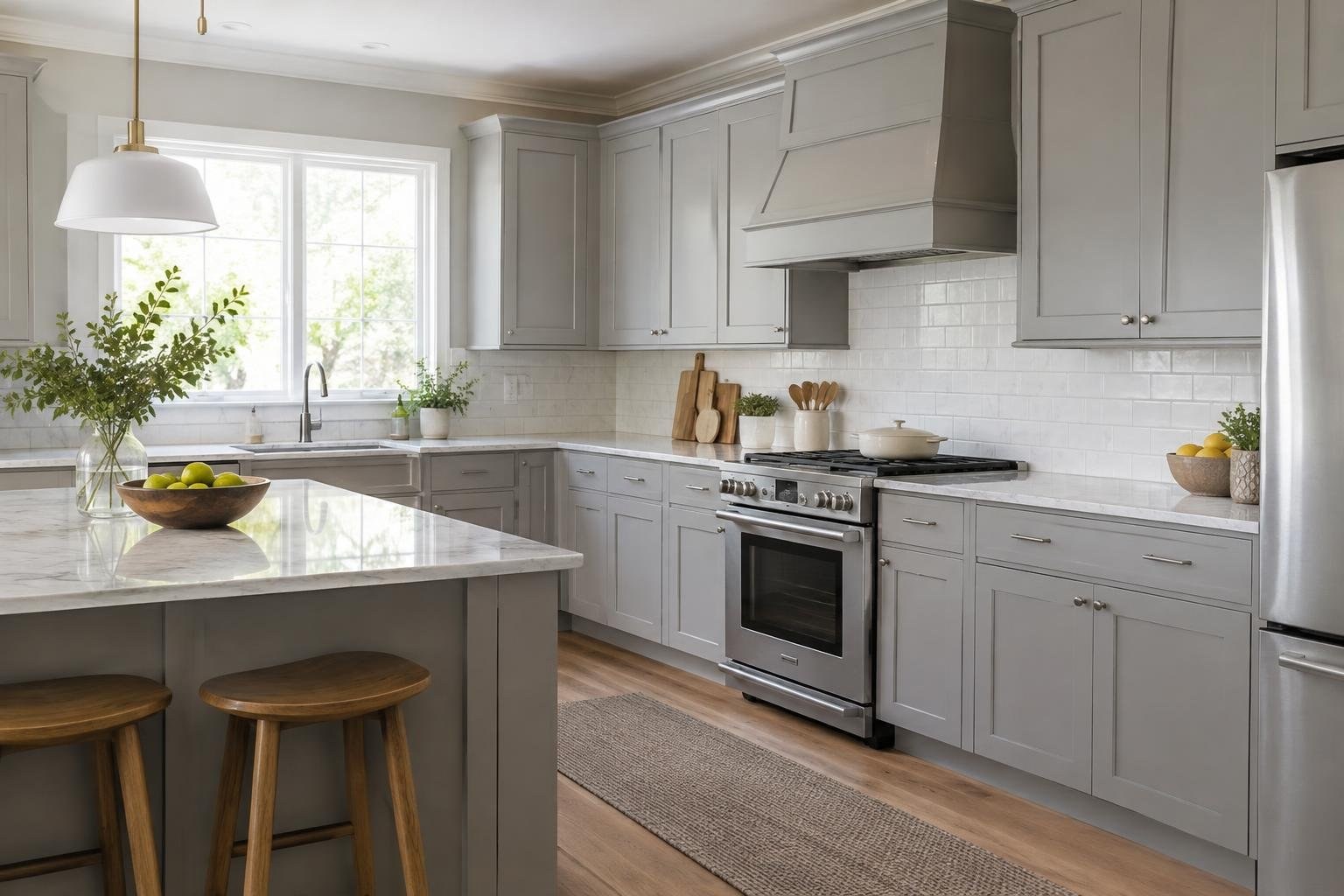
What to know about gray kitchen cabinets
Gray kitchen cabinets are cabinets offered in gray shades, from pale gray to deep charcoal. Products can differ in whether they are ready to assemble or arrive assembled, as well as in finish, door style, dimensions, and included components. Listings also show gray painted options and finishes described as high-gloss acrylic, so “gray” by itself does not tell you what you are buying.
Treat color as one selection within a larger kitchen plan. A sample should be considered beside the countertop, wall color, flooring, and other finishes you plan to keep. A retailer's online image can help you narrow choices, but it cannot show exactly how a sample will look in your own room.
Start with three questions: Which shade suits the room? What cabinet configuration fits the layout and storage needs? What does the seller include in the quoted package? Answering all three reduces the chance of choosing a color you like but a product or scope that does not fit the project.
What the cabinet-buying process includes
A cabinet project can mean buying a set of cabinets, planning a kitchen configuration, or hiring someone to measure and install the products. Product offerings differ: Kitchen Cabinet Depot lists ready-to-assemble cabinets, while CabinetSet advertises assembled kitchen packages. These are not automatically equivalent packages.
Before you compare products or providers, write down what you expect to receive and what work needs to happen. Your checklist may include:
- Cabinet types, quantities, sizes, and door or drawer fronts.
- Whether the cabinets arrive assembled or require assembly.
- Finish, color, and hardware details.
- Delivery terms and who checks the shipment.
- Who measures, installs, adjusts, and handles missing or damaged items.
- Whether removal, countertops, and related work are part of the project or separate.
Ask for the scope in writing. A product listing, a cabinet order, and a complete remodeling estimate can describe different things. A clear scope lets you compare like with like.
Signs a cabinet update may be worth considering
Consider a cabinet update when the current layout or appearance no longer suits your needs, or when you are planning a larger kitchen change and want the cabinetry to fit the new direction. A Houzz example documents homeowners moving from a more traditional look toward a less formal, more transitional style, using white and charcoal gray cabinets for contrast. It is an example of one design choice, not a rule that every kitchen needs new cabinets.
Before replacing cabinets, identify the problem you are trying to solve. Is the goal a new color, a different look, a cabinet configuration that better suits your storage needs, or a coordinated kitchen update? If only the color is unsatisfactory, compare options for a cabinet finish change with the cost and scope of purchasing new cabinetry.
Make a list of what works and what does not in the current kitchen. This gives a cabinet professional or seller a more useful starting point than a color choice alone.
Gray cabinet options and tradeoffs
Gray cabinet listings include light gray, charcoal, and warmer gray or greige-like shades. They also show both painted cabinetry and a high-gloss acrylic finish. These examples make a useful comparison set, but the specific product descriptions and samples matter more than the broad color label.
| Option | What to consider | Questions to ask |
|---|---|---|
| Light gray | How it relates to wall color, counters, and other finishes | Can I see a sample beside the materials I have selected? |
| Charcoal | How much contrast you want, including in a two-tone layout | Which cabinets or surfaces will balance the darker color? |
| Warm gray or greige | Whether the product's actual undertone suits the room palette | Can I compare the sample with the wall and countertop choices? |
| Painted or high-gloss finish | The exact finish offered on the cabinet you are considering | What does the product specification say about its finish and care? |
For a two-tone kitchen, decide which cabinets will be the contrast and which will be the quieter backdrop. A Houzz project pairs white and charcoal gray cabinets. Use that as inspiration, then check your own samples; a photo cannot establish how a different product or room will appear.
When comparing RTA and assembled choices, do not assume the label settles quality or value. Confirm dimensions, construction information, included hardware, assembly responsibility, delivery, and any warranty in the specific product documentation.
How to choose a shade and coordinate finishes
Gray cabinetry should be selected with the other visible kitchen materials, not in isolation. Retail guidance for gray cabinets specifically points to choosing a complementary wall color, and cabinet product listings present several different gray tones. That makes a sample-based comparison a practical step before ordering.
- Gather the fixed finishes. Include any countertop, flooring, backsplash, or appliance finish you are keeping.
- Compare samples together. Put the gray sample beside the materials you plan to use, rather than relying only on a product photo.
- Check more than one gray. Compare a light option with a darker or warmer one if available.
- Review the whole composition. For two-tone cabinetry, assess the chosen colors as a pair and decide where each will go.
- Confirm the exact product. Make sure the finish and cabinet configuration you order match the sample and written specification.
Color preference is personal, but the decision process can be disciplined. A coordinated sample set helps reveal whether a gray works with the rest of the planned palette before it is used across the kitchen.
Gray kitchen cabinet cost and price considerations
Published cabinet prices vary by product and package, and the available examples are not a complete installed-project budget. Kitchen Cabinet Depot advertises a Feather Gray basic 10-by-10 kitchen from $2,840. CabinetSet lists assembled kitchen examples from $3,097 and $3,997. Treat these figures as listing examples, not as a current quote for your kitchen or a promise of the final price.
When you request an estimate, ask the provider to separate the cabinet package from other work and identify the assumptions behind each number. Compare:
- Cabinet quantity, sizes, configuration, and product line.
- Whether the cabinets are assembled or ready to assemble.
- Door style, finish, and hardware included.
- Delivery charges and the handling of missing or damaged items.
- Measurement, assembly, installation, and adjustment responsibilities.
- Removal or disposal of existing cabinetry, if needed.
- Whether countertop work or other trades are included or excluded.
Do not compare one advertised starting price with a complete project estimate as if they cover the same scope. Ask for an itemized written proposal and a list of exclusions. The right comparison is between offers that specify the same quantities, product details, and responsibilities.
Factors that affect the project
Project cost, timing, and complexity depend on the exact product and what your kitchen requires. Product listings show different formats and finishes, including RTA cabinetry, assembled cabinets, painted options, and a high-gloss acrylic finish. Sellers also publish different shipping terms. A product name or color alone is not enough to establish that two offers are comparable.
Ask each seller or provider to confirm these details in writing:
- Exact product name, shade, finish, dimensions, and cabinet configuration.
- What is included in the package and what must be ordered separately.
- Whether assembly is required and who performs it.
- Current product availability, delivery terms, and estimated arrival.
- Installation scope and the process for resolving order problems.
For a full kitchen project, also tell the provider what parts of the existing room are staying and what work you expect. That gives the provider a chance to identify scope assumptions before the estimate becomes an order.
Planning measurements before you order
Measure and plan before ordering. Product listings show specific cabinet sizes, such as 30-by-24-by-30-inch examples, while another advertised kitchen is described as a 10-by-10 package. Those examples are not a substitute for measuring your own room or confirming a complete layout.
Record the room dimensions and note the locations of doors, windows, appliances, outlets, plumbing, and any other fixed features that may affect cabinet placement. Have the person responsible for the cabinet plan verify measurements and configuration before an order is finalized. If the project changes utilities or other regulated building elements, ask a qualified local professional which work and approvals apply rather than guessing.
Ask for a drawing or itemized cabinet plan that lets you review each cabinet location, dimension, and product selection. Check that the plan reflects the agreed shade and finish. Keep a copy of the approved plan and written order so you can compare the delivered items with what you selected.
What to expect, including delivery and timing
Expect the schedule to have separate stages: selecting products, confirming the order, delivery, and any assembly or installation. A seller's advertised shipping estimate covers only the stated shipping period, not the full time needed to plan and complete a kitchen project.
Kitchen Cabinet Depot advertises free shipping within 3 to 5 days, while CabinetSet lists a 5-to-12-business-day shipping estimate. These are seller-specific listing claims, not general delivery promises. Availability and terms should be confirmed for the exact order.
Before committing to a project date, ask for the current delivery estimate, how delays or damaged items are handled, and when the installer expects to begin. Coordinate any related work only after responsibilities and timing are clear. Get the schedule and any important assumptions in writing.
How to choose a qualified cabinet provider
Choose a cabinet seller or installation provider by comparing the documented product and project scope, not by color photos or a low headline price alone. The available listings differ in product format, finish, price examples, and shipping terms, so ask each provider to explain exactly what its offer covers.
Use these questions when comparing candidates:
- Can you provide the product specification and a cabinet plan for this kitchen?
- Who is responsible for measuring and confirming that the order matches the plan?
- Are the cabinets assembled, and who handles any required assembly?
- What delivery terms apply, and how are shortages or damage reported?
- Is installation included? If so, what tasks and adjustments are included?
- What is excluded from the estimate, including removal or related kitchen work?
- What written warranty applies to the products and any installation work?
- Who will be my contact if the order, delivery, or installation has a problem?
Check references and relevant project examples where available, and confirm any licensing or insurance requirements that apply in your location. Ask for written answers and compare the same scope across estimates. A cheaper offer may omit work or include a different product, so the total and responsibilities matter more than the first number.
Installation responsibilities and safety
Installation responsibility should be explicit, especially when comparing ready-to-assemble products with assembled cabinets. Ask who receives and checks the shipment, who assembles cabinets if needed, who installs and adjusts them, and who handles a problem discovered during the work. The product listings alone do not establish what installation service is included.
As a homeowner, focus on reviewing the plan, confirming product selections, clearing up scope questions, and checking the finished work against the written agreement. Do not take on electrical, plumbing, structural, or other regulated work unless you are qualified and local rules allow it. Ask the installer or an appropriate local professional about safe responsibilities for your specific project.
Before work begins, confirm what areas need to be accessible, who protects or removes existing items, and how changes will be approved and priced. A written plan can reduce misunderstandings between the cabinet seller, installer, and any other professionals involved.
Permits, credentials, warranties, and safety
Cabinet product descriptions and advertised prices are not, by themselves, a warranty or a statement of local requirements. Before placing an order, read the product warranty and ask whether installation work has separate coverage. Confirm the process for reporting missing parts, shipping damage, finish concerns, or defects, and keep your invoice and product details.
Rules for permits and regulated work depend on the location and the work involved. If a project goes beyond cabinet replacement or includes changes to utilities or the building, check with your local authority or a qualified local professional. Do not rely on a retailer's product page to answer questions about approvals for your home.
For a safer and clearer project, establish who is responsible for each task, who may perform it, and how the work will be checked. Ask for these responsibilities in the written agreement before delivery or installation starts.
Ways to save without creating avoidable risk
You can control spending without choosing cabinets on color or headline price alone. Compare the details that determine what you receive, and avoid ordering before measurements and scope are confirmed.
- Compare several gray shades and finishes, but narrow down to products that fit your layout and needs.
- Ask whether a package is RTA or assembled and what that means for your responsibilities.
- Request samples before committing to a full order, especially if you are coordinating two cabinet colors.
- Compare itemized estimates with matching product details and inclusions.
- Confirm shipping and delivery terms rather than assuming they are the same across sellers.
- Ask what is excluded so you can budget separately for work outside the cabinet package.
Do not save money by skipping necessary measurements, accepting unclear responsibilities, or doing work that requires a qualified professional. If an offer is substantially different from another, first check whether the products, quantities, shipping, assembly, and installation scope match.
Mistakes, red flags, and a final checklist
Use this checklist before approving a gray cabinet order or installation estimate:
- Have I compared the actual shade and finish with the other kitchen materials?
- Is the cabinet plan based on verified measurements?
- Do I know the exact product, dimensions, quantities, and package contents?
- Have I confirmed whether cabinets arrive assembled or require assembly?
- Are delivery terms and timing confirmed for this order?
- Does the estimate clearly state what installation includes and excludes?
- Have I asked how shortages, damage, or order changes will be handled?
- Have I reviewed warranty terms and checked locally applicable requirements?
Common avoidable mistakes include choosing from an online image alone, treating a starting price as a full project quote, assuming shipping includes installation, and approving an unclear layout. A provider who cannot explain product details, responsibilities, or exclusions clearly is a reason to pause and ask more questions before paying or signing.
Make a confident gray cabinet choice
Compare gray cabinets by their specific shade, finish, construction information, configuration, and package contents. Then check how the sample works with your intended wall and countertop colors. The product listings show a range of choices, including light gray, charcoal, warmer gray tones, painted options, RTA products, and assembled offerings, but no single listing establishes the best choice for every kitchen.
Before ordering, confirm dimensions, delivery, assembly, installation responsibilities, warranty, and exclusions in writing. If you want to browse cabinet options as you refine your plan, explore cabinet options at CabinetSupply.com.
Frequently asked questions
What colors go well with gray kitchen cabinets?
Gray cabinets can work with many countertop colors, but the undertone and finish matter. Compare samples with your countertop choice and kitchen lighting before committing. Gray cabinet listings include light gray, charcoal, and greige-like options, while coordinating wall color is also part of the overall palette.
Can I mix gray and white kitchen cabinets?
They can. A two-tone layout, such as white uppers with charcoal-gray lower cabinets, is one documented design approach. Decide which cabinets should provide contrast, then compare actual samples so the colors work together in your room.
How much do gray kitchen cabinets cost?
Kitchen Cabinet Depot advertises a Feather Gray RTA 10-by-10 kitchen from $2,840, and CabinetSet lists assembled kitchen examples from $3,097 and $3,997. These are listing examples, not a current quote or a complete installed-project budget. Confirm the date, package contents, shipping, and installation costs with the seller.
Are light gray or dark gray cabinets better?
No single gray shade is best for every kitchen. Compare light gray, charcoal, and warm gray or greige options against your fixed finishes and the light in the room. Order or view samples before settling on a full cabinet order.
What should I compare when buying gray kitchen cabinets?
Product listings include ready-to-assemble cabinets, assembled cabinets, painted options, and different gray tones and finishes. Compare construction details, included hardware, dimensions, assembly requirements, delivery, and warranty in the specific product documentation before deciding.
How long does it take to get and install gray kitchen cabinets?
Kitchen Cabinet Depot advertises shipping within 3 to 5 days, while CabinetSet lists a 5-to-12-business-day shipping estimate. Those seller-specific shipping estimates are not the full project schedule. Ask for confirmed product availability and delivery dates, and separately plan for measurement, preparation, installation, countertop work, and any other trades involved.
People Also Ask
What should I check when kitchen cabinets are delivered?
Compare the delivered items with your written order and approved cabinet plan, checking the products and quantities. Check for visible damage or missing items, follow the seller’s reporting process, and keep your order and product details.
What should I review on a cabinet layout before ordering?
Review a drawing or itemized cabinet plan against verified room measurements and the locations of doors, windows, appliances, outlets, and plumbing. Check each cabinet's location and dimensions, along with the selected shade and finish, before approving the order.
How can I check that the cabinet sample matches my order?
Compare the sample with the written product specification and cabinet plan. Before ordering, confirm that the specified finish, color, and cabinet configuration match the sample you chose, and keep the approved plan and order for checking the delivered items.
Does the price of kitchen cabinets include installation?
An advertised cabinet price is not necessarily the total cost of a kitchen project. Verify exactly what the listing includes, then separately ask about delivery, assembly, installation, removal of old cabinets, countertops, and any other work you need.
How long does cabinet delivery take?
The available product listings advertise different shipping arrangements and timeframes. Confirm current availability and delivery timing with the seller, then coordinate installation and other work around the confirmed delivery date.
How do I choose a countertop for gray cabinets?
Use cabinet and countertop samples together, and consider your wall color as part of the same palette. Gray cabinet options span light to dark tones, so the right combination depends on the specific samples and the look you want.
Gray kitchen cabinets can create a quiet, versatile backdrop or a strong focal point, depending on their shade, finish, and surrounding materials. Compare samples in your actual kitchen, check what each cabinet package includes, and evaluate the whole project rather than choosing on color or an advertised starting price alone. A clear plan for layout, storage, countertop, lighting, delivery, and installation makes it easier to choose cabinets that suit your room and budget.
Your next step
Explore cabinet options at CabinetSupply.com for your next project.
Last reviewed and updated November 2, 2026 by the CabinetSupply Editorial Team.
Sources
- Gray Kitchen Cabinets at Cabinets.com
- Gray – Kitchen Cabinets – The Home Depot
- Gray Kitchen Cabinets | Ready-to-Assemble
- Buy Gray Kitchen Cabinets | Light Gray, Dove & Charcoal | CabinetSelect.com
- Gray Kitchen Cabinets – Modern & Affordable – IKEA
- 75 Beautiful Gray Kitchen Cabinet Pictures & Ideas | Houzz
- Grey Kitchen Cabinets – Stylish, Durable, and Modern Designs
- Gray Kitchen Cabinets | Charcoal, Slate & Light Gray | Home Decorators
- Kitchen Cabinet Colors: How to Choose the Right Shade for Your Home