
MDF kitchen cabinets are worth considering if you want a smooth, painted look and are comparing cost-conscious cabinet options. MDF is an engineered wood product with a uniform, grainless surface, which is one reason it is commonly used for painted cabinet doors. But the label alone does not tell you how a complete cabinet is built, what finish it has, or whether the quote covers installation. This guide explains what to check, how MDF compares with other choices, what can affect your project price and schedule, and how to compare providers before you buy.
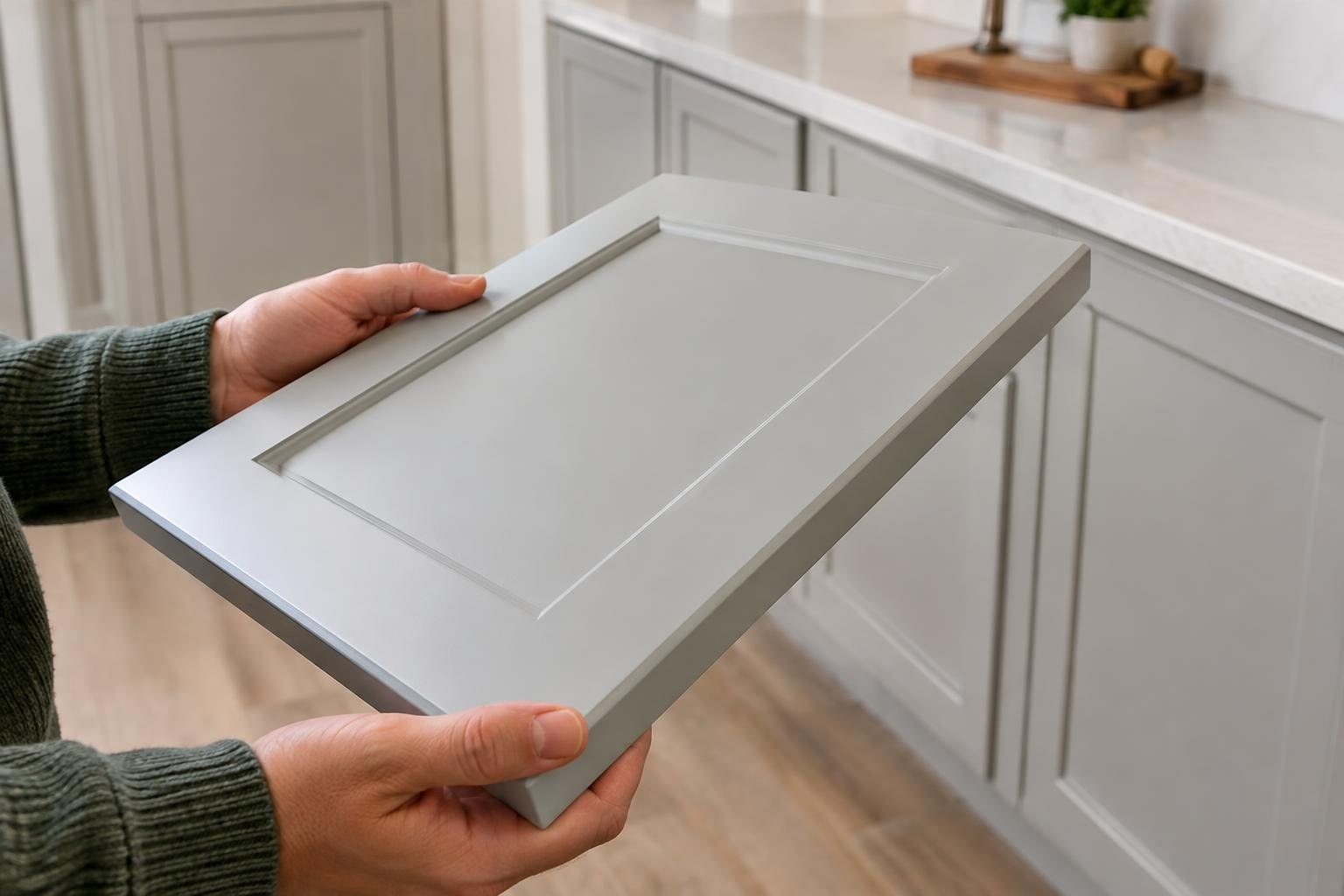
What MDF kitchen cabinets are and what the label means
MDF may be a cost-conscious cabinet-door option, but the price of a finished project depends on more than its panel material. Door design, finish, hardware, cabinet quantity, layout, and installation scope all need to be considered.
MDF is not a complete cabinet specification. A kitchen may use it for doors or drawer fronts while using different materials for the cabinet boxes, shelves, or backs. Another product may use MDF more broadly. Ask the seller to identify each component in writing rather than treating “MDF cabinets” as a description of the whole construction.
Bottom line: MDF tells you something about the material, not the complete quality or value of the cabinet. Use the material label as the start of your comparison, then review the product details.
How an MDF cabinet project works, from selection to installation
MDF cabinet products can include doors, drawer fronts, or other components. Some cabinet-door manufacturing uses MDF panels cut to shape and assembled into door designs; finished products may also be sold as part of a larger cabinet offering. The exact construction varies by product, so ask for a parts list or specification.
- Define the project. Decide whether you are replacing cabinets, changing only doors and drawer fronts, or considering another update. The existing layout and what you want to change will shape the discussion.
- Identify every component. Ask what the doors, drawer fronts, boxes, backs, shelves, and exposed panels are made from. Do not assume they share one material.
- Review the finish. Ask what finish is applied, how visible edges are treated, and what the manufacturer recommends for cleaning and care.
- Confirm the full scope. Request a written list of cabinets, hardware, delivery, installation, removal, and any work excluded from the price.
- Check fit and function. Review the design, storage, appliance clearances, and how doors and drawers will work in the actual room.
These steps help separate a material choice from the larger decisions about layout, construction, and installation.
When MDF may suit your kitchen and when to consider alternatives
Consider MDF when you want a smooth painted look, are comparing cabinet options with a cost-conscious budget, or want to update the kitchen’s appearance without selecting a visible wood grain. MDF is also available in cabinet products intended to support different styles, so ask to see actual samples and the full product specification.
It may be time to investigate new cabinets or a cabinet update if the current storage no longer works, the appearance no longer suits the room, or you are planning a layout change. Those are reasons to review options, not proof that MDF is the right replacement. Start by listing the problem you want to solve: storage, appearance, function, or a combination.
Before selecting MDF, ask yourself:
- Do I want a painted surface or a visible wood-grain appearance?
- Am I replacing complete cabinets, or only considering new doors and drawer fronts?
- What materials are used in the cabinet boxes and other parts?
- What finish care and warranty terms apply to this specific product?
- Does the proposed layout fix the storage or usability problem?
If you are considering a cabinet refresh, compare refacing with replacement only after a provider has assessed whether the existing cabinets fit your plan. A new finish cannot resolve a layout or storage issue you have not addressed.
MDF vs. other cabinet materials: what to compare
MDF is one option among several, and no material label by itself establishes cabinet quality. Compare what matters for the specific component, appearance, and use. The following table is a decision framework, not a claim that every product in a category performs the same way.
| Choice | What to compare | Questions to ask |
|---|---|---|
| MDF | Uniform, smooth surface; painted appearance; components included | Which parts use MDF? How are exposed edges finished? |
| Solid wood | Visible grain, door construction, finish, and product specification | Which pieces are solid wood, and which are not? |
| Veneer or laminate surfaces | Surface appearance, edge treatment, care guidance, and warranty | What is the underlying panel, and how is the surface applied? |
| Mixed-material cabinet | Material by part, construction details, and consistency of finish | Can the provider identify the material for doors, boxes, shelves, and backs? |
One useful distinction is between the look you want and the construction you are buying. MDF’s grainless surface is a reason to consider it for painted doors. If you want visible wood grain, request samples of the alternatives and evaluate their finish and construction rather than assuming a material name guarantees a particular result.
Check samples under the lighting in your kitchen when possible. Compare color, sheen, edge appearance, and door profile. Make the final comparison using written specifications, not just a showroom label.
MDF kitchen cabinet costs and what a quote should include
A reliable project total cannot be determined from the words “MDF kitchen cabinets” alone. The cost depends on the product and project scope, so obtain comparable, itemized estimates for your kitchen.
Ask each provider to show the cost of the same scope, including:
- Cabinets, panels, fillers, and any trim
- Materials for doors, drawer fronts, boxes, shelves, and backs
- Finish, hardware, and interior accessories
- Delivery and handling
- Removal and disposal of existing cabinets, if needed
- Installation, adjustment, and cleanup
- Any countertop, plumbing, electrical, wall, or flooring work included or excluded
Price can also change with the number and size of cabinets, custom dimensions, door style, finish choices, storage features, layout complexity, and installation requirements. Ask what could trigger a change order, and have additions or substitutions approved in writing.
A lower quote may omit work that another provider includes. Compare the total scope, product specification, warranty, and responsibility for installation before deciding which estimate offers better value.
Factors that affect the project and what to expect for timing
Project timing depends on the chosen product, design decisions, ordering, delivery, site preparation, and installation. Ask each provider for a written project timeline rather than relying on a general promise.
Before accepting a schedule, ask when measurements are final, when the order is placed, how delivery is coordinated, and what conditions could delay work. Clarify whether the same provider is responsible for design, cabinet supply, installation, and coordination with other trades. If work on plumbing, electrical, appliances, or surfaces is part of the project, confirm who is arranging it and when it must happen.
Accurate room information is essential to a useful plan. Share dimensions and note doors, windows, appliances, visible utilities, and any layout changes you are considering. Have the responsible professional verify measurements before a cabinet order is finalized. Do not treat a preliminary sketch as a confirmed installation plan.
Ask how the provider handles a mismatch, damaged delivery, or missing component, and who should be contacted. Knowing the process in advance makes it easier to evaluate both the schedule and the provider’s accountability.
How to choose MDF cabinets for your design and storage needs
Choose an MDF product by matching the finish and construction to your kitchen, then confirming the details in writing. Because MDF is commonly used for its smooth, grainless surface, it is a logical material to investigate for painted doors. That does not mean every MDF cabinet has the same door style, finish, construction, or warranty.
Use this selection sequence:
- Bring together the kitchen’s measurements, appliance information, and a list of storage problems.
- Decide whether your goal is a new layout, a visual update, or both.
- Choose a target appearance, including door profile, color, and sheen.
- Review physical samples and compare the finish and edge detail.
- Request written material specifications for each cabinet component.
- Confirm storage features, hardware, installation scope, and warranty.
- Compare total quotes with equivalent inclusions.
Look beyond the door face. Ask about drawer construction, shelf and box materials, hinges, slides, and the method for fastening and fitting the cabinets.
For a kitchen that needs a specific configuration, ask the provider to explain how the proposed cabinet plan accommodates appliances and everyday storage. A style decision is successful only if the written design also serves the room.
How to choose a qualified cabinet provider and compare bids
Choose a provider who can explain the cabinet specification, document the project scope, and state who is responsible at each stage. Do not select a contractor or supplier solely because the product is called MDF or because the initial price is lowest.
Ask prospective providers:
- Which parts of the proposed cabinets are MDF, and what materials are used elsewhere?
- Can I review a sample and the written product specification?
- What work is included in the estimate, and what is excluded?
- Who verifies measurements and approves the final cabinet plan?
- Who handles delivery, installation, cleanup, and any coordination with other trades?
- What warranty applies to the cabinets, finish, and installation, and how do I make a claim?
- How are schedule changes, damaged items, or installation problems handled?
Review the provider’s relevant project examples, references, insurance, and any licenses required for the work in your area. Verify requirements with local authorities rather than assuming one rule applies everywhere. Ask for payment terms and change-order procedures before signing.
Explore Cabinet Supply’s cabinet options at CabinetSupply.com as you research products and prepare to compare the details of your project.
Permits, credentials, warranties, and safety checks
Permit and license requirements depend on the location and the work being done. Confirm local requirements for the project with the relevant authority and ask the contractor which parts of the work require qualified trades. Cabinet selection alone does not establish what approvals or trade work a renovation needs.
Do not take on electrical, plumbing, structural, or other regulated work unless you are qualified and local rules allow you to do so. If cabinet installation requires utility changes or wall modifications, have the responsible professional explain the scope and who will perform it.
Read warranty documents before ordering. Ask what is covered for the cabinet, finish, hardware, and installation; what care is expected; what exclusions apply; and how to request service. Get product and finish claims in writing, including any claim about a moisture-resistant option. A general product label is not a substitute for the actual terms.
For safe planning, confirm who is responsible for protecting the work area, handling removed materials, and coordinating utility-related work. Make sure responsibilities are in the contract or estimate rather than relying on informal assurances.
Ways to save safely and mistakes to avoid
Save money by simplifying decisions and comparing complete scopes, not by skipping measurement, installation planning, or essential product information. MDF may be a cost-conscious option, but the final project price still depends on the chosen cabinets and the work included.
- Set a project budget and identify the storage or appearance goals that matter most.
- Keep the existing layout under consideration if it already meets your needs, but compare the implications before deciding.
- Limit late changes by finalizing the design, finish, hardware, and included accessories before ordering.
- Ask whether standard cabinet sizes or product options can meet the plan before requesting custom details.
- Compare itemized estimates with the same materials, installation, delivery, and removal scope.
- Ask for samples before making a large finish commitment.
- Request a written change-order process so additions and substitutions are priced and approved clearly.
Avoid savings that depend on unverified measurements, vague product descriptions, or work you are not qualified to perform. If you plan to handle removal or another part yourself, agree in advance on who is responsible, what must be completed, and how that affects the installation schedule.
Before signing, use this checklist: component materials identified; layout and measurements reviewed; finish and hardware selected; inclusions and exclusions listed; warranty provided; schedule discussed; payment and change terms written; local requirements checked.
Frequently asked questions
What are MDF kitchen cabinets made of?
MDF, or medium-density fiberboard, is an engineered wood product made from wood fibers. Its uniform, grainless surface makes it a common option for painted cabinet doors. Ask the seller which cabinet parts are MDF, since the material can differ between doors, drawer fronts, and cabinet boxes.
Are MDF kitchen cabinets a good choice?
MDF can be a suitable choice when you want a smooth painted look at a cost-conscious price. Compare the full cabinet specification, finish, hardware, and warranty rather than choosing on the material name alone.
Are MDF cabinets cheaper than wood cabinets?
MDF may be a cost-conscious option for cabinet doors, but it is not possible to say it will always be cheaper than wood cabinets. Price depends on construction, design, finish, quantity, layout, and labor. Compare itemized quotes for equivalent products and project scope.
Are MDF cabinets waterproof?
Do not assume every cabinet part is MDF or that every product handles moisture the same way. Confirm the material and any moisture-related product claims in the written specifications, and ask how the installer will address leaks or other water exposure.
What should an MDF cabinet warranty cover?
Check whether the written warranty covers the cabinet components, finish, hardware, and installation. Review exclusions, care requirements, and how to request service before ordering.
Is MDF good for painted kitchen cabinet doors?
MDF’s smooth, grainless surface makes it a strong option to consider for painted doors. Compare a finished sample with alternatives in your kitchen lighting, and check how the cabinet maker constructs the doors and finishes the edges.
What should an MDF cabinet estimate include?
Get an itemized estimate that identifies the materials, cabinet components, finish, hardware, installation, delivery, removal, and exclusions. Compare the same scope across providers instead of relying on a per-foot figure or a headline price.
Can I reface my kitchen with MDF cabinet doors?
Sometimes. Refacing may be worth investigating if the existing cabinet layout and boxes suit your needs and a provider confirms they can be reused. If the layout, storage, or cabinet condition is unsuitable, compare replacement costs and scope before committing.
People Also Ask
What does MDF mean in kitchen cabinets?
MDF is an engineered wood product made from wood fibers. For cabinets, check whether it is used for doors, drawer fronts, cabinet boxes, or only selected components.
Why do people choose MDF for painted cabinet doors?
MDF’s smooth, grainless surface is well suited to painted cabinet doors. Review a product sample and ask how its edges and finish are handled before ordering.
What affects the cost of MDF kitchen cabinets?
Price depends on product, quantity, layout, finish, hardware, delivery, and installation scope. Compare itemized estimates for the same work rather than relying on a single price-per-foot figure.
Are MDF cabinets lower quality than wood cabinets?
Not automatically. MDF’s use in a cabinet does not tell you the box construction, hardware, finish quality, or warranty. Review the full specification and inspect a sample or display.
How can I tell if a kitchen cabinet is made from MDF?
Ask the provider to identify the material used in each cabinet component and to provide written product and finish details. A general MDF label is not a complete specification.
Which is better for painted cabinets, MDF or solid wood?
A smooth painted appearance may be a reason to consider MDF, but compare the finish, door design, edge treatment, and care requirements with your other options.
How do you care for MDF kitchen cabinets?
Ask for the product’s written care guidance and warranty, and confirm how the provider recommends handling water exposure or damage. Do not assume MDF products all have identical performance.
MDF kitchen cabinets can be a practical choice when a smooth painted finish and a controlled budget matter. Judge the complete cabinet, not the MDF label alone: confirm which parts use MDF, how the surfaces are finished, what construction and hardware are included, and what the warranty covers. Compare written, like-for-like estimates before deciding.
Your next step
Explore cabinet options at CabinetSupply.com for your next project.
Last reviewed and updated November 2, 2026 by the CabinetSupply Editorial Team.
Sources
- MDF vs. Wood Cabinets | Cabinet Door Store
- Buy MDF for Cabinets Durable & Easy-to-Customize | Lowe's
- Custom MDF Cabinets – Durable, Budget-Friendly Style
- MDF – Kitchen Cabinets – The Home Depot
- MDF Kitchen Cabinets: Modern, Affordable Choice | George Cabinetry
- MDF | Cabinets To Go
- r/HomeImprovement on Reddit: Kitchen cabinets -MDF or no?
- MDF Kitchen Cabinets: All You Need to Know
- Wood Kitchen Cabinets: How to Choose the Right Style, Materials, and Project Plan