
Choosing between MDF and wood cabinets is not simply a choice between a low-quality material and a high-quality one. MDF is an engineered wood product; solid wood is natural lumber. Either may suit a cabinet project, but the best choice depends on the look and finish you want, the parts being made, your budget, and the rest of the cabinet’s construction. A useful comparison starts with the specific door, frame, box, and finish rather than a sales label such as “all wood.”
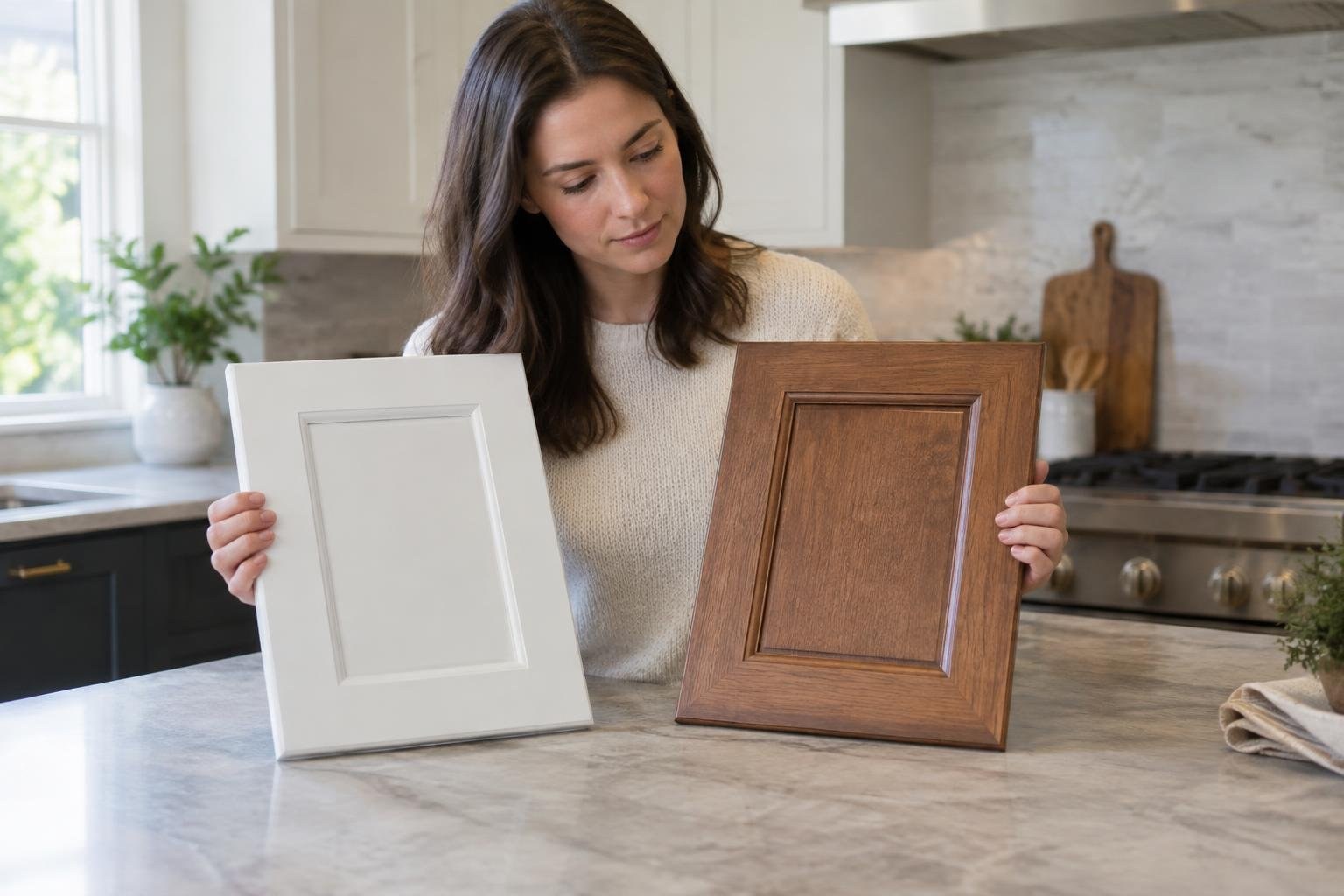
MDF vs. wood cabinets: the short answer
For a cabinet purchase, “MDF versus wood” is shorthand for several decisions: what the doors are made of, what supports them, what the cabinet box is made of, and how the visible surfaces are finished. MDF is made from wood fibers combined with resin. Solid wood uses natural lumber. A veneer is a thin layer of real wood attached to a core such as MDF or plywood, so a wood appearance does not necessarily mean the whole part is solid wood.
These distinctions matter because the same cabinet can use more than one material. A painted door could be MDF while a frame or cabinet box uses wood or another material. Ask for a written specification naming each component. That makes it possible to compare products fairly and understand what you are paying for.
What the material labels mean
- MDF: An engineered panel made from wood fibers and resin. It is often used beneath paint, laminate, or veneer and is generally more cost-effective than solid wood.
- Solid wood: Natural lumber with visible grain and variation. It can provide an authentic wood appearance, particularly for a stained design.
- Veneer: A thin layer of real wood applied to a core material. It can provide a wood surface without making the entire panel solid wood.
“Wood cabinets” is not a precise enough description for shopping. It might refer to solid wood doors, a wood frame, a veneer, or only some of the cabinet components. MDF is also not automatically an indicator of poor quality. Material is one part of the specification; the build, finish, and fit matter too.
When should you look more closely at cabinet materials?
Consider comparing materials when you are selecting new doors, planning a painted cabinet design, replacing damaged or outdated cabinets, or reviewing a quote that uses terms such as “wood,” “solid wood,” or “MDF.” The label may affect the look and price you expect, but it does not tell you everything about the cabinet.
For example, if you want a smooth painted appearance, ask whether the proposed door is MDF and how the finish is applied. If you want natural grain, ask whether the visible surface is solid wood or veneer and what the core is. If a quote says “wood cabinets,” ask which pieces are wood and which are engineered panels. These questions are useful before ordering because changing a door material or finish can affect both the design and the estimate.
Material selection alone cannot diagnose a cabinet problem. If doors are separating, surfaces are damaged, or a finish is failing, document where and how the issue appears, then ask the supplier or a cabinet professional to assess the actual part and finish.
Cost: what can you expect to affect the price?
MDF is generally more cost-effective than solid wood, but there is no reliable project price based on material alone. The scope, dimensions, door design, finish, hardware, and other cabinet components also shape a quote. A low material price does not establish whether the full cabinet is a good value, and a higher price does not by itself prove better construction.
Ask for an itemized estimate that identifies:
- Door and drawer-front materials, plus the finish.
- Materials for cabinet boxes, frames, shelves, and drawer parts.
- Hardware and any included accessories.
- Delivery, installation, removal, and other work included in the project.
- What is excluded, how changes are priced, and what warranty applies.
Compare estimates with matching scope and specifications. If one quote uses solid wood doors and another uses painted MDF, they are not direct price comparisons until you understand the materials, finish, and included work.
Factors that affect the project and the quote
Several project choices affect what you pay and the result you get. Material is one factor, but it is not the whole project. A simple door design and a more elaborate profile may be quoted differently. A natural stained finish and a painted finish call for different visible surfaces and materials. Cabinet quantity, dimensions, hardware, storage details, and the extent of installation work also belong in the comparison.
A cabinet may combine painted MDF doors with wood frames and plywood boxes. This is one possible combination, not a universal specification. It illustrates why an overall “wood” or “MDF” label may conceal important differences in materials. Ask what the particular product includes.
Before accepting a quote, have the provider explain whether the material listed applies to doors only or to the entire cabinet. Confirm finish, hardware, accessories, installation scope, and any work that is priced separately. If a material upgrade is proposed, ask what difference it makes to your chosen look or use.
Options and tradeoffs: MDF, solid wood, and veneer
Choose MDF when: you want a painted surface or a finish over a stable panel, and you value its generally lower cost compared with solid wood. MDF is also used as a substrate for laminate and veneer finishes. Ask the supplier for the product’s care instructions and confirm the full cabinet specification.
Choose solid wood when: natural grain, the variation of real lumber, or an authentic stained-wood appearance is central to your design. Solid wood can have a higher price, and natural wood can move with humidity, potentially contributing to slight panel movement or cracks over time.
Consider veneer when: you want a real wood surface but are comparing alternatives to a panel made entirely of solid wood. The veneer is real wood, but the underlying core is a separate material. Ask what that core is.
These are tradeoffs, not a ranking. MDF is not automatically the right choice for every painted cabinet, and solid wood is not automatically the best choice for every cabinet. Compare a sample in the actual finish and ask how the maker constructs the specific door style.
How to compare options before you buy
When you begin comparing product specifications, collect the same information from each supplier. This makes the choices easier to judge and reduces the chance that two different products will be treated as equivalent simply because both are called “wood cabinets.”
- Choose the door style and decide whether you want paint, stain, laminate, or a veneer appearance.
- Ask what the door, frame, box, shelves, and drawer parts are made from.
- Request the finish and care guidance for the exact product.
- Compare the hardware, included storage features, warranty, and project scope.
- Review a sample or display in the color and finish you are considering.
As you compare specifications, you can also browse cabinet options at CabinetSupply.com to explore possibilities for your project. Use product descriptions as a starting point, then verify component details and project requirements before making a purchase.
What to expect: ordering and timing
Material selection is only one part of project timing. The schedule depends on the product and project arrangement, so ask the seller or installer for the expected steps and dates rather than relying on a general promise. Confirm when selections must be finalized, what happens after an order is placed, when the cabinets are expected, and how installation is coordinated.
Ask whether the quoted schedule includes delivery and installation, or only product availability. Find out how a design or material change affects the timeline, and who will tell you if a date changes. If you are coordinating cabinets with other work, have the responsible providers confirm the sequence with you.
Do not assume that two products with different materials have the same lead time. Get the timing for the specific product and location in writing, and treat it as a project-specific estimate.
How to choose a qualified cabinet provider
Choose a provider who can clearly explain the product rather than relying on a vague material label. Ask to see the written specifications and a sample of the door and finish. A helpful comparison should identify the materials of the visible panels and the other cabinet parts, explain available finishes, and answer questions about care and warranty.
Before agreeing to a proposal, review the provider’s relevant project examples, references, written scope, schedule, payment terms, and process for addressing changes or concerns. Check any licensing or insurance requirements that apply to the work in your area. Ask who is responsible for ordering, delivery, installation, and resolving issues if the supplied product does not match the agreed specification.
Do not choose only by the lowest total. Compare equivalent materials, finishes, hardware, inclusions, exclusions, and responsibilities. If an answer about whether a part is MDF, solid wood, or veneer is unclear, ask for the specific product details in writing before ordering.
Permits, credentials, warranties, and safety
Material choice by itself does not tell you whether a permit, credential, or particular safety step applies to the project. Requirements can depend on the work and location. If your project includes work beyond selecting or replacing cabinets, ask the provider what approvals or qualified trades may be needed, then confirm applicable requirements with your local building department or relevant authority.
Ask for written warranty terms for the specific cabinet and finish. Clarify what components are covered, how long coverage lasts, who handles a claim, and whether installation is covered separately. Get the care instructions for the exact finish, not a general recommendation for a different cabinet surface.
For safety, leave work that involves utilities or other specialized construction to appropriately qualified people. Have the project scope and responsibilities documented before work begins. These steps help you distinguish a material comparison from questions that need project-specific or local answers.
Ways to save without making a blind tradeoff
To manage cost without compromising the decision, start with the look you need and compare materials that can achieve it. If you want a painted surface, ask whether an MDF door meets your design and budget needs. If natural grain is important, compare solid wood and veneer options and ask what core each veneer uses. MDF is generally more cost-effective than solid wood, but confirm the difference in an itemized quote for your chosen products.
- Keep the cabinet layout and door style consistent while comparing material options.
- Ask which specifications are included before paying for an upgrade.
- Compare samples in the finish you intend to order.
- Check whether hardware or accessories are optional rather than included.
- Get care guidance and warranty terms before substituting a lower-priced product.
Saving safely means comparing like with like, not removing important information from the quote. Avoid choosing a product based on a broad label or an unexplained price difference.
Mistakes, red flags, and a practical checklist
Use this checklist before you approve a cabinet order:
- Have I identified the material for the doors, frames, boxes, shelves, and drawer parts?
- Do I know whether a “wood” surface is solid wood or veneer over a separate core?
- Have I reviewed the finish on a sample or display that matches my intended selection?
- Does the estimate itemize hardware, installation, delivery, and exclusions?
- Have I received care instructions, warranty terms, and a project-specific schedule?
- Are changes, payments, and problem resolution described in writing?
Common mistakes include treating “wood cabinets” as a complete specification, assuming MDF means every cabinet component is MDF, and comparing estimates with different finishes or scopes. Another risk is selecting a material based on a general claim instead of checking the particular door and finish. A clear written specification helps prevent misunderstandings and gives you a fair basis for comparison.
Care, durability, and future repairs
Ask for care instructions that match your cabinet’s actual surface and finish. MDF, solid wood, and veneer describe materials or construction, but they do not by themselves specify how a particular finished product should be cleaned or maintained. Follow the product maker’s directions and ask how to address a scratch, chip, or other damage in the finish.
For future repairs or additions, keep a copy of the cabinet specifications, finish selection, warranty, and supplier information. That record helps you identify what material and finish were used rather than trying to infer them from appearance. If a panel shows movement or a painted joint develops a visible crack, ask a qualified provider to assess the particular part and construction before deciding whether a repair or replacement is appropriate.
Frequently asked questions
What is the difference between MDF and solid wood cabinets?
MDF is made from wood fibers combined with resin, while solid wood is made from natural wood. The distinction matters for appearance, finish choices, price, and how each material responds to environmental changes. Ask what material is used for each cabinet component, not just the doors.
Are MDF or solid wood cabinets better?
Neither is automatically better for every project. MDF can be a practical option for painted doors and may cost less than solid wood. Solid wood offers natural grain and an authentic wood appearance, particularly when the design calls for a stained finish. Compare construction and finish along with the material.
Are MDF cabinets good for painted finishes?
MDF is often selected for painted cabinet doors because it is less prone than natural wood to movement that can show as cracks or joint separations in a painted finish. Ask the cabinet supplier about the specific door construction, finish, and care instructions.
Are MDF cabinets cheaper than wood cabinets?
MDF is generally more cost-effective than solid wood, but the price of a cabinet project also depends on its size, design, finish, hardware, and other construction choices. Request an itemized estimate that identifies the material used for each component.
Can cabinets combine MDF and solid wood?
Yes. A cabinet can combine MDF and solid wood, such as an MDF door with a wood frame. It may also have veneer over a separate core. Confirm the material of the doors, frames, boxes, shelves, and drawer parts before comparing quotes.
What should I ask before buying MDF or wood cabinets?
Ask about the materials and construction of each part, the finish and care requirements, what the quote includes, the expected schedule, and the warranty. Review a sample or display door in the finish you are considering, and get the answers in writing.
People Also Ask
What does MDF mean in cabinets?
MDF is an engineered material made from wood fibers and resin. Solid wood is made from natural lumber. Ask which material is used for each cabinet component, since one cabinet can combine both.
Is MDF a good material for kitchen cabinets?
MDF is commonly used beneath laminate or veneer finishes, and it can be a cost-conscious option. The right choice depends on the finish, cabinet design, and other materials in the cabinet.
Do MDF cabinets crack like wood cabinets?
Natural wood changes with humidity and temperature more than MDF, while MDF is less likely to show movement-related cracks in painted surfaces. Follow the cabinet maker’s guidance for the specific product and room.
Which looks better, MDF or wood cabinets?
Solid wood offers natural grain and an authentic wood appearance. MDF may be more affordable and is often used for painted or covered surfaces. Compare the specific finish and construction before deciding.
Are cabinet doors and cabinet boxes made from the same material?
Not necessarily. Cabinet makers may use different materials for doors, frames, boxes, and interior parts. Ask for a written component-by-component specification instead of relying on a single overall material description.
Should I choose MDF or solid wood for cabinet doors?
There is no universal winner. Decide based on the desired finish, natural grain, budget, cabinet construction, and the maker’s care instructions. A sample door can help you assess the appearance in your space.
MDF and solid wood can both be sensible cabinet choices. The better fit depends on the door style and finish you want, how much visible natural grain matters to you, your budget, and the cabinet’s complete construction. Compare the door, box, frame, finish, hardware, and warranty as separate parts rather than relying on a broad “all wood” or “MDF” label.
Your next step
Explore cabinet options at CabinetSupply.com for your next project.
Last reviewed and updated November 2, 2026 by the CabinetSupply Editorial Team.
Sources
- MDF vs. Wood Kitchen Cabinets: A Comprehensive Comparison
- Kitchen Cabinet quality- MDF or wood? | Houzz Forum
- MDF vs. Natural Wood Cabinetry: A Comparison
- MDF vs. Wood Center Panels in Cabinetry: What’s the Difference? – Simply Cabinetry
- MDF vs. Solid Wood Cabinets: Pros and Cons of Each
- r/HomeImprovement on Reddit: Kitchen cabinets -MDF or no?
- MDF vs. Wood Cabinets | Cabinet Door Store
- Wood Kitchen Cabinets: How to Choose the Right Style, Materials, and Project Plan