
Cherry kitchen cabinets are known for warm wood color, but “cherry” does not describe one exact shade or guarantee that every cabinet part is made from solid cherry. The finished look can vary with the wood, stain, glaze, and topcoat. Before choosing a cabinet line, compare samples in your kitchen, check the written construction details, and confirm what the estimate includes. This guide explains how to evaluate cherry cabinets, plan around their color, compare options, and ask useful questions before ordering.
What to know about cherry kitchen cabinets
Cherry kitchen cabinets are cabinetry made with cherry wood or components described as cherry. Cherry wood is associated with warm hue variations, and product options may range from golden brown or reddish brown to deeper, richer colors. A “cherry” label alone does not tell you the exact shade or specify the material used for every cabinet part. Review the cabinet’s written specifications and finish sample before deciding.
Start with three questions: What color do I want? Which parts of the cabinet are actually cherry? What is included in the quoted project? Those answers help you compare products fairly and avoid choosing based only on a name or a single display door.
Signs cherry cabinets may suit your kitchen
Consider cherry cabinets if you want warm wood tones and a visible wood character in your kitchen. They may be a good fit if the color works with your counters, flooring, backsplash, and lighting. They may be a poor fit if you want a cool-toned, uniform surface or are choosing a shade without seeing it in the room.
Cherry can look more golden, reddish, or deep brown depending on the product and finish. Some collections offer natural, medium, or darker furniture-inspired finishes, while others use a rich stain or glaze. These are not interchangeable descriptions, so ask for the exact sample and finish name for the cabinet you plan to order.
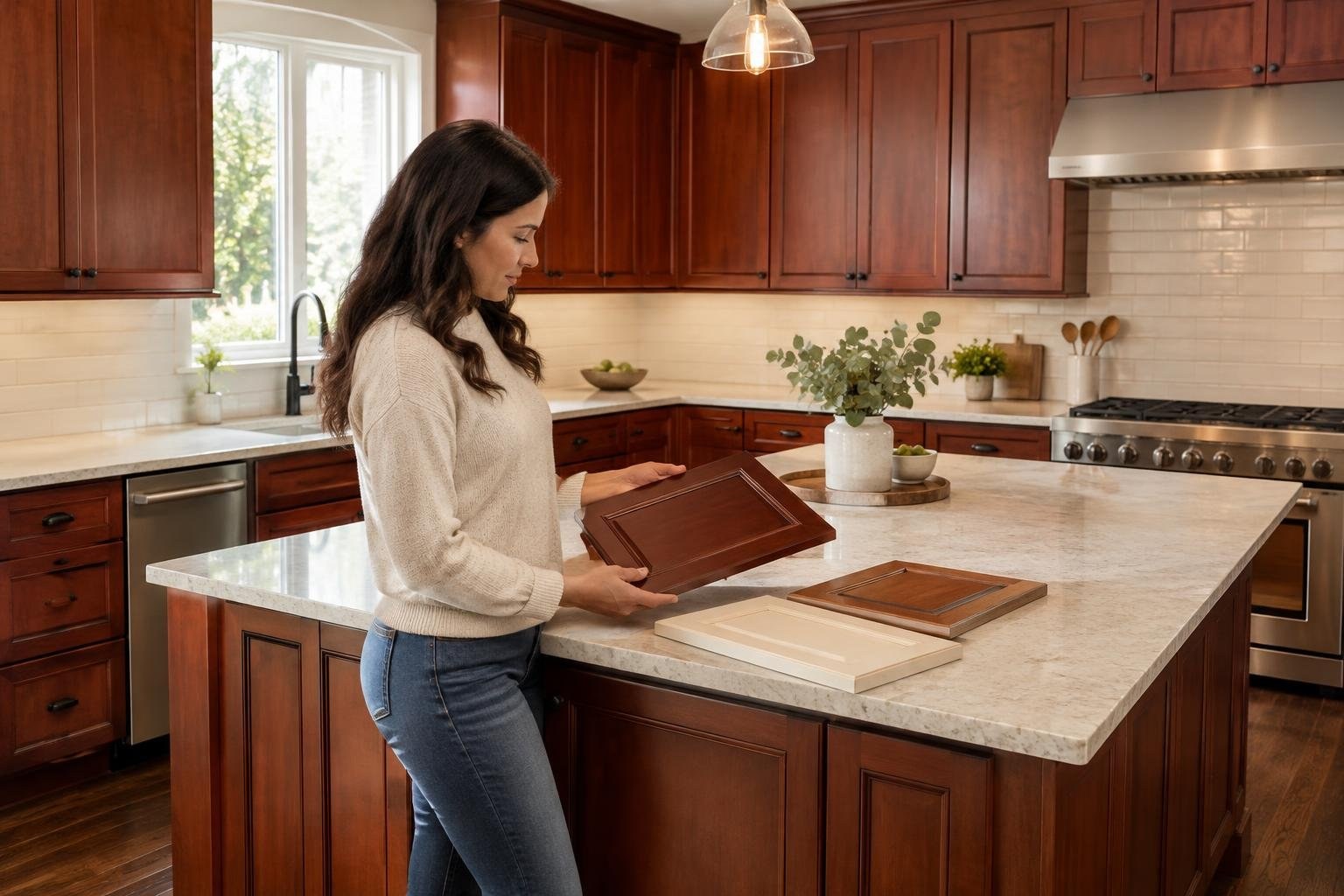
Look at your kitchen at different times of day and hold samples beside the permanent surfaces. If the room has limited natural light, consider the overall balance of cabinet color and lighter adjacent finishes rather than assuming a product photo will predict the result.
What the cabinet project includes and how it works
Cherry cabinet projects generally involve more than choosing a door color. The process includes defining the layout, selecting cabinet sizes and storage features, confirming materials and finish, ordering the cabinets, preparing the room, installing and adjusting the units, and coordinating any related countertop or appliance work.
- Set the scope. Decide whether this is a cabinet-only update or part of a broader kitchen remodel.
- Measure and plan. Record room dimensions, ceiling height, openings, appliances, and utility locations. Confirm measurements with the person responsible for the cabinet plan before ordering.
- Select the product. Review the cabinet specification, sample, storage options, hardware, and finish.
- Coordinate the work. Identify who handles removal, delivery, installation, countertops, and any plumbing or electrical work.
- Inspect at completion. Check alignment, doors, drawers, finish condition, and agreed project details before signing off.
The exact sequence depends on the project. Written responsibilities and a schedule help keep separate parts of the work coordinated.
Cherry cabinet cost and estimate considerations
There is no single useful price for cherry cabinets without knowing the product and project scope. A cabinet quote can change with cabinet class, dimensions, construction, finish, quantity, storage accessories, hardware, layout complexity, and the work included.
Ask each provider to separate or clearly describe:
- Cabinet units, fillers, finished panels, trim, and accessories
- Door and cabinet-box materials, finish, and hardware
- Delivery, removal of old cabinets, and disposal
- Installation, adjustments, and site preparation
- Countertop work and coordination with plumbing or electrical trades
- Taxes, allowances, exclusions, and charges for changes
Compare bids for the same layout, product specification, and scope. A low total may leave out work that another estimate includes. Ask providers to explain differences before using price alone to select a cabinet line or installer.
Factors that affect the project
The biggest project variables are the cabinet specification, the chosen appearance, and the complexity of the room and installation. A natural finish, a stained finish, and a deeper glazed finish can look quite different, so compare the exact finish offered rather than assuming every cherry product has the same color or protective coating.
Other details to settle include:
- Cabinet construction: Ask what materials are used for the box, doors, drawer parts, shelves, and backs.
- Layout: More corners, unusual dimensions, and fitted panels can require additional planning or components.
- Storage: Decide whether you need pullouts, drawer organizers, or other accessories before the order is finalized.
- Existing conditions: Uneven walls, floors, or out-of-square corners may affect fitting and finishing details.
- Related work: Countertops, appliance changes, plumbing, electrical work, flooring, and wall repairs can add scope.
- Product availability: Confirm current availability and the supplier’s stated production and delivery expectations directly.
Get selections, dimensions, exclusions, and allowances in writing. Clarify whether a change after approval affects price, schedule, or both.
Options and tradeoffs: color, finish, and cabinet type
Compare cherry options by the appearance you want and the cabinet construction you need. Natural cherry and clear or natural-looking finishes emphasize the wood’s own color variation. A light or golden finish can keep the look brighter, while medium stains and deeper stained or glazed finishes create a richer appearance. Product lines differ, so request a current sample and specification.
| Option | Potential benefit | What to verify |
|---|---|---|
| Natural or light cherry finish | Shows a lighter, warm wood look. | Ask for a sample and confirm the finish name and material details. |
| Medium stain | Offers a warmer, more pronounced color. | Check the color against counters, flooring, and backsplash. |
| Dark stain or glaze | Creates a deeper, furniture-inspired appearance. | Confirm whether the product is stained, glazed, or both. |
| RTA, stock, semi-custom, or custom line | Different product categories can provide different degrees of selection and sizing. | Compare construction, available dimensions, lead time, included parts, and installation responsibility. |
Do not treat a species name as a complete quality rating. Compare the cabinet box, door, drawer construction, finish, hardware, warranty terms, and service responsibility. Ask for those details in writing, particularly when a product name does not explain which components are solid wood, veneer, or another material.
Planning, measurements, and what to expect for timing
Plan the kitchen around its work needs as well as its appearance. Before ordering, document wall lengths, ceiling height, doors, windows, appliances, and the locations of plumbing, electrical, and ventilation equipment. Check that doors and drawers can open without striking each other, appliances, or nearby walls. Confirm walkways and countertop dimensions with the designer or installer responsible for the plan.
For a useful measurement appointment, clear access to the walls and note features that may affect installation, including visible floor or wall irregularities. Do not rely on rough measurements for a final cabinet order. Have the responsible professional verify the plan and resolve conflicts before the order is released.
Timing varies with the selected cabinet line, ordering and delivery, site readiness, installation scope, and coordination with countertops or other trades. Ask for milestone dates, who will contact you if a delivery changes, and what must be completed before the installer arrives. Avoid treating an informal estimate as a guaranteed schedule.
How to choose a qualified cabinet provider
Choose a provider who can explain the cabinet specification, coordinate the work they are responsible for, and provide a clear written estimate. Review relevant project examples, references, recent customer feedback, insurance, and any licenses required for the work in your location. Confirm who measures, orders, delivers, installs, handles damage, and returns to adjust doors or drawers.
Ask these questions before signing:
- Which materials are used in the cabinet boxes, doors, drawers, and finish?
- What is included and excluded from the estimate?
- Who is responsible for measurements and correcting ordering errors?
- What is the expected schedule, and how are delays communicated?
- What are the deposit, progress-payment, and final-payment terms?
- How are changes, damaged items, and installation concerns handled?
- What warranty applies to the product and to the installation, and how do I make a claim?
The lowest bid is not automatically the best value if it leaves out removal, finishing pieces, delivery, or adjustments. Compare written scope and responsibilities as carefully as the total.
Permits, credentials, warranties, and safety
Ask providers which permits, licenses, or trade credentials may apply to the work in your area. Requirements vary by location and by project scope, so confirm them with the relevant local authority rather than assuming a cabinet-only quote covers every approval. Work that changes plumbing, electrical systems, structure, or other regulated elements may require appropriately qualified professionals and local review.
Read product and installation warranty documents before purchase. Confirm what is covered, what is excluded, how long coverage lasts, who handles a claim, and whether the warranty applies to the product, finish, or installation. Do not rely on a sales description as a substitute for the written terms.
Have the work area prepared safely and ask the contractor how utilities and appliance connections will be managed during removal and installation. Do not attempt electrical, plumbing, or structural work unless qualified to do it and permitted to do it under local requirements.
Ways to save safely on cherry cabinets
Reduce cost by simplifying the plan without compromising fit, safety, or the parts you use every day. Keep existing appliance and utility locations when that suits the design, avoid unnecessary specialty accessories, and compare a few cabinet lines using the same layout and specification. Consider whether all cabinets need the same finish or whether a simpler selection can meet the project’s needs.
Ask whether the quote includes fillers, panels, trim, delivery, installation, removal, and disposal. Clarifying these items early can help prevent surprises. Compare the cost of changing the cabinet scope with the cost of doing related work later, and request a written change order before approving additional work.
Do not save money by skipping accurate measurements, buying a finish without seeing a sample, ignoring installation qualifications, or using unqualified labor for regulated tasks. Those shortcuts can create avoidable fit, coordination, or safety problems.
Mistakes to avoid and a pre-order checklist
Use this checklist before approving an order:
- View the actual door or finish sample and compare it with the room’s permanent surfaces.
- Confirm the finish name and ask whether it is natural, stained, glazed, or a combination.
- Get written details for the cabinet box, doors, drawer parts, shelves, hardware, and finish.
- Verify dimensions, appliance openings, utility locations, and door and drawer clearances.
- Review fillers, finished ends, trim, accessories, delivery, installation, and removal in the estimate.
- Ask who is responsible for measurements, damage, adjustments, and schedule updates.
- Read the product and installation warranty documents.
- Confirm local requirements for any plumbing, electrical, structural, or other regulated work.
Common mistakes include choosing from a small online image, assuming all cherry cabinets have the same color, and treating a wood label as proof of how the whole cabinet is built. Another risk is comparing bids with different scopes. Resolve these questions before approving the order, when selections and dimensions can still be reviewed together.
Care and deciding whether to update existing cabinets
Care instructions depend on the cabinet’s actual finish and the manufacturer’s directions. Ask for the approved cleaning method and products, and follow the written guidance rather than testing an unfamiliar cleaner on a visible area. Keep documentation for the cabinet line, finish, and warranty so you can identify the product if a repair or replacement part is needed.
If existing cherry cabinets look dated or worn, first assess the doors, boxes, finish, and layout. Refinishing changes the surface appearance; refacing changes visible exterior components; replacement provides an opportunity to change the cabinet plan. The appropriate choice depends on condition, desired appearance, and project scope. Have a qualified provider inspect the cabinets before deciding.
Frequently asked questions
What are cherry kitchen cabinets?
Cherry kitchen cabinets are cabinets made with cherry wood or cherry-finished components. Ask the seller which parts are solid cherry, veneer, or another material, since the word “cherry” alone does not specify how every cabinet component is built.
What color are cherry cabinets?
Cherry tones can range from golden or reddish brown to deeper, richer shades. Compare samples in your kitchen’s lighting, and ask whether the color comes from the wood’s natural appearance, a stain, a glaze, or a combination.
Are cherry cabinets more expensive than other cabinets?
Not necessarily. Cabinet prices depend on the cabinet line, materials, construction, finish, size, layout, accessories, and installation scope. Request itemized estimates for the same plan and selections to make a useful comparison.
Do cherry cabinets work in a small kitchen?
Cherry cabinets can suit a light kitchen when paired with lighter finishes and colors, but the result depends on the cabinet tone, room lighting, and nearby materials. Review samples beside your countertop, flooring, and backsplash before ordering.
Can cherry cabinets be painted or refinished?
You may be able to change the look through refinishing or painting, depending on the cabinet’s condition and finish. Have a qualified finisher inspect the doors and cabinet surfaces before deciding whether refinishing, refacing, or replacement is appropriate.
How do I compare quotes for cherry cabinets?
Compare the written specifications, not just the wood name or sample door. Check cabinet-box and door materials, finish, storage features, hardware, installation scope, delivery, warranty terms, and how changes or damage will be handled.
People Also Ask
Do cherry cabinets have a red color?
Cherry cabinets may show a range of warm tones, from golden or reddish brown to deeper shades. A sample helps you judge the actual color and grain rather than relying on a product name alone.
What finishes are available for cherry cabinets?
Natural-looking cherry finishes, medium stains, and deeper stained or glazed looks are available in some cabinet collections. Check the specific product’s finish options and view a sample before choosing.
What colors go with cherry kitchen cabinets?
They can be paired with light surfaces to create contrast or with warm neutrals for a coordinated palette. Test the combination with cabinet and countertop samples in the room’s lighting.
Are cherry cabinets made from solid wood?
Ask the seller to identify the material used for the doors, face frames, sides, shelves, and drawer components. A cabinet described as cherry may use cherry in some parts and other materials elsewhere.
What should I compare when buying cherry cabinets?
Compare the cabinet specification, finish, included accessories, delivery, installation, and warranty terms. Similar-looking samples can represent different product specifications, so verify the details in writing.
How long does it take to install cherry cabinets?
The project schedule depends on the product’s availability, ordering, delivery, site preparation, installation, and any related countertop or utility work. Ask the provider for a written schedule and clarify what could change it.
Cherry kitchen cabinets can bring warm color and visible wood character to a kitchen, but the right choice depends on the exact tone, cabinet construction, layout, and finish you select. Compare actual samples in your room, confirm what parts of each cabinet are cherry, and review complete project estimates before committing. With those details settled, you can choose a look that feels intentional and fits your kitchen’s needs.
Your next step
Explore cabinet options at CabinetSupply.com for your next project.
Last reviewed and updated November 2, 2026 by the CabinetSupply Editorial Team.
Sources
- More Kitchen Schemes! 6 Color Palettes to Make Your Cherry Kitchen SO Much Better (I Promise!) – Emily Henderson
- Cherry Wood Kitchen Cabinets: Design Ideas & Styling Tips | George Cabinetry
- Cherry Unfinished Kitchen Cabinets
- Cherry Kitchen Cabinets: All You Need to Know
- Charleston Cherry Cabinets- RTA Cherry Kitchen Cabinets
- Cherry Kitchen Cabinets | In Stock | Shop online | Free Shipping
- Wood Kitchen Cabinets: Styles, Finishes & Design Ideas
- Shaker Cherry Natural Framed Cabinets
- Best Wood for Kitchen Cabinets: How to Choose
- Wood Kitchen Cabinets: How to Choose the Right Style, Materials, and Project Plan