
Choosing the best material for kitchen cabinets is not simply a choice between solid wood and a cheaper alternative. Cabinet boxes and doors can use different materials, and each has tradeoffs in appearance, durability, moisture response, and price. The right choice depends on the cabinet’s location, expected use, preferred look, and the specifications of the finished product. This guide explains how to compare materials, what to ask a supplier, and how to avoid paying for a feature that does not fit your needs.
What “cabinet material” means
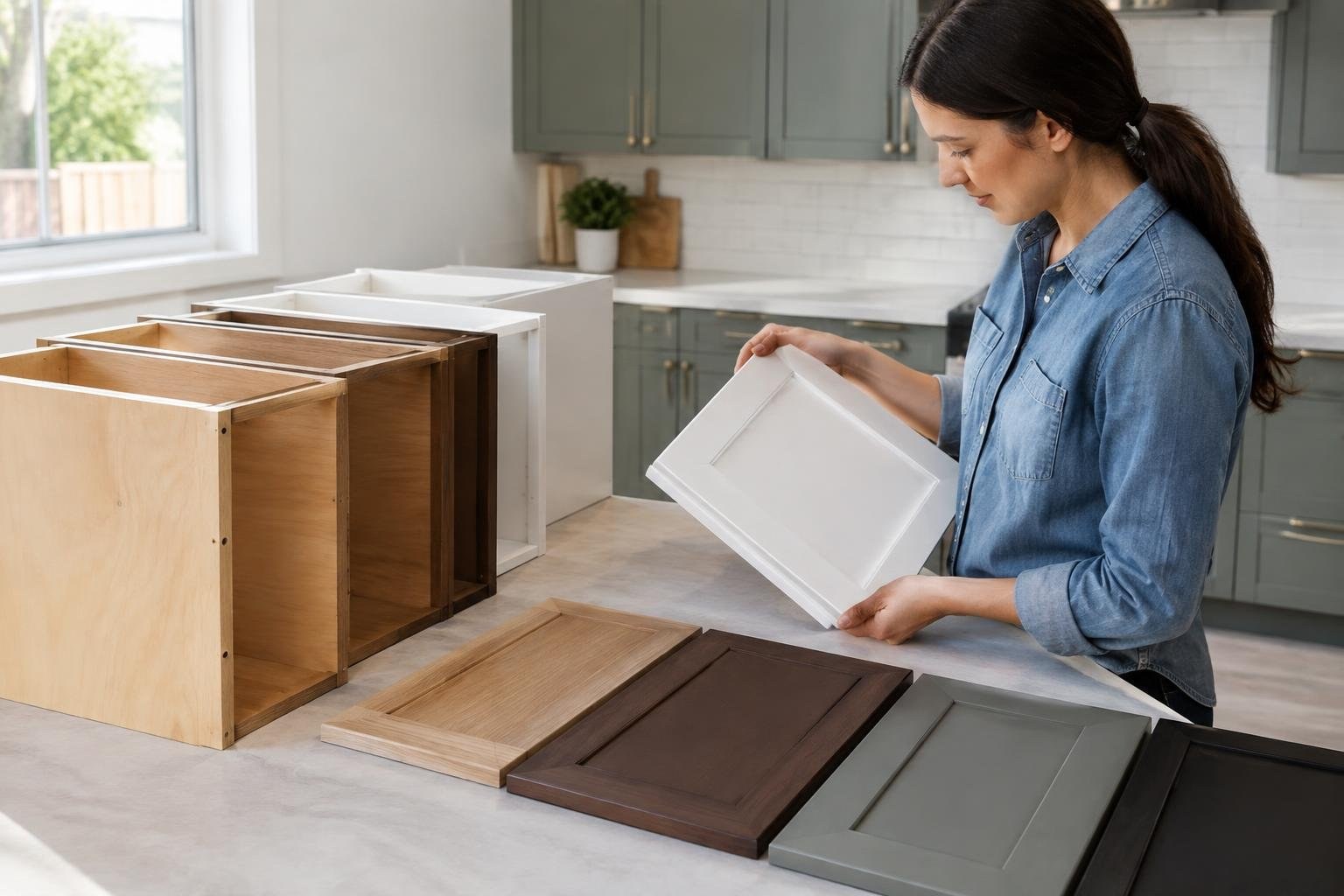
Kitchen cabinets are assemblies, not single blocks of material. The box, shelves, doors, drawer fronts, and finish may use different materials. That means a description such as “wood cabinets” may not tell you what the cabinet box is made from or how the visible doors are constructed.
Start by separating two decisions:
- Cabinet box: the sides, bottom, top, back, and shelves that create the storage structure.
- Doors and drawer fronts: the visible surfaces that establish much of the kitchen’s appearance.
Then compare the finish and the construction details. Material matters, but no single label answers every question about performance. A well-matched combination can make more sense than choosing the same material for every component.
Best material for kitchen cabinets: the main options
For many buyers, plywood is a strong starting point for cabinet boxes because it is widely regarded for strength, stability, and moisture resistance. It does not automatically make every cabinet the right choice: compare the full design, finish, and product specifications.
Solid wood is often selected for its natural appearance and versatility. It can cost more, and wood can expand and contract as humidity and temperature change. Solid wood may be used for visible components such as face frames and drawer fronts while another material is used elsewhere.
Particleboard uses wood chips and sawdust bonded together. It is a lower-cost option, but standard particleboard may sag under weight, chip, or swell with moisture. It may be a better fit for lighter-use or concealed applications than for a heavily used, moisture-exposed location.
Veneer can provide a wood appearance without making every surface solid wood. Thermofoil, PVC, stainless steel, and aluminum are other cabinet surface or material options identified in product discussions. Their presence in the market does not by itself establish suitability: request exact product details and care guidance before comparing them.
How the options compare
| Material | Potential advantages | Tradeoffs to consider | Often worth considering for |
|---|---|---|---|
| Plywood | Strength, stability, and moisture resistance are commonly cited advantages for cabinet boxes. | Ask for the exact box specification and compare the rest of the cabinet, including finish and doors. | Buyers prioritizing a robust box material. |
| Solid wood | Natural appearance, variation, versatility, and the option to refinish. | Often costs more and may change with humidity and temperature. | Buyers who value natural wood character and future refinishing. |
| Particleboard | Cost-effective relative to other material choices. | Standard particleboard can sag, chip, or swell from moisture. | Lighter-use or concealed applications when specifications suit the setting. |
| Veneer | Can provide a wood appearance as part of a mixed-material cabinet. | Confirm the substrate, edge treatment, finish, and care requirements. | Buyers comparing appearance and budget across cabinet components. |
| Thermofoil, PVC, or metal | Available alternatives for contemporary looks and particular design preferences. | Confirm the exact product construction, finish, care, and warranty rather than relying on a category name. | Projects where the specific product suits the desired style and requirements. |
How to match material to kitchen use and style
The best material is the one that suits the cabinet’s location and workload. Before shopping, identify which cabinets will hold heavy or frequently used items, which areas may encounter moisture, and which surfaces will be most visible. This is a practical way to avoid paying for one material everywhere when different cabinet parts have different priorities.
For visible doors, think about grain and the overall look. Oak has a prominent grain that may feel too textured for some designs. Birch has a smoother surface and simpler grain that can provide a quieter backdrop. Solid wood also responds to changes in humidity and temperature, so consider the room and the supplier’s product guidance when selecting it.
For box material, focus on the cabinet’s structural role and the product specification. Plywood is a widely regarded option for strength and moisture resistance. If considering particleboard, ask whether its grade and intended placement are suitable for the anticipated load and exposure.
Finish matters alongside the underlying material. Ask what finish is supplied, how it should be cleaned, and what conditions the warranty covers. A material’s potential does not remove the need for an appropriate finish.
Signs your current cabinet material may not suit the kitchen
Consider whether your existing cabinets show signs that the material or construction is not meeting your needs. Examples to investigate include shelves that appear to sag under their contents, chipped surfaces, swelling around moisture-exposed areas, or doors whose appearance no longer suits the kitchen. These observations do not prove that the whole cabinet must be replaced; inspect the cause and the affected components first.
Particleboard is specifically noted as vulnerable to sagging under weight, chipping, and swelling from moisture. If those problems appear, ask whether the issue is limited to a component or indicates a broader mismatch between the cabinet material and its use. A cabinet professional can assess the condition and explain whether repair, replacement of a component, or new cabinets are appropriate.
For a planned renovation, use the same logic before problems occur. A cabinet that will carry substantial contents or sit near a moisture source deserves more careful scrutiny than one with a lighter role. Ask for written product specifications and placement recommendations rather than relying on appearance alone.
Cabinet material costs and what affects the estimate
Particleboard is described as cost-effective, while solid wood is described as a higher-cost choice. Treat those as relative comparisons, not a quote or a promise about the price of a particular cabinet line.
For a useful estimate, ask suppliers to identify the material used for each major component and show which options are included. Compare the same layout, cabinet quantity, door style, finish, and accessories across proposals. If one estimate uses plywood boxes and another uses a different box material, the totals are not a like-for-like comparison.
Ask what the quoted price includes: cabinets, delivery, installation, removal of existing cabinets, finishing pieces, and any separately priced work. Confirm exclusions in writing. A lower material price may not produce the lowest complete project cost if the scope or included work differs.
Explore Cabinet Supply to browse cabinet options and begin comparing materials for your kitchen.
Factors that affect the material decision and project scope
Several decisions shape a material comparison. Separate them so you can see what is driving a quote:
- Component: box, shelf, door, drawer front, or exposed side panel.
- Use: expected load, frequency of use, and whether the cabinet is in a moisture-exposed area.
- Appearance: grain, color, surface, and how much natural variation you want.
- Finish: the supplied finish and its care instructions. Finishing is important even for durable materials.
- Product construction: the exact material and specification, not just a broad label.
- Scope: cabinet quantity, layout, delivery, installation, and related work included in a proposal.
Keep a written comparison sheet. Record the material by component, finish, included work, warranty terms, and any exclusions. This makes it easier to spot when two bids are describing different products or levels of work.
What to expect: selection process and timing
Choosing cabinet material is one part of a larger project sequence. First, decide what will stay and what will change. Then confirm the cabinet layout and the material specifications for boxes, doors, and visible panels. Review samples and product information before approving the order. After delivery, verify that the supplied components match the written selection before installation proceeds.
Project timing depends on the selected product and the work included. Confirm how schedule changes will be handled.
Before finalizing, identify who is responsible for measurements, delivery, installation, and adjustments. If cabinets are being installed as part of a remodel, coordinate material decisions with the person managing the larger work so that cabinet specifications and the project plan stay aligned.
Browse cabinet options at CabinetSupply.com as you compare materials and styles.
How to choose a qualified cabinet provider
There is no universal sign that one cabinet material is best for every kitchen. Start by listing priorities: budget, appearance, moisture exposure, expected use, and whether future refinishing matters to you. Then compare the available material combinations against that list.
- Request a component-by-component specification for boxes, shelves, doors, and exposed panels.
- Ask what finish is supplied and how to care for it.
- Compare written quotes with the same layout, cabinet count, and included work.
- Ask how the supplier handles measurement confirmation, delivery issues, and product concerns.
- Review the written warranty and identify what it does and does not cover.
When evaluating a provider, look for clear product descriptions, an itemized proposal, responsive answers, a defined installation responsibility, and a process for changes or problems. Verify any credentials or licensing that apply to the work in your area rather than assuming the same requirements apply everywhere.
Permits, warranties, and safety questions
Permit and licensing requirements vary by location and by the work being done. Confirm local requirements with the appropriate authority and ask the provider which party is responsible for obtaining any required approvals. Do not treat a material selection or cabinet quote as confirmation that the wider remodeling work meets local rules.
Ask for warranty terms in writing before committing. Check which cabinet components and finishes are covered, what conditions apply, and how to report a problem. Do not assume a specific lifespan or warranty period from the material name alone.
Cabinet material selection does not authorize homeowners to carry out electrical, plumbing, structural, or other regulated work. If the project involves those systems, use qualified help and confirm local requirements. Follow the product’s care and installation instructions, especially where moisture exposure is a concern.
Ways to save without choosing the wrong material
You can control costs without choosing a material that does not suit the cabinet’s job. First, identify where a higher-specification box material matters most and where a lower-cost option could be appropriate. Particleboard is described as cost-effective and better suited to lighter-use applications; that is not a reason to use it indiscriminately in areas exposed to moisture or heavy loads.
Compare mixed-material designs. A project may use plywood for boxes while selecting door material according to appearance and budget. Solid wood can be concentrated in visible components if its natural character is a priority, while other materials are considered for less visible parts.
To save safely, keep the layout and proposal scope consistent while comparing suppliers. Ask about alternative door materials or finishes, but request the revised specifications in writing. Avoid making a decision on material price alone if the cabinet’s intended use, finish, or construction changes at the same time.
Common mistakes, red flags, and a buyer checklist
Use this checklist before approving an order:
- Have I identified the material for the box, shelves, doors, and exposed panels?
- Does the selected material suit the cabinet’s expected use and exposure to moisture?
- Have I considered how visible grain, color, and surface texture fit the kitchen?
- Have I reviewed the finish and its care instructions?
- Are quotes based on the same cabinet quantity, layout, specifications, and included work?
- Are delivery, installation, removal, and exclusions stated clearly?
- Have I reviewed the written warranty and schedule?
- Have I confirmed local permit or credential requirements where applicable?
Common mistakes include treating “wood” as a complete specification, assuming every solid-wood cabinet behaves identically, choosing a lower-cost material without considering moisture or load, and comparing totals that cover different products. Be cautious of vague proposals that do not state which material is used for each component or what work is excluded.
Make the material decision with the whole cabinet in view
The best kitchen cabinet material is a considered match between component, use, appearance, and budget. Plywood is a widely regarded choice for boxes, solid wood can bring natural character and refinishing potential, and particleboard can be a cost-effective fit for lighter-use applications when the product and location are appropriate. Other door and surface materials may also suit a design, but their exact specifications matter.
Before choosing, compare the whole cabinet, get material details in writing, and ask how the product should be cared for. Explore Cabinet Supply to review cabinet options and continue planning your project.
Frequently asked questions
What is the best material for kitchen cabinet boxes?
There is no single best material for every kitchen. Plywood is a commonly favored choice for cabinet boxes because of its strength, stability, and moisture resistance, while solid wood, veneer, and other materials may suit different door styles and budgets. Compare the full cabinet construction and finish before deciding.
Are solid wood cabinets worth the extra cost?
Solid wood is a good option if you value natural appearance and the ability to refinish it. It generally costs more than lower-cost alternatives and can expand or contract as humidity and temperature change. Consider it alongside the finish, construction, and care requirements.
Are particleboard kitchen cabinets a bad choice?
Particleboard is a lower-cost option that may suit lighter-use or concealed applications. Standard particleboard can be more vulnerable to sagging, chipping, and swelling from moisture than more robust choices, so consider the location and expected use before selecting it.
Can kitchen cabinets use different materials for the box and doors?
A combination can be sensible: choose cabinet-box and door materials separately instead of requiring them to match. Plywood boxes with doors selected for appearance and budget are one example. Check the complete specifications because the material alone does not describe the whole cabinet.
Do solid wood kitchen cabinets change with humidity?
Solid wood can expand and contract with changes in humidity and temperature. Ask how the cabinet is constructed and finished, and follow the supplier’s care guidance for the specific product rather than assuming all wood cabinets behave identically.
How can I compare cabinet material prices accurately?
Compare more than the quoted material name. Ask for the box, door, finish, and construction specifications, and clarify what is included in the estimate. Material, cabinet quantity, design choices, and project scope can all affect the price, but local prices require a location-specific quote.
People Also Ask
Why does cabinet finish matter when choosing a material?
The finish matters alongside the underlying material. Ask which finish is supplied, how to clean it, and what conditions the warranty covers. Follow the product’s care guidance.
How do oak and birch differ as cabinet-door choices?
Oak has a prominent grain that may feel too textured for some designs. Birch has a smoother surface and simpler grain for a quieter backdrop. Choose based on the look you want.
What should I consider for cabinets near moisture?
Identify which areas may encounter moisture, then ask whether the material grade and placement suit that exposure. Standard particleboard can swell with moisture, so review the product specifications and care guidance.
What should I check if a cabinet shelf is sagging?
Check the shelf, its contents, and the surrounding cabinet to determine whether the issue is limited to one component or indicates a broader mismatch between the material and its use. Standard particleboard can sag under weight; a cabinet professional can assess the cause.
Which kitchen cabinet material is most affordable?
Particleboard is described as a lower-cost option, while solid wood is described as a higher-cost choice. Total price also depends on cabinet quantity, door choices, finish, construction, and project scope, so compare like-for-like written estimates.
What should I ask before buying kitchen cabinets?
Ask for the material and construction details for the boxes and doors, finish information, product care guidance, and written warranty terms. Compare the complete cabinet rather than one material label.
There is no single best material for every kitchen cabinet. A practical starting point is to choose the cabinet-box material for the demands of the space, then compare door materials for appearance, maintenance, and budget. Plywood boxes paired with doors chosen to suit your style are one approach; solid wood, particleboard, veneer, thermofoil, and metal each have tradeoffs. Compare the full construction and finish, not just the material name. Explore Cabinet Supply to browse cabinet options for your project.
Your next step
Explore cabinet options at CabinetSupply.com for your next project.
Last reviewed and updated November 2, 2026 by the CabinetSupply Editorial Team.
Sources
- Choosing Quality Kitchen Cabinet Material – Neil Kelly
- 12 Popular Kitchen Cabinet Materials – Pros & Cons – Laurysen Kitchens
- The Most Durable Kitchen Cabinet Materials Ranked (2026 Update)
- The Top 5 Types of Kitchen Cabinet Materials (Pros & Cons)
- Best Kitchen Cabinet Materials: Types, Comparison & How to Choose – ROBAM Living
- What Is the Best Material for Kitchen Cabinets? – StoneHill Cabinetry
- 11 Best Types of Kitchen Cabinet Materials [Complete Analysis]
- 7 Best Kitchen Cabinet Materials: Which One is Right for You?
- Wood Kitchen Cabinets: How to Choose the Right Style, Materials, and Project Plan