
Inset kitchen cabinets are defined by the way their doors and drawer fronts fit: each front sits inside an opening in the cabinet’s face frame, leaving the frame visible when closed. That small design distinction has a noticeable effect on the kitchen’s appearance and makes measurement, fit, and adjustment important parts of the buying conversation. Before choosing inset cabinetry, compare it with overlay styles, review the materials and finish being quoted, and ask who is responsible for measuring, installation, and final adjustments. This guide explains what to expect, which questions to ask, and how to compare proposals without relying on unsupported price promises.
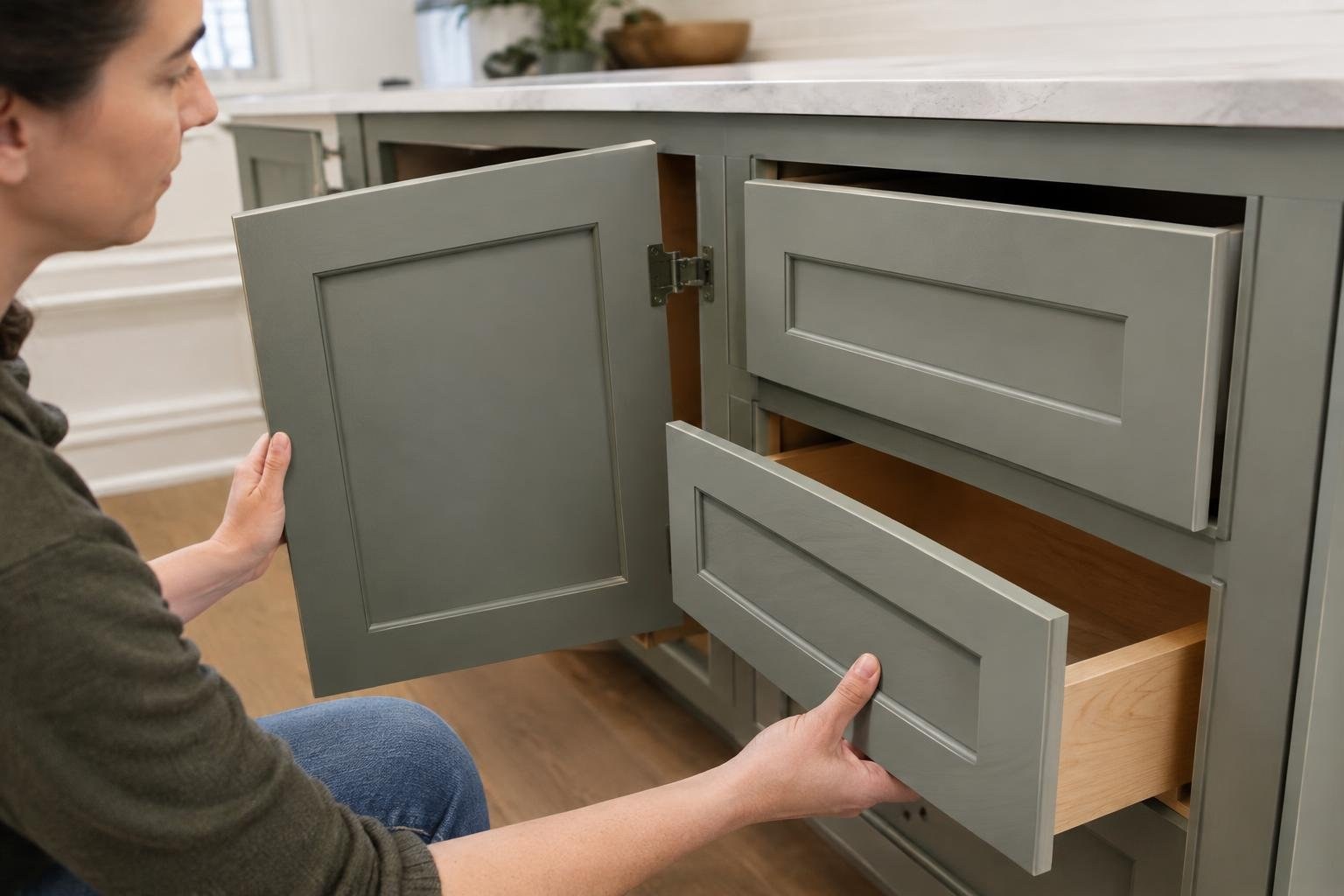
What inset kitchen cabinets are and why the fit matters
Inset cabinetry is identified by the location of its fronts. Doors and drawer fronts fit within the openings of the cabinet face frame rather than covering the frame. When the fronts are closed, the frame remains visible around them, creating a tailored, furniture-like appearance. That exposed frame and the close visual relationship between each front and its opening are central to the style.
Inset is a cabinet-front configuration, not a wood species, finish, or promise of a particular construction grade. A product may be customizable or offered in a selection of materials and styles, but those details need to be confirmed for the exact cabinets in your quote. Do not assume that every inset product is custom-built or that the word “inset” alone establishes quality.
As a starting point, ask to see a drawing or sample that shows the front within its opening. That makes the visible frame, proportions, and finish easier to assess than a label or small online image.
Signs inset cabinetry may suit your kitchen
Inset cabinets are most relevant when you want the face frame to remain visible and prefer the neat, furniture-style appearance associated with fronts set into the openings. Their defining feature is a design choice, not a repair need. If existing cabinet doors are damaged or outdated, first identify whether the goal is a new look, a different layout, or correction of a functional problem.
Consider inset when you are planning a kitchen renovation or selecting cabinets for a new layout and can evaluate the actual product details before ordering. Consider overlay fronts if you prefer doors that cover more of the frame or want a different visual balance. Neither style is inherently better for every kitchen; compare samples and choose based on your preferred appearance and project requirements.
If you are unsure, compare full-size samples or clear drawings in the room’s lighting and alongside your planned counters, backsplash, flooring, and hardware. Judge the whole composition rather than choosing from a cabinet-door photograph alone.
Inset, overlay, stock, and custom: options to compare
Inset cabinets can appear in different purchasing formats, but the format and the front style answer separate questions. Inset explains where the doors and drawer fronts sit. Stock, semi-custom, or custom describes how cabinets are supplied or configured. Ask the provider to identify both rather than treating “inset” as shorthand for a particular price or level of customization.
| Choice to compare | What it tells you | What to confirm |
|---|---|---|
| Inset versus overlay | Where the closed fronts sit relative to the face frame | Visible frame, front proportions, and appearance in a sample or drawing |
| Stock versus configurable or custom | How the cabinets and sizes are selected or made available | Available dimensions, modifications, ordering terms, and lead-time estimate |
| Material and finish | What the cabinet and visible surfaces are made of and how they look | Exact material by component, finish sample, care guidance, and written specifications |
Inset cabinet offerings may include wood choices such as cherry, hickory, maple, and oak, as well as MDF. Offerings may also vary in door styles and finishes. A list of options is not a guarantee that every combination is available in every product line. Verify the selection with the seller and include it in the order documents.
Inset kitchen cabinet costs and what a quote should include
Inset kitchen cabinet prices depend on the exact product, configuration, and project scope, so request a current quote for your location. Be cautious of broad online price claims that do not say what cabinets, labor, delivery, or related work they include.
When requesting estimates, ask providers to show how the total is assembled. Relevant line items may include cabinet sizes and quantities, door style, material by component, finish, hardware, modifications, delivery, installation, and any separately priced work. Ask whether the proposal includes fillers, finished end panels, trim, taxes, removal of existing cabinets, wall or floor repairs, and coordination with counters or appliances. These are questions to resolve in writing, not assumptions about what a particular quote covers.
Custom sizing or a made-to-order product may be offered, but a listing does not establish how much it adds or how long it takes. Request a written price and schedule for the exact specification. Compare estimates with matching scope, not merely with the same word “inset.”
What can affect the project price and scope?
Cabinet count and dimensions, the requested configuration, material and finish selections, and whether the product is built to order are reasonable points to clarify with the provider.
- Cabinet specification: Ask for the product line, cabinet dimensions, material by component, door style, finish, and hardware.
- Fit and customization: Confirm whether the offered sizes match your layout or require modifications. Customization options and limits depend on the specific product being quoted.
- Project scope: Separate cabinet supply from installation and other kitchen work. Request explicit inclusions and exclusions.
- Delivery and schedule: Get the provider’s current estimate for ordering and delivery rather than relying on a general claim.
- Changes: Ask how revised measurements, selections, or site conditions affect the price and schedule.
Use these factors to make proposals comparable. If a provider gives only a single total, request a clearer breakdown before comparing it with another bid.
Planning and measuring before you order
Start with the actual wall and kitchen plan, not a guess based on a previous cabinet order. Inset fronts are specified to sit within frame openings, so ask who will verify the cabinet dimensions and the relationship between each front and its opening. The visible frame is part of the finished appearance, making the drawing and sample useful tools for catching mismatched expectations early.
- Record the room layout and identify doors, windows, appliances, plumbing, electrical points, and any features that may affect cabinet placement.
- Have the responsible designer or installer confirm cabinet locations and dimensions against the site. Ask how uneven walls or other site conditions will be handled.
- Review a cabinet plan and elevations. Check door and drawer locations, corner arrangements, appliance relationships, and finished end panels.
- Confirm the exact door style, material, finish, hardware, and product configuration in writing.
- Agree on who takes final measurements, who approves the order dimensions, and how discrepancies are resolved before installation.
Do not treat a rough room measurement as an order-ready plan. Cabinet dimensions interact with counters, appliances, and adjacent work. Have qualified trades handle electrical, plumbing, structural, or other regulated work when required, and confirm local requirements for the project.
Materials, door styles, finish, and visible details
The appearance depends on more than the word “inset.” Door profile, frame visibility, wood or other material, color, finish, and hardware all contribute to the result. Listings show multiple door styles and material options, including several wood species and MDF, while some products describe choices such as painted, stained, or unfinished. Confirm which options are available together for the exact cabinet line.
Request physical samples when possible. Compare the sample with counters, flooring, backsplash, and paint in the kitchen’s lighting. Check that the selected finish and door profile support the style you want, whether that is traditional, farmhouse, or a cleaner contemporary look. Some inset offerings are presented for styles ranging from farmhouse to modern, but not every catalog offers every combination.
Ask how each cabinet component is constructed. “High quality” is not a measurable specification by itself. Get written details for the box, shelves, drawer construction, hardware, finish, and warranty. Confirm which visible surfaces are finished and how exposed ends will match. Make decisions from samples and product documentation rather than assumptions based on a single showroom display.
What to expect during ordering and installation
Installation scope varies by project, so do not assume that a cabinet purchase includes measurement, removal, fitting, or final adjustment. Ask the provider to describe each stage and identify which party is accountable. A clear written plan is especially useful for a style whose fronts are fitted inside frame openings.
- Site review: Confirm final dimensions, layout, product specification, and any site conditions that could affect the plan.
- Preparation: Establish whether existing cabinets, counters, or other items must be removed and who handles protection, disposal, and repairs.
- Delivery and inspection: Agree on how delivered cabinets will be checked against the order and how damage or missing parts will be reported.
- Installation: Identify who positions, secures, and levels the cabinets and who handles fillers, panels, and trim if included.
- Adjustment and handoff: Confirm who checks the fit and operation of doors and drawers, addresses punch-list items, and explains care and warranty documents.
Ask for a project-specific schedule, including ordering, delivery, installation, and coordination with other work. Get likely delay points and change-order procedures in writing.
DIY or professional installation?
Inset cabinets can be a DIY or professional project depending on the homeowner’s skills, the product, the site, and the work involved. Neither installation approach is right for every kitchen. A homeowner who is not experienced with accurate cabinet layout, secure fastening, leveling, and fitting should compare the cost of professional installation with the risk of rework.
| Approach | Potential advantage | Questions and tradeoffs |
|---|---|---|
| DIY installation | More direct control over scheduling and labor decisions | Do you have the tools and experience to measure, set, secure, and adjust the cabinets? Who handles errors or product issues? |
| Professional installation | A defined installer can take responsibility for specified fitting work | Is installation included? What tasks are excluded? Who completes adjustments and resolves damage or fit concerns? |
For either approach, document the dimensions, installation scope, and responsibility for corrections. Do not undertake electrical, plumbing, structural, or code-regulated tasks unless qualified and permitted to do so under local rules. Confirm applicable permit requirements with the local authority or a qualified professional.
How to choose and vet a qualified cabinet provider
Credential and warranty requirements depend on the work, provider, and jurisdiction. Check requirements in your jurisdiction and verify any applicable license or insurance directly with the relevant authority or provider. For work involving other trades, ask who is responsible for coordinating qualified professionals and required permits.
Evaluate providers using evidence you can inspect:
- Ask for a portfolio or examples of comparable inset installations.
- Request references and review how the provider handles concerns after installation.
- Verify business identity, insurance, and licensing where required for the work.
- Get a written scope, product specification, payment schedule, estimated timeline, and change-order process.
- Ask who measures, orders, delivers, installs, adjusts, removes debris, and resolves damage or missing items.
- Read the warranty terms, including what is covered, for how long, and how to submit a claim.
A low total is not enough to establish value if important work or product details are excluded. Compare like-for-like proposals and clarify ambiguous terms before paying a deposit or approving an order.
Common mistakes, red flags, and a pre-order checklist
Inset cabinet fronts are intended to fit inside the face-frame openings, so small differences in the plan or product specification can affect the final visual result. Avoid ordering from an unverified sketch, assuming all materials are equivalent, or choosing based only on a broad product description. The specific measurements and construction need to be documented.
- Do not assume “inset” means custom: Ask what is standard, what can be modified, and what is included in your order.
- Do not compare mismatched bids: Align cabinet quantities, finish, hardware, delivery, installation, and exclusions.
- Do not approve unclear samples: Confirm the selected door profile, material, color, and finish in writing.
- Do not leave adjustment duties vague: State who checks and corrects fit after installation.
- Watch for pressure to commit: Take time to review the dimensions, specifications, contract, and warranty before authorizing the order.
Before ordering, check: final plan approved; measurements verified; product and finish specified; quote itemized; schedule and change process written; installation and adjustment responsibilities assigned; warranty reviewed.
Ways to manage cost without risking the result
You can control unnecessary costs without compromising the information needed to order correctly. Request comparable proposals and ask providers to explain which choices change the specification or scope. A configurable or customizable product may offer options, but the exact limits and price need to be confirmed rather than assumed.
- Keep the layout and cabinet list stable while requesting bids so proposals cover the same work.
- Compare the cost and scope of available standard sizes with any proposed custom dimensions.
- Choose finishes, door styles, and hardware after reviewing samples and product documentation, not through repeated late changes.
- Ask whether existing site conditions or separate trade work are excluded, and obtain appropriate quotes for those items.
- Clarify delivery, removal, installation, and adjustment charges before selecting a provider.
Do not save money by skipping final measurements, ordering without a complete specification, using unsuitable products, or taking on safety-sensitive work without qualification. A written estimate that is clear about responsibilities is more useful than a low but incomplete number.
Ready to compare options?
Practical next steps for choosing inset kitchen cabinets
Before selecting inset cabinets, decide what matters most: the visible face-frame look, available design choices, budget, and clarity about who will deliver and install the product. Then compare the actual cabinet specifications, not broad category descriptions. Inset cabinetry is a distinct visual arrangement, while product materials, construction, customization, and installation terms must be evaluated separately.
Use a simple decision process: (1) review inset and overlay samples; (2) agree on the layout and verified dimensions; (3) specify material, door style, finish, and hardware; (4) request itemized proposals with matching scope; (5) check provider references, insurance or licensing where applicable, schedule, and warranty; and (6) approve the final order only after responsibilities and exclusions are clear.
Cabinet Supply readers can explore cabinet options on the publisher’s site as a next step. For project-specific advice, prepare your room measurements, inspiration images, preferred finish, and budget range before discussing the choices with a cabinet professional.
Frequently asked questions
What are inset kitchen cabinets?
Inset kitchen cabinets have doors and drawer fronts fitted inside openings in the cabinet face frame. The frame remains visible around the closed fronts.
Are inset cabinets worth it?
They can suit homeowners seeking a tailored, furniture-like appearance and who are comfortable comparing detailed measurements, construction, and installation plans. The best choice depends on the room, budget, and priorities.
How much do inset kitchen cabinets cost?
Prices depend on the exact product, configuration, and project scope. Request an itemized estimate that separates cabinets, finish, hardware, delivery, installation, and related work, then compare equivalent specifications.
What is the difference between inset and overlay cabinets?
Inset describes where the doors and drawer fronts sit: inside the face-frame openings. Overlay fronts sit over the frame. Ask to see a sample or drawing so you can compare how much frame is visible.
What should I ask a cabinet provider before ordering inset cabinets?
Ask how the cabinet openings and fronts are measured, what materials and finish are included, who installs and adjusts the doors, how changes are priced, and what the written warranty covers.
How long does it take to install inset cabinets?
Timing depends on the order, site preparation, installation scope, and coordination with other work, so ask for a written schedule and identify what could delay it.
What material is best for inset cabinets?
There is no single best material for every project. Compare available samples, construction details, finish, care requirements, and written product specifications to choose what suits your kitchen and priorities.
Can existing cabinets be converted to inset cabinets?
Inset describes the cabinet-front design, not a requirement to replace every cabinet. Ask a qualified provider to assess the existing boxes and openings and explain whether the intended look and fit can be achieved with the existing layout.
People Also Ask
What should homeowners check in an inset cabinet warranty?
Read the written terms to see what is covered, for how long, and how to submit a claim. Ask the provider to clarify any exclusions before approving the order.
How do I choose inset cabinets for my kitchen?
Start with the look you want, then check the cabinet drawings, material and finish specifications, hardware, installation plan, and total written estimate.
What should an inset cabinet estimate include?
Ask providers for comparable, itemized proposals. Include cabinet sizes, finish, hardware, delivery, installation, adjustment responsibility, and exclusions.
Are inset cabinets more expensive than overlay cabinets?
Costs need to be confirmed with current, location-appropriate quotes for the exact layout, product, and work scope.
Do inset cabinet doors need special measurements?
The fit depends on the cabinet openings and the fronts being specified for them. Have the provider verify measurements and explain how the final gaps and adjustments will be handled.
What styles and materials are available for inset cabinets?
Inset cabinet offerings may include several wood types and MDF, as well as varied styles. Confirm the exact material and construction for the model being quoted.
Inset kitchen cabinets create a tailored look by fitting doors and drawer fronts inside the cabinet face frame. The style is worth considering if you value the visible frame and precise, furniture-like appearance, but make the decision with a measured layout, detailed quote, and clear understanding of materials, hardware, installation, and adjustments. Compare the finished result and project responsibilities, not just the cabinet price.
Your next step
Explore cabinet options at CabinetSupply.com for your next project.
Last reviewed and updated November 2, 2026 by the CabinetSupply Editorial Team.
Sources
- Inset Kitchen Cabinets Guide, Pros, Cons, Design Tips | Cabinets by UKC
- Inset | Cabinets To Go
- Inset Cabinetry – Cabinet Joint
- Buy Inset Kitchen Cabinets Online | CabinetSelect.com
- Inset Starmark Cabinets – iCabinetry
- Inset Cabinets – Custom Sizes, Built to Last | Cabinets by UKC | Unfinished Kitchen Cabinets
- Inset Kitchen Cabinets
- CliqStudios | Shop Inset Cabinets
- Kitchen Cabinet Door Styles: How to Compare and Choose