
Oak kitchen cabinets are known for a visible grain that can bring texture and natural variation to a room. They are available in different colors, finishes, door profiles, and cabinet configurations, so “oak” alone does not describe the final look or the quality of the cabinet. If you are updating an existing kitchen, you may be able to change the doors, hardware, lighting, or surrounding finishes without replacing every cabinet. If you are buying new cabinets, compare construction, dimensions, finish samples, and the full installation scope, not just the wood name. This guide explains what to evaluate, how to compare update paths, what can affect the budget and schedule, and how to choose a provider.
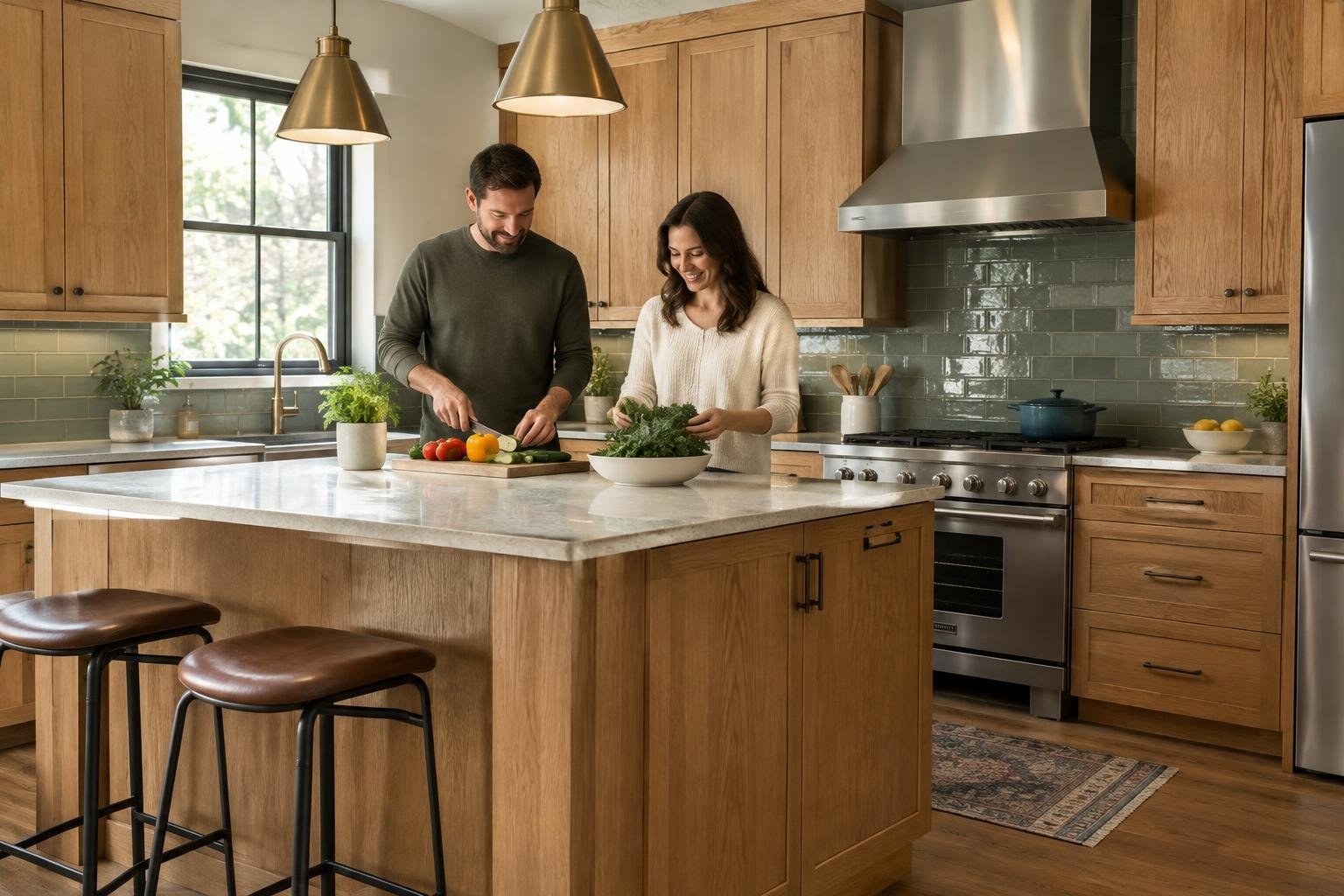
What to know about oak kitchen cabinets
Oak cabinets are defined by their wood appearance, not by one standard door style, finish, or construction method. The grain can show noticeable variation and light-reflecting rays, giving the surface visible texture. Product choices include different oak appearances and cabinet configurations, so inspect the actual door sample and product details before buying.
For an existing kitchen, separate the issues you want to solve. Worn or dated doors are a different problem from damaged cabinet boxes, poor storage, or an inconvenient layout. A cosmetic update may address the first issue, while the others could call for repair, reconfiguration, or replacement. Avoid assuming that new doors will solve a storage or workflow problem.
For a new installation, treat the cabinet order as part of the whole kitchen plan. Record appliance dimensions, counter and backsplash selections, hardware, and finish choices before approving final specifications. Ask for confirmation of sizes and scope in writing.
How oak grain and color affect the room
Oak’s visible grain is an important design feature. It can create a warm, textured backdrop, but the result depends on how the cabinets work with the rest of the room. A natural oak sample, a stained sample, and an oak-look veneer or other product may not look alike. Review the exact product rather than relying on a broad label.
Bring door samples together with countertop, flooring, backsplash, and paint samples. Check the combination in the kitchen at different times of day, because a color that looks balanced in a showroom or on a screen may read differently in your room. Consider whether you want the oak to be the main visual feature or a quieter element alongside other colors.
Oak can provide a neutral starting point for adding color through decor and accessories. Choose accents that connect with the room’s existing palette, rather than adding unrelated colors simply to make the cabinets stand out.
Signs your oak cabinets may need an update
Oak cabinets may be worth updating when the layout still works but the room no longer matches your taste. Signs to investigate include doors or drawer fronts that look dated to you, hardware that does not suit your intended design, or surrounding finishes that make the oak feel visually disconnected. These are design concerns, not proof that the cabinets are structurally sound or unsound.
Look beyond the visible fronts. Check whether doors open and close as intended, drawers operate properly, and cabinet boxes appear suitable to keep. If you see damage or have concerns about stability, moisture, or fastening, ask a qualified cabinet professional to inspect the cabinets before choosing a cosmetic treatment.
Also consider whether the storage and layout meet your needs. If the current arrangement creates persistent access or workflow problems, updating colors alone may leave the main issue unresolved. Write down the problems you want the project to fix before requesting proposals.
Compare update options before replacing everything
There are several ways to change the look of an oak kitchen, ranging from a small refresh to a broader cabinet project. The best fit depends on the condition of the existing cabinets, how much change you want, and whether the layout should stay the same.
- Keep the cabinets and update the room: Consider coordinated changes to hardware, lighting, paint, backsplash, or decor. This leaves the cabinet fronts in place and focuses on the surrounding design.
- Paint or refinish: A new surface treatment can change the appearance, but the preparation and finish system should suit the existing cabinet surface. Ask what work is included and how the visible grain will be treated.
- Replace doors or drawer fronts: This may preserve existing boxes while changing the visible style. Ask the provider to verify fit and identify any related hinge, trim, or finish work.
- Replace the cabinets: This gives you a chance to reconsider configuration and storage as well as appearance. It generally involves a broader scope that should be planned alongside the rest of the kitchen.
Changing more elements can produce a more complete transformation, but it also adds decisions and work. Compare options by the problems they solve, not just by how dramatic the sample looks.
Compare door styles, cabinet lines, and construction
Oak’s texture can be paired with varied door profiles. A traditional raised or cathedral-style door emphasizes a more detailed silhouette; a simple Shaker or slab-style front creates a cleaner outline. The available combinations depend on the product line. Confirm whether the quoted front is oak, oak veneer, or another specified material, and ask how the finish will look across doors with different grain patterns.
Cabinet collections may include oak or oak-look options in different configurations. For instance, retail listings show oak appearances across multiple cabinet sizes and combinations. That does not establish that every line offers the same construction, dimensions, or finish, so compare the individual specifications.
When evaluating quality, ask for product documentation describing the cabinet box, back, shelves, drawer construction, glides, hinges, finish, and warranty. The supplied product name or wood species alone is not enough to judge these features. If a provider cannot clarify what is included, request a written specification before placing an order.
Oak cabinet costs and what a quote should include
There is no reliable single price for an oak kitchen cabinet project without knowing the scope. A small change to existing cabinets and a full replacement are different projects, even if both are described as an oak cabinet update.
To make estimates useful, ask each provider to identify:
- Cabinet products, quantities, dimensions, door style, and finish.
- Hardware, accessories, fillers, panels, and trim included.
- Removal, disposal, delivery, installation, and adjustment responsibilities.
- Any related work included or excluded, such as countertop or wall preparation.
- Taxes, payment milestones, schedule assumptions, and change-order terms.
Compare proposals with the same scope. If one total is lower, find out whether it excludes labor, removal, finishing, or other work that another proposal includes. Ask for revisions in writing instead of comparing vague allowances.
Factors that can affect the project scope
Project cost and complexity depend on more than the word “oak.” Cabinet quantity and dimensions, product line, door design, finish, hardware, custom sizing, and the amount of installation or related work all affect the proposal. Keeping existing boxes and changing the fronts is a different scope from replacing cabinets and changing the layout.
Before requesting a quote, make a list of the cabinets to retain, change, or remove. Note appliance locations and any desired changes to storage or work areas. A provider can then identify which parts of the proposal are based on measurements and which depend on later selections or site conditions.
Keep a written record of decisions. A finish, door profile, or hardware change made after an order is placed may affect the product or schedule. Ask the provider how changes are priced and approved before work begins.
Plan the design and measurements as one project
Plan cabinet decisions alongside appliances, counters, flooring, backsplash, and lighting. The goal is not to make every surface match exactly; it is to ensure the selections work together and leave the kitchen practical to use.
Check that cabinet doors and drawers can open without interfering with nearby doors, appliances, or one another. Confirm appliance specifications and locations before final cabinet measurements. If the project includes layout changes or work involving utilities, have the appropriate qualified professionals review those parts of the plan.
Lighting deserves attention because it affects how wood color and grain appear. Review samples under the kitchen’s actual lighting where possible. If adding or changing lighting, coordinate its location and scope with the cabinet and electrical plans rather than selecting fixtures after installation.
Bring the measurements, product selections, and constraints together in one approved plan. Ask the provider to confirm what dimensions have been field-checked, what is assumed, and who must verify any changes before ordering.
What to expect from selection through installation
There is no single installation timeline that applies to every oak cabinet project. Timing depends on the chosen products, the work included, site preparation, and the provider’s schedule. Ask for a project schedule that distinguishes selection and measurement, ordering, delivery, preparation, installation, and final adjustments.
- Define the goals: Decide whether the project is primarily cosmetic, a cabinet replacement, or a layout change.
- Review the site: Confirm measurements, appliance locations, and visible constraints with the provider.
- Choose products: Approve door style, finish, hardware, configuration, and written specifications.
- Confirm scope: Establish who handles removal, delivery, installation, related work, and cleanup.
- Inspect the result: Compare the installed work with the approved plan and document items that need adjustment.
Do not rely on a verbal completion estimate alone. Ask how delays, unavailable selections, or changes will be communicated and documented.
How to choose a qualified cabinet provider
Choose a cabinet provider who can explain the products and the work clearly. Ask for examples of relevant projects, references or reviews, and a written description of who measures, orders, delivers, installs, and handles adjustments. Verify any licensing or insurance requirements that apply in your area rather than assuming they are identical everywhere.
During the consultation, ask the provider to distinguish between cabinet appearance and construction. Request details about the specified cabinet line, materials, finish, hardware, dimensions, and warranty. If the proposal includes an update to existing oak, ask what condition the current boxes need to be in and what happens if inspection finds a problem.
A useful proposal makes it possible to compare the same scope across providers. It should identify products, work, exclusions, schedule, payment terms, and the process for changes. A polished showroom or attractive sample can help you evaluate design, but it does not replace a clear written agreement.
Permits, safety, credentials, and warranty checks
Ask which permits, approvals, or inspections may apply to the specific project in your location. Requirements vary, so confirm with the local authority or a qualified professional when the work changes layout or involves utilities or other regulated work. Do not assume that a cabinet-only description means every part of a broader kitchen project is permit-free.
Review written warranty terms for the cabinets, finish, and installation, including who handles a claim and what conditions or exclusions apply. Keep product details, the signed scope, change orders, and communications together. If multiple parties are responsible for different work, clarify whom to contact when an issue appears.
For work involving electrical, plumbing, structural changes, or other safety-sensitive tasks, use appropriately qualified professionals. Confirm responsibilities before demolition or installation begins so cabinet work is coordinated with the required work around it.
Ways to control cost without cutting corners
Save safely by matching the scope to the problem. If the cabinet layout works and the boxes are appropriate to keep, ask for a proposal that separates a focused refresh from replacement. Compare a hardware or surrounding-design update with more extensive options before choosing the largest project.
Use a consistent specification when seeking bids: the same quantities, door profile, finish, hardware, delivery assumptions, and installation tasks. This makes it easier to identify whether a lower price reflects better value or simply omits work. Request samples and product descriptions before deciding based on an image or a general label.
Avoid reducing cost by skipping needed inspection, accepting unclear materials, or leaving installation and removal responsibilities undefined. Ask what is included and what might become an additional charge. A smaller, clearly scoped project can be easier to compare than a broad estimate with unspecified allowances.
Explore the curated cabinet provider directory to find providers serving your area and discuss which oak cabinet options fit your project, scope, and budget.
Mistakes, warning signs, and a practical checklist
Common planning mistakes include choosing a finish from a screen, selecting hardware before confirming the door or drawer details, and assuming that new fronts will solve a layout problem. Another risk is comparing quotes with different products or different installation responsibilities.
Before committing, use this checklist:
- Have you written down the problems the project must solve?
- Have you inspected the existing cabinets before deciding to retain them?
- Have you viewed finish and door samples with the other room selections?
- Are the product, dimensions, hardware, and quantities listed in the proposal?
- Does the quote clearly identify removal, delivery, installation, exclusions, and cleanup?
- Have you asked how schedule changes and additional work are approved?
- Have you checked local requirements, insurance, credentials, and warranty terms as applicable?
Treat vague answers, missing specifications, pressure to decide immediately, or unclear payment and change-order terms as reasons to pause and ask for clarification. A written record protects both the scope and your ability to compare options.
Plan your next step
Before choosing oak kitchen cabinets, decide whether your priority is a particular grain appearance, a door profile, more storage, or a complete layout change. Compare the exact products and finishes, not just the category name. For an existing kitchen, ask whether a focused update can meet your goals before replacing cabinets. For a new project, collect comparable, detailed proposals and clarify responsibilities, timing, safety requirements, and warranty coverage.
To discuss cabinet options, measurements, project timing, and budget, contact Cabinet Supply through its site and arrange an appointment with a cabinet professional.
Frequently asked questions
Are oak kitchen cabinets still in style?
Oak has a visible, open grain that can add texture and natural variation to a kitchen. Whether it feels traditional or contemporary depends on the door profile, finish, hardware, lighting, and surrounding materials.
Do I need to replace oak cabinets to update my kitchen?
Not necessarily. First assess the cabinet boxes, doors, layout, and storage. If the existing cabinets meet your needs, consider a smaller update such as changing hardware, lighting, or nearby finishes before planning a full replacement.
How much do oak kitchen cabinets cost?
Oak cabinet prices depend on the cabinet line, size, finish, configuration, and what is included in the quote. Compare itemized estimates for the same scope rather than relying on a single per-cabinet or whole-kitchen figure.
What colors go with oak kitchen cabinets?
Oak cabinets can be paired with many colors and materials. Choose samples for the countertop, flooring, wall color, and backsplash, and view them together in your kitchen before making final selections.
Can I replace oak cabinet doors and keep the boxes?
Replacing doors while keeping cabinet boxes may be an option when the boxes are in suitable condition and the layout works. Have a provider confirm compatibility and include any needed hinge, drawer, trim, or finish work in the quote.
What should an oak cabinet quote include?
Ask for a written scope, product details, measurements, finish information, schedule, installation responsibilities, exclusions, and warranty terms. Confirm who handles delivery, removal, adjustments, and cleanup before signing.
People Also Ask
What do oak kitchen cabinets look like?
Oak cabinets have an open grain pattern with visible variation, which gives them a more pronounced texture than many smooth-looking finishes. View samples in the room before deciding whether that character suits your design.
What types of oak kitchen cabinets can I buy?
Oak is offered in more than one cabinet style and finish. Compare actual door samples and product specifications, since the wood appearance alone does not identify the cabinet box construction or hardware.
Can oak cabinets look good with white countertops?
A combination can work if the finishes and colors are selected together. Bring samples of the oak, countertop, flooring, and paint into the same view and check them under the kitchen’s lighting.
How can I make oak cabinets look more modern?
Consider changing the door profile, hardware, lighting, or nearby colors and materials. The right choice depends on the existing cabinet condition and the look you want, so assess those elements as a group.
How do I compare quotes for oak cabinets?
Request comparable, itemized quotes that identify cabinet products, measurements, finish, hardware, delivery, installation, and exclusions. Ask providers to explain any scope differences before comparing totals.
How long does it take to install oak kitchen cabinets?
A cabinet project’s schedule depends on product selection, availability, preparation, and the work included. Ask the provider for a written schedule with ordering, delivery, installation, and adjustment milestones.
Oak kitchen cabinets can suit many kitchens, whether you prefer their natural grain or want a more contemporary look. Start by deciding what you want to change: the cabinet fronts, the surrounding finishes, the storage, or the whole layout. Then compare complete, itemized options before committing. A clear plan helps you preserve the oak features you value and spend on changes that solve real problems.
Your next step
Explore cabinet options at CabinetSupply.com for your next project.
Last reviewed and updated November 2, 2026 by the CabinetSupply Editorial Team.
Sources
- How To Make Oak Kitchen Cabinets Look Modern? 12 Amazing Tricks
- Oak | Cabinets To Go
- Explore Oak Kitchen Cabinets Durable, Classic Design | Lowe's
- Do You Have a Kitchen with Oak Cabinets? Try These Design Tips
- Oak Kitchen Cabinets – IKEA
- Oak Kitchen Cabinets: All You Need to Know
- Oak Kitchen Cabinets | In Stock | Shop online | Free Shipping
- Oak – Kitchen Cabinets – The Home Depot
- Best Wood for Kitchen Cabinets: How to Choose