
European style kitchen cabinets are known for clean lines, restrained detailing, and a contemporary look. The term often refers to frameless cabinets, which do not have a face frame across the front of the cabinet box. But style is only one part of the buying decision. The cabinet’s construction, finish, hardware, storage plan, fit, warranty, and installation scope all deserve close attention. This guide explains what to compare, how to prepare for a project, and which questions to ask before committing to an order.
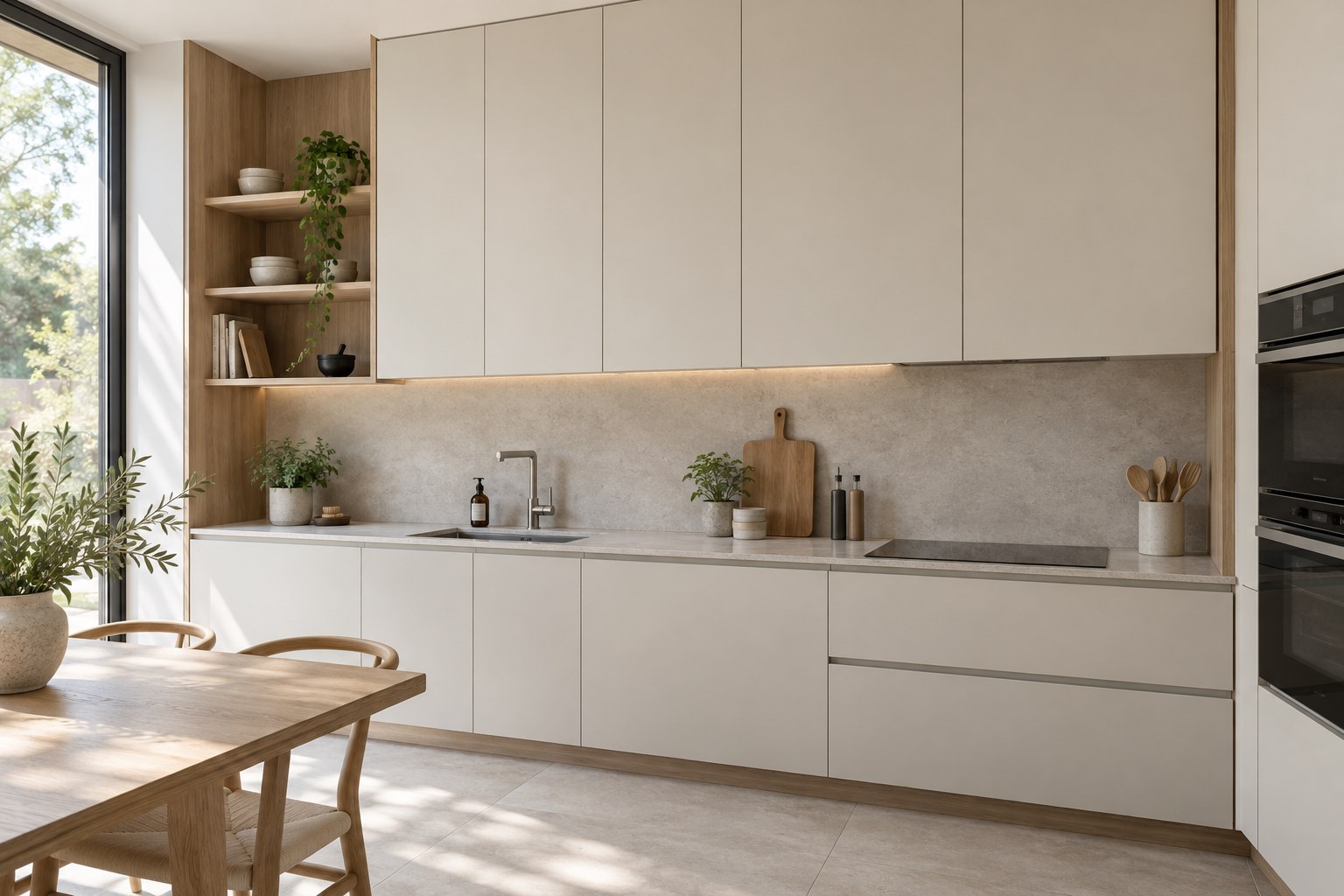
What to know about European style kitchen cabinets
European style kitchen cabinets are cabinetry with a streamlined, minimal appearance, often paired with frameless construction. A frameless cabinet does not have a face frame across the front edges of the box. The term is a useful starting point for describing a look, but it is not a complete specification.
Two cabinets with similar flat fronts can differ in box materials, door finish, drawer details, hinges, interior fittings, and warranty. Ask for the product specification and a drawing of the proposed layout, not just a mood board or collection name. European-style cabinets are commonly contrasted with framed cabinetry, which has a frame around the front of the box. The difference affects the cabinet’s visible construction and should be confirmed for the exact product.
Think of the decision as three connected questions: Do you want the visual style? Does the selected cabinet meet your storage and use needs? Does the quote cover the product and work you expect?
What does a European cabinet project include?
A European-style cabinet project typically includes selecting a cabinet line, choosing sizes and finishes, laying out the kitchen, ordering the cabinets, and arranging delivery and installation. The precise scope depends on whether you are buying cabinets only or hiring a provider to coordinate a broader remodel.
- Define the project. Decide whether you are replacing cabinets in the existing layout or changing the kitchen plan.
- Document the room. Record wall lengths, ceiling height, openings, appliance locations, and visible utility locations. Have the final dimensions checked before ordering.
- Choose a product and finish. Review samples and specifications, including available hardware and storage features.
- Approve the plan and quote. Confirm cabinet sizes, fillers, finished panels, delivery, installation, and any excluded work in writing.
- Coordinate the work. Confirm who handles removal, site preparation, utility work, installation, and final adjustments.
Ask the provider to explain which steps are included and which are assigned to you or another contractor. That prevents the word “installation” from standing in for an unclear scope.
Signs a cabinet update may be worth considering
Consider a cabinet update when the current storage, layout, or appearance no longer serves the way you use the kitchen. A new cabinet style may help address a design preference, but changing the doors alone will not necessarily solve an inconvenient layout or a shortage of useful storage.
- You want a cleaner, less ornamented cabinet appearance.
- You are planning a kitchen renovation and want to compare frameless cabinetry with framed options.
- You want to assess storage features such as full-extension drawers or soft-close hinges, where those are available in the selected collection.
- Your existing cabinet plan does not match your current storage needs, and you are considering a broader redesign.
Before choosing a replacement, identify the problem you want to solve. Write down what is difficult to store, where access feels awkward, and which visual details you want to change. Use that list to review the proposed layout rather than choosing from finish samples alone.
Cost and pricing: what to compare in an estimate
There is no single price that applies to European style kitchen cabinets as a category. The style label does not specify the cabinet line, finish, layout, quantity, accessories, delivery, or installation work. Some sellers present different collections and finishes, so request a project-specific, itemized quote rather than using an online style description as a budget.
Ask each provider to identify the price for:
- Cabinet boxes, doors, and selected finish
- Drawers, hinges, glides, and any included soft-close or full-extension features
- Interior accessories, finished end panels, fillers, and trim
- Delivery, assembly if needed, and installation
- Removal and disposal of existing cabinets, if included
- Any separate countertop, plumbing, electrical, or wall-repair work
Compare quotes only when the products and scope are comparable. If an estimate uses a low-detail allowance or leaves work out, ask for clarification before treating it as the lower-cost option. A collection described as budget-friendly does not establish the total cost of a particular kitchen project.
Factors that affect the project and its final scope
Project choices shape both the appearance and the work involved. Start with the layout and cabinet sizes, then compare finish, hardware, and storage options. A glossy white, lacquered, or wood-look finish may create a different visual effect, but the collection’s specifications determine what is actually offered.
Ask how changes to the plan affect the order. A kitchen that uses standard cabinet sizes may have different planning needs from one that requires special dimensions or many finished panels. Confirm whether the quote includes fillers and finished sides where exposed cabinet ends will be visible. Ask whether the listed hardware is included or an upgrade.
Also identify work that is outside the cabinet order. Countertops, appliance changes, plumbing, electrical work, wall repairs, and removal may be handled by different providers. A clear responsibility list helps you compare the full project rather than one product subtotal.
Options and tradeoffs: frameless, framed, and cabinet lines
European-style, framed, stock, semi-custom, custom, and ready-to-assemble describe different aspects of cabinetry. European-style usually refers to appearance and often frameless construction. Stock, semi-custom, and custom describe how a product is offered or made; they are not direct substitutes for the framed-versus-frameless distinction.
| Choice | What to verify | Potential fit |
|---|---|---|
| Frameless European style | Confirm the box construction, door and drawer details, finish, and available sizes. | For shoppers seeking a clean, minimal look. |
| Framed cabinetry | Confirm the frame design and how the doors relate to it. | For shoppers comparing a more traditional cabinet presentation with a frameless one. |
| Ready-to-assemble | Check what assembly is required, what hardware is included, and who handles installation. | For buyers willing to coordinate assembly or installation details. |
| Stock, semi-custom, or custom | Ask about available sizes, modifications, finishes, specifications, and lead time for the actual line. | Choose based on how closely standard offerings meet the room plan. |
These labels do not guarantee a particular level of construction or craftsmanship. Evaluate the specific product and quote. European design references describe clean lines and minimalist styling, while product collections may offer options such as lacquer, gloss, and wood-look finishes.
Finishes and design: coordinate the whole kitchen
European-style cabinets can create a sleek, contemporary effect, while framed cabinets are often associated with a more traditional presentation. These are broad style associations, not rules about which design belongs in a particular home. Review the cabinetry alongside counters, backsplash, flooring, lighting, and appliances.
Collections may include lacquered, glossy, and wood-look finishes. Request samples of the exact options under consideration. Look at them in the kitchen and alongside other finish selections, because a finish viewed by itself cannot show how the complete room will feel.
Consider how much contrast and visual texture you want. Flat, minimal fronts can make the cabinet design itself less prominent, while a selected wood appearance or color can add a stronger visual note. Coordinate pulls or other hardware with the door design, and ask whether the collection offers the preferred hardware or a compatible alternative.
For a cohesive plan, select a small group of finishes first and review them together before finalizing the order. Make the final decision from actual samples and written product details, not a collection name alone.
Planning and measuring before you order
Before an order is approved, the proposed cabinet plan should reflect the actual room and the appliances and utilities it must accommodate. Measure wall runs and ceiling height, and record doors, windows, appliance locations, and visible plumbing or electrical points. Treat your notes as planning information, not a substitute for a final field check by the person responsible for the cabinet order.
Review the plan for door and drawer movement, appliance openings, work areas, and access through the kitchen. Ask the designer or installer to identify where fillers, finished panels, and trim are needed. Verify the final appliance specifications and utility locations with the appropriate providers before cabinetry is finalized.
Small errors in a plan can become difficult to correct after cabinets are made or delivered. Get the final dimensions, product selections, and layout in writing. Confirm who is responsible for checking measurements and who must approve changes before the order is released.
What to expect: ordering, delivery, and installation timing
Expect timing to depend on the chosen collection, the completeness of the order, delivery arrangements, site readiness, and the work included in installation. Request a project-specific schedule from the provider, separating product lead time from on-site installation.
Ask for separate dates or time ranges for order processing, delivery, removal, installation, and any follow-on work. Confirm whether the schedule assumes that the room is ready and that appliances, utilities, and other trades are coordinated. Ask how schedule changes will be communicated and documented.
Before installation begins, confirm who will receive and inspect the order, what happens if a component is missing or damaged, and who handles final adjustments. A written plan makes it easier to understand what is expected at each stage and which party is responsible.
How to choose a qualified cabinet provider
Choose a provider who can explain the product and the work clearly. Ask for a detailed cabinet plan, written specifications, and an itemized quote. The person helping you should be able to distinguish a frameless construction detail from a style label and explain the selected cabinet’s finish and hardware without relying on broad promises.
Before signing, ask:
- Which cabinet line and exact finish are included?
- What are the box, door, drawer, hinge, and glide specifications?
- Who verifies field measurements and approves the final layout?
- Does the quote cover delivery, installation, removal, trim, and finished panels?
- Which countertop, utility, repair, or appliance tasks are excluded?
- What warranty applies, who provides it, and how are concerns handled?
- What is the expected schedule, payment plan, and process for written changes?
Review relevant project examples and references when available. Compare providers by the product and total scope, not by the lowest headline price alone. Keep approved drawings, specifications, and changes together with the agreement.
Permits, qualifications, warranties, and safety
Ask whether local approvals or permits apply to the full renovation, especially if the work changes utilities, walls, or other parts of the home. Requirements vary by location and project scope, so confirm with the local authority or qualified professional rather than assuming cabinet replacement has a universal rule.
Ask the provider to identify any required qualifications for work they perform and to explain who is responsible for regulated plumbing, electrical, or structural tasks. Do not treat cabinet installation as authorization to perform work outside the installer’s qualifications.
Get warranty terms in writing and separate the cabinet product warranty from any installation or labor coverage. Confirm what is covered, who handles a claim, and what care or installation conditions apply. A verbal assurance is not a substitute for the terms that apply to the selected product.
Ways to manage cost without cutting corners
Reduce avoidable costs by making decisions early and comparing equivalent scopes. A well-defined plan can help prevent ordering the wrong configuration or treating excluded work as an unexpected extra. Savings should not depend on skipping measurement checks or accepting a product whose specifications do not meet your needs.
- Compare a few cabinet lines using the same layout and feature list.
- Ask whether standard sizes in the selected collection can meet the plan before requesting special dimensions.
- Separate essential storage features from optional upgrades and price them clearly.
- Keep the existing layout if it works for you, rather than changing it without a defined benefit.
- Confirm delivery, removal, installation, and finish-panel costs before approving the order.
- Use written change approvals so late selections do not become unclear cost additions.
Ask the provider to explain lower-priced alternatives and what changes in the specification. A lower quote is useful only if you understand the differences in product, finish, hardware, and project scope.
Mistakes, red flags, and a pre-order checklist
Common planning problems include choosing from a style image without checking product details, overlooking included and excluded work, and approving a layout before measurements or appliance details are confirmed. These issues are easier to address before ordering than after delivery.
- Do not assume the label guarantees quality. Review construction, finish, hardware, and warranty.
- Do not compare unlike quotes. Match cabinet line, layout, features, delivery, and installation scope.
- Do not finalize from a small image alone. Request the exact finish sample and written specification.
- Do not leave responsibilities vague. Identify who measures, installs, removes old cabinets, and coordinates other trades.
- Do not ignore openings and appliance details. Verify them on the final plan.
- Be cautious of broad promises. Ask for specific product details, written schedule expectations, and warranty terms.
Before approval: compare the final drawing to the room, check the cabinet and finish schedule, confirm the quote exclusions, document the warranty, and get all changes in writing.
Make a confident cabinet decision
European style kitchen cabinets can offer a clean, minimal appearance and may include useful features such as soft-close hinges or full-extension drawers, depending on the collection. Decide whether the look suits your kitchen, then judge each product on the specifications and the full project plan.
Make a short list of preferred finishes and features, obtain a measured layout, and ask providers for itemized quotes with the same scope. Review what is included, what is excluded, how long the work is expected to take, and who is responsible for each stage.
Frequently asked questions
What are European style kitchen cabinets?
European style kitchen cabinets usually describe a clean-lined look and often use frameless construction, with no face frame across the cabinet box front. The label alone does not tell you the cabinet’s materials, finish, hardware, or warranty, so check the product specifications.
Are European style cabinets always frameless?
Not necessarily. Frameless describes a construction approach; modern describes a visual style. European-style cabinetry is often frameless and minimalist, but ask for the construction details rather than assuming every modern cabinet uses the same design.
Are European cabinets better quality than American cabinets?
No. European style describes a look and often a frameless format, not a quality grade. Compare the cabinet box, doors, finish, drawer construction, hardware, warranty, and installation plan before deciding which product offers better value.
Are frameless cabinets a good choice for a small kitchen?
They can suit a small kitchen if the planned cabinet dimensions, openings, and storage work for the room. Ask to see a detailed layout and verify that drawers, doors, appliances, and walkways do not conflict before ordering.
What finishes are available for European kitchen cabinets?
Available finishes can include lacquered or glossy surfaces as well as wood-look options, depending on the collection. Obtain physical samples when possible and review them alongside the room’s lighting, counters, flooring, and backsplash.
How much do European style kitchen cabinets cost?
There is no single reliable price for the style. Ask for an itemized quote showing the selected cabinets, finish, hardware, accessories, delivery, installation, and any separate work. Compare quotes with the same scope and product specifications.
How long does it take to install European style kitchen cabinets?
Timing depends on the selected product, order details, delivery, site readiness, and installation scope. Ask the provider for separate estimates for product lead time and on-site work, and confirm what could delay either stage.
People Also Ask
Are soft-close hinges and full-extension drawers included in every cabinet line?
Check the selected collection rather than assuming these features are standard. Ask the provider to identify the hinges and glides in the quote and state whether soft-close or full-extension features are included or priced as upgrades.
What details should appear on a measured cabinet layout?
Record wall lengths, ceiling height, openings, appliances, and visible utilities, and have the final dimensions checked before ordering. Confirm cabinet sizes, fillers, and finished panels against the proposed room plan.
Who handles countertop, plumbing, and electrical work during a cabinet project?
Ask the provider to list the work included in the cabinet order and identify who coordinates each separate trade. Confirm the sequence and responsibility for countertops, utilities, removal, and wall repairs in writing.
What should I check when buying ready-to-assemble European-style cabinets?
Confirm what assembly is required, which components and hardware are included, and who handles assembly and installation. Ready-to-assemble describes how a product is supplied, while framed or frameless describes its construction.
How should I compare cabinet product and installation warranties?
Request both sets of terms in writing. Identify what each covers, who handles a claim, and which care or installation conditions apply; do not assume a cabinet product warranty includes labor or installation coverage.
European style kitchen cabinets are best understood as a design and construction choice, not a guarantee of quality. Compare the cabinet box, finish, hardware, storage details, fit, warranty, and installation plan alongside the clean-lined appearance. A carefully planned layout and a complete, comparable quote matter as much as the door style.
Your next step
Explore cabinet options at CabinetSupply.com for your next project.
Last reviewed and updated November 1, 2026 by the CabinetSupply Editorial Team.
Sources
- European vs. American Cabinets — Compared | DodiHome
- Exploring the Elegance of European Kitchen Cabinets
- European Style Cabinets | Modern & Functional | Eurocraft
- Euro Frameless Cabinets | Modern Kitchen Cabinets | Frameless Cabinets–Tagged "German Design"
- European Kitchen Cabinets | Design & Buy Online | CabinetSelect.com
- European-Style vs. American-Style Cabinetry – Inventables, Inc.
- European Kitchen Cabinets – RTA – European Style Cabinets
- RTA European Style Kitchen Cabinets: Flat Panel Cabinets
- Kitchen Cabinet Styles: How to Compare Looks, Options, and Costs