
Cabinets can look impressive in a showroom and still differ in ways that affect how they fit, feel, and function. To tell if cabinets are good quality, inspect more than the door: check the cabinet box and back, look closely at the finish, and test drawers, hinges, and specialty hardware. Then ask for the product specifications in writing. This guide explains what to examine, what to ask a provider, and how to compare options without assuming that a high price or a “solid wood” label proves quality.
Cabinet quality: what it means and the factors that affect it
Cabinet quality is the combination of construction, materials, hardware, finish, and fit. One attractive door cannot tell you how the box is assembled or how a drawer will move after repeated use. Start by treating the cabinet as a working system: the box holds the structure, the doors and drawers provide access, and the hinges and glides support movement.
In a showroom, inspect a complete cabinet with its actual hardware rather than judging a loose door sample. For an online or remote purchase, ask for clear specifications and photos of the cabinet interior, back, drawer boxes, and hardware. The goal is not to find one universally “best” material; it is to understand what you are buying and decide whether its construction suits your room and use.
How to inspect the cabinet box, back, and interior
Inspect the cabinet box and back before focusing on decorative details. Look for panels that appear complete and securely assembled, with no obvious gaps, damage, or loose parts. Ask whether the back is a full panel, how it is attached, and what the cabinet is designed to fasten through during installation. A missing or incomplete back is a useful point to clarify, not something to assume is acceptable or unacceptable without understanding the design.
Look inside the cabinet for clean, consistent assembly. Check shelves and interior surfaces for damage, and ask what material each component uses. A manufacturer's description such as “wood construction” may not specify every part. Request a component-by-component description of the box, back, shelves, doors, and drawer boxes so you can compare product lines accurately.
Examine any exposed edges and corners. These areas can reveal how panels are finished and whether the visible surfaces appear complete. If you cannot see how the cabinet is assembled, ask the provider for a sample, cutaway, or written construction information.
How to inspect cabinet doors and finishes
A good-looking finish should appear consistent across the door, edges, and corners. View several doors under the same light, then run your hand over the surface. Look for rough patches, drips, thin spots, uneven color, or areas where paint or stain coverage changes noticeably. Small differences in natural wood appearance may be expected, so ask how the selected door material and finish are intended to look.
Open and close doors and drawers. Check whether neighboring doors line up evenly and whether a closed door sits as expected rather than leaving an unexplained gap. These checks can reveal visible fit or adjustment issues, but a showroom display is not a substitute for inspecting the delivered installation.
Ask what finish is specified, what surfaces receive it, and how to care for it. Get the details in writing, especially if your order includes several cabinet styles or finishes. That gives you a clear reference when reviewing the delivery and completed work.
Check drawer boxes, glides, and moving parts
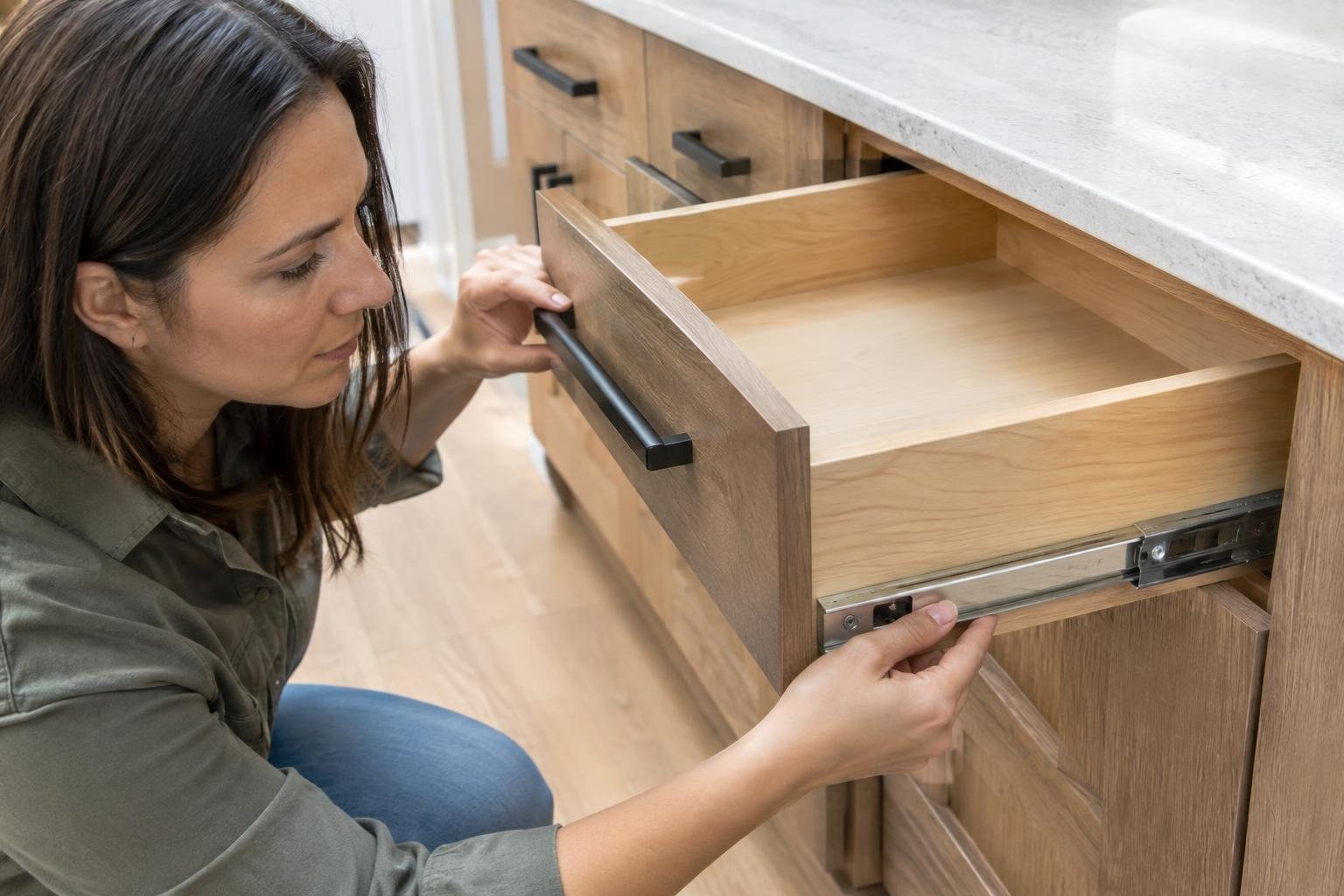
Test a drawer by pulling it open and closing it several times. Notice whether it moves smoothly, feels controlled, and opens as intended. If it catches, binds, feels loose, or appears uneven, ask whether the display needs adjustment and what glides are specified for the cabinets you plan to buy.
Look at the drawer box itself. Ask what its sides and bottom are made of and how the corners are joined. Dovetail joints on all four corners of a solid-wood drawer box are one construction detail that can indicate a carefully specified drawer, but they are not the only way to build a functional drawer. Compare the complete drawer and its intended use, not one joinery feature in isolation.
Operate pull-outs, corner units, and tall pantry accessories if they are part of the order. They should travel without binding or obvious wobble. Ask whether hinges and runners can be adjusted after installation; adjustability can help correct alignment if conditions change over time.
Signs the cabinets may need attention
Quality checks matter most when cabinets show problems that affect function or condition. Warning signs include drawers that repeatedly stick or feel too loose, doors that do not align or stay closed as expected, visible gaps, and finishes with thin or uneven coverage. A single display cabinet may need adjustment, so ask the provider to explain whether an observed issue is a defect, a setup problem, or a feature of that product line.
For existing cabinets, consider whether the issue is isolated or widespread. One misaligned door may need adjustment, while recurring drawer problems across multiple units deserve a closer look at the hardware and installation. Visible finish wear or damage is a separate concern from the strength of the cabinet box. Document the problem with photos and ask a qualified cabinet professional to assess it before deciding whether repair, replacement hardware, or a broader project is appropriate.
Do not dismiss repeated binding, loose movement, or inconsistent fit as purely cosmetic. Equally, do not assume that every visual variation means the cabinet is poorly made; materials and finish choices can affect appearance.
Cost and pricing: what to compare
There is no reliable quality verdict in a cabinet's price alone. Compare what the quoted price buys: the cabinet line, construction details, materials for each component, finish, hardware, accessories, and the provider's stated delivery and installation scope. Use written local estimates based on the same cabinet specifications and scope rather than treating a general price figure as a dependable project budget.
Project cost can vary with the number and size of cabinets, the selected line and finish, custom sizing, storage accessories, hardware, delivery, installation, and any related work included in the project. Ask providers to separate cabinet product costs from installation and other work where practical. Check whether the quote includes fillers, finished panels, trim, removal of existing cabinets, disposal, delivery, and adjustments, or whether those items are excluded.
Compare like with like. A lower quote may specify different materials, fewer accessories, or a narrower installation scope. A higher quote does not automatically prove better construction. Request a written breakdown and ask each provider to explain differences that affect function, appearance, and service.
Compare cabinet options by their specifications
Cabinet specifications are not one-size-fits-all. The right choice depends on the room, the way cabinets will be used, the desired appearance, and the available budget. Compare the materials used for individual components rather than assuming every part of a cabinet is made from the same material. Ask which choices affect structure and use, and which are primarily about appearance.
| What to compare | Questions to ask | Why it matters |
|---|---|---|
| Box and back | What are they made from, and how are they assembled? | Shows what supports the cabinet and what is behind the interior surfaces. |
| Drawer box | What are the sides and bottom made from, and how are the corners joined? | Helps you compare drawer construction rather than judging only the front. |
| Hinges and glides | What hardware is included, and can it be adjusted? | These parts affect door and drawer movement. |
| Finish | Which surfaces and edges receive the specified finish? | Helps set expectations for visible coverage and appearance. |
Stock, semi-custom, and custom product labels do not by themselves answer these questions. Ask for the same construction and hardware details for every line you are considering, then compare fit, available choices, and written scope.
What to expect: ordering, installation, and timing
Ask for a written sequence with the expected dates or time ranges for final selections, order confirmation, delivery, installation, adjustments, and completion. Confirm what could change those dates before making plans around the work.
Before ordering, verify the selected cabinet line, finish, hardware, quantities, dimensions, and included accessories against the estimate. Ask who checks measurements and who is responsible for correcting an error. Before installation, clarify whether removal, disposal, delivery, and preparation of the room are included. If other trades or related work are involved, find out how their schedules coordinate with the cabinet installation.
At completion, inspect the cabinets with the provider. Operate doors and drawers, note alignment or finish concerns, and ask who will make adjustments. A defined handoff and written record of unresolved items are more useful than relying on a verbal assumption about what happens next.
How to choose a qualified cabinet provider
Choose a cabinet provider who can clearly explain the product and the work they are quoting. Ask them to identify the materials used in the box, back, shelves, doors, and drawers; describe the hinges and glides; and clarify the finish and available adjustments. A knowledgeable provider should be able to distinguish a visible design choice from a construction detail and explain what is included without relying on vague labels.
Request a written estimate and project scope. Check whether the provider is responsible for measurement, delivery, installation, alignment adjustments, and handling damaged or missing items. Ask for references or examples of comparable completed work, and confirm who to contact if a problem appears after installation. Where licensing or insurance is required for the work in your location, confirm the relevant requirements directly with local authorities and ask the provider for applicable documentation.
Compare the total scope and the clarity of communication, not only the price. If two estimates use different cabinet lines or hardware, ask for a revised comparison or an explanation of the differences before choosing.
Warranties, local requirements, and safety
Ask for warranty terms in writing and find out what they cover, who handles a claim, and whether the product and installation have separate terms. Do not assume a general warranty statement covers every component or installation issue. Keep the order, specifications, estimate, care instructions, and any completion notes together so you can refer to the agreed product and scope.
Permits and credential requirements depend on the location and the work involved. Cabinet selection alone does not establish whether a project requires permits; associated changes to utilities or building elements may have separate local requirements. Check with the relevant local authority and use appropriately qualified professionals for work that is regulated or outside your expertise.
For a cabinet quality inspection, avoid forcing a sticking drawer or using tools on a display cabinet. Ask the provider to operate or adjust the hardware if needed. During a project, clarify responsibility for safe handling, installation, and any work involving electrical, plumbing, or structural components.
Ways to compare value and save safely
You can reduce the risk of paying for features you do not need by comparing specifications before choosing a style or upgrade. Decide which details matter for daily use, such as the drawer layout, access to stored items, and the movement of doors and pull-outs. Then compare alternatives with the same basic scope instead of accepting a package based only on a broad quality claim.
- Ask for written construction and hardware details for each cabinet line.
- Test the drawer and door on the actual display or a representative sample.
- Prioritize features you will use, and ask for the cost of optional accessories separately.
- Confirm quantities, dimensions, finish, and installation responsibilities before approving an order.
- Compare the full estimate, including delivery and other work, rather than just the cabinet subtotal.
Saving safely does not mean choosing the least expensive cabinet regardless of fit or scope. Avoid late changes where possible by checking the selections and written details carefully before ordering. Do not attempt regulated or hazardous work yourself to cut labor costs.
Common mistakes and a practical inspection checklist
Use this checklist in a showroom or when reviewing a quote:
- Identify the cabinet line and get component materials in writing.
- Ask how the box and back are constructed and attached.
- Inspect the inside, edges, and corners for visible gaps or incomplete finish coverage.
- Open and close several doors and drawers; check movement and alignment.
- Inspect a drawer box and ask about its joints, bottom, and glides.
- Operate any pull-outs or specialty storage included in the order.
- Review the finish under clear, consistent lighting.
- Confirm accessories, delivery, installation, adjustments, and exclusions in the estimate.
- Ask for written warranty terms and a process for reporting damage or problems.
Avoid choosing based only on a door sample, a single hardware feature, a claim that a product is “all wood,” or the highest or lowest bid. Also avoid approving an unclear estimate: ask questions until the product and responsibilities are understandable.
Frequently asked questions
How can you tell if cabinets are good quality?
Inspect the cabinet box, back, drawer construction, hardware, and finish rather than judging only by the door or price. Open and close drawers and doors, check whether they align, and ask for written details about materials and hardware.
Are solid-wood cabinets always better quality?
Not necessarily. Solid wood is only one possible material, and cabinet quality also depends on the box, joinery, hardware, finish, and how the cabinet is built for its intended use. Ask what each part is made of instead of relying on a general label.
What should I look for in a quality cabinet drawer?
A well-made drawer should operate smoothly and consistently, and its glides should allow it to open as intended. Inspect the drawer box and joints, then ask what materials and hardware are specified for the cabinets you are considering.
How do I check the quality of a cabinet finish?
Check for even color and finish coverage, including at edges and corners. Run your hand over the surface for rough patches, drips, or thin spots, and compare several doors or panels for consistency.
Does a more expensive cabinet mean better quality?
Do not rely on a single price or a broad product label. Compare written specifications for the box, back, drawer construction, hinges, glides, finish, and included installation work. A higher price alone does not establish quality.
What questions should I ask before buying cabinets?
Ask the provider to identify the materials, construction details, hardware, finish, warranty terms, and installation responsibilities in writing. Also clarify what the estimate includes and how damaged or misaligned cabinets will be handled.
People Also Ask
What should I request if I cannot inspect cabinets in person?
Ask for written specifications and clear photos of the cabinet interior, back, drawer boxes, and hardware. Compare the construction details for the exact product line rather than judging a loose door sample or a general material label.
Who should verify measurements before a cabinet order is placed?
Ask the provider to identify who checks site measurements and who is responsible for correcting an error. Confirm the dimensions, quantities, finish, hardware, and accessories against the written order before it is placed.
What should I record at the end of a cabinet installation?
Inspect the completed cabinets with the provider, operate the doors and drawers, and record any unresolved alignment, finish, or damage concerns. Agree who will make adjustments and how to report a problem after the handoff.
What warranty paperwork should I keep for cabinets?
Keep the order, product specifications, written estimate, care instructions, warranty terms, and completion notes together. Ask whether product and installation coverage have separate terms and who handles each type of claim.
Should I force a sticking showroom drawer to test it?
No. Avoid forcing the drawer or using tools on a display cabinet. Ask the provider to operate or adjust it and explain whether the problem is a setup issue, a defect, or a feature of that product line.
To judge cabinet quality, look beyond the door style, price, or a broad claim such as “all wood.” Check the cabinet box and back, inspect finish coverage, and operate drawers, hinges, and pull-outs. Ask for written specifications and make sure the cabinets you order match the samples and quote. A careful comparison helps you choose construction and features that suit your room, budget, and expected use.
Your next step
Explore cabinet options at CabinetSupply.com for your next project.
Last reviewed and updated November 1, 2026 by the CabinetSupply Editorial Team.
Sources
- 7 Ways To Determine The Quality Of Your Cabinets | Rasmussen Custom Cabinetry LLC
- How Can I Tell if a Cabinet Is Good Quality?
- What are some indicators of a good quality cabinet? How can you determine if a cabinet is of good quality? – Quora
- How to Tell If Cabinets Are High Quality: A Kitchen Cabinet Buyer's Checklist – Cabinet IQ
- How to tell quality custom cabinetry?
- How to Tell if Cabinets Are Good Quality: A Buyer's Inspection Checklist – Express Kitchens
- Four Ways to Spot Kitchen Cabinet Quality – KraftMaid
- 11 Signs to Spot Kitchen Cabinets of High Quality | CabinetCorp
- Best Value Kitchen Cabinets: How to Compare Cost, Quality, and Fit