
The average cost of kitchen cabinets can mean different things depending on whether an estimate covers the cabinets alone, installation, or a larger remodeling project. Published U.S. estimates span from a few thousand dollars for basic stock cabinetry to well over $50,000 for fully custom, premium work. To build a useful budget, compare cabinet type, project scope, installation, and exclusions rather than relying on one headline average.
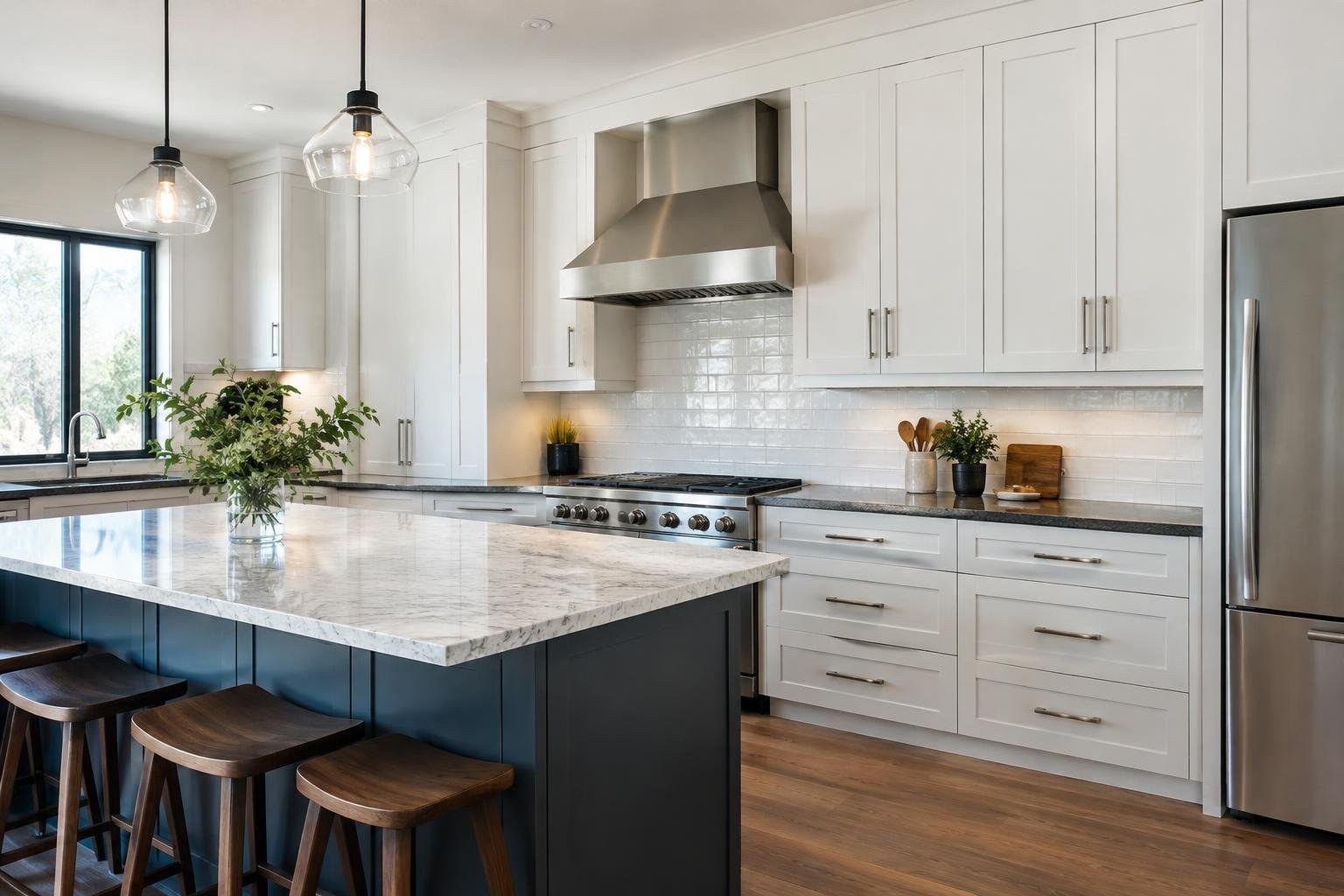
Quick answer: what is the average cost of kitchen cabinets?
Cabinet cost estimates can refer to different things: the cabinets themselves, cabinets plus installation, or a larger kitchen project. Cuisine Idéale’s 2026 guide reports a broad U.S. range from $2,000 for basic stock cabinetry to more than $50,000 for fully custom, luxury-grade cabinets. Other published figures describe narrower averages or sample kitchen sizes. These estimates are not interchangeable because they may cover different products and work.
Start by asking what the estimate includes. Then compare the cabinet specifications and labor scope line by line. A lower number may omit installation, delivery, removal, or finishing details that another bid includes.
What to know before setting a cabinet budget
Cabinets shape how much storage a kitchen has, how the room works, and how the finished space looks. They also interact with counters, appliances, plumbing, lighting, and walls. A cabinet budget is more useful when it reflects the whole scope, not just a door style or a price per cabinet.
- Decide whether you are replacing cabinets, changing the layout, or keeping existing cabinet boxes.
- List the storage and access problems you want the project to solve.
- Choose a cabinet category before comparing detailed door, finish, and hardware upgrades.
- Request written estimates that identify inclusions, exclusions, and who handles installation.
Cost guides use different units, such as per cabinet, per linear foot, or whole-project ranges. Check the unit and scope before comparing numbers.
Signs you may need new cabinets, or a different solution
Consider new cabinets when the existing layout, storage, or cabinet condition no longer meets your needs. Visible wear alone does not automatically mean full replacement is necessary; first determine whether the problem is limited to doors and finishes or involves the cabinet boxes, access, or room layout.
- Make a list of recurring frustrations, such as hard-to-reach storage or inadequate drawer space.
- Look for doors or drawers that no longer function as intended and identify whether adjustment or repair may be enough.
- Assess whether the cabinet boxes can remain if you are considering a surface update.
- Decide whether the current arrangement works with your appliances and daily kitchen use.
Use these observations to explain the desired outcome to providers. A replacement estimate and an estimate that retains existing boxes may have very different scopes, so they should not be compared as though they are the same project.
Kitchen cabinet costs and how to read published estimates
Published U.S. price figures vary substantially. Cabinet Now reports stock cabinets at $200 to $350 per cabinet, or $100 to $280 per linear foot installed. HomeAdvisor reports that a typical 10-by-10-foot kitchen can range from $2,000 to $24,000, with many projects in the $4,000 to $13,000 range. Kitchen Cabinet Kings gives a broad range of $2,000 to $40,000 and an average range of $4,500 to $15,000. These are source-reported estimates, not a promise of local pricing.
Installation figures also use different methods. Homewyse’s 2026 cost calculator reports an estimated national range of $486 to $736 per cabinet for installation. Home Depot reports $69 to $119 per linear foot for installation or replacement. These differing units and estimates show why a homeowner should request a locally applicable, itemized bid.
Set a working budget only after clarifying whether it covers cabinets, installation, demolition, delivery, disposal, fillers and panels, hardware, countertops, and other remodeling work. Ask each provider to identify allowances and exclusions in writing.
Factors that affect the project
The total depends on more than the number of doors. When requesting estimates, ask providers to show how each of these choices affects the quote:
- Cabinet category: Stock, semi-custom, and custom products have different selection and sizing approaches. A published guide places basic stock cabinetry at the low end and fully custom, premium cabinetry above $50,000 for some projects.
- Quantity and layout: Cabinet count and the amount of cabinetry in the plan affect the order. Islands, corners, tall units, and unusual dimensions can change the scope.
- Door, finish, and interior choices: Ask which finish and storage features are included and which are upgrades.
- Installation and project preparation: Confirm whether labor, removal, delivery, wall preparation, and cleanup are included.
- Related work: Clarify whether counters, plumbing, electrical work, appliance moves, or other remodeling items are in the quote or handled separately.
- Location and timing: Request an estimate for your project and location rather than assuming a national figure applies.
These questions help reveal whether two bids are actually pricing the same work.
Stock, semi-custom, or custom: which option fits?
Stock cabinets are often the budget-conscious starting point. Cabinet Now describes them as the most budget-friendly category and reports per-cabinet and per-linear-foot installed figures. Standard choices can make them a practical match when the planned layout fits available sizes. The tradeoff is less freedom to specify dimensions or details.
Semi-custom cabinets start from a product range with some additional selection or detailing options. Cabinet Now characterizes them as stock cabinets with an option for extra detailing. Ask exactly which dimensions, finishes, and modifications are available in the quoted product.
Custom cabinets are designed for a particular project and can address more specific requirements. That flexibility can come with a much higher budget: Cuisine Idéale’s 2026 guide says fully custom, luxury-grade cabinets can exceed $50,000. Custom is worth considering when the room or design has requirements standard selections cannot meet, but request a detailed specification and quote.
Compare the complete order, not just the category name. Ask for the cabinet description, dimensions, finish, included accessories, installation scope, and expected schedule in writing.
Planning and measurements: what to prepare
Before requesting bids, prepare a clear description of the intended work. Record the room constraints and the appliances, sink, and other fixed elements that the cabinet plan must accommodate. If you are considering a layout change, explain what you want to improve rather than assuming a provider will infer it from a rough drawing.
- Make a list of existing cabinets to keep, remove, or replace.
- Note appliance locations and any known plumbing, electrical, or ventilation constraints.
- Identify storage priorities and features that matter most.
- Share your preferred cabinet category and finish direction, while remaining open to alternatives.
- Ask the provider to verify measurements and document the final cabinet plan before you approve an order.
A provider should clarify who measures, who confirms the order, and who is responsible if a product or dimension does not match the approved plan. Do not rely on a rough room measurement alone for a final cabinet order.
What to expect during the process, including timing
A cabinet project commonly moves through planning, final measurement, product selection, ordering, preparation, removal when applicable, installation, and final adjustment. The exact sequence depends on whether the layout changes and what other work is part of the renovation. Do not assume a cabinet-only estimate covers the full kitchen remodel.
Delivery and installation timing varies by product and project. Ask for separate expected dates or milestones for the final plan, order, delivery, installation, and any work that must follow cabinet installation. Have the provider explain the schedule assumptions for your selected product and project.
Before work begins, confirm how the kitchen will be protected, what must be cleared, who removes existing cabinets, how delivery is handled, and who coordinates related work. If counters or utilities are affected, ask which provider is responsible for each part.
Installation scope and DIY versus professional help
Cabinet installation may be included in a replacement quote or priced separately. Published installation estimates differ: Home Depot reports $69 to $119 per linear foot for installation or replacement, while Homewyse’s 2026 calculator gives $486 to $736 per cabinet. These figures use different units and should not be treated as interchangeable or as a current local offer.
Ask the installer to specify the work covered: removal, disposal, delivery handling, layout, fastening, leveling, fillers, panels, trim, door and drawer adjustment, and cleanup. Also ask whether countertop work and changes to plumbing or electrical are excluded. When existing walls or floors need attention, clarify who will identify and price that work.
Experienced DIYers may consider straightforward work within their skills, but cabinet installation requires accurate layout and secure attachment. If the plan involves utility changes, structural concerns, heavy cabinets, or work outside your experience, use appropriately qualified professionals and confirm local requirements. Do not attempt regulated or hazardous work without the required qualifications.
How to choose and compare a qualified provider
Choose a provider based on the proposed scope and its ability to document the work, not on price alone. Ask for examples of relevant projects, references, and a written estimate that describes the cabinets and installation responsibilities. Confirm any licensing and insurance requirements that apply where the project is located.
- Who takes and verifies final measurements?
- Which cabinet category, product details, finish, and hardware are included?
- Does the estimate include delivery, removal, installation, trim, and cleanup?
- What work is excluded or assigned to another contractor?
- How are changes, unexpected conditions, and additional charges approved?
- What schedule is anticipated, and what may change it?
- What warranty applies to the product and what coverage applies to installation?
- What payment schedule and problem-resolution process will be used?
Compare at least two estimates with the same scope when practical. A low bid may reflect missing work or a different product, so seek clarification before deciding.
When you are ready to review cabinet choices for your project, explore Cabinet Supply as a next step.
Permits, qualifications, warranties, and safety
Cabinet replacement by itself is not the same as a kitchen renovation that changes utilities or the room structure. Before work begins, ask the local building department or your remodeling professional whether permits or inspections apply to the planned scope. Requirements vary by location and by the work being done.
Confirm who is responsible for any plumbing, electrical, ventilation, or structural work and whether that work requires a separately qualified trade professional. Ask for product and installation warranty terms in writing, including how to report a problem and which party handles it. Do not assume a warranty covers every part of a project or that a product warranty and labor warranty are identical.
Keep the approved cabinet plan, estimate, change orders, product details, and closeout information together. That record can help clarify what was ordered and what was agreed if a question comes up later.
Ways to reduce cost without cutting corners
Save by reducing unnecessary scope, not by weakening measurement, installation, or safety. Keeping the existing layout may make it easier to compare cabinet-only options, provided the layout still works for you. Ask whether standard cabinet sizes can meet your needs before paying for custom dimensions, and identify which upgrades matter most so you can prioritize them.
- Compare stock and semi-custom selections against the actual room plan.
- Keep a written list of must-have storage features and optional upgrades.
- Ask for separate prices for cabinets, installation, removal, delivery, and related work.
- Review the final measurements and cabinet schedule before approving the order.
- Avoid late design changes by confirming appliance and utility locations early.
Do not choose an estimate solely because it is the cheapest. Compare product details and inclusions first. Published figures vary substantially by product type and pricing method, which is another reason to evaluate the full written scope.
Common mistakes, red flags, and a practical checklist
Use this short review before signing an estimate or approving a cabinet order:
- Scope: Is it clear whether the project is a cabinet replacement, a layout change, or part of a larger remodel?
- Measurements: Has the final plan been checked against room conditions and appliance locations?
- Price: Are cabinet and labor costs separated, with exclusions and allowances identified?
- Product: Are cabinet category, dimensions, finish, hardware, and included features specified?
- Responsibilities: Is it clear who handles removal, delivery, installation, utilities, and cleanup?
- Changes: Is there a written process for approving changes and added costs?
- Protection: Are qualifications, insurance, warranties, and any local permit questions addressed?
- Schedule: Are milestones and schedule assumptions documented?
Red flags include pressure to approve an unclear quote, reluctance to document exclusions, or an unwillingness to explain how the price was developed. Pause and seek clarification before committing.
Frequently asked questions
What is the average cost of kitchen cabinets?
Published estimates vary because some describe cabinets only, while others include installation or a broader project scope. Cuisine Idéale’s 2026 guide gives a broad range of $2,000 to more than $50,000, while other estimates put many projects in narrower ranges. Compare itemized bids with the same inclusions rather than relying on a single average.
Are stock or custom kitchen cabinets cheaper?
Stock cabinets are generally the lower-cost choice, while semi-custom adds selection or modification options and custom cabinetry is made for a specific project. The right choice depends on your budget, required dimensions, desired features, and whether standard sizes work in your kitchen.
Does the cost of kitchen cabinets include installation?
Usually, the cabinet purchase and installation are separate estimate categories, but some providers may bundle them. Ask whether the price includes delivery, removal of old cabinets, installation, fillers, panels, hardware, and cleanup.
Is it cheaper to reface or replace kitchen cabinets?
It depends on the existing cabinet boxes, door and drawer condition, desired appearance, and project scope. Refacing may be worth comparing when the boxes can remain and the goal is a new exterior look. Replacement may be more suitable when the layout or cabinet interiors need substantial changes. Request comparable written scopes before deciding.
How long does it take to install kitchen cabinets?
The delivery and installation schedule depends on the chosen cabinets, order readiness, project preparation, and coordination with other trades. Ask for separate target dates for measurement, ordering, delivery, installation, and countertop work, and have the provider explain what could affect them.
How do I choose a kitchen cabinet installer?
Compare the project scope, cabinet specifications, installation responsibility, exclusions, payment schedule, change-order process, cleanup, and warranty terms. Check references and relevant project examples, and confirm licensing and insurance requirements that apply in your area.
Do I need a permit to replace kitchen cabinets?
Possibly. Requirements depend on the work and location. Ask the local building department or your remodeling professional whether permits or inspections apply, especially if the project includes changes to plumbing, electrical, ventilation, or structural elements.
How can I save money on kitchen cabinets?
Sometimes. Keeping the existing layout, choosing standard sizes, limiting upgrades, and avoiding late changes can help control the cabinet portion of the project. Do not cut costs by skipping accurate measurements, safe installation, or work that requires a qualified professional.
People Also Ask
What should I check in a kitchen cabinet estimate?
Check that the estimate identifies cabinet type, dimensions, finish, hardware, and quantity, and states whether delivery, removal, installation, fillers or panels, and cleanup are included. Ask providers to list exclusions and related countertop or utility work separately so you can compare matching scopes.
What do stock kitchen cabinets cost per cabinet?
Cabinet Now reports stock cabinets at $200 to $350 per cabinet or $100 to $280 per linear foot installed. Treat these as that source’s reported figures, not a guaranteed quote, and confirm the date, location, and included work with providers.
What is the difference between stock, semi-custom, and custom cabinets?
Stock cabinets use standard selections and dimensions, semi-custom options offer some added choices or modifications, and custom cabinets are designed for a specific project. Compare fit, lead-time expectations, finish choices, storage needs, and total installed price.
How much do cabinets cost for a 10-by-10 kitchen?
HomeAdvisor reports a broad range of $2,000 to $24,000 for a 10-by-10-foot kitchen, with many projects between $4,000 and $13,000. A sample kitchen size is not a quote: cabinet count, selections, location, and included labor can change the result.
Should I reface or replace my kitchen cabinets?
Not necessarily. Refacing can preserve existing boxes, but it will not address every layout or storage problem. Compare the condition of the cabinet boxes and the written scope for refacing and replacement before choosing.
How much does kitchen cabinet installation cost?
The estimate should clearly say whether installation is included. Published installation figures vary by source and pricing method, so request a separate, itemized labor figure and verify which preparation and finishing tasks it covers.
The average cost of kitchen cabinets is best understood as a project range, not a single dependable price. Cabinet type, layout, finishes, installation, and what the estimate includes all affect the total. Compare itemized bids on the same scope, confirm measurements and responsibilities before ordering, and choose a plan that fits both your budget and the way you use your kitchen.
Your next step
Explore cabinet options at CabinetSupply.com for your next project.
Last reviewed and updated November 2, 2026 by the CabinetSupply Editorial Team.
Sources
- Kitchen Cabinet Cost: 2026 Price Guide | Cuisine Idéale
- What's The Average Cost To Replace Kitchen Cabinets? – Cabinet Now
- How Much Do Kitchen Cabinets Cost? – CabinetSelect.com
- Cost to Install Kitchen Cabinets – The Home Depot
- Cost to Install Kitchen Cabinets – 2026 Cost Calculator (Customizable)
- 2026 Average Cost of Kitchen Cabinets | New Kitchen Cabinet Prices – HomeAdvisor
- What Do Kitchen Cabinets Cost? + Budget Tips
- Kitchen Cabinet Cost in 2026 – Average Price, Stock vs Custom, and Hidden Fees