
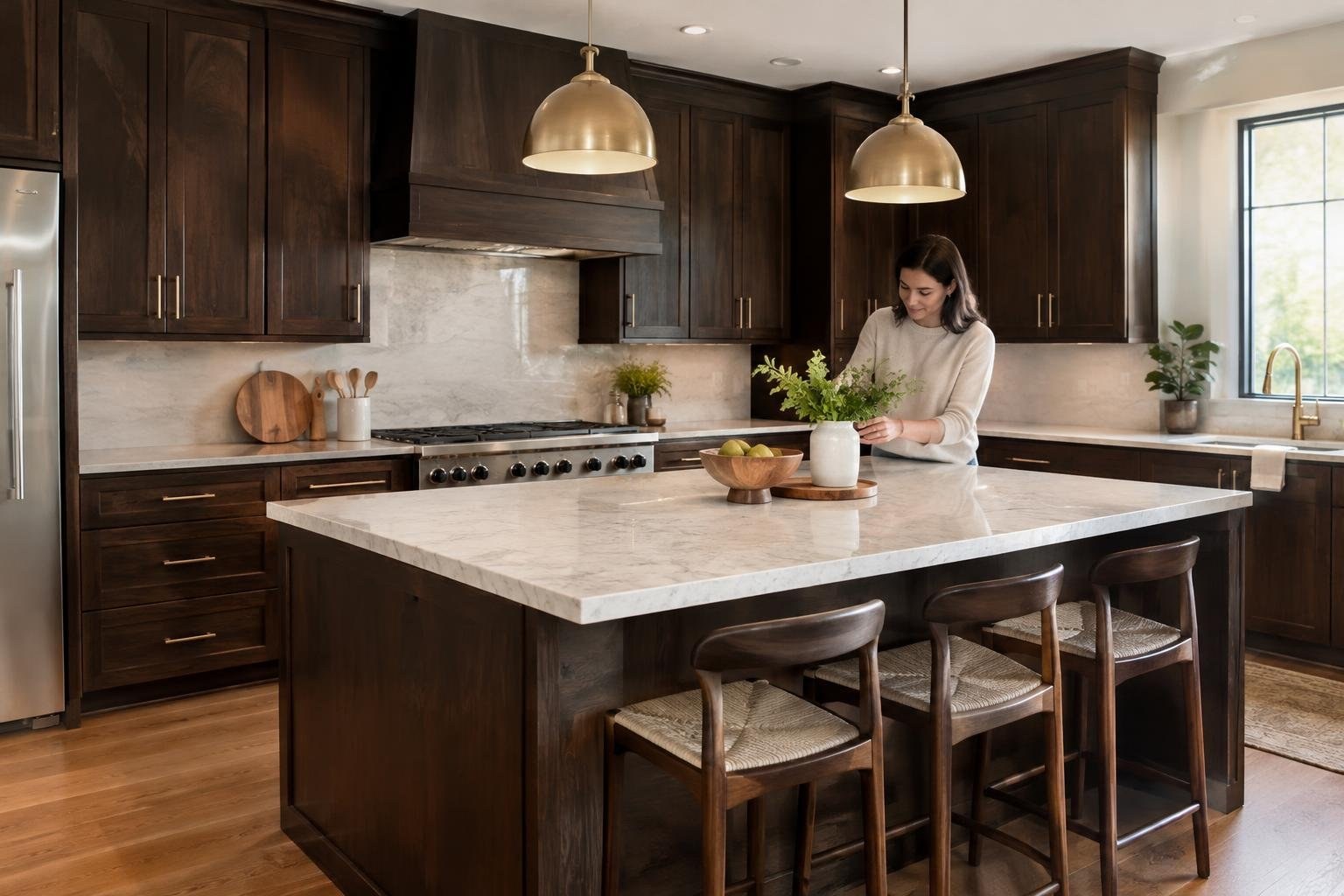
Dark wood kitchen cabinets range from deep brown and espresso tones to nearly black finishes, and can suit both contemporary and more traditional compositions. The color alone does not determine whether a kitchen will feel warm, dramatic, balanced, or too visually heavy. The result depends on the cabinet style, surrounding surfaces, room lighting, and how much of the kitchen is finished in the dark tone. Use this guide to compare design approaches, plan selections, and evaluate a cabinet or installation proposal before committing.
What to know about dark wood kitchen cabinets
Dark wood cabinetry can anchor a kitchen with a rich, contemporary look, or contribute to a more classic composition. Examples range from espresso and dark cherry inspiration to nearly black cabinetry and matching backsplashes. Dark wood also appears in both modest layouts and kitchens designed around a more elaborate cooking area, so the style is not limited to one room size or design approach. These examples are starting points, not a promise that a particular finish will suit every kitchen.
Keep three questions separate while you shop:
- Appearance: What color, grain, door shape, and sheen do you want?
- Cabinet specification: What are the boxes, doors, drawers, finish, and hardware made of?
- Project scope: Who measures, supplies, delivers, installs, and handles any related work?
A photograph or product name can help identify a look, but it does not answer the construction or installation questions. Evaluate each independently.
Design options: contrast, matching finishes, and mixed materials
Dark cabinets can make a strong visual statement, but there is no single correct way to use them. First decide whether you want contrast, a mostly dark room, or a mix of finishes. Design references illustrate dark cabinetry with light countertops and a lighter island, as well as a dark cabinet-and-backsplash combination. Another example uses dark wood cabinets with matching floating shelves. Those different treatments show why it helps to choose the whole palette, not cabinetry in isolation.
Ways to balance the color
- Contrast: Consider lighter counters, walls, or an island against dark cabinets. A light terrazzo island and pale countertop are examples of how a lighter surface can offset dark cabinetry.
- Dark-on-dark: If you prefer a continuous look, consider differences in texture or grain direction so adjacent surfaces are not visually identical. One design example uses horizontal wood grain on cabinets and vertical alignment on the backsplash.
- Mixed storage: Dark cabinets can sit alongside matching open shelves or a different cabinet color. Decide whether open display or concealed storage better fits how you use the kitchen.
These are design options rather than fixed rules. Look at samples together under the lighting in your kitchen. A screen image cannot establish how a finish will look beside your own countertop, flooring, wall color, or backsplash.
Mid-guide next step: Use the options you find to compare the look you want with the details your kitchen requires.
Compare cabinet styles and product options, not color alone
Dark wood is a broad visual category, so narrow the choice by comparing the actual finish and door design. A product listing describes one dark wood collection with a flat-slab door and soft-close doors and drawers. Other listings and design collections show dark finishes offered in different settings, including more traditional and contemporary examples. Do not assume a named dark finish has the same grain, sheen, or appearance across different products.
| Choice | What to compare | Useful question |
|---|---|---|
| Flat-slab or more detailed door | Door outline, visual weight, and how it relates to the kitchen’s other details | Does the door style fit the look I want across the whole room? |
| Dark wood tone | Undertone, grain visibility, and appearance beside room finishes | Can I review a sample with my counter, floor, and wall color? |
| Cabinet and shelf combination | Amount of closed storage and the look of displayed items | Do I want open shelves, matching cabinetry, or both? |
| Dark-on-dark or contrasting palette | How much of the room is dark and where lighter surfaces appear | Do I prefer a continuous mood or visible contrast? |
A dark color does not tell you whether a cabinet is stock, semi-custom, custom, framed, frameless, or ready to assemble. Those are separate product and construction descriptions. Ask the seller to identify the exact cabinet type and specification rather than inferring it from a style photograph or finish name.
When should you consider changing the cabinets or finish?
A dark finish is one reason to reconsider a kitchen’s cabinetry, but it is not by itself evidence that the cabinets need replacement. Begin by identifying the actual issue: a look you no longer want, a storage arrangement that does not work for you, or a cabinet condition that needs an assessment. These concerns call for different decisions.
- If the cabinets work for your needs and the main concern is color, ask whether a finish change or another limited update is appropriate for the existing cabinet condition. Have a qualified provider assess the surface before assuming it can be refinished.
- If the room’s layout or storage is the problem, discuss whether changing some or all cabinetry can address the specific use issue. A new dark finish will not by itself correct a poorly suited layout.
- If you are choosing cabinets for a remodel, decide whether dark cabinetry is a lasting preference for your household, not only a reaction to a photograph or current design example.
Use project photographs for inspiration, then translate the idea into requirements: desired storage, cabinet locations, finish, door style, and the surfaces that will sit beside them. This helps keep a style decision connected to function.
Cost considerations: what to compare in a cabinet quote
There is no supported universal price for dark wood kitchen cabinets. A finish name alone cannot tell you the cost of a particular kitchen. Request a project-specific proposal that identifies the products and work included, then compare it with proposals covering the same scope.
Ask each provider to separate or clearly describe:
- Cabinet type, quantity, sizes, door style, finish, and interior specification.
- Drawers, hinges, and other hardware, including whether soft-close features are included.
- Finished panels, fillers, trim, and any custom sizing included in the design.
- Measurement, delivery, installation, removal of existing cabinets, and cleanup.
- Countertop work and any separate plumbing, electrical, wall, flooring, or appliance work.
- Expected schedule, payment milestones, warranty terms, and how changes are priced.
For a fair comparison, mark each item as included, excluded, or not applicable. A lower total may reflect a narrower scope, different product, or fewer included services. Ask the provider to explain any difference before you compare totals.
Factors that affect the project and proposal
Project choices can change the proposal even when the color stays the same. The cabinet collection and door style, the number and dimensions of cabinets, the amount of custom sizing, selected hardware, and the work assigned to the installer are all details to clarify. A product listing may identify a specific feature such as soft-close doors and drawers, but do not assume it is included in another cabinet line.
Other scope questions include whether you are changing only cabinetry or also counters, appliances, plumbing, electrical, walls, or flooring. Ask which provider is responsible for each task and how the sequence will be coordinated. Confirm the finished design against your room measurements and appliance requirements before an order is placed.
Room compositions range from one-wall layouts to kitchens with islands and tall storage, so use your actual plan rather than applying a package or photograph without checking fit. The same visual style can involve very different cabinet quantities and project scopes.
What to expect: planning, ordering, and project timing
Cabinet projects generally require a sequence of decisions and handoffs, but the exact workflow depends on what you are changing and who is doing the work. Ask the responsible provider to explain the steps for your project and identify when you must approve each selection.
- Set priorities: Record what you want to change, what must remain, and the storage or appearance goals the new cabinetry should meet.
- Review the room: Have the responsible person confirm dimensions and note doors, windows, appliances, utilities, and surfaces that could affect the design.
- Select the specification: Confirm the exact cabinet type, finish, door style, hardware, and included accessories in writing.
- Confirm the scope: Identify who handles removal, delivery, installation, related trades, and cleanup.
- Approve the schedule: Ask for the expected order, delivery, and work dates, along with the process for reporting delays or changes.
- Review completion: Check the installed work against the agreed scope and ask how adjustments or unresolved items will be handled.
Do not rely on a generic installation-time promise. Ask for dates tied to the actual product and scope, and find out which decisions or site conditions could alter them.
How to choose a qualified cabinet provider or installer
Choose a cabinet provider or installer based on the full scope they can document, not a single attractive image or the lowest quote. Ask who is responsible for design, final measurements, ordering, delivery, installation, and follow-up. If different companies handle those stages, clarify who coordinates between them.
Before hiring, request:
- A written description of the proposed cabinets, finish, door style, hardware, and quantities.
- A plan or other clear record of the intended arrangement and dimensions.
- A complete estimate that identifies included and excluded work.
- References or examples of relevant completed projects, where available.
- The anticipated schedule, payment terms, change-order process, and cleanup responsibilities.
- Written warranty information and a clear contact for problems after installation.
Check applicable licensing and insurance requirements for your location and the work being performed. Confirm credentials with the appropriate local authority when needed. Ask how the provider handles damaged items, measurement discrepancies, and corrections. Compare responses as well as prices: a proposal is easier to evaluate when responsibilities and assumptions are explicit.
Permits, qualifications, warranties, and safe project planning
Local requirements depend on the project and location. Before work begins, ask the contractor or the appropriate local authority whether permits or inspections apply to the planned scope. Do not assume that a cabinet-only change and a project involving utilities have identical requirements. Electrical, plumbing, structural, or other regulated work should be assessed and completed by appropriately qualified professionals under applicable local rules.
Ask for warranty terms in writing and check what product and installation components they cover, how long coverage applies, and how a claim is submitted. Verify warranty terms, code requirements, and credentials for the specific product, project, and location.
Safety and coordination matter during removal and installation. Confirm who is responsible for protecting the work area, handling waste, and coordinating any separate trades before the project starts.
Ways to manage cost without creating avoidable risk
Save by making informed scope and design decisions, not by skipping checks that protect fit or workmanship. Decide which parts of the room must change and which can remain. Compare more than one proposal using the same cabinet specification and task list, and ask whether a simpler door style or fewer special features would meet your priorities. Confirm whether a seller’s advertised offer applies to your selected product and order before using it in your budget.
Do not reduce cost by ordering from unverified measurements, omitting necessary finished panels, or assuming delivery and installation are included. Confirm the final plan, cabinet sizes, hardware, and responsibilities before approving the order. If considering ready-to-assemble cabinets or self-installation, first establish who will verify fit, what tools and skills the work requires, and who handles problems with the product or installation. A lower initial quote is not a saving if it leaves essential work unpriced.
Mistakes, red flags, and a pre-order checklist
Use this checklist before ordering or signing an installation agreement:
- Have you chosen a specific sample or finish, not just a general color name?
- Have you viewed it beside the planned counter, floor, wall, and backsplash finishes?
- Does the written specification identify cabinet type, door style, hardware, and quantities?
- Have final room measurements and appliance locations been checked by the responsible provider?
- Are finished panels, fillers, trim, delivery, installation, removal, and cleanup clearly addressed?
- Does the estimate say who handles countertop and utility work, and what is excluded?
- Do you have a project-specific schedule and a written process for delays and changes?
- Have you checked local requirements and asked for applicable credentials and insurance?
- Can you locate the warranty terms and contact the provider responsible for follow-up?
Common avoidable problems include choosing from a screen image alone, treating dark color as proof of cabinet quality, overlooking the contrast or texture of surrounding finishes, and comparing quotes with different assumptions. Pause if a provider will not identify the product, document the scope, explain responsibilities, or put key terms in writing. Resolve those questions before paying or authorizing work.
Frequently asked questions
Do dark wood cabinets make a small kitchen look smaller?
Dark wood cabinets can work in a small kitchen, but judge the effect in the actual room rather than assuming the color will suit every space. Compare a cabinet sample with your lighting, wall color, counters, and flooring. If the overall composition feels too dark, consider using lighter surfaces or limiting the dark finish to part of the cabinetry.
What countertop goes with dark wood kitchen cabinets?
Pair dark cabinetry with lighter counters, walls, or a lighter island if you want visual contrast. A more enveloping look can use dark cabinetry with a related dark surface, but vary texture or direction to keep the composition from feeling uniform. Design examples show both dark-on-dark treatments and dark cabinets balanced by lighter surfaces.
Are dark wood kitchen cabinets more expensive?
Not necessarily. Dark wood describes an appearance, not a single construction type. Compare the cabinet box, door material and finish, drawer construction, hardware, and warranty for the particular product rather than using color as a quality measure.
How can I estimate the cost of dark wood kitchen cabinets?
Ask what the quote includes: cabinet boxes and fronts, fillers and finished panels, hardware, delivery, installation, removal, and any separate countertop or utility work. Compare matching scope and specifications, not just the bottom-line price. Prices depend on the product and project scope, so request comparable project-specific quotes rather than applying a single figure to every kitchen.
How long does it take to install dark wood kitchen cabinets?
Request the expected production, delivery, and installation sequence from the seller or installer for the selected cabinets and project. Timing depends on the specific order and scope, so get the anticipated dates and what could change them in writing rather than relying on a general estimate.
Can I mix dark wood cabinets with lighter cabinets?
Yes. Dark cabinetry can be used with lighter counters, mixed cabinet colors, or complementary shelves. Decide whether you want contrast or a continuous dark look, then check how the chosen materials and finishes look together in the room.
What should I ask a kitchen cabinet installer before hiring?
Ask the provider to show relevant completed projects, clarify who measures and installs, provide a detailed written scope, and explain how changes, delivery, adjustments, and concerns are handled. Verify applicable credentials and insurance for your location and project before work begins.
How do I choose the right shade of dark wood cabinets?
Use a sample or door sample where possible and view it alongside the actual or planned countertop, floor, wall color, and lighting. The same color can read differently against different surrounding finishes, so make the decision as a room-wide combination rather than from a screen image alone.
People Also Ask
Can dark cabinets and a matching backsplash use different grain directions?
Yes. One design example uses horizontal wood grain on the cabinets and vertical alignment on the backsplash to add variation to an otherwise dark-on-dark look. Consider texture or grain direction when choosing adjacent dark surfaces.
How do you brighten a kitchen with dark cabinets?
Use lighter counters, walls, or an island to create contrast with dark cabinets. A lighter surface, such as a terrazzo island, can brighten the overall look. If you prefer a dark-on-dark scheme, vary grain direction or texture for visual distinction.
What styles are available for dark wood kitchen cabinets?
The cited product listing describes a dark wood collection with a flat-slab door and soft-close doors and drawers. Other dark cabinet styles are available, so compare the actual door, finish, and hardware options rather than assuming every product shares those features.
Do open shelves work with dark wood cabinets?
Yes. A design example pairs dark wood cabinetry with matching floating shelves, while other examples show dark cabinets alongside lighter counters or an island. Choose based on the amount of contrast and storage display you want.
What should I do before ordering dark wood cabinets?
Plan a coordinated sample review, confirm the exact cabinet and finish, compare written project scopes, and have the responsible provider verify measurements and project requirements before ordering. Confirm local requirements for any regulated work with the appropriate local authority or qualified professional.
What should I check in a kitchen cabinet warranty?
Check what product and installation components the warranty covers, how long coverage applies, and how to submit a claim. Request the terms in writing for the specific cabinets and project.
Dark wood kitchen cabinets can create a rich, dramatic look or a quieter, grounded one, depending on how you balance their color with light, counters, walls, and other finishes. Choose the cabinet tone and door style in the context of the whole room, inspect a sample in your own lighting, and compare complete project proposals rather than judging a design by a single photograph. When you are ready to explore possibilities, explore cabinet options at CabinetSupply.com for your next project.
Your next step
Explore cabinet options at CabinetSupply.com for your next project.
Last reviewed and updated November 2, 2026 by the CabinetSupply Editorial Team.
Sources
- 47 Best Dark wood kitchen cabinets ideas
- Torino Dark Wood Kitchen Cabinets
- Explore Dark Wood Kitchen Cabinets for Sophisticated Style | Lowe's
- 19 Moody and Dramatic Dark Kitchen Cabinet Ideas
- 27 dark wood kitchen cabinets for a strong look – COCO LAPINE DESIGN
- 27 Dark Wood Kitchen Cabinets for a Strong Look – Coco Lapine Design
- Dark Kitchen Cabinets – Buy RTA dark wood kitchen cabinets
- 75 Kitchen with Dark Wood Cabinets Ideas You'll Love – June, 2026 | Houzz
- Kitchen Cabinet Trends for 2026: Styles, Colors, and Smart Choices