
Solid wood kitchen cabinets are often considered for their natural appearance and the option to select from different wood looks, finishes, and cabinet configurations. But “solid wood” does not automatically mean every cabinet component is made from solid lumber. Before choosing a product, find out what the doors, cabinet box, shelves, drawers, and finish are made of, then compare the complete project scope. This guide explains how to assess those details, evaluate alternatives, plan for cost and timing, and make a more informed buying decision.
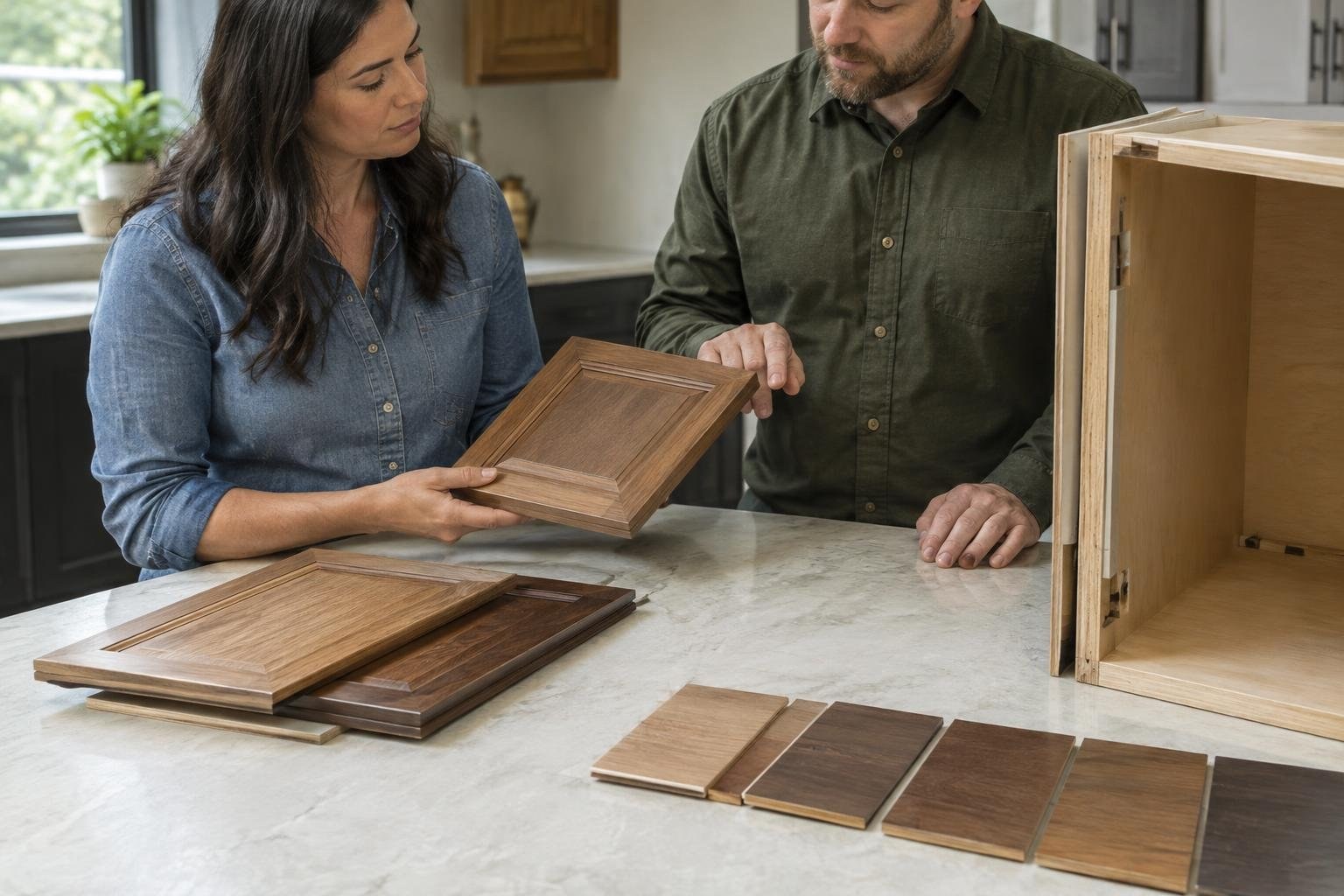
What solid wood kitchen cabinets include
“Solid wood kitchen cabinets” describes a product category, not necessarily a promise that every part is made from solid wood. Some cabinets combine solid wood doors with plywood cabinet boxes. The key is to identify the material of each component and decide which differences matter for your kitchen.
Cabinet sellers offer products in a range of sizes and appearances, and ready-to-assemble and assembled products are both available in the market. Listings may show different door looks, colors, and cabinet dimensions, but the precise options depend on the product line. Verify the specifications for the exact cabinet you are considering.
Use the term as a starting point for questions, not as a complete quality grade. A careful comparison should cover cabinet construction, finish, hardware, included parts, delivery, and installation responsibilities.
Signs it may be time to reconsider your cabinets
Cabinets may be worth evaluating when existing storage no longer works for the way you use the kitchen, when the layout is being changed, or when you are planning a broader renovation. Those are project-planning prompts, not proof that solid wood is the right replacement material.
Before deciding to replace cabinets, note what is actually wrong: appearance, storage, damaged parts, fit, or a need to change the layout. If the issue is limited to the look, ask whether a finish or door update is possible for your existing cabinets. If the layout or cabinet condition is the concern, compare replacement options and scope.
Make a short list of the problems a new cabinet plan must solve. For example, identify which items lack a practical storage location, where doors or drawers are inconvenient, and what appliances or other fixed features constrain the design. Take that list to the cabinet seller or installer so recommendations address your needs instead of just a finish preference.
Cost and pricing: what to request in a quote
Project costs depend on the actual cabinet sizes, quantities, configuration, finish, delivery, and work included, so request a quote tied to those details. BestOnlineCabinets notes that a displayed starting price can change with the sizes added.
Ask for an itemized estimate that separates, where applicable:
- Cabinet units and component materials
- Door style, finish, and any finishing work
- Hardware, organizers, and other selected features
- Delivery, assembly, and installation
- Removal or disposal of existing cabinets, if included
- Any related work the provider has agreed to perform
Compare bids based on the same plan and specifications. A lower total may reflect fewer cabinets, a different box material, less installation work, or excluded finishing and delivery. Ask providers to identify every exclusion before comparing the bottom line.
Factors that affect the project and its price
Project price and complexity are shaped by the product and by the scope around it. The number and sizes of cabinets matter, as do the chosen finish, selected accessories, and whether the cabinets arrive assembled or require assembly. Custom sizing and unfinished products may also change what must be planned and priced.
Before requesting bids, record the approximate room layout and list the cabinet components you expect to replace. Treat that information as a starting point, not a final order measurement. Ask the provider to confirm dimensions and identify the assumptions used to prepare the quote.
Separate cabinet cost from other work. If your project includes changes beyond cabinets, request a clear explanation of which provider is responsible for each part. This makes it easier to spot gaps, avoid duplicate charges, and understand why two estimates differ.
Options and tradeoffs: assembled, RTA, and unfinished
Compare cabinet options by how they are made, delivered, and finished, not just by the words used in a product title. A product listing may distinguish solid wood doors from the box material, while another may describe a cabinet as solid wood without explaining every component on the page. Ask for the same component-level information from each seller.
| Option | Potential fit | What to verify |
|---|---|---|
| Ready-to-assemble | Buyers who are prepared to assemble the product or arrange assembly | Assembly instructions, included hardware, delivery, and who handles installation |
| Assembled | Buyers who prefer cabinets supplied assembled | Which parts arrive assembled, delivery arrangements, and installation scope |
| Unfinished | Buyers who want to select or arrange finishing work | Finish requirements, who performs the work, and whether it is included in the quote |
| Custom-sized | Projects that need dimensions beyond a standard selection | Available sizes, specification approval, lead-time estimate, and return terms |
These descriptions do not establish a quality ranking. Judge each complete product and project proposal against your requirements.
Choosing wood appearance, door style, and finish
Solid wood may appeal to buyers who want visible wood character and a choice of wood-colored or painted looks. Product ranges can vary: examples of listed offerings include different cabinet sizes and door appearances, but not every style or dimension will be available for every product.
Ask for a sample or a clear view of the exact door and finish before making a large selection. Check the product name and specification for the finish you are ordering; a photograph or showroom sample may not represent every item in a range. If choosing unfinished cabinets, agree on who will finish them and what the final appearance should be.
Also consider whether the chosen finish and cabinet appearance work with the room’s other fixed selections. Review cabinet samples alongside countertop, flooring, backsplash, and hardware choices where possible. Avoid selecting by a small online image alone when the final combination matters to you.
How to judge construction and product quality
Do not judge a cabinet solely by whether its doors are solid wood. Ask the seller to describe the construction of the doors, cabinet box, shelves, drawers, and visible edges. Some products use solid wood doors with plywood boxes, so a component list is more informative than a general label.
Request written specifications that identify the materials and included features. Ask how doors and drawers are adjusted, what hardware is included, and what the warranty covers. If the seller cannot answer a construction question, ask for the product documentation or a written response before placing an order.
Keep appearance and construction separate in your comparison. A chosen door look or finish is a design decision. Box material, supplied hardware, and the clarity of the product specification are separate considerations. Neither a wood appearance nor a broad “solid wood” description tells you all of those details.
What to expect: ordering, delivery, and timing
Timing depends on the actual product and the work included, so request a project schedule rather than relying on a general promise. Ask the supplier to distinguish product availability and delivery from assembly, installation, finishing, and any other planned work.
Before ordering, agree on who checks the final measurements and who confirms that the selected cabinets fit the approved plan. Confirm whether the cabinets arrive assembled or need assembly, and ask how missing or damaged parts will be handled. If finishing is not included, include that work in the schedule and determine who is responsible.
Get the expected sequence and key dates in writing. If a date changes, ask the provider to explain what work is affected and how the change affects the next steps. This is especially useful when you are coordinating cabinet work with other parts of a renovation.
How to choose a qualified cabinet provider
Choose a provider who can explain the product and the work clearly, and who will put important commitments in writing. Ask how many projects of a similar type they have handled, who is responsible for measuring and installation, and how questions or problems are resolved.
- Request an itemized estimate tied to an approved cabinet plan.
- Confirm product materials, sizes, finish, and included hardware.
- Ask whether delivery, assembly, installation, and cleanup are included.
- Request written warranty terms and clarification of exclusions.
- Check references or reviews and ask to see relevant completed work.
- Confirm licensing and insurance requirements that apply in your location.
- Agree on payment timing, schedule, and written change-order procedures.
Do not assume the lowest bid is the best value. Compare what each provider is supplying and doing, and resolve differences in writing before you choose.
Permits, credentials, warranties, and project safety
Cabinet product descriptions and warranties are not substitutes for checking local requirements or the details of a project. Rules that apply to remodeling work vary by location and scope, so confirm any permit or contractor requirements with the relevant local authority or a qualified local professional.
Ask for the warranty document before purchase. Confirm who provides coverage, which components it applies to, how long coverage lasts, and what actions or conditions may limit it. Do not rely on a verbal summary when the written terms are available.
Make sure the person taking final measurements and the person installing the cabinets know the approved plan and their responsibilities. Keep product specifications, order confirmations, estimates, and change approvals together so they are available if a question arises.
Ways to save without taking avoidable risks
You can control spending without choosing a product that fails to meet your needs. Start with a clear cabinet plan, identify must-have features, and ask for a quote that separates the cabinet selection from delivery and labor. This reveals where options can be adjusted without losing track of the project.
Consider standard sizes when they suit the layout, compare assembled and ready-to-assemble products honestly, and avoid ordering accessories you have not confirmed you will use. Ready-to-assemble products may reduce the assembly service you purchase, but the work still needs to be completed correctly. Include your time, tools, and installation arrangements in the decision rather than treating the product price as the whole cost.
Do not save money by skipping measurement confirmation, ignoring material specifications, or accepting unclear warranty and installation terms. A written, comparable quote is a safer place to make tradeoffs than an assumption based on a product label.
Mistakes to avoid and a pre-order checklist
Common buying mistakes include treating “solid wood” as a description of every component, comparing different cabinet quantities as if they were equivalent, and overlooking assembly or finishing work. A product listing can show a starting reference that changes with the selected sizes, so use the final itemized quote rather than an initial display price.
- Do not order before confirming the final dimensions and product specifications.
- Do not assume the cabinet box, shelves, and drawers match the door material.
- Do not treat assembled and RTA products as having the same included labor.
- Do not assume an unfinished cabinet includes finish or finishing labor.
- Do not compare bids until exclusions and responsibilities are clear.
- Do not accept warranty, schedule, or change-order promises only by word of mouth.
Before signing, check that the approved plan, materials, finish, quantity, delivery, assembly, installation, payment schedule, and warranty are documented. Resolve unanswered questions before the order is placed.
A practical buying checklist and next step
Use this list to keep the buying decision organized:
- Write down the storage and appearance goals for the kitchen.
- Ask for a component-by-component material description.
- Confirm the exact sizes, door style, finish, and hardware.
- Determine whether the cabinets are assembled or ready to assemble.
- Identify who measures, delivers, finishes, and installs the cabinets.
- Compare itemized estimates based on the same plan.
- Review written warranty, payment, schedule, and change terms.
- Confirm any applicable local requirements with an appropriate local source.
When you are ready to browse options, explore cabinet options at CabinetSupply.com and use your written project requirements to narrow your choices.
Frequently asked questions
Are solid wood kitchen cabinets made entirely from solid wood?
Not necessarily. A cabinet may have solid wood doors with a cabinet box made from plywood or another material. Ask for a written breakdown of the door, face frame, sides, back, shelves, and drawer components rather than relying on a broad product label.
How much do solid wood kitchen cabinets cost?
Costs depend on your cabinet sizes, layout, finish, hardware, delivery, and installation scope. Get an itemized quote based on those details and compare bids using the same plans and inclusions.
Are ready-to-assemble solid wood cabinets a good choice?
It depends on the product and the buyer’s skills. Ready-to-assemble cabinets may reduce the amount of assembly service purchased, but the buyer must assemble the cabinets and still account for installation, fitting, and any project-specific work. Check the instructions and delivery details before ordering.
What should I compare when choosing wood cabinets?
Compare the exact material used in each component, cabinet dimensions, finish, hardware, included accessories, delivery, and warranty. A product described as solid wood may not use solid wood for every part, so request component-level details.
Can I buy unfinished solid wood kitchen cabinets?
Some suppliers offer unfinished cabinets and custom sizes, but availability and included features vary by product. Confirm what finishing work is required, who will do it, and whether the quoted price includes that work before ordering.
What should a kitchen cabinet estimate include?
Ask whether the quote covers measuring, delivery, assembly, installation, fillers, panels, trim, removal of old cabinets, and cleanup. Also confirm how changes, damaged parts, and adjustments will be handled in writing.
People Also Ask
What should I check in a kitchen cabinet warranty?
Ask for the written warranty before purchase. Confirm who provides coverage, which components it applies to, how long coverage lasts, and what conditions or actions may limit it.
Are plywood cabinet boxes lower quality than solid wood boxes?
Not always. Some cabinet products use solid wood for the doors and plywood for the cabinet box. The combination should be assessed by component and against your priorities, not by the label alone.
Can you buy assembled solid wood kitchen cabinets?
Some retailers list ready-to-assemble and assembled solid wood cabinet products. The right choice depends on what assembly and installation work you can complete or arrange.
What styles and sizes are available in solid wood cabinets?
Product offerings can include different dimensions, door looks, and finishes. Check the current product specification for the exact item you are considering rather than assuming every size or finish is available.
Are unfinished wood cabinets cheaper?
Some suppliers offer unfinished products, but confirm what finishing steps remain and what the supplier includes. A cabinet that still needs finishing may require added planning and labor.
How long does it take to install solid wood kitchen cabinets?
Timing depends on the product and work included. Ask the supplier and installer for a written schedule that separates product availability, delivery, assembly, installation, and any finishing work.
Solid wood kitchen cabinets can be a good fit when the look and feel of wood are priorities, but the label alone does not tell you how the entire cabinet is built or what the project will cost. Compare the door, box, finish, hardware, installation scope, and warranty as separate parts of the decision. Review the full plan and written estimate before committing, then choose the option that fits your kitchen, budget, and expectations.
Your next step
Explore cabinet options at CabinetSupply.com for your next project.
Last reviewed and updated November 2, 2026 by the CabinetSupply Editorial Team.
Sources
- Wood Kitchen Cabinets – Wooden Kitchen Cabinets – IKEA
- Solid Wood – Assembled Kitchen Cabinets – The Home Depot
- Solid Wood Cabinets
- High Quality Solid Wood Kitchen Cabinets
- Unfinished Kitchen Cabinets | Solid Wood, Custom Sizes, USA Made
- Wood Kitchen Cabinets | Ready-to-Assemble Wood Cabinets for Your Kitchen – RTA Wood Cabinets
- Solid Wood – Kitchen Cabinets – The Home Depot
- Solid Wood Kitchen Cabinets: Timeless Elegance – Bestonlinecabinets
- Best Wood for Kitchen Cabinets: How to Choose