
Cabinet refinishing cost depends on the amount of cabinetry, the condition of its surfaces, the finish selected, and the work included in the quote. Published estimates vary: examples for kitchen projects range from about $1,500 to $5,000, while a separate estimate gives $4 to $15 per square foot. Those figures are broad reference points, not a promise of what a project will cost in your area. The best way to compare prices is to confirm that each estimate covers the same cabinet parts, preparation, finish, hardware decisions, and cleanup. This guide explains what refinishing involves, when to consider it, how it compares with other options, and what to ask before hiring a provider.
What cabinet refinishing includes and what it can change
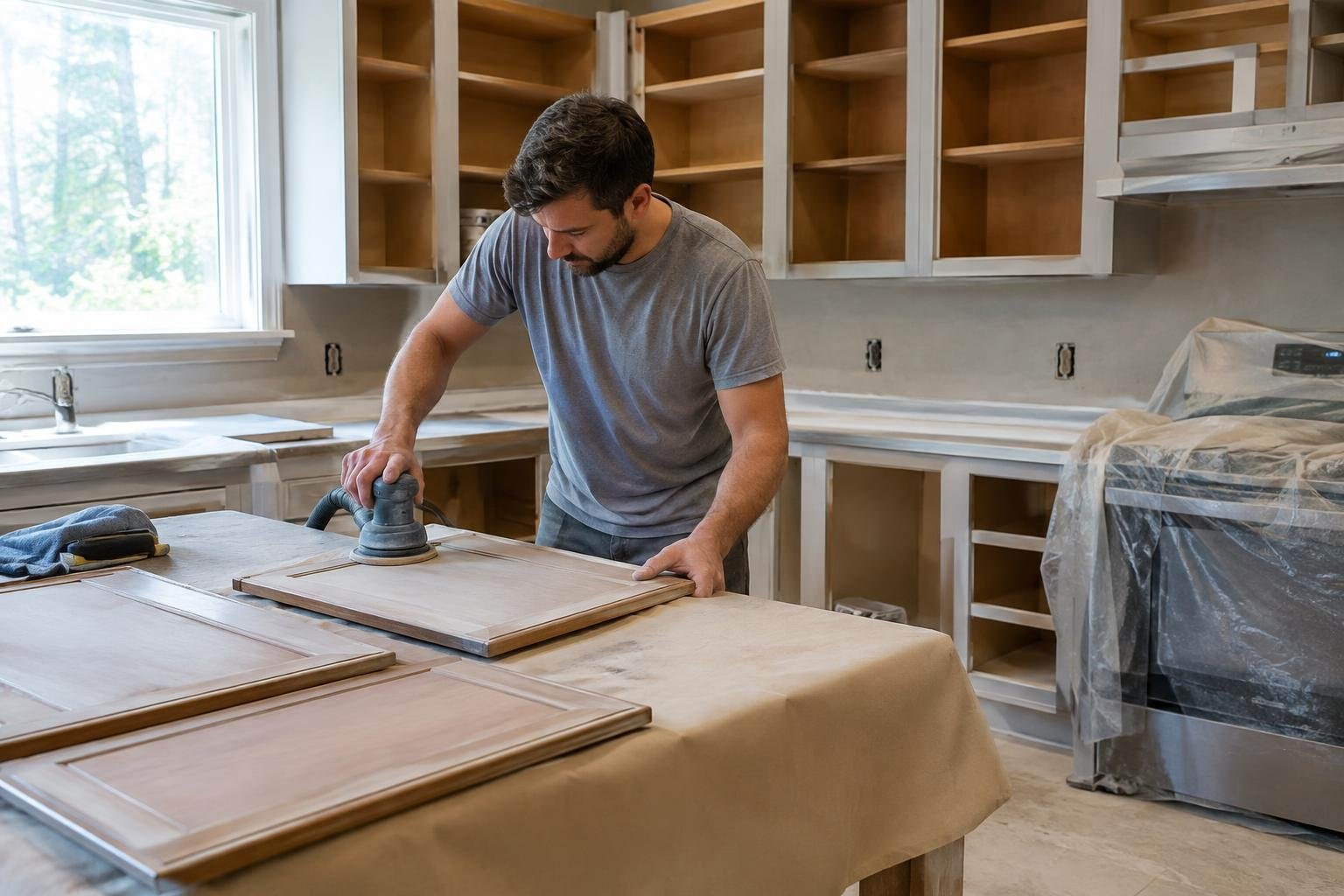
Cabinet refinishing generally means renewing the existing cabinet surfaces rather than changing the cabinet layout. Before requesting a quote, clarify whether the proposed work covers doors, drawer fronts, cabinet frames, exposed sides, and any other visible parts. Providers may use the word “refinishing” differently, so the written scope matters more than the label.
The project decision has two parts: whether the cabinets are suitable for the proposed treatment, and whether a new surface appearance solves the problem you have. A finish update cannot add storage, move an appliance, or correct a layout that no longer works. If appearance is the main concern and the current arrangement still serves you, it is worth comparing refinishing with other options.
Ask the provider to describe the preparation and finish process in plain language. Find out what happens to doors and drawers, how the work area will be protected, and what you should do with cabinet contents. Do not assume that every visible part or repair is included.
Start with the result you need
- List the visual changes you want, such as a different color or a refreshed appearance.
- Note any functional concerns, including damaged parts or storage problems.
- Decide whether you want to keep the existing doors, hardware, and cabinet arrangement.
Signs it may be time to consider refinishing
Refinishing may be worth investigating when the cabinet layout still works but the visible finish no longer suits the room. Surface wear, an outdated appearance, or a desire to coordinate cabinets with other planned updates can prompt homeowners to seek an assessment. These are reasons to request an opinion, not proof that refinishing is the right solution.
Look beyond the surface. Check whether doors and drawers operate as expected, whether cabinet parts appear sound, and whether there are areas that need repair. Make a list and show it to each provider. Ask which items can be addressed as part of the proposed work and which would require separate repairs or a different approach.
Consider the limits of a surface update, too. If you are dissatisfied with the storage arrangement, need a different cabinet configuration, or want to change the location of cabinets, refinishing alone will not deliver that scope. Compare options before spending money on a finish that leaves the main problem unresolved.
Questions to ask during an initial assessment
- Which cabinet parts are suitable for the finish I want?
- Are any parts damaged or in need of repair before finishing?
- What visible changes should I expect, and what will remain as it is?
- Would refacing or replacement better address my goals?
Cabinet refinishing cost and how to use published estimates
Published price estimates are not consistent, so treat them as broad planning context rather than a price list. One source gives a typical kitchen refinishing range of about $1,500 to $5,000; another estimates $1,500 to $4,500 overall and $4 to $15 per square foot. A separate kitchen-focused article also reports a range of about $1,500 to $5,000. The figures come from different sources and may use different assumptions about geography, timing, and scope. They are not interchangeable guarantees.
For a useful project budget, request written estimates from providers serving your location. Ask each to price the same work and to state whether the quote covers cabinet doors, drawer fronts, frames, exposed ends, preparation, repairs, hardware removal or replacement, protection, and cleanup. Check whether sales tax or other charges are included, if applicable.
Do not compare a per-square-foot figure with a total project price unless the provider explains how the area was measured and what the rate includes. A lower number may represent a narrower scope. Ask for an explanation of any allowance, optional item, or excluded service that could change your final total.
Use cost ranges carefully
Published estimates are useful for beginning a budget conversation, but the quote for your cabinets should be based on an in-person or otherwise sufficiently detailed assessment. Ask for a written process for approving extra work before it is performed.
What factors affect the project and its price?
The project price is shaped by the scope as well as the amount of cabinetry. A practical estimate should explain what the provider has inspected and how the proposed work responds to the cabinet condition and the finish you chose. Use these factors as prompts when you request and compare bids, rather than assuming each one will appear as a separate charge.
- Cabinet quantity and size: Ask how the provider counted or measured the cabinets and whether exposed sides or other visible sections are included.
- Existing condition: Identify areas that may need repair or extra preparation and ask how they affect the scope.
- Finish choice: Confirm the finish type, color, sheen, and any sample or approval process in writing.
- Hardware: Clarify whether existing pulls and knobs will be removed and reinstalled, replaced, or left untouched.
- Work-area needs: Ask what protection, access, and cleanup are included and what you must prepare in advance.
- Additional work: Separate cabinet finishing from changes such as new doors, repairs, or unrelated kitchen updates.
Ask each provider to identify assumptions and exclusions. If two quotes differ sharply, compare their scopes line by line before deciding that one is a better value.
Refinishing vs. refacing vs. replacing cabinets
Refinishing, refacing, and replacement solve different problems. Refinishing focuses on the existing cabinet surfaces. Refacing typically involves changing visible components such as doors and drawer fronts, though the exact scope varies by provider. Replacement means taking out existing cabinets and installing different ones, which can address a broader set of layout or storage goals but requires a different project scope.
| Option | May suit you when | Questions to resolve |
|---|---|---|
| Refinishing | You want a surface appearance update and want to retain the existing arrangement. | Are the current parts suitable, and are all desired surfaces included? |
| Refacing | You want a more substantial change to visible cabinet components while considering what can remain. | Which parts are replaced, which remain, and what repairs are included? |
| Replacement | Your plans involve different cabinets, storage, or layout. | What removal, installation, and related work does the full project require? |
These are broad distinctions, not a substitute for a written scope. Providers may package work differently. Ask each one to identify exactly what will be removed, retained, repaired, or finished.
If you are changing the cabinet arrangement or adding storage, compare the larger project rather than judging refinishing only by its initial quote. If you are satisfied with the layout, ask whether a finish update meets your appearance goals and what limitations would remain.
What to expect: preparation, schedule, and project coordination
There is no single timeline to assume for every refinishing job. The work plan depends on the cabinets, the scope, the provider's process, and coordination with other work in the room. Ask for a project-specific schedule before accepting a quote, including preparation, work on doors and drawers, work on fixed cabinet parts, cleanup, and any time before the finished cabinets can be used.
Discuss access and household routines. Ask whether you will need to empty some or all cabinets, how the work area will be separated from the rest of the home, and what arrangements are needed if the kitchen remains in use. Get instructions for protecting nearby surfaces and for handling items that are removed.
If you are also planning countertop, plumbing, electrical, flooring, or appliance work, clarify who coordinates the sequence. Do not assume those tasks are part of a cabinet-finishing quote. Have each provider describe dependencies and confirm any schedule changes in writing.
Before the work begins
- Confirm the finish, scope, and approved sample or selection.
- Agree on access, preparation, and the work area.
- Ask how change requests and unexpected conditions are handled.
- Confirm the schedule and who to contact with questions.
How to choose a qualified cabinet refinishing provider
Choose a provider based on a clear scope and confidence in the proposed process, not on the headline price alone. Ask for examples of comparable work and references you can contact. Review the written estimate, the finish and preparation details, the planned schedule, the cleanup plan, and how the provider handles concerns or corrections.
During a conversation, a qualified provider should be able to explain what they inspected, what they recommend, and what the project will not change. Ask who will perform the work and who is responsible for protecting the home, handling removed parts, and communicating schedule changes. Confirm that any verbal promises appear in the agreement.
Compare proposals side by side
- Are the same cabinet parts included in each quote?
- Does each quote describe preparation, repairs, finish, and hardware work?
- Are exclusions, optional upgrades, and possible additional charges clear?
- Is the schedule stated, including customer preparation and access needs?
- Are payment terms, warranty terms, and the process for resolving concerns written down?
- Can you verify relevant references and review examples of similar work?
If an estimate is vague, ask for clarification before signing. A low total is difficult to evaluate when the work included is unclear.
Permits, qualifications, warranty, and safety questions
Ask whether the proposed work requires permits or other approvals in your location, particularly if the project includes more than surface finishing or connects to other renovation work. Requirements can depend on the jurisdiction and the actual scope, so confirm with the appropriate local authority rather than relying on a general online estimate.
Ask the provider what licensing or registration applies to the work where you live and request relevant documentation. Confirm that the provider has appropriate insurance for the work and ask what protections or warranty terms are offered. Read the written terms carefully: identify what is covered, for how long, what conditions apply, and how to request help if an issue appears.
Talk through product handling and household safety before work starts. Ask for the product information and the provider's instructions about ventilation, access restrictions, children, pets, and when the area can be used again. Follow the product and provider directions. Do not undertake electrical, plumbing, structural, or other regulated work yourself unless you are qualified and local requirements allow it.
Ways to manage costs without cutting corners
You can manage costs without sacrificing clarity or skipping important preparation. Start by defining the result you want and limiting the quote to that scope. If hardware replacement or repairs are optional, ask for separate line items so you can compare the core work with upgrades. Do not remove necessary preparation or protection simply to reduce the price.
- Get more than one written estimate using the same list of cabinet parts and desired finish.
- Ask whether you can retain usable hardware, and request the cost of replacement as a separate option.
- Decide which cabinets or visible areas are priorities before asking for phased or limited-scope pricing.
- Prepare the work area as requested, but confirm what the provider expects before moving or dismantling anything.
- Resolve finish and hardware selections before work begins to reduce late changes.
- Ask for approval before additional work or charges are added.
Be cautious about unusually low bids that omit the scope, preparation, or finish details. A safe saving is a clearly defined choice, not an assumption that a critical step can be skipped. Compare the full written proposals and choose the approach that fits your needs and budget.
Common mistakes, red flags, and a decision checklist
Cabinet projects can become frustrating when the finish is chosen before the underlying goals and scope are clear. Use this checklist before accepting a proposal:
- Layout: Confirm that the current arrangement and storage meet your needs. If not, compare options beyond refinishing.
- Condition: Point out visible damage or loose parts and ask how they will be handled.
- Coverage: List doors, drawer fronts, frames, exposed ends, and any other parts that should be included.
- Selection: Confirm color, sheen, and hardware decisions in writing.
- Estimate: Check the scope, exclusions, optional items, payment terms, and change process.
- Schedule: Agree on the sequence, access needs, and customer preparation.
- Safety: Get instructions for ventilation, household access, and safe return to use.
- Closeout: Ask how the completed work will be reviewed and how concerns will be addressed.
Red flags include pressure to sign before you understand the scope, reluctance to document selections, unexplained charges, and promises that do not appear in writing. Pause and ask for a revised proposal if important details remain unclear.
After the work: care and final review
After the project, follow the provider's care instructions for the chosen finish. Ask what cleaning products and methods are appropriate, how to handle spills or marks, and whom to contact if you notice a problem. Keep the finish selection, estimate, care instructions, and warranty information together so you can refer to the agreed terms.
During the final review, inspect the cabinet parts included in the contract under ordinary room lighting. Check that doors and drawers operate as expected, hardware decisions were completed, and the work area has been cleaned as agreed. Note concerns promptly and ask the provider to record the follow-up plan.
A refinished appearance does not change cabinet capacity or correct unrelated mechanical or layout problems. If those issues remain, document them separately and discuss the appropriate repair or renovation option rather than assuming they were included in a surface-finishing project.
Frequently asked questions
What is the difference between cabinet refinishing and cabinet refacing?
Cabinet refinishing updates the visible finish on existing cabinet parts, while refacing generally changes visible components such as doors and drawer fronts as well. Ask each provider to define the exact work included in the estimate.
How much does cabinet refinishing cost?
Published estimates vary. Sources give broad examples ranging from about $1,500 to $5,000 for kitchen cabinet refinishing, while another gives a range of $4 to $15 per square foot. Treat these as general reference points, not a location-specific quote.
Are my cabinets suitable for refinishing?
Existing cabinets may be candidates for refinishing if they meet your storage and layout needs and the parts to be finished are suitable for the proposed process. Have a provider assess damaged, loose, or otherwise concerning areas before choosing a finish.
What should a cabinet refinishing estimate include?
Ask for a written estimate that identifies which cabinet parts are included, how they will be prepared and finished, what materials are proposed, what is excluded, and how changes are handled.
How do I compare cabinet refinishing contractors?
Compare the provider's proposed scope, preparation, finish, cleanup, schedule, warranty terms, and total price. A lower total is not directly comparable if it leaves out work another estimate includes.
How long does cabinet refinishing take?
Ask the provider for a project-specific schedule, including preparation, finishing, any time before the cabinets can be used, and how the work area will be managed. The timing depends on the actual scope and the provider's process.
Does refinishing change my kitchen layout or storage?
Refinishing changes appearance, not the cabinet layout. If you need different storage, cabinet locations, or a new configuration, compare the scope and cost of refacing or replacement as well.
People Also Ask
What is usually included in cabinet refinishing cost?
The estimate depends on the amount of cabinetry and the scope of work. Ask providers to identify included cabinet parts, preparation, finish, and exclusions so you can compare equivalent bids.
Is cabinet refinishing cheaper than replacing cabinets?
Published estimates differ, so use them as a starting point only. Request a written quote based on your cabinet count, condition, finish choice, and project scope.
Can damaged cabinets be refinished?
Ask the provider to inspect the cabinets and explain which surfaces can be refinished and which may need repair or another treatment before work begins.
How long should I plan for cabinet refinishing?
There is no single schedule that fits every project. Ask for the planned work sequence, estimated duration, and any wait before you can put items back or use the cabinets.
What makes cabinet refinishing more expensive?
The amount and condition of the cabinets, the requested finish, preparation needs, and services included in the estimate can change the price. Compare written scopes rather than totals alone.
Can cabinet refinishing change the layout?
Cabinet refinishing changes surfaces, not the cabinet arrangement. Consider other approaches if your storage needs or layout must change.
Cabinet refinishing can be a useful way to change the appearance of cabinets when their existing layout and condition still suit your needs. Before committing, inspect the cabinet surfaces and boxes, compare refinishing with refacing or replacement, and request a written estimate that spells out the work, materials, preparation, schedule, and exclusions. Use published cost ranges as context, not as a substitute for a quote based on your own cabinets and location.
Your next step
Explore cabinet options at CabinetSupply.com for your next project.
Last reviewed and updated October 25, 2026 by the CabinetSupple Editorial Team.
Sources
- Cost to Refinish Kitchen Cabinets – 2026 Cost Calculator (Customizable)
- Kitchen Cabinet Refinishing Cost Calculator (2025)
- How Much Does It Cost to Refinish Cabinets? (2026) – HomeGuide
- How Much Does It Cost to Refinish Cabinets? – Bob Vila
- Cabinet Refacing Cost Guide
- How Much Does Refinishing Cabinets Cost? [2025 Data]
- Cost to Refinish Cabinets – 2026 Cost Calculator (Customizable)