
Are custom cabinets worth it? They can be, especially when a room has awkward dimensions, when you need a particular storage solution, or when standard options cannot deliver the look you want. But customization alone does not guarantee better construction, longer life, or better value. For many straightforward projects, stock or semi-custom cabinets may provide the right combination of fit, choice, and cost. The useful question is not whether custom is always better. It is whether its specific advantages solve problems that matter in your space enough to justify the added design and project investment.
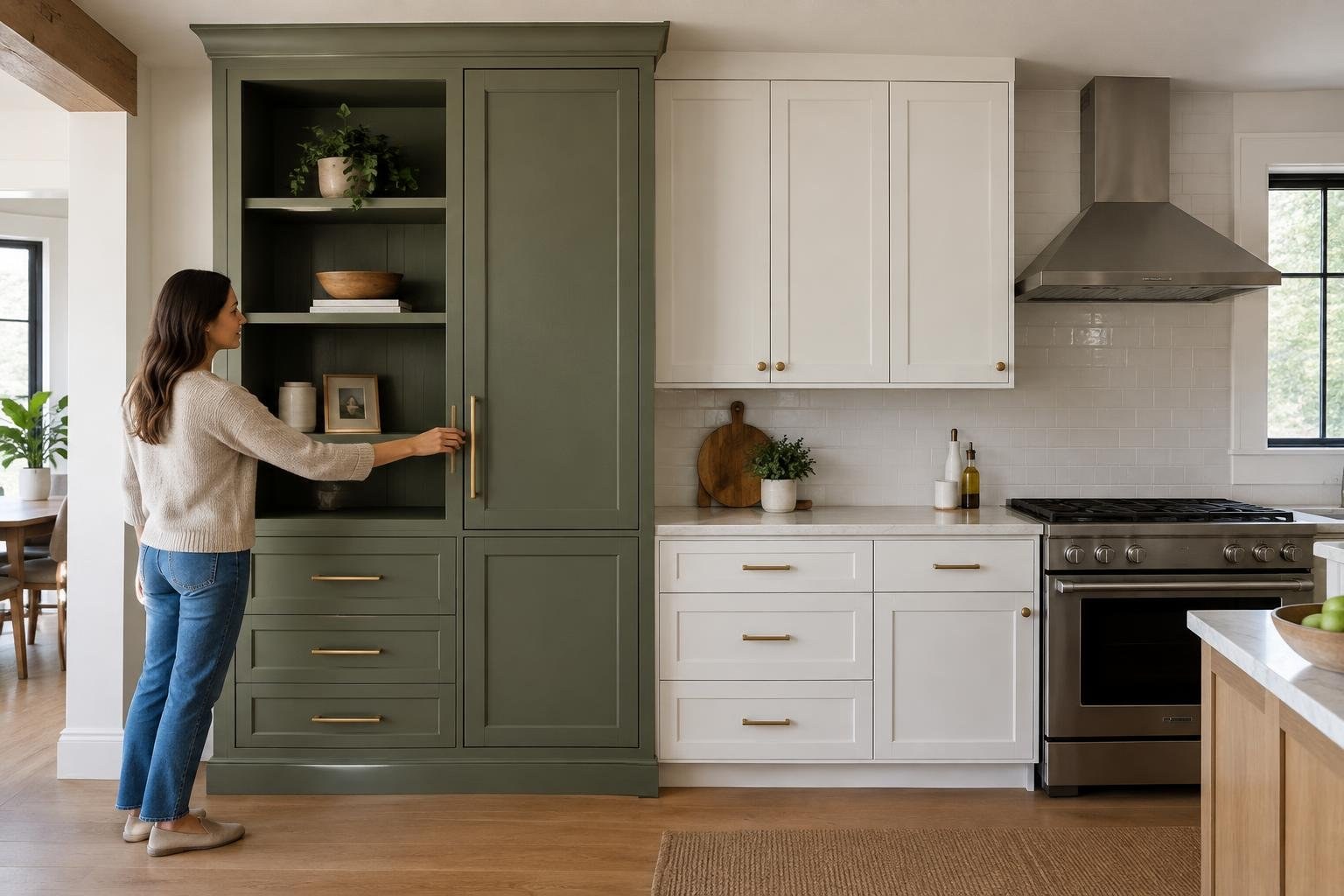
What does a custom cabinet project include?
Custom cabinetry generally means cabinets designed or specified for a particular room and project rather than selected only from a fixed set of standard sizes and options. How far the customization goes varies. One provider may adjust dimensions or finishes; another may offer a broader design and build service. Confirm the actual scope instead of relying on the label.
A cabinetry proposal may address cabinet dimensions and arrangement, storage features, doors and finishes, hardware, and the way the units relate to the room. It may or may not include installation, demolition, countertops, plumbing or electrical coordination, or other remodeling work. Ask for every included and excluded task in writing.
The reason custom work appeals to many buyers is control: it can address unusual spaces, particular design preferences, or storage requirements that standard options do not meet. Those benefits depend on the design and the quality delivered. They are not automatic proof of superior materials or workmanship.
When might custom cabinets solve a real problem?
Custom cabinets may be useful when existing or planned cabinets leave awkward gaps, do not fit a challenging room, or cannot deliver a particular storage or design feature. A strong case for custom work exists when you can identify a real problem and explain how a tailored solution would address it.
- Standard cabinet dimensions do not fit an unusual room or layout.
- You have a specific storage need that available options do not satisfy.
- You want a design feature or combination of choices that is unavailable in the alternatives you have considered.
- You care about a particular fit or level of personalization enough to invest time in design decisions.
These are reasons to explore custom cabinetry, not proof that it is the only answer. Semi-custom products may have enough size and design choices to address many projects. Ask a designer or provider to show where a standard option falls short and what the custom solution changes.
When might custom cabinets not be worth it?
Custom cabinetry may be a poor priority when the room has a straightforward layout, the available standard sizes fit, or timing is a major constraint. It can also be sensible to direct funds toward other work that is more important to the project, such as structural needs, windows, or flooring. The right decision depends on the whole renovation, not just the cabinets.
Before choosing custom, write down the problem you want it to solve. If the answer is mainly “I like the idea of custom,” compare actual samples, drawings, and proposals first. If a semi-custom or stock option meets the same functional and visual requirements, the extra tailoring may not deliver enough practical benefit.
Do not treat a simple room as a reason to accept a poor fit or construction specification. Instead, use the layout to test whether a standard product can meet your needs. The goal is a good cabinet solution, not a particular label.
What affects custom cabinet cost?
Custom work has no dependable price premium that applies to every project. The total depends on what is being designed and supplied, the selections, the quantity of cabinetry, the work included, and the provider. Research on this topic also cautions that custom is not always the most expensive solution, so compare real proposals instead of assuming a category determines the price.
Ask each provider to clarify:
- Which cabinets, panels, fillers, trim, and storage features are included.
- What materials, finish, door choices, and hardware are specified.
- Whether design, delivery, installation, removal, and cleanup are included.
- Whether countertops, utility work, wall repairs, or other renovation tasks are excluded or separately priced.
- How taxes, allowances, changes, and any potential additional work are handled.
Compare the same scope across bids. A lower proposal may omit work or selections that another includes. A more expensive one may reflect a different design or product, not simply better quality. Request revised proposals when the descriptions are too vague to compare.
Custom vs. semi-custom vs. stock cabinets
Custom cabinetry is only one of several routes to a finished room. Stock cabinets usually come in a defined selection of sizes and options. Semi-custom products offer more choices or adjustments than a fixed stock selection, though the exact flexibility depends on the line. Custom work offers project-specific design, but the amount of freedom and the standards of construction vary by provider.
| Option | Potential advantage | Tradeoff to check |
|---|---|---|
| Stock | Can suit a straightforward layout when available sizes and finishes work. | Fixed choices may not solve unusual dimensions or specific design requirements. |
| Semi-custom | May offer enough size and style flexibility for many projects. | Confirm which changes are available and how the product is built. |
| Custom | Can be tailored to a challenging space or distinct preferences. | Requires careful design review, clear specifications, and a project schedule that allows for the process. |
Construction quality is a separate comparison. Ask about cabinet-box materials and joinery, drawer construction and glides, hinges, finish, and warranty. Features such as dovetail joints or soft-close hardware can appear in more than one cabinet category; their presence should be verified rather than assumed from a custom label.
Pick the least complicated option that meets your must-haves. If the custom design only changes a detail that you do not value, compare a standard or semi-custom alternative. If it resolves a significant fit or storage issue, evaluate the additional investment against that benefit.
What should you expect, and how long can it take?
A custom project often involves more design decisions than ordering a fixed cabinet selection. The exact sequence and schedule depend on the provider and the work involved. Ask for a project calendar that identifies design review, final approval, ordering or fabrication, delivery, and installation milestones. Do not rely on an informal estimate of timing without clarifying what it covers.
- Define needs. List what does not work in the current room, what storage you need, and what you want to preserve.
- Review the room and design. Provide accurate room information and ask the provider to explain the proposed layout and choices.
- Approve specifications. Check dimensions, cabinet locations, materials, finishes, hardware, and included work before authorizing production.
- Coordinate the project. Clarify who handles removal, delivery, installation, and any work by other trades.
- Inspect the result. Compare the completed work with the approved plans and written scope, and document unresolved issues.
Changes after approval can affect scope, cost, or schedule. Ask how revisions are priced and authorized before work begins. Confirm who to contact if a delivery, fit, finish, or installation issue arises.
How to plan the layout and verify the fit
Good measurements and an agreed layout are essential to evaluating whether custom work is solving a genuine fit problem. Give the provider accurate information about the room and existing constraints, then ask who is responsible for verifying dimensions before the design is finalized. Do not assume a rough sketch or an early estimate is sufficient for ordering.
Review cabinet positions against doors, windows, appliances, plumbing, electrical points, and other fixed features. Check that drawers and doors can open as intended and that proposed storage is useful for the items you plan to keep there. If the design depends on moving utilities or altering the room, ask which work is included and who is qualified to perform it.
Make decisions using a clear list of priorities. Separate must-haves, such as a specific fit or storage function, from optional details. This helps a provider develop a comparison between a tailored layout and a standard or semi-custom alternative, and makes it easier to judge whether customization justifies its added complexity.
How to choose a qualified cabinet provider
Choose a provider based on the clarity of the proposal, relevant project experience, communication, and the work they will actually take responsibility for. Ask to review examples of comparable projects and speak with references where available. A polished presentation is not a substitute for detailed specifications or a reliable plan for resolving problems.
Before signing, request written answers to these questions:
- Who designs, supplies, delivers, and installs the cabinets?
- What cabinet construction, finish, hardware, and storage features are specified?
- What work is excluded, and which other trades must be coordinated?
- What is the expected sequence and schedule, and how are changes approved?
- What warranty applies to the cabinets and to installation, and how are claims handled?
- What are the payment terms, cleanup responsibilities, and process for correcting incomplete or damaged work?
Compare providers on the same scope. Do not select solely by the lowest initial price or by broad promises about quality. A strong proposal makes the product, responsibilities, and next steps understandable before you commit.
Permits, credentials, warranties, and safety
Custom cabinetry does not remove the need to check local requirements or project safety. Ask the local building department or a qualified professional whether the planned work requires approval, especially if the project includes work beyond cabinets.
Verify applicable licensing and insurance requirements in your area and ask the provider for documentation relevant to the work being performed. Get warranty terms in writing, including what is covered, how long coverage lasts, who handles service, and what conditions or exclusions apply. Do not infer a warranty from a product description or a verbal assurance.
Do not attempt electrical, plumbing, structural, or other regulated work unless you are qualified and local rules allow it. Have the appropriate professional handle work that requires specialized knowledge or approval, and coordinate cabinet dimensions with those project requirements before ordering.
How to save without compromising the project
To control spending, compare a custom proposal with a semi-custom or stock design that addresses the same essential needs. A tailored solution may be valuable for a specific challenge, but not every cabinet needs a unique dimension or feature. Ask the provider to identify which custom details affect function and which are primarily aesthetic.
- Prioritize fit and storage needs before selecting optional upgrades.
- Keep the layout straightforward where it does not compromise how you use the room.
- Compare the same materials, hardware, included work, and installation scope across proposals.
- Ask whether a semi-custom line can provide the sizes or choices you need.
- Set aside funds for other important project work rather than spending the entire budget on cabinetry alone.
- Finalize decisions before approving the design to reduce avoidable changes later.
Save safely by comparing value, not by accepting unclear specifications or ignoring a real functional problem. If you are weighing cabinet spending against work such as flooring, windows, or structural needs, consider the overall project priorities before committing.
Mistakes to avoid and a pre-order checklist
Common decision errors include assuming custom means premium construction, paying for personalization without a clear purpose, and comparing proposals with different inclusions. The word custom does not tell you the cabinet-box material, joinery, drawer components, finish process, installation quality, or warranty. Ask for those details in writing.
- Do not rely on the label. Compare actual construction specifications across cabinet types.
- Do not assume custom is the only way to improve storage. Test whether semi-custom choices can solve the same problem.
- Do not overlook the full project budget. Account for the work that must accompany the cabinets and other priorities.
- Do not approve vague drawings. Verify the layout, dimensions, and selections before authorizing the order.
- Do not accept unclear responsibilities. Establish who handles delivery, installation, coordination, cleanup, and corrections.
- Do not treat price as proof of quality. Request product details and warranty terms.
Before signing: Can you name the problem custom work solves? Have you compared a suitable standard or semi-custom alternative? Are the scope, specifications, schedule, exclusions, warranty, and change process written down? If any answer is no, pause and get clarity.
Make the decision around your needs
Custom cabinets are most compelling when a specific need for fit, storage, or personalization cannot be met well by a standard product. But you do not have to choose custom to get a thoughtful, functional result. Compare the design and construction details, not just the category name, and make sure the proposal fits the rest of your project priorities.
For another step, explore cabinet options at CabinetSupply.com for your next project. Bring your room constraints, must-have features, and budget priorities into the comparison so you can focus on the solution that best matches your needs.
Factors that affect the project
Several project factors can change whether custom cabinetry is a good fit, what the proposal covers, and how much coordination the work needs.
- Room and layout: A challenging space or a need for specific design choices can strengthen the case for custom work. If the layout is straightforward and standard sizes fit, the added tailoring may be less useful.
- Scope and selections: Providers may offer different degrees of customization. Clarify which dimensions, materials, finishes, storage features, and related work are included so you can compare proposals on the same basis.
- Construction and provider: A custom label does not guarantee a particular level of materials or workmanship. Compare the stated construction details and remember that features such as dovetail joints and soft-close hardware may also be available in semi-custom lines.
- Budget and timing: Custom work may not be the most expensive option in every project, but a tight schedule or competing renovation priorities may make it a poor fit. Weigh the proposal against the rest of the project and ask for a schedule that reflects its actual scope.
Use these factors together rather than judging by category alone. The best option is the one whose fit, specifications, responsibilities, and schedule meet your priorities.
Frequently asked questions
What are custom cabinets?
Custom cabinets are made or specified for a particular project, with dimensions and design choices tailored to the space. The exact degree of customization varies, so ask what the provider will design, build, supply, and install.
When are custom cabinets worth it?
They can be worth the added investment when standard sizes cannot use the space well or when you need specific design choices. If standard or semi-custom cabinets meet your functional needs, custom work may add little value for your project.
Are custom cabinets always more expensive?
Not necessarily. Custom cabinetry can involve higher costs, but the total depends on the design, materials, scope, and provider. Compare complete proposals rather than assuming one cabinet category will always cost more.
Are semi-custom cabinets a good alternative to custom cabinets?
Yes. Semi-custom cabinets may offer enough sizes and choices for many projects, while stock cabinets may suit straightforward layouts. Custom work is most useful when a clear fit, storage, or design problem remains.
How long do custom cabinets take?
There is no single schedule that applies to every project. Ask for the expected design, approval, production, delivery, and installation milestones, and confirm how changes or delays will be handled.
What should a custom cabinet quote include?
Request an itemized proposal that explains what cabinets and related work are included, the materials and construction details, delivery and installation responsibilities, schedule, warranty, and exclusions. Compare the same scope across providers.
People Also Ask
Do custom cabinets use space better?
Custom cabinets may use awkward or unusual spaces more effectively when standard sizes leave gaps or cannot fit the room. Whether that added use matters enough to justify the cost depends on the layout and your storage priorities.
Are custom cabinets higher quality?
Not by definition. Ask for specific information about the cabinet boxes, drawer construction, hardware, finish, and warranty. Compare those details with the alternatives rather than relying on the word custom.
Can custom cabinets improve kitchen storage?
They can be designed around individual storage needs and preferences, but a well-planned semi-custom layout may also meet many needs. List the functions you require before paying for special features.
Do custom cabinets increase home value?
Potentially, but do not assume a cabinet investment will raise a home's value by a predictable amount. Choose based on fit, usability, quality, and your plans for the home, not an unsupported promise of resale return.
Can I get a good kitchen without custom cabinets?
Yes. If a standard or semi-custom line fits the room and offers the needed features, it may be a practical choice. Custom work is not essential simply because you want attractive, functional cabinets.
How do I compare custom cabinet makers?
Compare the complete scope and the written construction specifications. A higher price or custom label alone does not establish that one proposal is better made or better suited to your project.
Custom cabinets can be worth it when standard sizes or limited choices prevent you from getting the fit, storage, or appearance you want. They are not automatically a better investment: semi-custom or stock cabinets may meet your needs at a lower cost and with a simpler schedule. Compare the complete proposals, construction details, design service, and project priorities before deciding.
Your next step
Explore cabinet options at CabinetSupply.com for your next project.
Last reviewed and updated October 15, 2026 by the CabinetSupple Editorial Team.
Sources
- Are Custom Cabinets Worth It? Pros and Cons Explained – Imperial Cabinets
- Custom vs. Pre-Made Kitchen Cabinets: The Pros & Cons of Each — Olive Branch Woodworking
- r/kitchenremodel on Reddit: Are custom kitchen cabinets worth it? I'll start. No. 🙂
- Are Custom Cabinets Worth It?
- Are Custom Cabinets Worth It? A Real-World Test
- Are Custom Cabinets Worth It?
- We Asked the Experts If Custom Kitchen Cabinets Are Actually Worth It – Dwell
- r/kitchenremodel on Reddit: Is custom cabinetry worth it?