
Cabinet replacement cost can range widely because a quote may cover anything from cabinets alone to a larger kitchen project with removal, installation, and new countertops. The most useful first step is to decide what must change: the cabinet boxes, the doors and finish, the layout, or some combination. Then compare written estimates that describe the same work. This guide explains the main price drivers, ways to evaluate replacement against less extensive updates, and the questions to ask before choosing a provider.
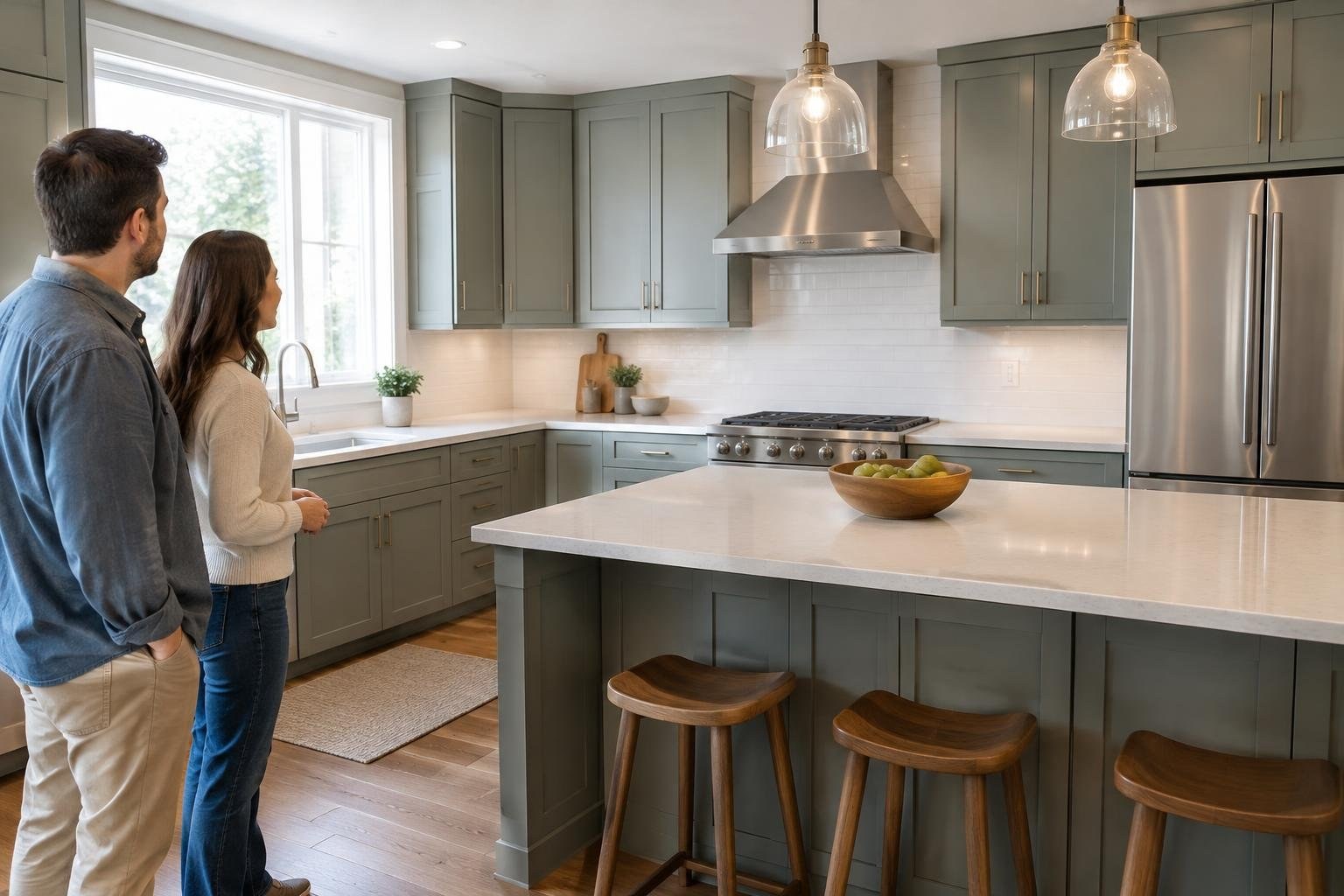
What Does Kitchen Cabinet Replacement Include?
Cabinet replacement usually means removing existing cabinets and installing new ones. Depending on the project, the work may also include measuring, ordering, delivery, disposal, fillers and trim, hardware, countertop coordination, and changes to nearby finishes or utilities. A proposal should make clear which tasks are included and which are separate.
Start with the outcome, not a product list. Decide whether you need more storage, a different layout, updated appearance, or repair of cabinets that no longer serve the room. This helps distinguish a full replacement from a narrower update and gives providers a clear brief.
- Document the room: Note cabinet runs, openings, appliances, and visible constraints.
- Set priorities: Separate must-haves from optional features.
- Choose the project scope: Decide whether to retain the layout or explore changes.
- Request comparable proposals: Give each provider the same information and ask for itemized work.
- Confirm responsibilities: Identify who handles removal, installation, countertop coordination, and any other trades.
Replacement matters when the current cabinets prevent the kitchen from working as you need. It is also a major purchasing decision: changing the scope or layout can affect costs beyond the cabinet order. Treat the estimate as a project plan, not just a price for boxes and doors.
Signs Cabinet Replacement May Be Worth Considering
Replacement may be worth investigating when the existing cabinets do not meet your functional needs or when you want a substantial change in appearance or layout. A provider can assess whether the cabinet boxes are suitable to keep, but the decision should begin with your goals and the condition of the components.
- Storage does not work: You lack useful space, or the arrangement makes everyday items difficult to access.
- The layout is a poor fit: You want to change cabinet locations or the relationship between storage and appliances.
- Visible damage is widespread: Multiple parts need attention, making a localized repair less appealing.
- The desired change goes beyond the surface: New doors or paint would not address the way the kitchen functions.
- You are planning other kitchen work: Consider cabinet decisions alongside countertops and related project tasks rather than assuming the cabinet price covers everything.
These are prompts to evaluate, not proof that full replacement is necessary. If you like the layout and the underlying cabinets appear sound, ask whether refinishing or replacing doors and drawer fronts could achieve your goals. If you are unsure about the condition, request an in-person assessment and ask the provider to explain what can be retained and why.
Avoid choosing a full remodel simply because a cabinet surface looks dated. Conversely, do not commit to a cosmetic update before confirming that the existing arrangement and cabinet structure can support the result you want.
Cabinet Replacement Cost: Published Ranges and What They Mean
Published kitchen estimates are not identical because sources define the project differently. One cost guide reports $4,500 to $15,000 for installed kitchen cabinets and $1,500 to $6,000 for countertops, or $6,000 to $21,000 for both in an average-sized kitchen. Other sources give a $5,000 to $25,000 replacement range or report $4,000 to $18,000 for installed kitchen cabinetry. Use these as broad reference points, not guaranteed prices or a substitute for local written bids.
| Published estimate | Reported scope or measure | How to use it |
|---|---|---|
| $4,500 to $15,000 | Installed kitchen cabinets | Check what installation and other work are included. |
| $1,500 to $6,000 | Countertops | Compare countertop material, removal, and installation scope. |
| $6,000 to $21,000 | Cabinets and countertops for an average-sized kitchen | Use as a combined reference, not a universal project total. |
| $5,000 to $25,000 | Kitchen cabinet replacement | Confirm the source's scope before comparing with a bid. |
Another published guide lists installation or replacement at $69 to $119 per linear foot, while a separate source lists semi-custom cabinets at $150 to $400 per linear foot. Per-foot numbers can describe different products and work, so they are not interchangeable. Ask what the measurement includes and compare total project proposals with matching scopes.
For a useful budget, separate the cabinet order from installation, demolition and disposal, delivery, countertops, and related work. Ask providers to identify allowances, exclusions, and items priced only after site review. That gives you a better basis for evaluating an estimate than a single headline number.
What Factors Affect Cabinet Replacement Cost?
Cabinet replacement prices change with the product, the room, and the boundaries of the job. Research sources specifically identify materials, labor, layout, design goals, and additional costs as factors. Ask providers to connect each major price difference to a selection or task you can evaluate.
- Cabinet type and specification: Ask whether the proposal is for stock, semi-custom, or custom cabinetry and identify what sizing or finish choices are included.
- Quantity and layout: Cabinet count, run lengths, corners, and a changed arrangement can affect the order and the installation work.
- Materials and finish: Compare the actual construction and finish specified, not just a broad product label or a door sample.
- Labor and site conditions: Clarify what removal and installation cover, and whether wall or floor corrections are excluded or priced separately.
- Additional work: Confirm whether countertops, delivery, disposal, hardware, and coordination with other work appear in the estimate.
- Optional features: List organizers, upgraded hardware, specialty storage, and decorative details separately so you can decide what deserves the budget.
Request an explanation when two bids differ significantly. The difference may reflect product choices, quantity, installation scope, or exclusions rather than a simple markup. Make decisions only after you know whether each bid is pricing the same result.
Replacement, Refacing, Refinishing, or Repair?
Full replacement is not the only way to update a kitchen. The right approach depends on the condition of the existing cabinets, whether the layout works, and how much change you want.
| Option | Consider it when | Tradeoff to discuss |
|---|---|---|
| Repair | A limited component or area needs attention. | Ask whether the repair will solve the underlying issue and blend acceptably. |
| Refinish or repaint | The cabinet arrangement works and the goal is mainly a surface update. | It does not create a new layout or replace the cabinet boxes. |
| Reface | You want a new door-and-drawer-front appearance while retaining suitable cabinet boxes. | Confirm the boxes can be retained and that the result meets your storage and design goals. |
| Replace | You want new cabinet components or a layout change, or retaining the old units does not suit the project. | It can involve more project tasks; compare the full scope rather than cabinet price alone. |
Within replacement, ask providers to explain the product tier and its limits. Stock options may constrain sizing and selection; semi-custom offerings may allow some adjustments; custom work can be designed around specific dimensions and preferences. Those labels alone do not establish construction quality. Request specifications, samples, and a clear statement of what is included.
Avoid comparing an entire custom design with a cabinet-only stock price. Compare products and work at equivalent levels, including installation and any modifications required for the room.
How to Compare Cabinet Construction and Product Options
Cabinet labels do not tell the whole quality story. Ask for the construction details that matter to your intended use and request the information in writing. Compare cabinet boxes, backs, shelves, drawer construction, slides, hinges, doors, finish, and warranty terms rather than relying on appearance alone.
- Boxes and backs: Ask what materials are used and how the units are assembled and secured.
- Shelves and drawers: Review thickness, support, drawer construction, and the specified drawer-slide type.
- Doors and finish: Examine samples in your room's lighting and ask how the surface should be cleaned and maintained.
- Hardware: Confirm which hinges, slides, and pulls are included and whether upgrades change the quote.
- Panels and fillers: Ask how exposed sides, gaps, and transitions will be finished.
- Warranty: Read what is covered, who handles a claim, and whether the terms distinguish product from installation.
Request a written product specification rather than assuming a sample represents every component. If two bids use different construction or hardware, decide whether that difference matters for your priorities before comparing totals.
Measurements and Decisions to Make Before Ordering
Accurate site information helps providers prepare a design and estimate that fit the room. Share measurements and constraints, but have the provider verify critical dimensions before ordering. A small discrepancy can affect how cabinets, appliances, openings, and finished edges meet.
Record wall lengths and ceiling height, and note doors, windows, appliance locations, and visible plumbing or electrical features. Photograph the room from several angles. Mark features that may affect cabinet placement, such as vents, trim, unusual corners, and changes in wall or floor surface. Do not move utilities or alter structural elements based on an unverified sketch.
Before approving a plan, review how doors and drawers will open, where appliances fit, and whether the intended storage is convenient. Ask for the cabinet layout and product selections to be documented. If the plan changes after ordering, confirm the cost and schedule implications in writing before authorizing the change.
For a kitchen that may also receive new countertops, coordinate the cabinet plan with that work. The estimate should state who is responsible for communicating measurements, scheduling, and resolving fit questions between providers.
What to Expect: Project Stages and Timing
Expect several stages: consultation and measurement, design and product selection, estimate approval, ordering, site preparation, removal, installation, and final adjustments. The schedule depends on the selected products, the provider's process, and whether other work is included.
- Design and verification: Review the plan, measurements, cabinet specification, and estimate.
- Preparation: Confirm access, protection, removal responsibilities, and any work that must happen before installation.
- Delivery and installation: Verify delivery timing and who checks the order and installs the cabinets.
- Related work: Coordinate countertops and any separately contracted work.
- Completion review: Walk through adjustments, outstanding items, cleanup, and care instructions.
Ask what could delay the project, when the kitchen may be difficult to use, and how schedule changes will be communicated. Get the expected sequence and responsibility for each stage in writing. Do not assume cabinet delivery and the completion of the whole kitchen happen on the same date.
How to Choose a Qualified Cabinet Provider
A qualified provider should be able to explain the proposed scope, product, installation approach, schedule assumptions, and estimate exclusions in plain language. Compare providers on the complete plan, not only the total price.
Ask each candidate:
- Who measures, prepares the cabinet plan, orders products, and installs them?
- What cabinet specification, hardware, panels, and fillers are included?
- Are demolition, haul-away, delivery, and countertop work included or separate?
- What assumptions could change the estimate after site review?
- How are changes approved, priced, and recorded?
- What is the anticipated schedule, and who communicates updates?
- What warranty applies to products and installation, and how are concerns resolved?
Review relevant project examples, references, and written terms. Verify licensing or other qualifications where locally required, and ask for proof of insurance appropriate to the work. These requirements vary by location and project, so confirm them with the relevant local authority rather than assuming one rule applies everywhere.
A very low bid is not automatically the best value. It may exclude work another provider included, use a different product, or rely on assumptions that have not been checked. Ask for a revised, itemized proposal if a line is unclear. Keep the signed scope, selections, payment terms, and change approvals together.
Permits, Qualifications, Warranties, and Safety
Permits, licensing, and other requirements depend on location and on the work being done. Do not assume that replacing cabinets has the same requirements everywhere, especially if the project also changes utilities or other building components. Ask the provider what approvals may apply, then verify local requirements with the appropriate authority before work begins.
Clarify who is responsible for permits or approvals, if needed, and whether that responsibility appears in the contract. Do not ask a cabinet installer to perform electrical, plumbing, or structural work unless the person is qualified and authorized to do that work under applicable local rules. Keep the project within the written scope and arrange separate qualified trades when necessary.
Read warranty documents before purchase. Ask which product and installation issues are covered, how long coverage applies, what exclusions matter, and who you contact if a problem arises. Do not rely on a verbal promise in place of written terms. Confirm how the provider will handle damage, missing parts, or adjustments identified at the final walkthrough.
Ways to Save Without Creating Avoidable Problems
Control costs by narrowing the scope deliberately, not by skipping steps that protect fit and completion. A few practical choices can make estimates easier to compare and help prevent avoidable changes.
- Keep the layout if it works: Ask providers to price a like-for-like replacement and a layout alternative separately if you are undecided.
- Prioritize selections: Put essential storage and function first, then price optional organizers and decorative details individually.
- Compare equivalent products: Match cabinet type, construction, finish, and hardware before comparing totals.
- Separate the project into line items: Review cabinets, labor, delivery, removal, disposal, countertops, and other work independently.
- Confirm measurements before ordering: Provider verification can help identify fit questions before products are committed.
- Ask about alternatives: If existing cabinets may be retained, request a separate price for a suitable repair, finish update, or reface.
Do not reduce cost by accepting vague exclusions, ignoring damaged components, or assigning work to someone who is not qualified for it. Ask providers what a lower-cost choice changes in the product, scope, or outcome. A transparent tradeoff is more useful than a lower number with an unclear finish line.
Estimate Checklist, Common Mistakes, and Red Flags
Use this checklist before accepting a proposal:
- Does the estimate specify cabinet quantity, product type, finish, and hardware?
- Are measuring, delivery, demolition, disposal, and installation clearly assigned?
- Are countertops and other related work included, excluded, or separately priced?
- Does the plan account for room constraints and appliance locations?
- Are allowances and assumptions explained?
- Is the schedule described by stage, with a process for updates?
- Are payment terms, change orders, cleanup, and final adjustments written down?
- Have you checked applicable local requirements and qualifications?
- Do warranty documents and issue-resolution steps make sense?
Common warning signs include pressure to approve before the scope is clear, a quote with no product specification, reluctance to itemize exclusions, or verbal changes that do not appear in writing. Pause and request clarification rather than trying to settle unclear details after work starts.
Before signing, compare at least two proposals when practical, using the same room information and scope. A fair comparison explains both the price and the work that price buys.
Explore Cabinet Options for Your Project
Explore Cabinet Supply to browse cabinet options as you develop your project plan. Use your measurements, preferred style, storage priorities, and budget range to prepare for a conversation with a provider. Comparing product choices alongside a clear project scope can help make estimates more meaningful.
Explore cabinet options at CabinetSupply.com for your next project.
Plan Your Next Step
Replacing cabinets is a substantial decision, but it becomes more manageable when you separate product choices from installation and related work. Use published prices only as rough references, verify the project scope, and compare written bids with the same inclusions. If a limited update could meet your needs, price it alongside full replacement before deciding.
When you are ready to move from research to planning, explore cabinet options at CabinetSupply.com. Bring your measurements, questions, timing preferences, and budget to a discussion with a cabinet professional so you can evaluate choices against the actual project.
Frequently asked questions
How much does it cost to replace kitchen cabinets?
Published estimates vary by project and scope. One source lists $4,500 to $15,000 for installed kitchen cabinets and $1,500 to $6,000 for countertops, or $6,000 to $21,000 combined for an average-sized kitchen. Treat these as reference ranges, not a quote for your home.
Is it cheaper to reface cabinets than replace them?
Yes. If the cabinet boxes are in suitable condition and you are satisfied with the layout, ask whether replacing doors and drawer fronts or refinishing could meet your goals. If the boxes are damaged or the layout needs to change, replacement may be the more appropriate option.
What should a cabinet replacement estimate include?
It depends on what the estimate includes. Compare the same cabinet quantity and type, delivery, installation, demolition, disposal, fillers, panels, hardware, and countertop work. A low cabinet-only price is not comparable to a complete installed-project bid.
How long does it take to replace kitchen cabinets?
The cabinet work itself may be only one part of the schedule. Ask the provider for a written sequence covering measuring, ordering, delivery, removal, installation, countertop work, and any related trades. Confirm when the kitchen may be unavailable and what could delay the work.
Can I install replacement cabinets myself?
Not necessarily. DIY installation may reduce labor charges, but it requires accurate layout, careful leveling and fastening, and coordination with other work. Compare the savings with the work you can safely and competently complete, and clarify who handles corrections or installation-related issues.
How can I lower cabinet replacement costs safely?
Keeping the existing layout, choosing standard sizes, limiting accessories, and comparing bids with identical scopes can help control costs. Do not save money by skipping accurate measurements, necessary installation work, or work that should be completed by a qualified trade professional.
People Also Ask
What is a realistic budget for new kitchen cabinets?
Published estimates put installed kitchen cabinets at $4,500 to $15,000 in one guide, while another reports a broader $5,000 to $25,000 replacement range. Actual bids depend on what is included and on project choices.
What costs are not included in a cabinet quote?
Cabinet price is only one part of a replacement budget. Ask whether the proposal includes removal, disposal, delivery, installation, countertops, and any related work, and compare that scope with other bids.
Can I replace kitchen cabinets without changing the layout?
It may be possible when the existing cabinet boxes and layout suit your needs. Have a provider assess their condition and confirm that a limited update will deliver the look and function you want.
Is cabinet replacement priced by the linear foot?
The sources report different price ranges and units, so a per-foot figure should not be treated as a full-project budget. Compare total scope, cabinet type, installation, and exclusions instead.
How do I choose a cabinet replacement contractor?
A provider should explain the work included, product choices, schedule assumptions, exclusions, and how changes are handled. Verify any locally required qualifications and insurance before signing.
Should I replace or refinish my kitchen cabinets?
The right choice depends on what is unsatisfactory. Consider replacement if the boxes or layout need to change; consider a more limited update if the existing structure works and only appearance or hardware needs attention.
Cabinet replacement cost depends on more than the cabinets themselves. Compare complete, itemized project scopes, decide whether the existing layout should stay, and confirm who is responsible for demolition, installation, countertops, and related work before committing. A clear plan makes it easier to weigh new cabinets against a more limited update and to keep choices aligned with your budget.
Your next step
Explore cabinet options at CabinetSupply.com for your next project.
Last reviewed and updated October 15, 2026 by the CabinetSupple Editorial Team.
Sources
- Cost to Replace Kitchen Cabinets & Countertops (2026)
- Kitchen Cabinet Installation and Replacement Cost Guide
- How Much Does It Cost to Replace Kitchen Cabinets? – homecabinets
- r/HomeImprovement on Reddit: Advice and Cost for Replacing Kitchen Cabinets
- How Much Does It Cost to Replace Kitchen Cabinets? A Complete Cost Breakdown | Built Cabinets
- Kitchen Cabinet Installation Cost Guide
- Kitchen Cabinet Replacement Cost: What to Expect and How to Budget – Builders Surplus
- What's The Average Cost To Replace Kitchen Cabinets? – Cabinet Now