
Finding the best value kitchen cabinets is not simply a matter of choosing the lowest price or a highly rated brand. Value depends on whether the cabinets fit your kitchen, provide the storage you need, have construction and hardware suited to your expectations, and arrive with a clear plan for delivery and installation. This guide explains how to compare cabinet types and quotes, where a lower price may mean a compromise, and how to avoid paying for upgrades that do not improve your day-to-day use.
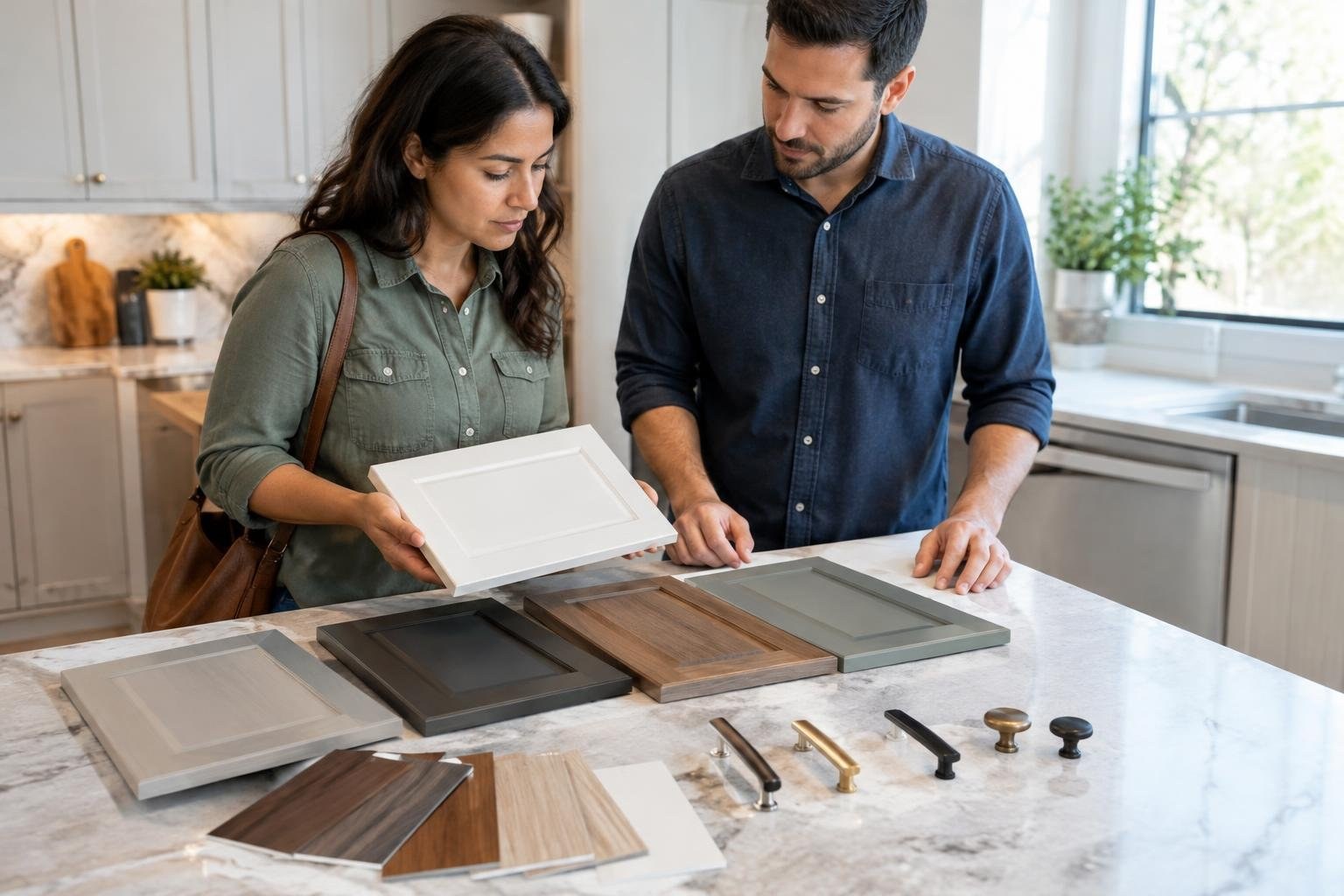
What makes kitchen cabinets a good value?
Kitchen cabinets are a major design and storage decision, but a cabinet-only price is not the full project price. A useful comparison starts with the same room plan and a clear list of included work. It then checks whether the construction, storage, finish, and service match what you need.
Brand roundups and rating systems can help you build a shortlist, but their conclusions depend on how they evaluate quality and price. Treat a ranking as a prompt to investigate, not a substitute for comparing the model and specifications in your own quote. One review source, for example, describes evaluating brands by construction quality and value at their respective price points, a useful reminder to weigh both dimensions.
When should you consider changing your kitchen cabinets?
Start by listing what is not working in your current kitchen. Common reasons to consider new cabinets include a layout that fails to support your cooking routines, storage that does not suit the items you own, damaged or worn cabinet parts, or a renovation that requires different cabinet dimensions or placement. These are decision prompts, not proof that every cabinet needs replacement.
Before shopping, decide whether your goal is more usable storage, a different look, improved access, a new layout, or a combination. If the cabinet boxes and layout already serve you, explore whether changing doors, hardware, or selected components can meet the goal before pricing a full replacement. Compare the scope and finish results you want, rather than assuming the most extensive option is automatically best.
What does a kitchen cabinet project include?
A cabinet project usually moves from measuring and planning to selecting a cabinet line, confirming an order, preparing the room, delivery, assembly if needed, installation, and final adjustments. The exact responsibilities vary: a supplier may sell cabinets without installing them, while a contractor or kitchen provider may coordinate several parts of the work.
- Set the scope. Decide whether you are replacing cabinets in the existing layout or changing the room plan.
- Measure and design. Record the room, openings, appliances, and fixed conditions, then have the cabinet plan checked against them.
- Compare specifications. Confirm cabinet sizes, finishes, construction details, fillers, panels, hardware, and storage features.
- Confirm ordering and site responsibilities. Establish delivery, assembly, demolition, installation, and any trade work in writing.
- Inspect and adjust. Review the installed doors, drawers, hardware, and finished areas, and document any unresolved items.
Do not treat a design drawing as a final order until dimensions, appliance requirements, and site conditions have been verified.
Which cabinet types should you compare?
There is no single cabinet type that delivers the best value for every kitchen. Compare how much sizing and finish flexibility you need, what assembly or installation work you can take on, and whether the proposed cabinets suit the room.
| Option | Potential value | Tradeoffs to check |
|---|---|---|
| Stock | Can be a fit when standard sizes and selections work with the layout. | Confirm how gaps, fillers, exposed ends, and unusual dimensions will be handled. |
| Semi-custom | Offers a broader selection of styles and configurations than a limited standard offering may provide. | Choices and price depend on the specific line, finish, and configuration. One published brand overview places Fabuwood in this category and notes its selection of colors and door styles. |
| Ready-to-assemble (RTA) | Can suit buyers who are prepared to assemble and coordinate installation. Compare product specifications rather than relying on the category name. | Account for assembly time, delivery, instructions, support, and who corrects assembly or fit issues. |
| Custom | May be appropriate where standard options do not meet a particular room or design requirement. | Request clear drawings, specifications, pricing, and schedule before committing. |
| Freestanding furniture | A compact piece, such as a buffet, may add storage without a full built-in cabinet project. | It is not a direct substitute for a complete fitted kitchen. Check dimensions, intended use, and assembly needs. |
Some product roundups recommend framed, all-plywood semi-custom cabinetry as a balance of flexibility, durability, and price for standard layouts. Treat that as a starting point for comparison, not a universal rule: the exact cabinet construction, fit, quote, and project needs still matter.
How do you compare cabinet construction and quality?
Cabinet labels such as “plywood,” “solid wood,” or “soft-close” do not tell the whole story. Ask for the specifications for each component instead of assuming that one material guarantees overall quality. Check the cabinet box, back, shelves, drawer construction, slides, hinges, door finish, and exposed edges.
- Boxes and backs: Ask what the sides, bottom, back, and shelves are made from, how they are joined, and how the cabinet is intended to be secured.
- Drawers: Check the drawer sides and bottom, the way parts are joined, slide type, extension, and whether the quoted hardware includes soft-close.
- Doors and finish: Review a physical sample when possible. Confirm the material, finish, care instructions, and whether exposed ends receive a matching finish.
- Hardware and interiors: Identify what is standard and what is an upgrade. Compare useful storage accessories separately so you can decide which ones matter to your routines.
- Warranty and support: Request written warranty terms and find out who handles a damaged part or a problem after installation.
RTA product listings may describe materials such as solid wood and plywood, but claims about an individual product should be checked against its exact specification and terms. Do not assume every cabinet in a category is built the same way.
How much do value kitchen cabinets cost?
Prices vary with cabinet quantity, size, configuration, style, finish, hardware, and the work included around the cabinets. A published 2026 budget-cabinet guide gives an estimate of about $1,260 to $5,100 for a 10-foot run and roughly $2,300 to $5,100 for a complete 10-by-10 kitchen, with style and finish affecting the range. These are reference figures from that source, not a quote or a guaranteed local price.
Confirm what “complete kitchen” means in any price you see. Cabinet costs may not include delivery, assembly, removal, installation, countertops, plumbing or electrical work, wall repair, flooring, or appliance changes. The available estimates do not establish that all such items are included.
For a useful comparison, request itemized proposals with matching plans and specifications. Ask providers to identify cabinet models, quantities, finish, hardware, fillers, panels, delivery, installation, exclusions, and any allowances. A lower total can reflect a different scope or omitted work, not necessarily a better deal. Fabuwood package pricing, for example, is described as varying with kitchen size, finish, and hardware selection.
What affects cabinet project cost and complexity?
Several project factors can change both the cabinet quote and the amount of coordination required. Identify them before placing an order, when there is still time to compare alternatives.
- Room and layout: The cabinet count, dimensions, corners, ceiling height, openings, and any nonstandard conditions affect the plan.
- Design selections: Door style, finish, color, panels, decorative details, and hardware selections influence the chosen package.
- Storage choices: Pull-outs and other accessories may add cost. Prioritize the features you will actually use.
- Delivery and assembly: Clarify what is delivered, whether assembly is required, and who is responsible for it.
- Related work: Demolition, removal, countertop coordination, utility changes, repairs, and installation can be separate parts of a kitchen remodel.
- Changes after ordering: Late changes can affect what needs to be reordered or rescheduled. Confirm the approved plan and selections before authorizing production or purchase.
Keep a written decision list so that every quote is based on the same room plan and selection assumptions.
How should you plan the layout and measurements?
Accurate measurements and a coordinated plan help prevent ordering cabinets that conflict with the room or appliances. Have the plan account for wall lengths, ceiling height, doors, windows, appliance locations, plumbing, electrical, and other fixed conditions. Verify the required appliance clearances and door or drawer movement with the relevant product specifications and provider.
Before approving a layout, check that doors and drawers can open without colliding with each other, appliances, walls, or handles. Review storage by activity: food, cookware, dishes, cleaning items, and small appliances may call for different cabinet locations and configurations. Think through countertop space and how the cabinets coordinate with counters, backsplash, lighting, flooring, and appliances.
For kitchens with an island or major layout change, ask the designer or contractor to verify the plan in the actual room and coordinate utility work. Do not perform electrical, plumbing, or structural work unless qualified and permitted to do so.
What should you expect for timing and installation?
Project timing depends on the cabinet selection, order readiness, delivery, assembly, site preparation, and installation scope. The supplied product and pricing information does not establish a dependable universal lead time or installation duration, so request a schedule for your specific project.
Ask the provider to identify milestones, including final measurement and approval, ordering, delivery, room preparation, cabinet installation, countertop coordination, and completion of any related work. Confirm whether the kitchen will be usable during each phase and who will communicate schedule changes.
Before delivery, agree on where cabinets will be received and stored, who checks for damage or missing parts, and how problems will be documented. If other trades are involved, confirm how their work fits the cabinet schedule rather than assuming one contractor has included every task.
How do you choose a qualified cabinet provider?
Compare providers on the clarity of their plan and accountability, not just the proposed price. Ask who measured and designed the kitchen, who supplies the cabinets, who installs them, and who resolves a mismatch or damaged item.
Use these questions when reviewing a proposal:
- Which cabinet line, models, sizes, finishes, and construction specifications are included?
- Are fillers, finished ends, panels, hardware, delivery, assembly, installation, and removal included?
- What is excluded, and what conditions could trigger a change order?
- Who verifies the measurements and coordinates appliance, plumbing, and electrical requirements?
- What schedule and payment milestones are proposed?
- What written warranty terms apply, and who handles service requests?
- Can the provider share relevant project examples and references?
Where licensing or insurance is required for the work in your area, verify it with the appropriate local authority or provider documentation. Check references and written terms; do not treat a brand ranking as a substitute for evaluating the installer and scope.
What should you check about permits, warranties, and safety?
Permit, licensing, insurance, and inspection requirements depend on location and on the work being performed. Confirm local requirements before beginning, especially when the project changes plumbing, electrical, structural elements, or other regulated work. Cabinet replacement alone does not establish whether a permit is or is not required for a specific project.
Get warranty terms in writing and distinguish product coverage from installation responsibility. Ask how to report transit damage, missing parts, finish concerns, or adjustment needs, and whether a third party is involved in resolving them. Follow product instructions for assembly and installation, and use qualified tradespeople for work that requires their training or local authorization.
How can you save money without creating avoidable problems?
Save safely by reducing unnecessary scope and comparing like with like, not by skipping measurements or essential installation work.
- Keep a workable existing layout if it meets your needs, and price the alternative layout separately.
- Choose standard sizes and available finishes where they fit the room rather than paying for special sizing you do not need.
- Prioritize storage accessories according to actual use. Leave out upgrades that do not solve a specific problem.
- Compare a stock, semi-custom, and RTA option against the same cabinet plan and written scope.
- Ask whether a smaller built-in project or a freestanding storage piece could address a limited need.
- Do not overlook assembly, delivery, installation, and removal when assessing a lower cabinet price.
One consumer discussion describes using an IKEA system with aftermarket fronts as a cost-conscious approach, but that is an individual account, not a universal price promise. If considering a modular system or alternate fronts, confirm compatibility, assembly responsibilities, and the complete project cost for your own kitchen.
Common mistakes, red flags, and a quote checklist
Before approving a quote, use this checklist to catch common gaps:
- Measurements and appliance locations have been checked against the final plan.
- Cabinet sizes, quantities, finish, hardware, panels, fillers, and storage features are identified.
- Construction and warranty details are available in writing.
- Delivery, assembly, demolition, installation, and removal responsibilities are clear.
- Excluded work, allowances, payment terms, schedule, and change-order process are stated.
- Doors, drawers, and appliances have been considered for opening conflicts.
- Related work and local permit or licensing questions have been addressed.
Red flags include a quote that does not identify the cabinet line or scope, pressure to commit before measurements are verified, unclear responsibility for installation, and verbal promises missing from the written agreement. A particularly low bid deserves a careful scope comparison; it is not automatically the best value.
For another perspective on cabinet choices, consult more than one brand review and ask providers to support their recommendations with product specifications. Reviews differ in their criteria, so compare what each one evaluates rather than relying on a single ranking.
How should you compare sellers and cabinet approaches?
Value is easier to judge when you compare a cabinet package with the way it will be bought and installed. A retailer or online seller may focus on the product package, while a design or installation provider may offer help with planning and coordination. Establish which services are included in each proposal instead of assuming that the provider category settles the question.
For example, an RTA seller may promote its materials and design support, but confirm exactly what the quoted service includes, whether it covers installation, and who is responsible for verifying fit. A freestanding cabinet review may be useful for a compact storage need, but it should not be compared as though it supplies the same scope as a full fitted kitchen.
When your shortlist is ready, explore cabinet options at CabinetSupply.com and compare choices against the needs and measurements in your project plan.
Frequently asked questions
What is the best value kitchen cabinet option?
Start with the cabinet package that meets your layout and storage needs, then compare construction, finish, hardware, included parts, delivery, and installation. A low cabinet price is not necessarily the lowest total project cost.
Are semi-custom cabinets worth the extra cost?
Semi-custom cabinets offer more choices in sizes, finishes, and configurations than many stock lines, while generally requiring fewer compromises than standard-size-only options. Compare the actual specifications and quote, since the category alone does not guarantee quality or value.
How much do budget kitchen cabinets cost?
A published 2026 budget-cabinet estimate gives roughly $2,300 to $5,100 for a complete 10-by-10 kitchen, with style and finish affecting the price. Treat it as a reference, not a quote: confirm what cabinets, delivery, assembly, installation, and other work the estimate includes.
Are plywood cabinets better value than particleboard cabinets?
Not always. Plywood is one useful specification to compare, but the whole cabinet matters: construction, joints, back, shelves, drawer hardware, finish, and warranty all affect the decision. Compare complete samples or specifications instead of relying on one material label.
How long does it take to install new kitchen cabinets?
Installation time depends on the number of cabinets, layout, site conditions, delivery, and whether demolition or utility work is included. Ask the provider for a project schedule that separates delivery, installation, countertop coordination, and any work by other trades.
Can I save money by installing cabinets myself?
Yes, if you have the tools, time, and skills to assemble and install accurately, and the supplier provides clear instructions and support. Include assembly, delivery, required tools, and the cost of correcting mistakes when comparing DIY with a professional installation.
What should a kitchen cabinet quote include?
Ask for a written scope that identifies cabinet models and specifications, quantities, fillers and panels, hardware, delivery, assembly, installation, removal, exclusions, schedule, payment terms, and warranty information. Clarify who handles problems, damage, and adjustments.
Are freestanding kitchen cabinets a good value?
A compact freestanding buffet cabinet can provide storage without replacing an entire built-in kitchen. Compare its size, intended use, assembly requirements, and fit with your room rather than treating a furniture piece as an equivalent to a full cabinet installation.
People Also Ask
What affects the price of kitchen cabinets most?
The cabinet total is affected by the number and sizes of cabinets, finishes, door choices, hardware, accessories, and whether the layout needs special sizing. Installation, delivery, removal, and other remodeling work can also change the project total, so compare the full written scope.
How do I compare kitchen cabinet brands?
Compare the actual cabinet specifications and what each price includes. Check box material and construction, back and shelf details, drawer hardware, finish, warranty terms, delivery, and installation responsibility before deciding which bid offers better value.
Are ready-to-assemble cabinets a good deal?
RTA means ready-to-assemble. These cabinets arrive as components for assembly, so the buyer needs to account for assembly and installation work as well as the cabinet price. They can suit people prepared to manage that work, but compare instructions, support, shipping, and the complete specification.
Can a buffet cabinet replace kitchen cabinets?
A freestanding buffet may be a practical, compact storage addition, but it is not the same scope as replacing built-in cabinets. Check the exact dimensions, assembly needs, storage use, and how it will fit with the existing kitchen.
Is it cheaper to keep the same kitchen layout?
Usually, preserving the existing layout avoids some redesign and relocation decisions, but it does not guarantee savings. Compare the cabinet and installation scope, including repairs and any work needed around appliances or utilities, before choosing a layout.
How do I choose a cabinet finish that will last?
Compare samples under the lighting in your kitchen and consider how the finish, door style, hardware, counters, and backsplash work together. Also review the finish-care guidance and ask what the quote includes for doors, finished ends, and exposed panels.
The best value kitchen cabinets are the ones that fit your room, storage needs, budget, and installation plan without paying for features you do not need. Compare complete, written proposals rather than brand names or cabinet prices alone. Check the box and drawer construction, hardware, finish, included parts, delivery terms, and who is responsible for installation. A carefully planned stock or semi-custom layout may suit a standard kitchen, while custom work can make sense when the room or requirements demand it.
Your next step
Explore cabinet options at CabinetSupply.com for your next project.
Last reviewed and updated October 15, 2026 by the CabinetSupple Editorial Team.
Sources
- Most Affordable Cabinet Brands To Consider In 2026
- Best Kitchen Cabinets for the Money – 2026 Reviews – Kitchen Advisor
- Best Kitchen Cabinets 2026: Top Rated Brands & Reviews
- Shop Kitchen Cabinets Online | CabinetSelect.com
- Budget-Friendly Kitchen Cabinets: Real 2026 Prices & 12 Ways to Save
- Cabinet Reviews 2026: Ratings for the top 157 cabinet brands
- The Best Kitchen Cabinet Brands, According to Home Renovation Pros
- Best bang for your buck cabinets? : r/kitchenremodel