
Kitchen cabinet storage problems often come down to poor visibility, awkward stacking, or items being stored far from where they are used. The right kitchen cabinet storage ideas do not always require replacing cabinets: drawer dividers, shelf inserts, pullout shelves, door-mounted organizers, and vertical tray storage can make existing space easier to use. Start with the contents and dimensions of your cabinets, then choose an organizer that fits both the space and your daily routine.
What Kitchen Cabinet Storage Ideas Can Do
Useful kitchen cabinet storage begins with a simple question: what is hard to find, reach, or put away? A cabinet may have plenty of volume but still be frustrating if small items get lost, cookware is stacked too high, or trays lean against one another. Storage improvements can be as small as a shelf riser or as involved as adding pullout shelves or reconfiguring a cabinet.
Think of organization as matching a storage feature to a specific task. A divided drawer helps separate utensils. A vertical divider gives trays their own slots. A pullout can bring items from the back of a deep cabinet into view. The objective is not to fill every gap with accessories. It is to make the things you own easier to use and return.
Start with one problem area rather than reorganizing the whole kitchen at once. That makes it easier to assess whether a low-cost organizer solves the issue before you commit to a permanent change.
Signs Your Kitchen Storage Needs Attention
Look for repeated signs that your current setup is not working: you move several items to reach one, small pieces are scattered, cookware is difficult to lift from a stack, or you forget what is stored behind other items. These are signals to rethink the arrangement, not automatic proof that you need new cabinets.
- Items disappear from view: Consider an insert or riser that makes the contents easier to see.
- Frequently used items are difficult to reach: Move them to an accessible shelf or drawer, or consider a pullout where the cabinet allows one.
- Trays and pans fall over: Separate them vertically rather than stacking them in a pile.
- Small items become mixed together: Use clear compartments or drawer dividers to give each group a place.
- Cabinet doors conceal useful space: Check whether a slim door organizer can fit without interfering with the cabinet interior.
Before purchasing anything, remove the contents and decide what belongs in that cabinet. Discarding or relocating items you do not use may solve part of the problem without an accessory.
How to Plan a More Useful Cabinet Layout
Begin by sorting items into practical groups: cooking tools, food preparation, baking, serving, and everyday dishes. Within each group, separate frequently used items from occasional-use pieces. Put the things you reach for most often in the most accessible location available, and store less-used items farther away.
- Empty one cabinet or drawer. Seeing the full space helps reveal what is actually stored there.
- Group related items. Keep items used together near each other where the kitchen layout permits.
- Measure the usable space. Record the opening and interior width, depth, and height. Note hinges, pipes, shelf supports, and other obstructions.
- Select a storage approach. Match the organizer to the item: compartments for small pieces, vertical slots for trays, or a pullout for items stored deep inside.
- Test the arrangement. Confirm doors and drawers open, contents can be removed, and the organizer does not block access.
Use clear compartments or shelf inserts when separation and visibility are the main goals. Keep the system straightforward enough that everyone who uses the kitchen can put things back in the right place.
Drawers, Shelf Inserts, and Risers
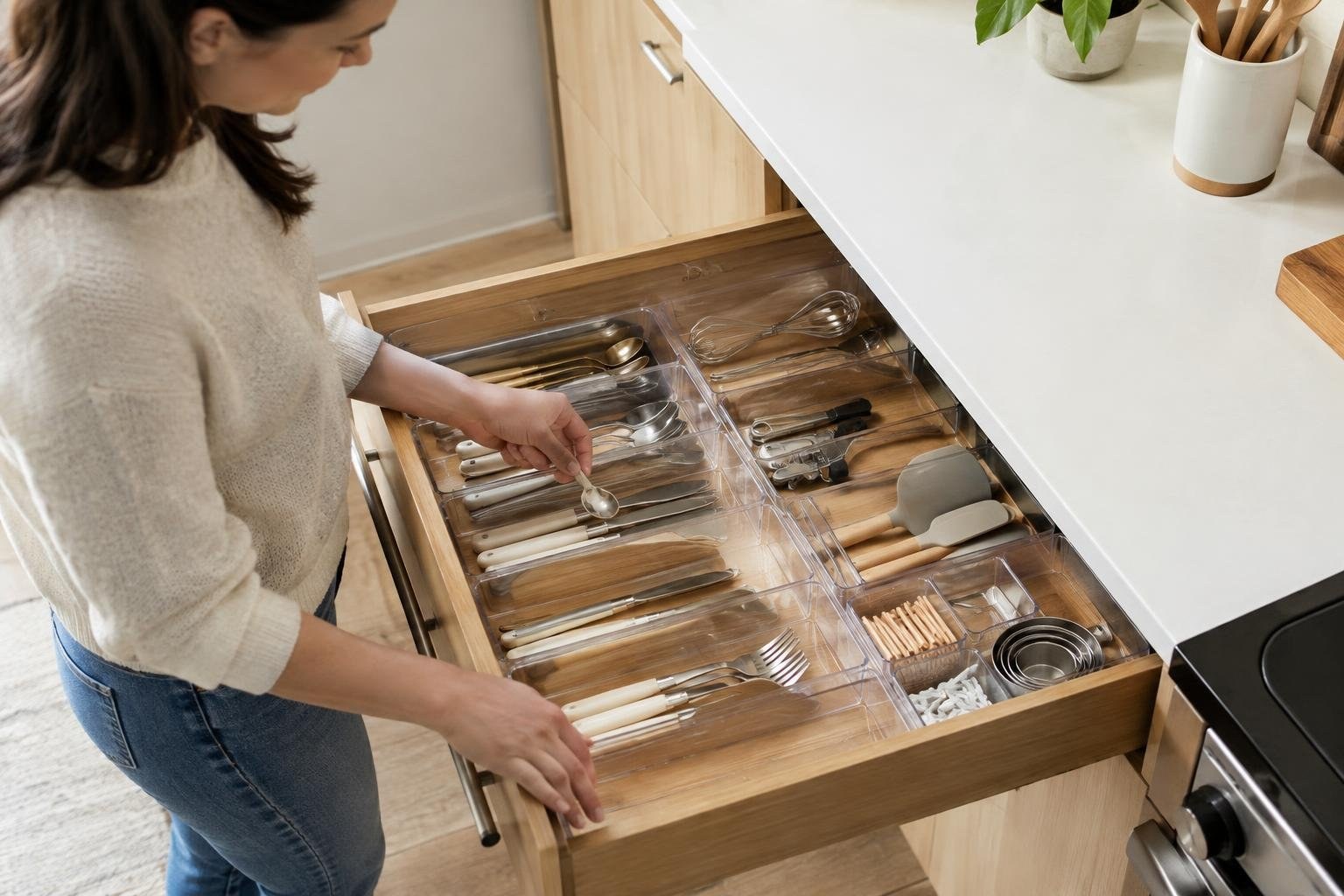
For utensils and small kitchen tools, divided drawer organizers create separate spaces and reduce loose clutter. A shelf insert or riser can add a visible level inside a cabinet, which can be helpful for smaller containers. Select adjustable or removable pieces when you may want to change the arrangement later.
For pots and pans, first consider whether the issue is access, stacking, or both. A pan organizer can hold cookware upright, while pullout shelves can make items in a deep cabinet easier to reach. Check the size and shape of the cookware before choosing a rack, and make sure the organizer will not make a cabinet too crowded to use.
Advantages: Many organizers can improve an existing cabinet without requiring a full remodel, and movable inserts can be rearranged. Tradeoffs: An organizer takes up some cabinet space, and a poorly sized insert may make access worse. Measure the items as well as the cabinet, and consider the room needed to lift or slide each piece out.
Pullouts for Deep Cabinets and Hard-to-Reach Items
A pullout shelf is a sliding platform installed inside a cabinet. It brings some of the contents forward rather than requiring you to reach as far into the cabinet. This can be useful for pots, pans, spices, or other items stored deep inside, provided the cabinet opening and interior can accommodate the hardware.
Some storage systems use more than one moving tray so items at the back can be accessed after the front tray moves aside. These arrangements can make use of a deep cabinet, but they have more parts and need careful measurement. Check the overall width, depth, and height, including the space used by hardware and cabinet doors.
Advantages: Contents can be easier to see and reach. Tradeoffs: The hardware and tray occupy space, and the installation must suit the existing cabinet. Before ordering, check for face frames, hinges, plumbing, shelf supports, or other obstructions. If you cannot confirm compatibility, ask a cabinet professional to assess the cabinet rather than guessing.
Vertical Storage for Baking Sheets and Cutting Boards
Baking sheets, cutting boards, and serving trays are awkward to store in a stack. A vertical divider or tray cabinet gives each item a separate position, making it easier to remove one without lifting the others. A freestanding rack inside a cabinet may be a simpler approach if it fits securely and leaves enough room to retrieve the items.
Measure the tallest, widest, and thickest pieces you plan to store, then compare those measurements with the available cabinet space. Consider how you will grasp and remove the items, not just whether they fit when placed inside. A divider that is too narrow or crowded can defeat its purpose.
For a lasting built-in solution, plan the divider location while selecting or changing cabinets. For an existing cabinet, check that a movable organizer rests securely and does not slide around during normal use.
Cabinet Doors, Spice Storage, and the Under-Sink Area
The back of a cabinet door can be useful for lightweight items that are used often, such as cups or small supplies. Bars with hooks can hold cups, and a slim rack may keep selected small items together. Before installation, check the door’s interior clearance, hinge location, and what sits on the shelf directly behind it. An organizer should not hit stored objects or prevent the door from closing.
Under the sink, a tension rod can create a simple place to hang suitable cleaning items, but the area often has plumbing and stored products to work around. Do not press the rod against pipes, block access to shutoff valves, or load it beyond what it can safely support. Keep the contents arranged so leaks or plumbing connections remain visible and reachable.
Spices can be grouped in a drawer, cabinet, or door-mounted rack. Use a consistent arrangement and labels if that makes it easier to find what you need. A riser can help make containers visible, but verify that the containers fit and are easy to remove.
Cost and Pricing Considerations
Storage projects range from movable organizers to cabinet modifications, so there is no single meaningful price for every kitchen. The main cost questions are what product you choose, how many cabinets need attention, and whether the work requires installation or changes to the cabinetry.
- Organizer type: A simple insert is a different purchase from a fitted pullout or a cabinet built with dedicated tray dividers.
- Quantity and sizing: More storage locations and nonstandard dimensions may affect product and installation costs.
- Installation scope: A removable organizer may be a do-it-yourself task, while modifying a cabinet or adding fitted hardware may require professional work.
- Cabinet condition and access: Existing shelves, frames, doors, and obstructions can affect what can be installed.
- Project timing: Adding storage during a larger cabinet project may allow the feature to be planned as part of the overall design.
Ask for a written estimate that identifies the product, quantity, measurements, installation work, and any exclusions. Compare equivalent solutions rather than choosing by the total alone.
Factors That Affect the Right Storage Solution
Fit is the first major constraint: an organizer must work with the cabinet opening and usable interior, not just the outside dimensions. Also consider what is already in the cabinet, how its door and drawers move, and whether other stored items will obstruct the new feature.
Think about the people and routines the storage must serve. A useful arrangement places regularly used items within easy reach and groups things according to how they are used. If several people share the kitchen, choose a layout that is easy to understand and maintain rather than one that depends on a complicated sorting system.
During a larger remodel or cabinet order, communicate specific storage needs before the design is finalized. For example, explain where you want baking sheets, cookware, spices, or pet bowls stored. A kitchen renovation has included a drawer near the refrigerator intended to hide pet bowls, showing how storage can be tailored to a household’s routine. Treat that as an example of an option to discuss, not a universal layout recommendation.
Options and Tradeoffs to Compare
Choose between a movable organizer, a fitted accessory, and a cabinet designed around a specific storage need.
| Option | Can make sense when | Consider before choosing |
|---|---|---|
| Drawer dividers or shelf inserts | You want to separate small items or add visible levels. | Check fit and whether the insert reduces usable space. |
| Pan organizer or vertical rack | Trays, pans, or boards are difficult to stack and retrieve. | Measure the items, cabinet opening, and available depth. |
| Pullout shelf | Items in a deeper cabinet are hard to see or reach. | Confirm the hardware and tray fit the cabinet and clear obstructions. |
| Door-mounted storage | You want to use the back of a door for selected lightweight items. | Check hinges, closing clearance, and the shelf space behind the door. |
| Purpose-planned cabinet feature | You are replacing cabinets or making a broader remodel plan. | Discuss the actual items and dimensions before the design is finalized. |
Movable accessories are usually easier to change, while fitted features can be designed around a particular use. Neither is automatically better: choose based on fit, durability expectations, installation needs, and the importance of being able to change the arrangement later.
What to Expect and How Timing Can Vary
A small organization project may involve sorting, measuring, and placing removable accessories. A fitted pullout or cabinet modification adds measurement, product selection, installation, and adjustment steps. A larger cabinet project may require storage planning to happen alongside the cabinet layout and other design decisions.
Timing depends on the scope, product availability, installation needs, and whether the work is part of a larger remodel. No reliable project-duration range is established here. Ask the seller or installer for a schedule specific to the selected products and work. Confirm when measurements will be checked, when materials are expected, whether installation is included, and what could delay completion.
Before a visit or installation, clear the relevant cabinets and set aside the items that belong there. Keep the measurements, product details, and any questions together. If changes are proposed after ordering, ask how they affect fit, cost, and timing before approving them.
DIY or Professional Help: Choosing a Qualified Provider
For a removable drawer organizer or shelf insert, many readers can handle the selection and setup themselves by measuring carefully and following the product’s instructions. More involved work deserves a closer assessment. If installation requires drilling into a cabinet, changing shelves, fitting moving hardware, or altering cabinetry, be realistic about your tools and ability to make accurate adjustments.
When hiring someone, look for relevant cabinet or storage-project experience and ask to see examples of comparable work. Request a written scope that specifies products, quantities, measurements, installation responsibility, schedule, price, cleanup, and how adjustments or damaged items will be handled. Confirm applicable licensing or insurance requirements for the work in your location rather than assuming they are the same everywhere.
Ask who will verify measurements, what happens if the organizer does not fit, and whether the provider or homeowner is responsible for ordering. A clear answer to those questions can prevent disputes and avoidable delays. Compare complete scopes, not just the lowest total.
Safety, Local Requirements, and Warranty Questions
Simple organizers may not involve a permit, but rules depend on the work and location. Do not assume that a storage project is permit-free if it expands into electrical, plumbing, structural, or other regulated work. Confirm local requirements with the appropriate building department or a qualified professional before that work begins.
For a product or installation, review the manufacturer’s instructions, weight limits, care guidance, and warranty terms. Ask whether changes to a cabinet could affect a product warranty. Keep receipts, product information, and written agreements with your project records.
Prioritize safe access. Do not cover plumbing shutoffs, overload a rack, or install an organizer where it can interfere with a door or moving drawer. If a proposed installation requires work beyond your skill or involves utilities, have it assessed by a qualified professional.
Ways to Save Without Creating a New Problem
Keep the project focused on the problem you want to solve. Sorting items and moving rarely used pieces may reveal that only one cabinet needs an organizer. A riser, divider, or removable insert can be a sensible first step when it fits the cabinet and does not interfere with access.
- Measure before purchasing and compare the product’s required clearance with the actual cabinet.
- Use an organizer for a real storage problem rather than buying accessories simply because they look useful.
- Start with one cabinet or drawer and see whether the arrangement works before repeating it throughout the kitchen.
- When comparing products, compare function, dimensions, installation, and materials, not only appearance.
- If hiring installation help, ask whether the quote includes measuring, fitting, and final adjustments.
- For a broader remodel, identify storage priorities early so they can be considered before cabinet selections are finalized.
Do not save money by skipping needed measurements, ignoring installation instructions, or attempting work involving utilities without appropriate qualifications. The least expensive option is not a bargain if it does not fit or makes the cabinet harder to use.
Mistakes to Avoid and a Storage Planning Checklist
Before buying an organizer or approving a cabinet change, use this checklist:
- Have I identified the specific items and task this storage feature should support?
- Have I measured the cabinet opening, interior, stored items, and required clearances?
- Have I checked hinges, plumbing, shelves, doors, and neighboring drawers for conflicts?
- Can I remove items easily once the organizer is installed?
- Will frequently used items remain easy to reach?
- Do I understand whether the product is removable, fitted, or part of a cabinet modification?
- Does a written estimate explain products, installation, exclusions, and adjustment responsibility?
- Have I checked applicable instructions, safety limits, and warranty terms?
Common mistakes include buying by exterior cabinet size alone, overlooking door clearance, adding organizers that crowd existing contents, and choosing a complicated system that is difficult to maintain. In a larger project, another risk is deciding on storage after the cabinet design is already fixed. Share your priorities and measurements early, and ask for a fit check before ordering.
Explore cabinet options at CabinetSupply.com as you compare choices for your project.
Conclusion
Practical kitchen cabinet storage starts with your own routine, not a catalog of accessories. Identify what is difficult to access, group related items, measure the available space, and compare organizers that address the problem directly. Drawer dividers, shelf inserts, pullouts, tray dividers, and door-mounted storage can each help in the right situation, but fit and usability matter more than adding features for their own sake.
For a simple refresh, begin with one drawer or cabinet. If a solution requires fitted hardware or changes to cabinetry, confirm measurements and installation details before moving ahead. Explore cabinet options at CabinetSupply.com for your next project.
Frequently asked questions
How do I make the most of my kitchen cabinet storage?
Start by grouping items by task and frequency of use. Keep everyday dishes and cookware easy to reach, then choose organizers that fit the items and cabinet dimensions. Drawer dividers and shelf inserts can help separate smaller items.
Are pullout shelves worth adding to kitchen cabinets?
Pullout shelves can bring items in deep cabinets forward and make them easier to see and reach. Check the cabinet opening, interior dimensions, obstructions, and the pullout’s installation requirements before choosing one.
How should I store baking sheets and cutting boards?
Use vertical dividers or a rack designed for trays and cutting boards, if the cabinet has enough usable space. Measure the items and opening first so they can slide in and out without catching.
What is the easiest way to organize a small kitchen cabinet?
A riser can add a second level for small containers, while a door-mounted organizer may use otherwise idle space. Check that the door closes freely and that the organizer does not interfere with hinges or stored items.
How can I keep spices organized in a cabinet?
Group spices in a single location and use a riser or clearly labeled containers so you can identify them. A door-mounted rack may also work if it fits without obstructing shelves or hinges.
Can I use a tension rod under the kitchen sink?
Sometimes. A tension rod can help separate or hold items under the sink, but first account for the plumbing and any cleaning products already stored there. Avoid putting pressure on pipes or blocking access to shutoff valves.
People Also Ask
What storage works best in deep kitchen cabinets?
Pullout shelves can make contents in deep cabinets easier to reach by bringing them forward. Confirm that the cabinet dimensions, opening, and interior obstructions suit the hardware before purchasing.
How do you store baking pans in a cabinet?
Try a vertical divider or a rack suited to trays and baking sheets. Measure the cabinet and items, and leave enough clearance to remove each piece without scraping or catching.
How do I choose kitchen cabinet organizers?
Choose organizers based on what you store, the cabinet’s usable dimensions, and how frequently you need access. Divided drawers suit small tools, while pullouts can improve access to items in deeper cabinets.
Can you use the back of a cabinet door for storage?
Door-mounted storage can use the back of a cabinet door for lightweight, frequently used items. Check the space behind the door, hinge position, and clearance before installing anything.
What are simple kitchen organization ideas I can do myself?
A riser can create another level for small containers, and a drawer organizer can keep utensils or other small items grouped. Measure first and avoid buying organizers that reduce access to other contents.
Where should everyday kitchen items go in cabinets?
Keep items near the area where you use them and put frequently used items in the easiest-to-reach locations. Grouping items by task can also make it easier to find and return them.
The best kitchen cabinet storage ideas solve a specific daily problem: reaching cookware, sorting small items, or using awkward cabinet space more effectively. Start by observing what you store and how you use it, then compare simple organizers with built-in cabinet features. Choose solutions that fit your cabinets, routine, and budget, and verify measurements before buying. Explore cabinet options at CabinetSupply.com for your next project.
Your next step
Explore cabinet options at CabinetSupply.com for your next project.
Last reviewed and updated October 15, 2026 by the CabinetSupple Editorial Team.
Sources
- 12 Clever Kitchen Cabinet Storage Ideas
- The 15 Most Popular Kitchen Storage Ideas on Houzz
- Kitchen Cabinet Storage Ideas | HGTV
- Clever Kitchen Cabinet Storage & Organization Ideas
- Easy kitchen organization ideas – IKEA
- 60 Clever Kitchen Cabinet Organization Ideas
- Kitchen Cabinet Storage Ideas – Driven by Decor
- Best Kitchen Cabinet Storage & Organization Solutions | CliqStudios