
The cost of RTA cabinets can look straightforward when you first compare catalog prices. But a cabinet order is only one part of the budget: assembly, delivery, installation, and other remodeling work can change what you ultimately spend. RTA means ready-to-assemble, so you should also decide who will put the cabinets together and who is responsible for correcting errors or damaged parts. This guide explains how to interpret published prices, build a more complete estimate, and compare RTA with assembled alternatives without treating a sample layout as a guaranteed price for your project.
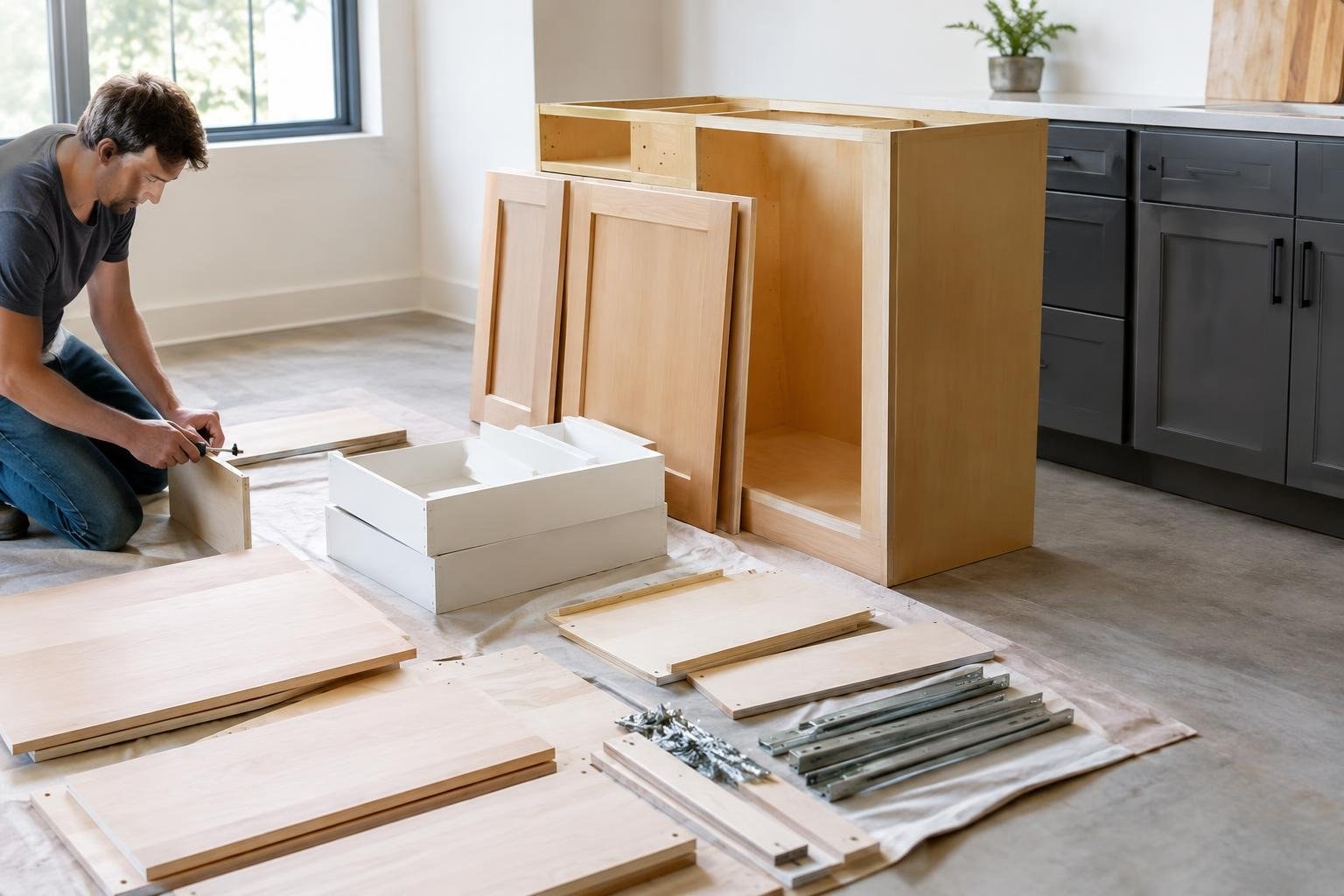
What does the cost of RTA cabinets include?
RTA stands for ready-to-assemble. Instead of arriving as fully built cabinet boxes, the cabinets are supplied as components that must be assembled before installation. The order may include a mix of base cabinets, wall cabinets, tall cabinets, doors, drawers, fillers, and related parts, based on the selected layout and product line.
For a useful budget, separate the project into four questions:
- What cabinets and accessories are in the order? Confirm each size, quantity, finish, and configuration against the room plan.
- Who assembles them? Determine whether you will do it, hire an installer, or purchase an assembly service.
- Who installs them? Assembly and installation are separate tasks. Ask who is responsible for each and what preparation is included.
- What work is outside the cabinet order? Clarify demolition, disposal, wall repair, countertop work, and utility changes with the appropriate provider.
Do not assume a catalog total represents the cost of a completed kitchen. It may refer only to the selected cabinets, and product pages or estimates can define their scope differently.
When should you consider RTA cabinets?
An RTA price is worth investigating when your existing cabinets no longer fit your needs, you are planning a remodel, or you are weighing a lower upfront cabinet quote against the work needed to finish the room. The choice is not automatically right just because the catalog price is attractive.
Start by identifying the actual problem. Are the cabinets damaged, difficult to use, short on storage, or simply dated in appearance? If the cabinet layout and boxes still work, ask whether repair, refinishing, or refacing could address the issue before pricing a complete replacement. If you are already changing the room layout, compare the cost of the full cabinet list and related project work instead.
RTA may be a candidate when you have a cabinet list that can be ordered from the available options and can take responsibility for assembly or arrange it separately. If the room requires many unusual sizes, layout changes, or coordinated work, compare assembled, semi-custom, or custom options too. The goal is to solve the room’s problem, not just to find the lowest advertised cabinet price.
What do RTA cabinets cost? Published estimates and limitations
Published figures are not consistent enough to treat one number as the standard RTA price. One source reports $2,500 to $7,500 for cabinets in a 10-by-10 kitchen. Two other sources report $30 to $100 and $100 to $300 per linear foot, respectively. These are different published estimates and should not be combined into a single promised rate.
| Published comparison | Reported amount | How to use it |
|---|---|---|
| RTA cabinets in a 10-by-10 kitchen | $2,500 to $7,500 | A broad benchmark for one sample kitchen size, not a quote for your layout |
| RTA cabinets per linear foot | $30 to $100 in one source; $100 to $300 in another | Evidence that product, scope, and estimating assumptions differ |
| One retailer's basic 10-foot layout | $1,818 RTA and about $2,182 assembled | A single product example, not a market-wide assembly premium |
Use a benchmark only to identify questions. Request a written quote based on your actual cabinet schedule and specifications. Ask whether the total includes assembly, delivery, installation, fillers, panels, trim, and any related labor. If two estimates have different assumptions, their totals are not directly comparable.
Which factors affect the final project price?
Cabinet prices can shift when the product, order, or work scope changes. Rather than relying on a single per-foot figure, identify the variables that make one quote different from another.
- Cabinet list and quantity: The number and combination of units determine what is being priced. A sample layout may not match your room.
- Material, finish, and style: Compare the exact specifications, not just a style name or a product image. Sources identify materials, finish, and layout as price variables, but do not establish one universal price for each choice.
- Layout complexity: Corners, appliance openings, end panels, and unusual dimensions can alter the cabinet schedule and work required. Ask the provider to identify special pieces separately.
- Assembly and installation: Check whether each is included or separately priced. One retailer’s example shows a difference between its RTA and assembled version, but that does not set the rate for other orders.
- Delivery and handling: Confirm delivery charges, drop-off conditions, and who checks the order for damage or missing components.
- Other project work: Demolition, disposal, wall repair, and contractor coordination can add costs beyond the cabinet purchase. A cost-estimating source specifically calls out hazardous-material testing and remediation, as well as general-contractor overhead and markup, as possible additional costs.
Geography, labor availability, and the chosen contractor may also affect an estimate. Get local, written pricing for the work rather than applying a national or sample figure to your project.
RTA vs. assembled, semi-custom, and custom cabinets
RTA, assembled, semi-custom, and custom cabinets are different buying approaches. The best comparison considers fit, available configurations, price, and how much responsibility you want for assembly and coordination.
| Option | Potential advantage | Questions to resolve |
|---|---|---|
| RTA | Separates the cabinet purchase from assembly, which may suit buyers willing to manage assembly or arrange it independently. | Who assembles, checks parts, and handles problems? Does the available range suit the layout? |
| Assembled | Cabinets arrive assembled if that service is included in the order. | What is the price difference, delivery condition, and installation responsibility? |
| Semi-custom | May provide more choices than a fixed catalog while avoiding a fully custom order. | Which dimensions and configurations are actually adjustable, and what are the lead time and quote? |
| Custom | Can be considered when project requirements call for individualized cabinetry. | What design, material, construction, schedule, and warranty are specified in the proposal? |
Some published comparisons position RTA as a lower-priced alternative to custom cabinetry, but their quoted ranges differ. Compare complete, equivalent specifications and project scope rather than assuming that a category name guarantees a price or quality level.
What to expect: planning, ordering, and timing
Before ordering, create a cabinet schedule: a written list of each cabinet, size, location, configuration, finish, and any associated panel or filler. Have the room measured and the layout checked by the person responsible for design or installation. Confirm openings and obstacles, including doors, windows, appliances, plumbing, outlets, and other fixed features.
Ask the supplier or installer to confirm who owns the final measurements and who checks the order against them. Verify that the cabinet list matches the approved plan before authorizing purchase. A small difference in size or configuration can affect adjacent cabinets, appliance spaces, and finish pieces.
Then request separate timing estimates for order processing, delivery, assembly, installation, and any follow-on work. A product page may publish a specific shipping window or assembly service, but that is supplier-specific and should not be assumed for other sellers or orders. Ask for the schedule that applies to your written proposal and what could change it.
How to choose a qualified cabinet provider
Choose a provider who can explain exactly what the estimate covers and who will be accountable at each stage. Depending on your project, you may work with a cabinet supplier, designer, installer, or general contractor. Do not assume one company is responsible for the entire project unless the agreement says so.
Ask each prospective provider:
- Who confirms measurements and the final cabinet schedule?
- Who assembles and installs the cabinets, and who supervises that work?
- What product construction, finish, hardware, and warranty are included?
- Are delivery, removal, disposal, installation, and cleanup included?
- What is excluded, and how are added work and change orders priced?
- What schedule and payment milestones are proposed?
- How are damaged, missing, or incorrectly ordered parts handled?
Review written estimates side by side, along with relevant project examples, references, insurance, and any licensing required where you live. The lowest bid is not necessarily the best value if it leaves essential work or responsibility unclear. Before signing, make sure the product and work scope match your priorities.
Permits, credentials, warranties, and safety
Cabinet installation and remodeling can involve work beyond assembling boxes. Before work begins, ask which party handles demolition, utility changes, wall repairs, and any required permits. Permit rules and contractor licensing depend on location and scope, so confirm local requirements with the appropriate local authority or qualified professional.
Do not disturb materials that may require hazardous-material testing or remediation. If the home or work raises that concern, ask a qualified provider what assessment is appropriate before demolition proceeds.
Read the cabinet and labor warranties before purchase. Confirm who provides each warranty, what it covers, how claims are made, and whether assembly or installation must meet specified conditions. Get promises about repairs, replacement parts, and schedule in writing instead of relying on a verbal assurance.
How to save safely on RTA cabinets
You can reduce waste in the budget without choosing cabinets solely by the lowest price. Start with a measured layout and prioritize the storage and features you will use. Ask for an itemized proposal so you can see whether a cost difference comes from the product, assembly, delivery, installation, or unrelated remodeling work.
- Compare the same cabinet list and specifications across providers.
- Ask for both RTA and assembled pricing when both are available.
- Check whether standard catalog sizes can meet the layout before paying for special configurations.
- Review optional accessories separately and prioritize them based on actual use.
- Confirm the delivery, assembly, and installation scope before committing to a low product price.
- Keep the approved layout stable once the order is finalized to reduce avoidable changes.
One retailer example prices a particular 10-foot layout at $1,818 as RTA and about $2,182 assembled. It illustrates why assembly deserves its own line in a comparison, not how much every homeowner will save. If you plan to assemble cabinets yourself, consider the time, space, tools, and risk of an assembly error before treating your own labor as free.
Common mistakes, red flags, and a pre-order checklist
Most cost and scheduling surprises begin with an unclear scope or a mismatch between the order and the room. Use this checklist before placing a deposit or authorizing an order:
- Have you confirmed room measurements and the cabinet schedule with the responsible provider?
- Does the quote list every cabinet and finish, rather than only a broad layout or per-foot number?
- Is assembly priced separately from installation?
- Are delivery, damage inspection, removal, disposal, and cleanup addressed?
- Are panels, fillers, trim, and other necessary pieces identified?
- Are demolition, wall repair, utilities, and hazardous-material concerns addressed or clearly excluded?
- Do you understand the warranty, payment schedule, timeline, and change-order process?
Red flags include pressure to approve an incomplete estimate, unclear responsibility for measurements, vague verbal promises, and a quote that cannot explain exclusions. Pause and get clarification in writing before ordering.
How to compare RTA cabinet estimates
Use a repeatable comparison process instead of picking a supplier from a headline price:
- Prepare one cabinet list. Use the same layout and required specifications for each estimate.
- Separate product from labor. Request distinct amounts for cabinets, assembly, delivery, installation, and other project work.
- Confirm the product. Document finish, construction details, hardware, and warranty rather than comparing labels alone.
- Compare exclusions. Mark every item one provider includes that another omits.
- Check responsibility. Identify who measures, assembles, installs, coordinates, and resolves order problems.
- Review the schedule and agreement. Confirm written dates, payment terms, and change-order procedures.
Published prices can help frame a conversation, but they are not a substitute for a complete quote based on your room and selected products. If an estimate is hard to compare, ask the provider to revise it into clear, separate line items.
Explore cabinet options for your project
If RTA cabinets are on your shortlist, compare providers using the same cabinet schedule and ask who handles assembly, delivery, and installation. Explore Cabinet Supply to review cabinet options for your project, then confirm product details and the complete work scope directly before making a purchase decision.
Frequently asked questions
What does RTA mean for cabinets?
Ready-to-assemble cabinets are sold as parts or components for assembly before installation. The buyer, a hired installer, or a supplier-provided service may handle assembly, depending on the order.
How much do RTA cabinets cost for a 10-by-10 kitchen?
Published estimates vary. One source gives a $2,500 to $7,500 range for RTA cabinets in a 10-by-10 kitchen, while other sources report different per-linear-foot ranges. Treat these as rough comparisons, not a quote for your room.
Are RTA cabinets lower quality than assembled cabinets?
Not necessarily. RTA describes how cabinets are supplied, not a guaranteed level of materials or construction. Compare the specific box, back, drawer, hardware, finish, and warranty details for each product.
How much can I save by assembling RTA cabinets myself?
It depends on what is included. One retailer's example lists an RTA layout at $1,818 and the same layout assembled at about $2,182. That is a single product example, not a universal assembly rate.
How long does it take to get and install RTA cabinets?
It depends on cabinet availability, delivery, assembly, site readiness, and the installer’s schedule. Ask for separate dates or time estimates for each stage rather than relying on one overall lead-time promise.
What should an RTA cabinet estimate include?
Compare itemized estimates that identify the cabinet list, finish and construction, assembly, delivery, installation, removal, and any project coordination or hazardous-material testing. Clarify exclusions and how changes are priced.
Can I assemble and install RTA cabinets myself?
It may suit you if you can follow the assembly instructions carefully, have suitable space and tools, and can coordinate delivery and installation. If errors, delays, or warranty questions could be costly, ask about paid assembly or professional installation before ordering.
Do RTA cabinet prices include demolition and installation?
Do not assume a cabinet-only quote covers demolition, disposal, utility work, wall repairs, or testing and remediation of hazardous materials. Ask the contractor which work is included and confirm local permit requirements for any regulated work.
People Also Ask
What are ready-to-assemble cabinets?
RTA is a supply format: cabinets arrive unassembled for assembly before installation. The product’s construction and materials depend on the specific cabinet line.
What is a reasonable RTA cabinet budget?
The estimates in available sources range from $2,500 to $7,500 for one 10-by-10 kitchen benchmark, with different reported per-foot prices elsewhere. Scope and product specifications matter, so request a quote for your actual cabinet list.
Are RTA cabinets cheaper than pre-assembled cabinets?
Often, but not always. Compare the same cabinet list and specification, then include assembly, delivery, and installation in both estimates. A lower catalog price alone does not prove a lower finished-project cost.
What is the average price per linear foot for RTA cabinets?
Published estimates differ: one source reports $30 to $100 per linear foot and another reports $100 to $300. The ranges may reflect different products or pricing assumptions, so use them as broad context rather than interchangeable rates.
Is it worth paying extra to have RTA cabinets assembled?
Assembly is one possible add-on. One retailer's product example lists a $364 difference between its RTA and assembled versions of a particular 10-foot layout. Ask suppliers to price your actual order both ways.
How do I compare RTA cabinet quotes?
Ask for a complete list of cabinet units and accessories, product specifications, delivery terms, assembly and installation scope, exclusions, schedule, payment terms, and written change-order rules.
RTA cabinets can reduce the cabinet purchase price, but the real comparison is the complete cost of a finished, properly installed room. Start with a measured cabinet list, confirm construction and finish details, and price assembly, delivery, installation, and project work separately. Compare like-for-like written estimates before choosing.
Your next step
Explore cabinet options at CabinetSupply.com for your next project.
Last reviewed and updated October 15, 2026 by the CabinetSupple Editorial Team.
Sources
- Custom vs. RTA Kitchen Cabinets: 2026 Cost & Quality Guide – Captivating Cabinets Blog
- What Is the Average Cost of RTA Cabinets for a 10×10 Kitchen? – RTA Cabinet Blog
- RTA Cabinet Cost Guide – 2025 RTA Cabinet Typical Options and Example Cost Estimates for Your Area – Homewyse.com
- Are RTA Cabinets Worth It?
- RTA vs Assembled Cabinets: Cost, Quality & Which Is Best (2026)
- RTA Kitchen Cabinets | Ready to Assemble Kitchen Cabinets | RTA Cabinet Store
- How Much Are RTA Cabinets? Complete Cost Guide
- RTA Cabinet Cost Guide 2026: Real Prices Per Linear Foot