
Kitchen cabinet remodeling can make a kitchen feel and work better, but the right project is not always a full cabinet replacement. If the cabinet boxes are in good condition and the layout suits your needs, a finish or hardware update may be enough. If storage, cabinet condition, or appliance placement is the problem, a broader redesign may be more useful. This guide explains the choices, cost considerations, planning steps, and provider questions that help you match the work to the kitchen.
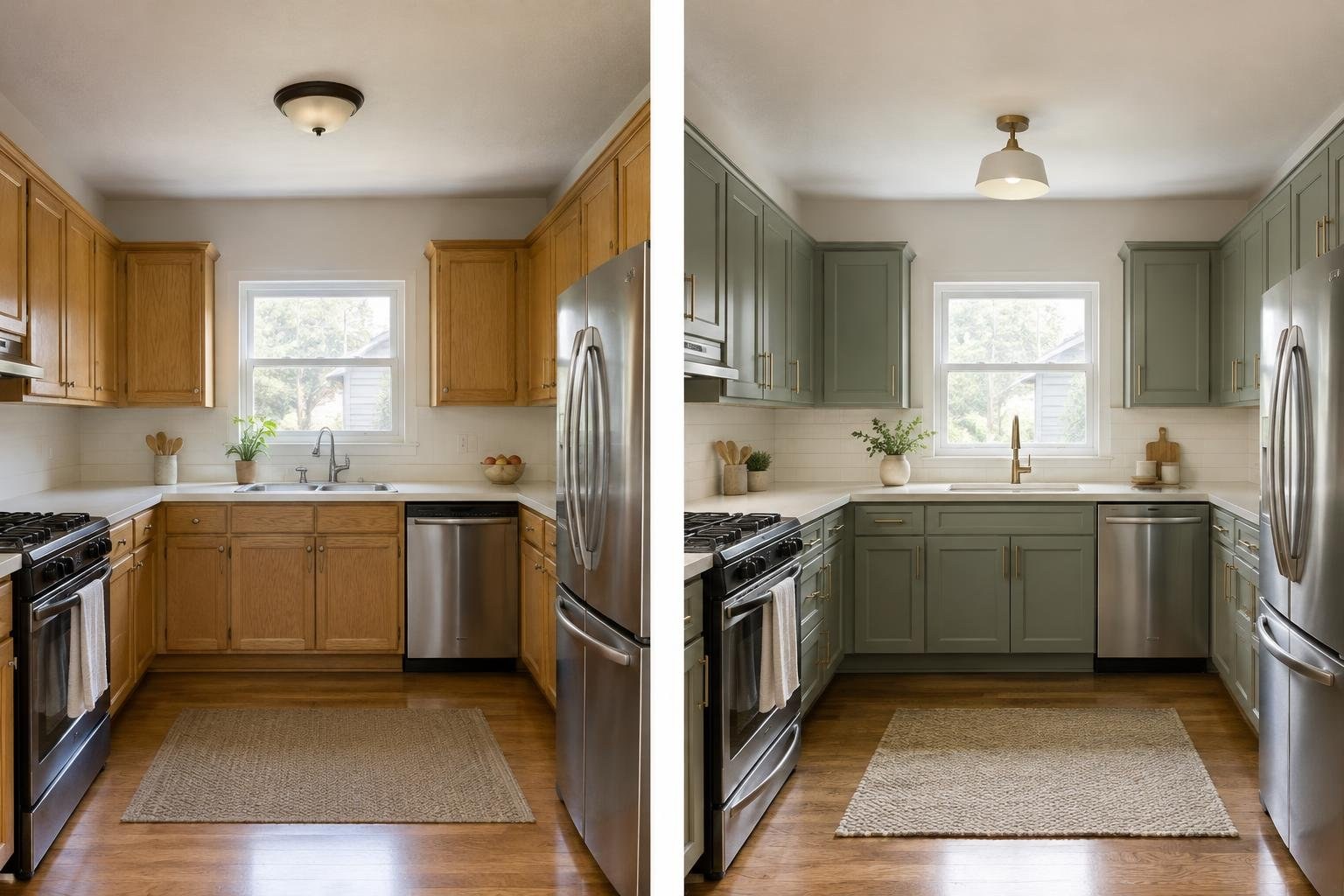
What kitchen cabinet remodeling includes and how it works
Kitchen cabinet remodeling is an umbrella term for work that changes the appearance, function, or layout of some or all of a kitchen’s cabinetry. A project may update existing cabinet doors and hardware, rework storage, install new cabinets, or coordinate cabinets with counters and other kitchen improvements. The scope can be limited to cabinetry or included in a larger remodel.
Start with the problem to solve. A dated color is different from a broken cabinet box, poor storage, or an appliance that no longer fits the plan. Updating appearance alone will not fix a layout problem; buying new cabinets may be unnecessary if the existing boxes and arrangement still serve you well.
Write down the outcomes you want, such as easier access to cookware, more pantry storage, a brighter appearance, or space for a planned appliance. Separate essentials from preferences. This gives you a practical way to compare design proposals and avoid paying for changes that do not address your priorities.
Signs your kitchen cabinets may need remodeling
A cabinet project may be worth exploring when the kitchen is hard to use, the cabinets no longer meet your storage needs, or visible wear makes the room feel overdue for an update. Look for the underlying cause before selecting a solution.
- Appearance concerns: The color, finish, door style, or hardware feels dated, but the cabinet boxes and layout remain serviceable.
- Storage frustrations: Commonly used items are difficult to reach, shelves do not suit what you store, or you need a different mix of drawers and cupboards.
- Condition concerns: Doors, drawers, or boxes are damaged or no longer work as intended. A cosmetic treatment may not address a deeper condition problem.
- Layout conflicts: Cabinets, appliances, or work areas do not fit how you use the kitchen. Consider whether a layout change is part of the solution.
- Planned kitchen work: You are already considering counters, appliances, or other remodeling work and want to coordinate the design and sequence.
These are prompts to assess the project, not proof that replacement is necessary. Have a provider inspect the existing cabinets and explain what can reasonably be retained.
Kitchen cabinet remodeling cost and pricing considerations
Kitchen cabinet remodeling costs depend on the work being priced. A finish update, cabinet-front changes, new cabinets, and a full kitchen remodel are different scopes, so a single average can mislead. Published examples illustrate the variation: one source reports $35,000 to $50,000 for upgrades to a mid-sized kitchen, while another gives $18,000 to $27,492 for minor cosmetic updates in the Virginia, Maryland, and DC area. Those figures are not a like-for-like comparison or a current estimate for your project.
Ask providers for a written, itemized proposal based on your kitchen and selections. Confirm whether it includes:
- Cabinet products, finish, hardware, accessories, and any custom sizing
- Design work, delivery, removal, disposal, and installation
- Countertops, backsplash, appliances, flooring, or lighting if included
- Plumbing, electrical, wall repair, and other trade work
- Taxes, applicable fees, cleanup, warranty terms, and change-order process
Compare equivalent scopes, not just bottom-line totals. If a price is notably lower, check whether important work has been excluded or left undefined. Request current, project-specific pricing from providers serving your area before setting a budget.
Factors that affect the project
The project’s scope is a key factor: a surface refresh, new cabinet fronts, new cabinets, and a broader kitchen remodel involve different work. Changing the cabinet layout or coordinating cabinets with appliances and countertops can add design and scheduling decisions.
- Layout and dimensions: Changes to cabinet locations or sizes need to be considered alongside appliances and the kitchen’s other fixed features.
- Selections: Cabinet style, finish, hardware, and accessories shape the product choices. Custom or semi-custom cabinets are among the options providers may offer.
- Related work: Countertops, backsplash, flooring, lighting, plumbing, and appliances may be included in a broader remodel or handled separately.
- Coordination: When multiple parts of the kitchen are involved, clarify who handles design, installation, and coordination for each part.
Before committing, ask the provider to define the proposed scope, identify what is included or excluded, and explain how changes or discoveries during the work will be handled.
Compare cabinet remodeling options and tradeoffs
Choose among cabinet updates, refacing, and replacement by asking what needs to change and what is worth keeping. Surface treatments such as painting or refinishing can change appearance; new hardware is another focused update. Other visual options include glass-front details or open shelving. These choices are most relevant when the existing layout and cabinets are suitable for continued use.
| Option | Can suit | Important limitation |
|---|---|---|
| Paint, refinish, or change hardware | A kitchen where the main goal is a different look and existing cabinets remain usable | Does not by itself resolve an unsuitable layout or inadequate storage |
| Add selected open shelving or glass details | A targeted visual change or a place to display frequently used items | Changes what is visible and may reduce concealed storage |
| Replace some or all cabinets | Projects needing different cabinet sizes, storage, or a new arrangement | Requires product selection and coordination with installation and related work |
| Include cabinets in a broader remodel | A kitchen needing coordinated cabinet, counter, lighting, flooring, or utility work | More components mean more scope and responsibilities to clarify |
Do not select a treatment based on appearance alone. Ask whether the cabinet substrate and current finish are appropriate for the proposed work, and request clear details about preparation, replacement parts, and what the finished scope will cover.
Want to compare cabinet possibilities before settling on a design? Explore cabinet options at CabinetSupply.com and use your priorities and measurements to guide further planning.
Plan the layout, measurements, appliances, and storage
Good cabinet planning starts with the kitchen as a connected space. Note what you store, how you move between work areas, and where the sink, cooking equipment, refrigerator, and other appliances sit. A cabinet plan should be checked against appliance dimensions and openings, not just the appearance of a drawing.
Before requesting proposals, assemble the information you can safely verify:
- Sketch the cabinet runs and mark walls, ceiling height, doors, windows, and visible obstacles.
- Record appliance make and model or verified dimensions, and note the direction doors and drawers open.
- Mark the sink, plumbing locations, outlets, lighting, vents, and any other visible utility constraints.
- Identify walkways, work areas, and places where open doors, drawers, or appliance doors might interfere.
- List storage frustrations and the items you want the new arrangement to hold.
These notes help the designer understand the project, but they are not a substitute for a final field measurement. Have the responsible provider verify dimensions and site conditions before orders are placed. Do not move plumbing, electrical, or structural components yourself unless you are qualified and allowed to do so.
What to expect during the project and how timing works
Expect a series of decisions rather than a single installation appointment. The exact sequence depends on the scope and provider, so request a project-specific schedule that identifies who is responsible at each step.
- Define the brief: Agree on priorities, budget range, what stays, and whether the kitchen layout changes.
- Design and verify: Review the cabinet plan, product selections, appliance fit, and site measurements before approving an order.
- Confirm the work plan: Clarify demolition, delivery, cabinet installation, counters, and any other trades in the sequence.
- Prepare the space: Confirm access, protection, removal, and how the kitchen will be affected during the work.
- Install and coordinate: The responsible professionals complete their assigned work and address fit or site questions through the agreed change process.
- Inspect and close out: Review doors, drawers, finish, installation, cleanup, and outstanding items. Obtain care and warranty information.
Do not rely on a generic promise about how many days a project will take. Ask for anticipated start and completion windows, decision deadlines, dependencies, and how delays or changes will be communicated.
How to choose a qualified cabinet remodeling provider
A qualified provider should be able to explain the proposed cabinet scope in language you understand and show how the design relates to your priorities. Some remodeling approaches coordinate design, cabinets, installation, and related trades under one provider; other projects use separate providers for different parts. Either can work if responsibility is clear.
Compare candidates using questions such as:
- Who measures, designs, orders, installs, and coordinates any other trades?
- What similar project examples can they show, and can you speak with references?
- What products, finish, hardware, and installation details are included?
- What work is excluded, and who handles demolition, disposal, and cleanup?
- What is the written schedule, payment plan, and process for approving changes?
- How are defects, fit issues, or other concerns reported and resolved?
- What warranty applies to products and installation, and who administers each one?
Verify applicable licensing and insurance for the work and location, and check references and the written agreement. A low bid is not necessarily better value if it omits design, installation, removal, or other work that another proposal includes.
Permits, credentials, warranties, and job-site safety
Permits, licensing, and insurance requirements depend on the project and location. Ask the provider which permits may apply, who will obtain them, and which local authority can confirm the requirements. Do not assume that a cabinet-only description means every related part of the work is exempt.
Before signing, check the agreement for product specifications, installation responsibility, exclusions, payment milestones, schedule, cleanup, change approvals, and a procedure for addressing concerns. Request product and workmanship warranty documents and confirm who to contact for each. Do not rely on a verbal summary when written terms are available.
For safety, use qualified professionals for work involving electrical systems, plumbing, structural changes, or other regulated work. Confirm how the work area will be protected and how debris will be handled. If the kitchen includes appliance or utility changes, identify who is responsible for coordinating and verifying those parts of the project.
Ways to reduce cost without cutting essential corners
Saving money safely starts with choosing a scope that solves the actual problem. If the cabinets are serviceable and the layout works, compare focused appearance updates with replacement before committing to a larger project. If function or condition is the problem, a cheaper finish change may leave the main issue unresolved.
- Set priorities and distinguish required work from optional upgrades.
- Ask whether existing cabinets can be retained, and request an explanation of any proposed replacement.
- Compare cabinet and hardware selections at more than one scope level, while keeping the proposals comparable.
- Coordinate decisions about cabinets, counters, appliances, and other work before orders are finalized.
- Request itemized estimates and ask about lower-cost alternatives that preserve the essential function and agreed finish quality.
- Avoid late changes by confirming dimensions, selections, and responsibilities in writing before approval.
Do not reduce cost by skipping required permits, unsafe utility work, necessary preparation, or qualified installation where needed. A small savings is not useful if the work fails to address the problem or creates avoidable repair work. Ask providers to explain the tradeoff behind each proposed economy.
Mistakes, red flags, and a pre-project checklist
Before approving a kitchen cabinet remodeling proposal, use this checklist to catch common planning gaps:
- Have you identified whether the main issue is appearance, storage, cabinet condition, layout, or a combination?
- Does the plan account for appliances, doors, drawers, walkways, windows, and visible utility constraints?
- Are the exact cabinet products, finishes, hardware, and accessories listed?
- Are demolition, removal, disposal, delivery, installation, counters, and related trades clearly included or excluded?
- Have measurements and site conditions been verified by the responsible provider?
- Are schedule, payment milestones, change orders, cleanup, and warranty terms written down?
- Have you checked references, relevant credentials, and insurance where applicable?
Common red flags include vague allowances, undefined installation responsibility, pressure to approve before selections are documented, and assurances that local requirements never apply without a project-specific check. Ask for unclear items to be resolved in writing. Review each estimate against the same checklist so omissions do not look like savings.
Frequently asked questions
What does kitchen cabinet remodeling include?
Kitchen cabinet remodeling can mean painting or refinishing existing doors, changing hardware, refacing cabinets, or replacing some or all cabinets. The right scope depends on the condition of the cabinet boxes, your storage needs, and whether the layout should change.
Should I remodel or replace my kitchen cabinets?
Keep the cabinet boxes if they are sound, the layout works, and the existing storage meets your needs. Consider replacement when the boxes are damaged, the layout needs a major change, or the cabinets cannot support the storage and appliance plan you want.
How much does kitchen cabinet remodeling cost?
There is no single price that applies to every kitchen. Published examples vary by project scope and location: one source gives $35,000 to $50,000 for upgrades to a mid-sized kitchen, while another reports $18,000 to $27,492 for minor cosmetic updates in the Virginia, Maryland, and DC area. Treat these as distinct examples, not a current quote or a direct comparison.
How long does a kitchen cabinet remodeling project take?
A cosmetic update that keeps the cabinet layout may require less coordination than a project involving new cabinets, counters, appliances, or utility changes. Ask providers for a written sequence and project-specific schedule rather than relying on a generic duration.
Can I remodel kitchen cabinets without replacing them?
A cabinet painting project may be unsuitable if doors or boxes are damaged, the finish is failing, or the layout and storage are the real problems. Assess the condition and function before choosing a cosmetic treatment.
What should I ask a kitchen remodeling contractor?
Ask for a written scope, itemized inclusions and exclusions, who handles design and installation, the schedule, cleanup and disposal responsibilities, warranty terms, and how changes are approved. Confirm relevant licensing and insurance for the work in your area.
People Also Ask
How do I start planning a kitchen cabinet remodel?
Begin with a written list of what feels dated, damaged, inconvenient, or hard to store. Separate appearance goals from functional problems, then assess cabinet-box condition and whether the layout should stay. That helps narrow the choice to a finish update, refacing, partial replacement, or a larger redesign.
Is it cheaper to keep my kitchen layout?
Keeping the current layout can limit disruption, but it will not solve every storage or workflow problem. Changing the layout may create more useful cabinet space, but can involve coordination with appliances, counters, plumbing, electrical, and other remodeling work. Compare the functional benefit with the broader scope.
What is the difference between painting, refacing, and replacing cabinets?
Painting or refinishing changes the visible surface, while refacing typically updates cabinet fronts and visible exterior surfaces without replacing all cabinet boxes. Replacement supplies new cabinets and can support a layout change. Ask each provider to define exactly which parts are included.
Can new cabinets be part of a full kitchen remodel?
Yes, cabinet projects can be one part of a larger kitchen remodel that also addresses countertops, backsplash, flooring, lighting, plumbing, or other work. Agree on which provider is responsible for each trade and how the work will be sequenced.
How can I compare kitchen remodeling estimates fairly?
Compare proposals with the same cabinet scope and list of related work. Check whether design, delivery, installation, demolition, disposal, counters, utility work, wall repairs, cleanup, and warranty terms are included or excluded. A lower total may not represent the same project.
What should I check before ordering kitchen cabinets?
Keep a dated record of cabinet dimensions, appliance specifications, finish selections, and approved changes. Before ordering, review the final plan for openings, clearances, door and drawer swings, and any plumbing or electrical constraints with the responsible professionals.
Kitchen cabinet remodeling can be a focused cabinet refresh or part of a larger kitchen renovation. Start by identifying what is not working, decide whether the existing layout and cabinet boxes are worth keeping, and compare written proposals with the same scope. Confirm local requirements and get the schedule, responsibilities, and warranty terms in writing before work begins. For a next step, explore cabinet options at CabinetSupply.com and use your measurements, priorities, and budget to guide the conversation.
Your next step
Explore cabinet options at CabinetSupply.com for your next project.
Last reviewed and updated October 15, 2026 by the CabinetSupple Editorial Team.
Sources
- How to Remodel a Kitchen Cabinet on a Budget
- How to Remodel Kitchen Cabinets on a Budget – Making Frugal FUN
- How to Remodel Kitchen Cabinets | 5 New Ways | Rocky Mountain Hardware
- 45 Kitchen Remodeling Ideas For 2026 | USA Cabinet Store
- 21 DIY & Affordable Ways to Redo Kitchen Cabinets | Extra Space Storage
- Kitchen Remodeling Services & Contractors | USA Cabinet Store
- Kitchen Remodeling at The Home Depot
- Kitchen Design & Installation From Lowe’s