
Kitchen cabinet trends can help you find a direction, but a popular look is not automatically the right one for your home. For 2026, design coverage points to warm natural wood, richly stained dark timber, Shaker and flat-panel doors, mixed finishes, and details that make a kitchen feel more personal. Use those ideas as a starting point. The better decision is the one that balances appearance with your storage needs, room conditions, budget, and willingness to live with the style over time.
What kitchen cabinet trends mean for your project
Kitchen cabinet trends are popular design directions, not a standard package of products or a guarantee that a particular look will suit every home. Current coverage points to a broad mix: natural wood, dark stains, familiar framed doors, simple slab fronts, color, mixed materials, and more expressive details. That range matters because homeowners do not have to choose between a completely traditional kitchen and an all-white, highly minimal one.
Think of the cabinets as part of a whole-room decision. Their color and door profile interact with countertops, backsplash, flooring, lighting, appliances, and the amount of visual contrast in the space. First identify what is not working in your current kitchen, then use trend ideas to solve that problem or establish a look you genuinely like.
Key takeaways before choosing a style
- Current design coverage includes both lighter natural woods and dark stained timber.
- Shaker and flat-panel doors offer different levels of visual detail, and both appear in trend reporting.
- Color, contrasting finishes, mixed materials, and distinctive details can make a kitchen feel less uniform.
- Plan cabinet function and the whole-room palette before settling on a trend-led finish.
- Compare actual samples and written estimates. A trend article cannot tell you what a specific project will cost or how long it will take.
These are prompts for evaluating your options, not a ranking of what every kitchen should have. Your preferred look, the existing room, and the cabinet products available for your project should guide the final selection.
Signs it may be time to rethink your cabinets
Look beyond photographs and decide what a successful change would accomplish. You may want a warmer appearance, a less busy door style, more useful storage, a stronger focal point, or a combination of these. If the cabinets function well but their appearance feels dated to you, a finish or door update may be worth discussing alongside replacement. If storage or layout is the main problem, choosing a new color alone will not address it.
Write down the changes you want before speaking with a designer or cabinet provider. Separate must-haves, such as a particular storage feature or appliance fit, from preferences such as a dark stain or decorative door detail. This makes it easier to assess tradeoffs without losing sight of why you are making changes.
Trend coverage for 2026 ranges from organic wood character to cleaner, more architectural fronts and bolder details. That variety suggests a useful question: do you want the cabinets to blend into the room, or to be one of its defining features? There is no universal answer. Decide based on your taste and how the cabinets relate to the rest of your finishes.
Warm wood or dark timber: compare the effect, not just the trend
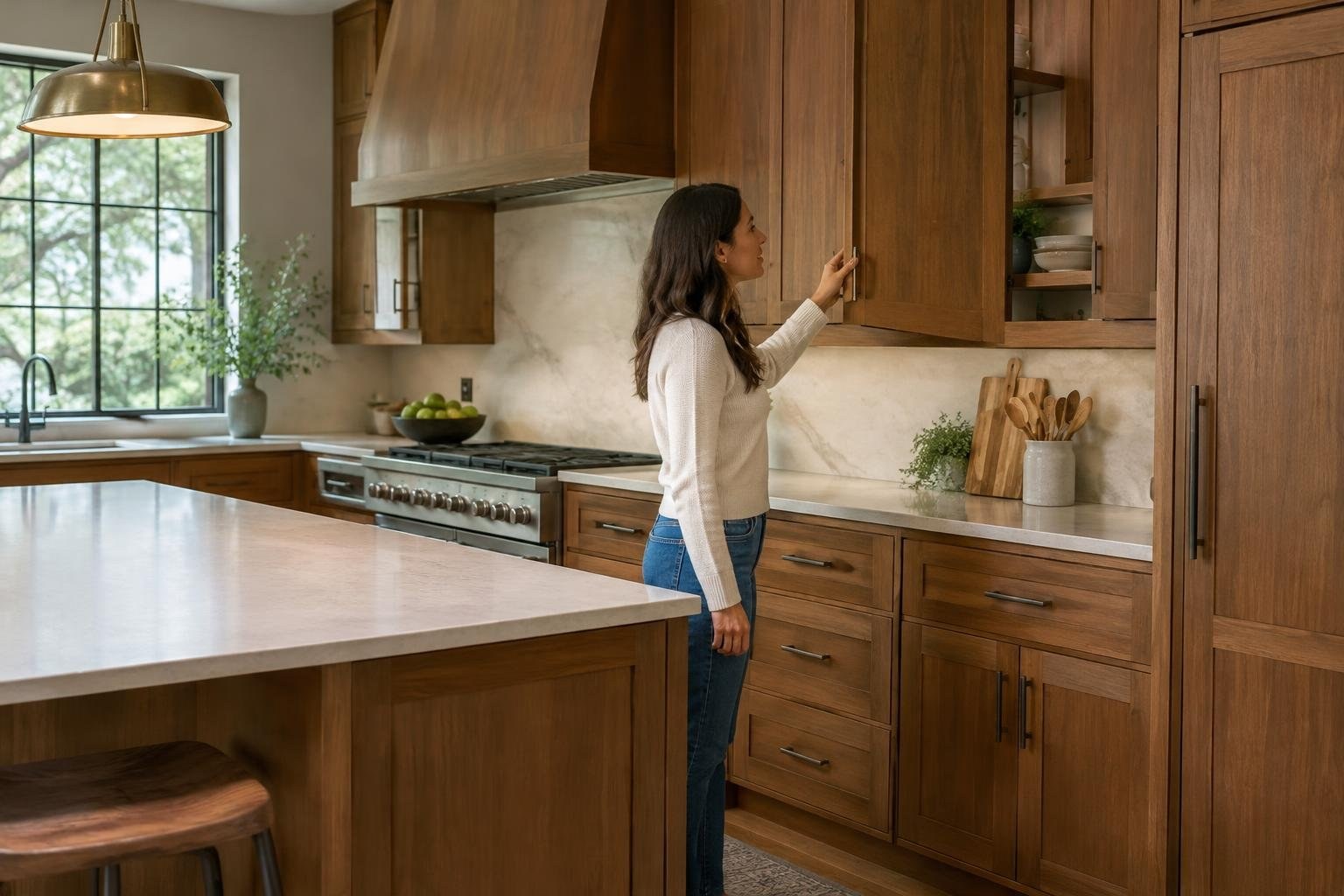
Many design stories treat wood as a key part of the 2026 cabinet conversation. Lighter woods such as white oak, ash, and maple are associated with a lighter, natural look, while another reported direction is dark timber with a richer stain. Both approaches let the wood grain contribute to the visual character of the kitchen.
Lighter wood: Consider it if you want visible natural texture without making the cabinets the darkest element in the room. Compare the sample with your floor and countertop; similar tones can either feel coordinated or appear mismatched.
Dark stained wood: Consider it if you want the cabinets to make a stronger visual statement. Check the sample under the room's lighting and against nearby materials before choosing it throughout the kitchen.
Wood appearance varies, so do not make a final choice from a small online image alone. Ask to see a sample of the specific finish and cabinet material being offered. Discuss care and finish expectations with the supplier, since the trend articles do not establish the performance of a particular product.
Shaker versus flat-panel cabinet doors
Shaker doors have a more defined frame-and-panel look, while flat-panel or slab fronts are visually simpler. Current trend reporting includes both, so the choice is less about whether one has replaced the other and more about which fits your taste and room.
| Choice | Visual character | Questions to ask yourself |
|---|---|---|
| Shaker | A framed, recessed-panel appearance with visible structure | Do I want some traditional detail, and does this profile work with other finishes? |
| Flat-panel or slab | A smooth, restrained cabinet face | Do I prefer a cleaner look, and will this style feel right with the room's materials? |
One trend report cites Shaker as a leading choice and flat-panel as a strong alternative, but a market ranking is not a design instruction. A popular door may still be a poor fit for your taste. Ask to compare full-size door samples instead of relying on a name or a small catalog image.
Two-tone cabinets, color, and mixed finishes
Color and contrast can shift the mood of a kitchen without changing the door profile. Design coverage includes bold cabinet colors, blue cabinets, and the continuing idea of darker lower cabinets paired with lighter uppers. A two-tone scheme can distinguish parts of a cabinet run, but it introduces another finish decision that needs to work with counters, flooring, walls, and hardware.
Before selecting contrasting colors, place samples side by side in the room. View them in the lighting you use during the day and evening. Consider whether you want contrast to be subtle or obvious, and whether the cabinet arrangement makes the color division feel intentional. If the kitchen already contains several strong patterns or colors, a simpler cabinet palette may be easier to coordinate.
Mixing materials or finishes can also add variety. Keep the combination deliberate: choose which surface is the main feature and which plays a supporting role. Trend coverage can provide examples, but it cannot show how a particular color will appear alongside your existing finishes.
Functional upgrades and distinctive cabinet details
Some current ideas focus on what a cabinet does as well as how it looks. Design coverage points to functional upgrades, mixed materials, rounded details, and cutouts that make cabinetry feel more distinctive. A decorative opening or unusual profile can create a focal point, while storage features should solve a real household need.
Make a short list of what you want to store and how you use the kitchen. Consider the items that currently end up on counters, shelves that are hard to reach, and equipment that needs a dedicated place. Ask a cabinet professional to show how a proposed layout addresses those concerns, rather than accepting an accessory because it is featured in a design image.
Details can be a good way to introduce personality without using an assertive color across every cabinet. At the same time, every special feature should be reviewed for cleaning, access, and fit with the overall design. Request drawings or product details so you can understand what is included in the proposal.
Cost considerations: compare a defined scope, not a trend name
A trend does not have a fixed price. The cost of a cabinet project depends on the products and work included in the specific proposal. The research for this article does not provide a reliable location-specific price range, so use written estimates for your home rather than applying a general figure to your budget.
Ask providers to identify the cabinet selection, finish, hardware, quantities, and installation work in their estimates. If the project includes work beyond the cabinets, have each item listed separately so you can compare proposals on the same basis. Confirm whether removal, delivery, adjustments, and cleanup are included or handled separately. Ask how changes to selections or measurements affect the price.
Do not assume that the most fashionable finish is automatically the most expensive, or that two estimates are comparable because they show similar-looking kitchens. The product specification and scope matter. If your budget is firm, ask which choices can be adjusted while preserving your priorities, and get any revised scope documented.
Factors that affect the project
Several decisions affect the result and the estimate: how many cabinets are involved, the selected door and finish, whether finishes are mixed, the amount of customization, and which installation or related tasks are part of the job. A decorative detail or special color also needs to be defined precisely so you know what product the estimate covers.
Write down the existing conditions and choices you want the provider to price. Share the measurements and appliance information you have, but have the responsible professional verify the plan before ordering. Ask how the proposal handles fillers, exposed ends, trim, and any fit adjustments that may be needed for the design. Those details help distinguish a complete plan from a mood-board image.
Keep the comparison focused on equivalent products and work. If one estimate includes installation and another does not, they are not directly comparable. Ask questions in writing and request an updated proposal whenever a selection or scope changes.
What to expect: planning and timing
The usual planning path is to define the desired changes, review styles and samples, measure and develop a layout, confirm product and finish selections, obtain a written scope, and agree on ordering and installation responsibilities. The exact sequence depends on the project and the provider. Do not treat a trend photo as a cabinet plan: it may not identify dimensions, construction, finish, or installation requirements.
- Set priorities. Separate functional needs from visual preferences.
- Gather information. Note room dimensions, appliance details, and existing conditions for the planning conversation.
- Review options. Compare door profiles, colors, materials, and any special details using samples.
- Confirm the design. Review the layout and written product specifications before approval.
- Agree on responsibilities. Clarify who handles ordering, delivery, installation, and any related work.
Ask the provider for a project-specific schedule and the milestones that depend on your approvals. Confirm what happens if selections, measurements, or site conditions change.
How to choose a qualified cabinet provider
Choose a cabinet provider based on fit for the project and clarity of the proposal, not on trend pictures alone. Ask to see examples of relevant work and explain which details you want to achieve. A useful provider should be able to discuss both the visual choices and how the proposed cabinet selection fits the room and project scope.
- Ask who measures, designs, orders, delivers, and installs the cabinets.
- Confirm the product, finish, hardware, and quantities in writing.
- Request an itemized scope and a schedule with key decision dates.
- Ask how revisions, change orders, damage, delays, and installation concerns are handled.
- Check references and relevant project examples where available.
- Confirm applicable licensing and insurance requirements for the work in your area.
Compare proposals at the same level of detail. A lower total may reflect a different cabinet specification or omitted work. Ask questions until you understand the differences, and do not approve a vague scope just because you like the pictured style.
Permits, credentials, warranties, and safety
Rules and permit needs vary by location and by the work involved. Ask your local building department or the professional responsible for the work whether permits or inspections are required, especially if the project also changes regulated building systems. Do not assume that replacing cabinet doors and changing a room layout have the same requirements.
Check which party is responsible for permits, if any, and make that responsibility clear in the contract. Confirm the provider's applicable credentials and insurance rather than relying on a design portfolio alone. Request written warranty information for the cabinets and any installation work, and ask what maintenance, exclusions, or claim process applies. Warranty terms are product- and provider-specific, so review the documents for the actual selection.
Keep approved drawings, product details, change orders, receipts, and warranty paperwork together. If the plan involves electrical, plumbing, structural, or other regulated work, use appropriately qualified professionals and confirm local requirements before work begins.
Ways to save without creating avoidable problems
To control spending safely, prioritize the changes that matter most and ask the provider to price alternatives within the same overall plan. You might compare a simpler door profile with a more detailed one, or use a distinctive finish selectively rather than throughout the whole kitchen. Review each option using samples and confirm that the revised estimate covers the same installation responsibilities.
Ask whether any existing elements can remain if they are in suitable condition and work with the new design. Do not assume that keeping them is automatically less expensive; have the provider explain any fit, finish, or coordination implications. Avoid cutting costs by skipping accurate measurement, product specifications, written agreements, or qualified work where required.
A practical way to avoid budget surprises is to finalize selections before ordering and record every change. Ask what charges or schedule effects can result from changes after approval. This approach keeps the decision focused on value and scope rather than on an attractive headline price.
Common mistakes and a pre-approval checklist
- Choosing by trend alone: A popular style may not suit your taste or the rest of the kitchen. Compare it with existing finishes and your long-term preferences.
- Deciding from a small image: Ask for physical samples and view them in the room's lighting.
- Focusing only on cabinet color: Resolve storage needs and layout questions as well as appearance.
- Mixing finishes without a plan: Decide which finish leads and check that the combination works with the counters, floor, and walls.
- Comparing totals without comparing scope: Confirm that estimates specify equivalent products and work.
- Assuming a trend report predicts your project's cost or schedule: Request written, project-specific estimates and timing.
- Approving before details are clear: Confirm measurements, product specifications, responsibilities, and change procedures before ordering.
Before signing, ask yourself: Do I like the look in my actual room? Does the plan address the reason for the project? Can I identify exactly what is included? Do I understand who is responsible for each step? If any answer is no, resolve it before moving ahead.
Explore cabinet options for your kitchen
Use the trend ideas to shortlist possibilities, then compare your preferred options in the actual context of your kitchen. Select a door profile, wood or color direction, and any distinctive detail only after you have considered storage, the overall palette, and the written project scope.
For a low-commitment starting point, gather inspiration images and note what you like about each one: the grain, color contrast, simplicity, or craft detail. Share those notes with a provider, ask for relevant samples, and request a clear proposal. Browse the curated cabinet options at CabinetSupply.com as you explore possibilities for your project.
Frequently asked questions
What are the kitchen cabinet trends for 2026?
Current design coverage highlights warm wood, darker stained timber, mixed materials, color, and functional details. The best choice depends on your room, preferences, and how long you expect to live with it.
Are Shaker cabinets still in style in 2026?
Shaker doors remain a widely recognized choice, while flat-panel doors offer a simpler, more modern appearance. Compare actual samples and consider how much visual detail you want in the room.
Are wood kitchen cabinets coming back?
Yes. Lighter woods such as white oak, ash, and maple are featured in current design coverage, while darker stained wood is also receiving attention. Look at full-size samples because grain and color can appear different under your kitchen lighting.
Are two-tone kitchen cabinets still popular?
A two-tone scheme can use contrast to distinguish cabinet runs, such as darker lower cabinets and lighter uppers. Test the actual colors together and consider how the arrangement relates to the counters, floor, and wall color.
What kitchen cabinet color is best for resale?
There is no single best cabinet color for resale in every home. A color you enjoy and can coordinate with the rest of the room is a safer starting point than choosing a shade only because it is currently popular.
Do current kitchen cabinet trends make a remodel more expensive?
Trends themselves do not set a cabinet price. Ask for itemized estimates based on your cabinet choices and project scope, then compare what is included, such as installation, removal, and related work.
Can dark kitchen cabinets work in a small kitchen?
They can work in a small kitchen if the color, contrast, and visual detail suit the room. View samples in place and check that new finishes will not make the kitchen feel too visually busy for your preference.
How do I choose kitchen cabinets that will not look dated?
Make a list of what you want to store, bring measurements and appliance information to the planning conversation, and compare samples in the room. Confirm the exact products, work included, schedule, and payment terms in writing.
People Also Ask
What is the biggest kitchen cabinet trend in 2026?
Design coverage for 2026 includes warm wood, dark stained timber, mixed materials, bold colors, and functional upgrades. These are ideas to assess against your room, not requirements for a remodel.
Are light or dark wood cabinets more on trend?
Both appear in current trend coverage. Lighter wood is associated with a clean, natural look, while rich dark stains create a deeper, more dramatic effect. Sample each against your flooring and counters before deciding.
What is the difference between Shaker and flat-panel cabinets?
Shaker doors have a framed, recessed-panel appearance; slab or flat-panel doors have a smooth, simple face. Choose by the visual character and maintenance expectations you prefer, rather than assuming one style suits every kitchen.
What cabinet colors work well in a two-tone kitchen?
Dark lower cabinets paired with lighter upper cabinets are one reported two-tone approach. The combination can create contrast, but test the exact colors together and consider the other large surfaces in the kitchen.
How can I use a cabinet trend without overdoing it?
Use a trend as an accent or a limited selection if you are unsure about committing across the whole room. Compare door, color, and hardware samples together and make the final choice based on the kitchen as a whole.
How much do trendy kitchen cabinets cost?
The trend reports supplied here do not provide a reliable, location-specific price range. Get estimates for the same scope and compare cabinet products, installation, removal, delivery, and any related work included.
Kitchen cabinet trends are most useful as a source of ideas, not as a checklist to copy. Choose a door style, color, and finish that fit the room and your preferences, then give equal attention to storage, clearances, durability, and the full project scope. Compare samples in your own kitchen and review detailed estimates before committing. Explore cabinet options at CabinetSupply.com for your next project.
Your next step
Explore cabinet options at CabinetSupply.com for your next project.
Last reviewed and updated October 15, 2026 by the CabinetSupple Editorial Team.
Sources
- Kitchen Cabinets Ideas for 2026 Data-Backed Trends from IST Cabinets
- 10 2026 Kitchen Cabinet Design Trends and Colors
- 5 Kitchen Cabinet Trends Interior Designers Are Choosing for 2026 — Put These On Your Radar Now
- 9 Kitchen Cabinet Trends to Know, According to Designers
- Kitchen Cabinet Styles and Trends | HGTV
- Top 18 Kitchen Cabinet Trends of 2026: Latest & Most Popular Styles – American Made Cabinets
- The Kitchen Cabinet Trend Interior Designers Are Obsessed With in 2026—And How You can Re-create it at Home | Architectural Digest
- 5 Kitchen Cabinet Trends for 2026—And the Surprising Style That Just Fell Out of Favor