
Kitchen cabinet shelves shape how much you can store and how easily you can reach it. If dishes are stacked too tightly, pantry items disappear at the back, or a shelf is damaged, you may not need a full cabinet replacement. Options include adjustable shelf panels, replacement shelves, add-on shelf kits, and pull-outs that slide forward. The best choice depends on the cabinet’s interior dimensions, support system, what you plan to store, and the amount of access you want. This guide explains how to compare those options, measure before buying, understand cost drivers, and decide whether to install shelves yourself or ask a professional.
What Kitchen Cabinet Shelves Include and How the Process Works
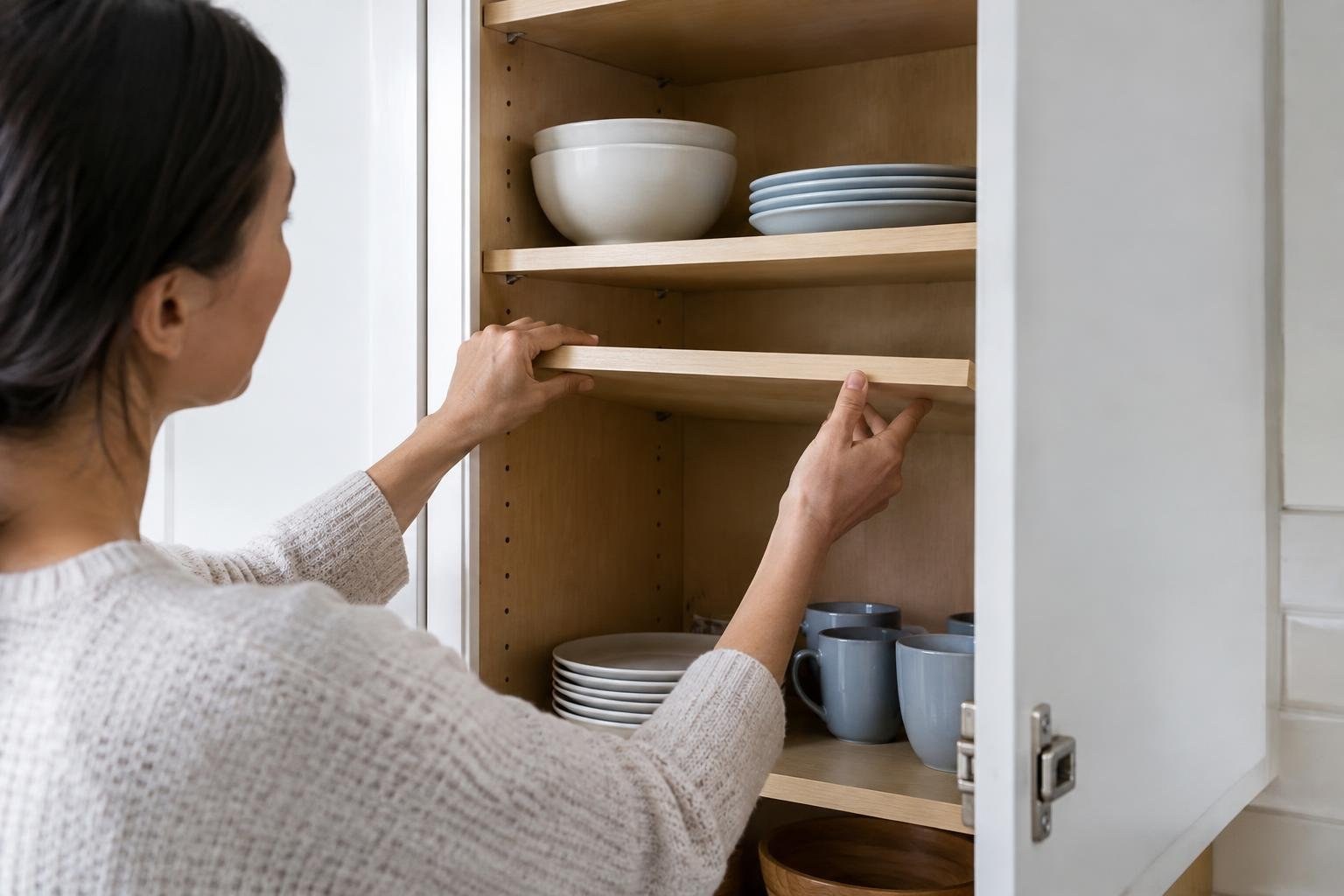
Kitchen cabinet shelves are interior surfaces or moving trays that organize items inside a cabinet. Common choices include fixed panels, adjustable panels supported by shelf pins, and pull-out trays mounted on rails. Replacement shelves can restore a damaged or missing panel, while shelf kits and add-on organizers can create another storage level.
The practical goal is to match the shelf to the cabinet and its contents. Plates and cookware need stable, accessible space; pantry goods may benefit from adjustable heights; items at the back of a deep cabinet can be difficult to reach without a sliding tray. Decide what problem you are solving before shopping, rather than selecting an accessory based only on its appearance.
Cabinet storage products are sold as panels, kits, shelves, and drawers, and some are designed for specific cabinet systems. Treat compatibility as part of the product, not an afterthought.
Signs You May Need Different or Replacement Shelves
A shelf upgrade may be useful when the current arrangement wastes vertical space, makes frequently used items hard to reach, or no longer fits what you store. A visibly damaged panel or broken shelf support is another reason to inspect the cabinet and consider a replacement.
Before buying, distinguish a shelf problem from a larger cabinet problem. If the panel is intact but shelf heights are inconvenient, adjustable supports may address the issue. If items disappear at the back of a deep cabinet, a pull-out may improve access. If the cabinet box or mounting area is damaged, a new shelf alone may not correct the underlying issue.
Take everything out and group items by size and frequency of use. Note unusually tall containers, heavy cookware, and items you want at the front. This simple inventory helps determine whether you need a different shelf height, more shelf area, or a sliding solution.
Kitchen Cabinet Shelf Cost and Pricing Considerations
There is no single shelf price that applies to every kitchen. A useful estimate depends on the number of shelves, their dimensions and material, whether you are buying a basic panel or a sliding system, and whether the work includes fitting or cabinet adjustments. The supplied product listings do not establish a universal price range, so compare current, item-specific quotes rather than relying on a broad average.
Ask each seller or installer to separate product, hardware, delivery, and labor where applicable. Confirm whether the quoted shelf is finished, whether supports or rails are included, and whether installation is included. For multiple cabinets, request a room-by-room or cabinet-by-cabinet breakdown so you can compare like with like.
Do not compare a simple replacement panel directly with a custom-designed pull-out as if they were the same scope. A sliding solution includes a different function and hardware, and may require a fit check or installation work.
Factors That Affect Fit, Project Scope, and Price
Several details shape a shelf project’s total effort and price. Cabinet width and depth affect what will fit; material, thickness, finish, and edge treatment affect the product selected. The number of shelves, whether they are fixed or adjustable, and the number of pull-outs or specialty trays also change the scope.
Cabinet compatibility matters. For example, a manufacturer may offer a replacement shelf for a specified cabinet depth and type, while a different cabinet system may have its own shelf and drawer selection. A product that looks similar is not necessarily a direct fit for your cabinet.
Installation can add work when the cabinet is difficult to access, existing supports need attention, or rails must be fitted. Ask whether the provider has included measuring, fitting, hardware, and any necessary adjustments. If a quote assumes a standard opening, have the actual interior dimensions checked before approving the order.
Kitchen Shelf Options: Fixed, Adjustable, Kits, and Pull-Outs
| Option | How it works | Best suited to | Check before choosing |
|---|---|---|---|
| Fixed replacement panel | Replaces or adds a stationary shelf. | A cabinet with a suitable fixed-shelf layout. | Dimensions, support, thickness, and finish. |
| Adjustable shelf panel | Rests on pins so the height can be changed. | Storage that changes or items of different heights. | Pin compatibility, fit, and available positions. |
| Pull-out shelf | Travels forward on rails. | Deep storage where reaching items at the back is inconvenient. | Usable cabinet space, rail fit, and installation needs. |
| Shelf kit or organizer | Adds a shelf or tier within a cabinet. | Creating another level for smaller items. | Interior clearance, stability, and intended use. |
Adjustable panels offer flexibility without moving the stored items forward. Pull-outs address reach by bringing a tray toward the opening. Some custom-designed solutions offer specialized layouts, but their usefulness depends on the cabinet and the items being stored. Choose the simplest option that solves the actual problem.
How to Measure and Check Cabinet Fit
Measure the cabinet opening and the usable interior, not just the outside of the cabinet. Record the inside width, depth, and height where the shelf will sit. Note the existing shelf thickness, pin-hole positions or other supports, obstructions, and how the door and hinges affect access.
- Empty the cabinet so you can see its interior and supports.
- Measure the shelf area in more than one place if the cabinet appears out of square.
- Record the support type and the distance between supports.
- Check whether stored items need extra height or clearance to move in and out.
- Compare your notes with the product’s stated dimensions and compatibility details before ordering.
Allow room for a shelf or tray to move without rubbing the cabinet sides or interfering with the door. If you are unsure about a measurement, ask the product provider or installer to confirm it. Some replacement products are made for a defined cabinet type and depth, so a close visual match is not enough.
What to Expect During Shelf Replacement or Installation
For a straightforward replacement, the work generally involves identifying the shelf, checking its dimensions and support, sourcing a compatible panel, and fitting it securely. For adjustable panels, check that the pins are appropriate for the cabinet’s holes and that the shelf sits level. For a pull-out, the rails and tray must fit the cabinet opening and be installed according to the product instructions.
Timing depends on how quickly the right product can be identified and supplied, how many cabinets are involved, and whether installation or adjustments are needed. A replacement panel and a multi-cabinet pull-out project are different scopes, so avoid promising or assuming the same turnaround for both.
Before work begins, clear the cabinet and protect nearby surfaces. At completion, check that stationary shelves sit securely and that sliding trays move as intended without binding or striking the door. Follow the supplied installation and care instructions.
How to Choose a Shelf Provider or Installer
A simple shelf-panel swap may be manageable for a capable DIYer when the dimensions and support system are clear. A pull-out installation involves fitting moving hardware, so consider professional help if you are not comfortable confirming the fit or following the installation requirements.
When evaluating an installer, ask about similar shelf or cabinet-storage projects, who will measure and install, and what the estimate includes. Check whether the provider supplies the product, whether fitting and hardware are included, how changes are handled, and what happens if the ordered shelf does not fit. Request written dimensions and product details rather than relying on a verbal description.
Compare providers on the complete scope and clarity of their answers, not simply the lowest total. For product-specific selections, verify compatibility with the cabinet maker or supplier. A qualified provider should be willing to explain the proposed solution and its limitations.
Need help exploring cabinetry and storage choices? Browse Cabinet Supply at CabinetSupply.com as you research options for your project.
Safety, Installation Instructions, and Warranty Questions
For an ordinary shelf replacement, the available product information does not establish a universal permit requirement. Requirements can depend on the work and location, so confirm local rules if a project expands into regulated construction or changes to utilities. Do not attempt electrical, plumbing, or structural work unless qualified and permitted to do so where required.
For product safety and fit, follow the maker’s installation instructions and any stated load guidance. Do not assume a shelf is suitable for heavy items simply because it fits. Check that the panel is supported as intended, the supports are secure, and a pull-out can travel without obstruction.
Ask about the product and labor warranty, what it covers, how long coverage lasts, and how to report a problem. Get the answers in writing. Warranty terms vary, so do not assume that a product warranty also covers installation or cabinet damage.
Ways to Save Without Compromising Fit or Function
Keep the project focused on the storage problem you need to solve. Replacing a damaged shelf or repositioning adjustable panels may be more targeted than adding a complex system to every cabinet. Add pull-outs where reaching the back is a real problem, rather than assuming every cabinet needs the same upgrade.
Ways to control scope include:
- Measure carefully before ordering to reduce the risk of buying an incompatible shelf.
- Prioritize the cabinets you use most or that have the clearest access problem.
- Reuse sound shelf supports where the product instructions allow it.
- Compare the cost and function of a simple panel, adjustable shelf, kit, and pull-out.
- Ask for an itemized estimate and confirm what is included before approving work.
Save safely by avoiding shortcuts that compromise fit or secure support. A low-cost shelf that does not fit, or a sliding system installed without confirming clearances, can create additional work rather than value.
Common Mistakes and a Before-You-Buy Checklist
Use this checklist before ordering or approving installation:
- Identify the items the shelf needs to hold and how often you use them.
- Measure the usable interior width, depth, and height.
- Record shelf supports, pin holes, obstructions, and door or hinge clearance.
- Confirm the product’s cabinet compatibility and dimensions.
- Check whether the price includes hardware, delivery, measuring, and installation.
- Ask how the installer will address a fit problem or a change in scope.
- Review installation guidance, load information if provided, and warranty terms.
- Test the finished shelf or pull-out before loading it.
Common avoidable problems include ordering by outside cabinet dimensions, overlooking hinge clearance, choosing a shelf height without considering stored items, and assuming all products use the same support system. Another mistake is comparing a basic panel with a pull-out without accounting for the different hardware and work. Resolve those questions before purchase, not after delivery.
Frequently asked questions
How do I measure for replacement kitchen cabinet shelves?
Start with the cabinet’s usable interior width, depth, and height, then check the shelf thickness, support method, and any door or hinge interference. Confirm product dimensions and compatibility before ordering. A shelf that is nominally the right size may still need clearance to fit and move freely.
Are adjustable shelves or pull-out shelves better?
Adjustable shelves rest on pins and can be repositioned as storage needs change. Pull-out shelves travel on rails, bringing stored items forward. Adjustable panels suit flexible shelf spacing; pull-outs can make deep storage easier to access, but need room for the tray and hardware.
Are plywood cabinet shelves better than particleboard shelves?
Not necessarily. Plywood, melamine, laminate, and other panels have different appearances, edge treatments, and construction details. Check thickness, support, load guidance, finish, and compatibility with your cabinet. Material alone does not tell you whether a shelf is suitable for a particular use.
Can I replace just one kitchen cabinet shelf?
Often, a shelf can be replaced or supplemented without replacing the whole cabinet. First check whether the cabinet box and shelf supports are sound and whether replacement dimensions are available. A damaged cabinet box or a storage problem that requires a different layout may call for a broader solution.
Can I install kitchen cabinet shelves myself?
It depends on the cabinet, shelf, and installation approach. A straightforward shelf-panel replacement may be manageable for someone comfortable measuring and fitting parts. Pull-outs or modifications that affect cabinet structure, utilities, or secure mounting may call for an experienced professional.
How much do kitchen cabinet shelves cost?
There is no single reliable price for all shelf projects. The total depends on how many shelves you need, their dimensions and material, whether you choose fixed or sliding storage, and whether installation or cabinet modifications are involved. Compare itemized quotes and confirm what is included.
Do pull-out shelves make kitchen cabinets easier to use?
Yes. Adjustable shelves can be moved to fit changing items, while pull-outs can help bring stored goods forward. Their usefulness depends on the cabinet’s size, interior layout, and the space available for hardware and movement.
What should I check before ordering replacement shelves?
Measure the usable cabinet interior and note the shelf support style, door hinges, obstructions, and existing shelf thickness. Then verify the product’s specified dimensions and fit requirements. For model-specific replacement shelves, check the cabinet maker’s product information.
People Also Ask
Can adjustable shelves be added to existing kitchen cabinets?
Usually, yes, if the cabinet has compatible shelf-pin holes and the panel fits its interior. Confirm the usable dimensions, pin size and position, shelf thickness, and clearance before ordering. If the cabinet uses a different support system, you may need compatible hardware or a different shelf solution.
Are pull-out shelves worth it in a kitchen?
They can improve access to items stored toward the back by sliding the tray forward. Check whether your cabinet has enough usable width and depth for the shelf and rails, and verify how the system attaches. A pull-out is not automatically the best choice for every cabinet.
How can I tell if a kitchen cabinet shelf needs replacing?
Check the shelf panel, its edges, support pins or rails, and the cabinet interior. Look for sagging, broken supports, swelling, peeling, or a shelf that no longer sits securely. Identify the cause before replacing parts, especially if the cabinet has been exposed to moisture.
How much weight can a kitchen cabinet shelf hold?
A kitchen shelf’s suitable load depends on its material, thickness, span, support, and installation. Follow the product’s stated load guidance if provided, distribute heavy items across supported areas, and avoid assuming every shelf can safely hold the same weight.
Will replacement shelves fit any kitchen cabinet?
Use accurate interior measurements and verify that the product is intended for your cabinet’s dimensions and support style. Some replacement products specify a particular cabinet type and depth, so check the maker’s details instead of relying on the cabinet’s outside dimensions alone.
What types of kitchen cabinet shelves are available?
Options include fixed or adjustable panels, shelf kits, and sliding pull-outs. Adjustable panels provide flexibility in shelf height; pull-outs bring stored items toward the cabinet opening. The right choice depends on what you store and the cabinet’s space and construction.
The right kitchen cabinet shelves make everyday items easier to see, reach, and organize. Start by identifying what is not working, then check your cabinet’s dimensions and construction before choosing adjustable shelves, replacement panels, pull-outs, or a combination. Compare the full fit and installation details, not just the shelf material or appearance. For broader project ideas and cabinet options, visit CabinetSupply.com.
Your next step
Explore cabinet options at CabinetSupply.com for your next project.
Last reviewed and updated October 15, 2026 by the CabinetSupple Editorial Team.
Sources
- Wood Kitchen Cabinet Shelves Replacement, 12" Wall Cabinets | KraftMaid
- Cabinet Shelves – Ace Hardware
- Kitchen Shelves | Custom Kitchen Shelving | ShelfGenie
- Shop Cabinet Shelves for Kitchen Boost Your Storage | Lowe's
- Kitchen Cabinet Shelves
- Kitchen Cabinet Shelving Replacements | CDNM | Shop Now – Cabinet Doors 'N' More
- Kitchen Cabinet Shelves and Drawers – Cabinet Storage – IKEA
- Amazon.com: Kitchen Cabinet Shelves