
Kitchen cabinet pulls affect how cabinets look and how easily you open them. The right choice depends on more than finish: check the mounting-hole spacing, overall size, grip, cabinet layout, and quantity before buying. Pulls are commonly used on drawers and can also serve as handles on cabinet doors. This guide explains how to compare styles, plan a consistent layout, estimate the scope of the purchase, and decide whether to install the hardware yourself or get help.
What Kitchen Cabinet Pulls Include and Why They Matter
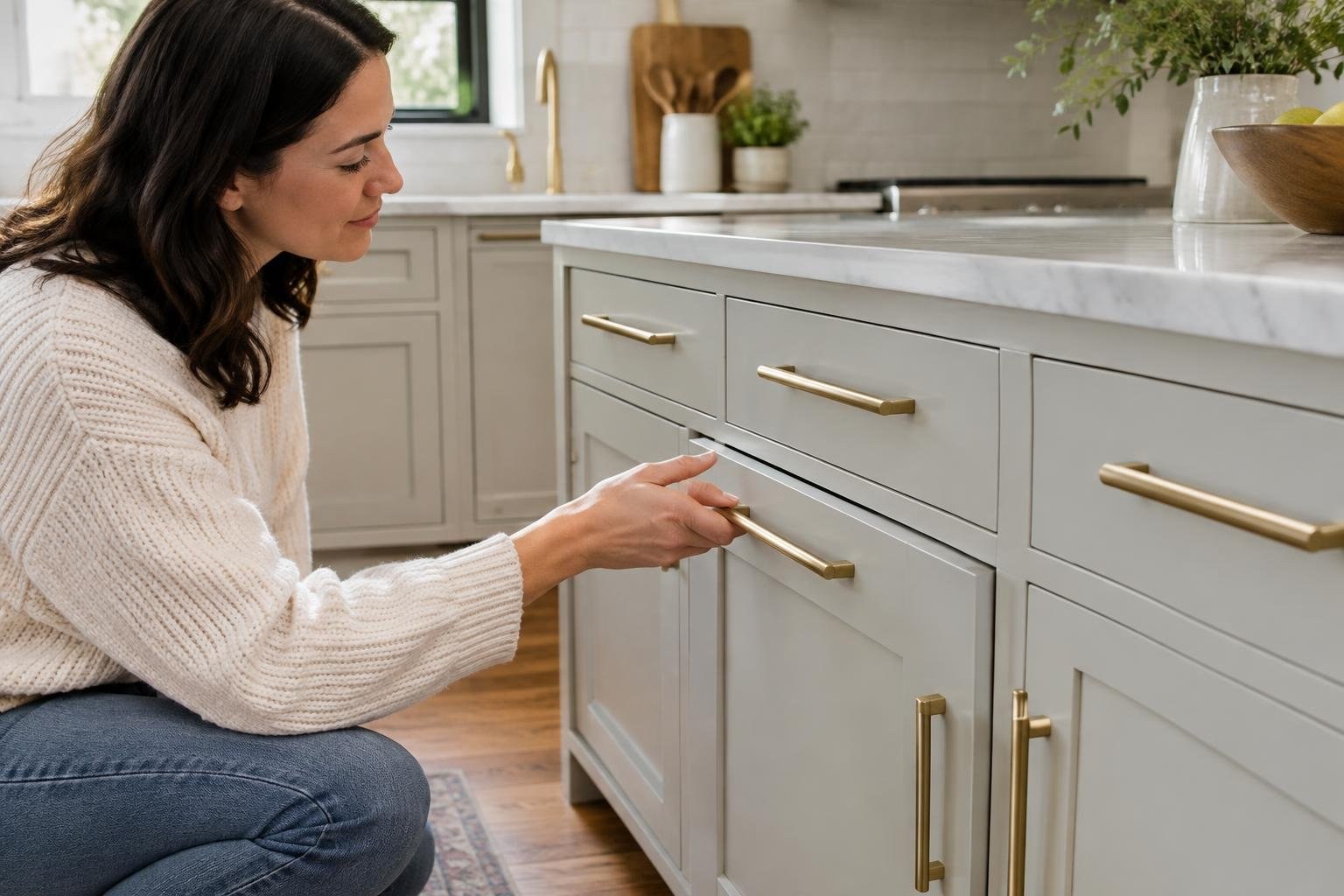
Kitchen cabinet pulls are handles fitted to cabinet doors or drawers. The two common hardware categories are pulls and knobs: pulls are often selected for drawers, but they can also be used on doors. A pull’s shape, finish, size, and mounting arrangement all influence how it looks and works in the room.
Think of the choice as both a design decision and a fit decision. A beautiful pull can still disappoint if its grip feels awkward, its mounting holes do not match existing holes, or it interferes with a nearby cabinet front. Selecting hardware methodically helps avoid those problems.
Signs It May Be Time to Replace or Reconsider Your Pulls
Consider replacing or changing your pulls when the hardware is loose, uncomfortable to grasp, damaged, inconsistent, or at odds with a kitchen update. A change may also make sense when the existing style no longer suits the cabinets or when you want a more consistent look across doors and drawers.
Before shopping, inspect several cabinets rather than judging only the most visible one. Note loose fasteners, worn or mismatched pieces, hard-to-reach locations, and pulls that collide with neighboring doors or walls. If the cabinet fronts themselves are damaged or do not function properly, new pulls alone will not solve those issues.
Changing hardware is a focused update, not a substitute for correcting a cabinet door or drawer that is misaligned, damaged, or difficult to operate. Identify the underlying issue first so you do not buy hardware to fix a problem it cannot address.
Kitchen Cabinet Pulls Cost: What to Include in Your Budget
There is no reliable single price for kitchen cabinet pulls without knowing the product, quantity, and installation plan. A useful budget starts with the number of pieces needed, then adds any installation work, tools or templates you do not already have, and possible work to address mismatched mounting holes.
Pulls are sold in varied styles and product ranges. For example, available catalog listings include different brands, styles, and dimensions, while retail listings may offer pulls in multi-piece packs. That range is a reminder to compare like with like: match the finish, material description, size, quantity, and package contents when evaluating prices.
Request or calculate the full amount for the entire kitchen, not just the cost of one sample. If a quote includes installation, ask whether it covers layout, drilling, hardware, adjustment, and cleanup. Avoid assuming a low unit price represents the lowest completed-project cost.
Factors That Affect the Pull Selection and Project Scope
The project’s cost and complexity depend on the number of pulls, the product selected, and how closely the new mounting points match the existing ones. Other practical variables include the size of the hardware, the finish, whether pulls are used on every door and drawer, and whether you are installing them yourself or paying for labor.
Make an inventory before requesting a quote or placing an order. Count doors and drawers separately, decide which fronts will receive pulls, and record the number and spacing of existing holes. Confirm whether a listed dimension is the distance between mounting-hole centers or the pull’s overall length. Product listings can use both kinds of measurements, so do not treat them as interchangeable.
If the kitchen is being remodeled, settle the hardware layout early enough to coordinate with cabinet ordering and installation. If you are changing only the pulls, find out whether any extra work is needed to handle a different hole pattern.
Pulls, Knobs, and Pull Styles: Options and Tradeoffs
Choose among knobs, pulls, and different pull shapes by considering how each feels and how it will look across the room. A pull gives the hand a longer grip and can be used on a drawer or door. A knob uses a different, often more compact form. Neither option is automatically right for every cabinet.
| Option | Potential advantages | Considerations |
|---|---|---|
| Pulls throughout | Creates a consistent handle style across doors and drawers. | Check that the size and position suit both smaller doors and larger drawers. |
| Knobs on doors, pulls on drawers | Combines two hardware forms for a planned contrast. | Choose compatible finishes and shapes so the mix feels deliberate. |
| Bar-style pulls | Offers a distinct linear shape and clear grip area. | Compare length, hole spacing, projection, and nearby clearances. |
Manufacturers and retailers show a broad selection of styles and finishes, from straightforward pulls to more decorative options. Use samples or product images as a starting point, but verify measurements and the actual finish description before committing.
How to Coordinate Pulls With Cabinet Style and Finish
Finish and shape should relate to the cabinets, not compete with them. Compare your preferred hardware with cabinet color, door style, countertop, faucet, and other visible metal finishes. You can match finishes for a quiet effect or use a deliberate contrast; the important point is to assess the whole room rather than choosing a pull in isolation.
For a useful comparison, place a sample against the cabinet finish in the kitchen’s normal lighting. Look at the hardware from across the room and close up, and hold it as you would during everyday use. If you are choosing between several finishes, compare them side by side rather than relying only on a screen image.
Product collections show that cabinet pulls are available in varied styles and finishes. That range does not mean one finish is best for every kitchen. Choose based on your preferences, the surrounding materials, and the maintenance guidance for the specific product.
How to Measure Cabinet Pulls and Check Fit
Measure the distance between the centers of the mounting holes on an existing pull. Do not measure from one outside end of the handle to the other and assume that is the hole spacing. Product listings may show overall length as well as mounting dimensions; check which measurement is provided before ordering.
- Remove one existing pull if you need to inspect the mounting points.
- Measure from the center of one screw hole to the center of the other.
- Record the overall length and projection if those dimensions matter for clearance or appearance.
- Compare the measurements with the product’s listed dimensions and installation instructions.
- Check the new pull against adjacent cabinet fronts, walls, and appliance panels before buying the full quantity.
For example, a retail listing can describe a pull using both an overall length and a hole-center measurement. That distinction matters: a handle may look similar in a photograph while its screw spacing differs. If you are replacing a set, verify dimensions for every selected style, not just the first product you considered.
What to Expect During Selection and Installation
For a hardware-only update, the work generally involves choosing the pulls, confirming the count and fit, marking positions, attaching the hardware, and checking that doors and drawers work without interference. The precise installation steps depend on the hardware and cabinet construction, so follow the product instructions rather than relying on assumptions.
For existing holes, confirm that the replacement’s mounting points align before fastening it. For new holes, use a carefully checked layout or template and test the position before drilling finished cabinet fronts. A misplaced hole can be difficult to conceal. Keep pulls, screws, and any templates organized by location so the installation stays consistent.
Once installed, open and close each door and drawer. Check that the pull feels secure, the fasteners are appropriately snug, and nearby fronts do not strike the new hardware. Correct alignment or interference before considering the job complete.
Timing: How to Plan the Work Without Rushing
There is no dependable project duration to promise without knowing the number of cabinets, whether holes already exist, and how the hardware will be installed. A small replacement using matching holes is a different scope from fitting a new pattern across many cabinet fronts.
Before setting expectations, count the pieces, identify any fronts that need new holes, and decide whether you will work alone or hire help. If the pulls are part of a larger cabinet project, coordinate the hardware selection and installation sequence with the person responsible for the cabinets. Confirm when the hardware will be available and whether the plan includes time for a sample fit or layout check.
Do not rush the measuring and marking stage to save a few minutes. Consistent placement is easier to achieve when you establish a repeatable layout before installing the first pull.
How to Choose a Qualified Installer or Provider
DIY installation may suit someone who is comfortable measuring accurately, using appropriate tools, and following the hardware instructions. Hiring an installer or carpenter may be preferable when the kitchen has many fronts, the layout is complex, new holes are needed, or you are not comfortable drilling finished cabinet surfaces.
When comparing help, ask who supplies the pulls, who confirms measurements, how the installer will establish consistent placement, and what happens if a hole is misplaced or a pull does not fit. Request a written description of the work, including preparation, installation, adjustments, and cleanup. For a larger cabinet project, clarify which contractor is responsible for hardware selection and installation.
Look at relevant project examples, references, reviews, and insurance information. Confirm any licensing requirements that apply to the work in your location. A low bid is not necessarily a good value if it excludes important steps or leaves responsibility unclear.
Safety, Credentials, Local Rules, and Warranty Questions
Cabinet pulls are hardware, but installation still deserves care. Follow the product’s installation and care instructions, use the correct fasteners for the selected hardware, and avoid forcing a screw that does not fit. If you are unsure whether a cabinet front can accept a new hole safely, ask a qualified cabinet professional before drilling.
Requirements for licensing, insurance, and permits can depend on location and the larger scope of work. Do not assume a hardware-only change has the same requirements as a broader kitchen remodel. Confirm local rules with the appropriate local authority when the project includes other regulated work.
Ask what product warranty or written guarantee applies, what it covers, and who handles a problem. Do not assume every pull has the same warranty or that installation labor is covered by a product warranty.
Ways to Save Without Creating More Work
To manage spending, count accurately, compare products with matching dimensions and package quantities, and avoid ordering a full set before confirming the fit. If you are considering a more costly design, request a sample or buy one piece first when practical. That lets you check the grip, finish, and scale against the actual cabinets before committing to the whole kitchen.
Keeping the existing hole spacing may reduce extra work when you are replacing pulls, but only choose a product that fits and feels right. Do not select unsuitable hardware solely to avoid a drilling or repair step. If a new hole pattern is needed, compare the cost of professional installation with the risk and effort of doing the work yourself.
Look for the total project cost, not just a discount or low per-piece price. Confirm package count, screw inclusion, finish, return terms, and any labor charges before making a final decision.
Common Mistakes and a Before-You-Buy Checklist
Many avoidable problems come from ordering before checking fit or choosing a layout without testing it. Use this checklist before purchase:
- Count every door and drawer that will receive hardware.
- Measure existing mounting-hole centers and record overall pull dimensions separately.
- Confirm each product listing’s measurements and package quantity.
- Try the grip and finish against the cabinets when possible.
- Check clearance at corners, adjoining doors, walls, and appliance panels.
- Decide whether the plan uses pulls throughout or a mix of pulls and knobs.
- Agree on a consistent position and make a template before drilling new holes.
- Read the installation, care, and warranty information for the selected product.
- Get a written scope if you hire someone, including who supplies hardware and handles corrections.
Red flags include unclear dimensions, an estimate that does not identify the number of pieces, pressure to order before checking the fit, and uncertainty about who is responsible for installation mistakes.
Explore Cabinet Options for Your Project
Start with how you use the cabinets, then confirm dimensions, compare styles and finishes, and decide who will install the hardware. If your plans include new cabinets, consider pulls as part of the wider cabinet selection rather than a last-minute purchase. Review cabinet options at CabinetSupply.com as you plan the look and scope of your project.
Frequently asked questions
What is the difference between cabinet pulls and knobs?
Cabinet pulls are handles attached to cabinets or drawers, usually with two mounting points. Knobs are typically attached through one mounting point. Pulls can be used on drawers and cabinet doors, so choose based on comfort, appearance, and the cabinet layout.
How do I measure for replacement cabinet pulls?
Measure between the centers of the existing mounting holes, not from the outside ends of the pull. Compare that measurement with the listed hole spacing for a replacement. Also check overall length and projection so the new hardware fits the cabinet and feels comfortable.
Which finish is best for kitchen cabinet pulls?
There is no single best finish for every kitchen. Compare samples with your cabinet color, appliances, faucet, and lighting, then consider how much visual contrast you want. Choose a finish you like seeing and touching every day rather than relying on a trend alone.
Can I use pulls on cabinet doors?
Pulls can work on cabinet doors as well as drawers. Check that the pull can be mounted securely, has enough clearance from nearby doors and walls, and is comfortable to grasp in the intended position.
How much do kitchen cabinet pulls cost?
The total depends on the number of pulls, the style and finish, and whether you are replacing hardware in existing holes or changing the hole pattern. Compare the complete quantity and any installation work in quotes rather than comparing one pull’s price alone.
Can I install kitchen cabinet pulls myself?
A confident DIYer can often install pulls by carefully measuring, marking, drilling where needed, and fastening them according to the hardware instructions. If you are unsure about drilling finished cabinet fronts or aligning many pulls, consider a cabinet installer or experienced carpenter.
People Also Ask
Are cabinet pulls better than knobs?
Pulls typically have two mounting holes, while many knobs use one. Pulls provide a handle to grasp and can be used on doors or drawers; knobs offer a different look and grip.
Should kitchen cabinets have pulls or knobs?
Not necessarily. A coordinated kitchen can use pulls on drawers and knobs on doors, or use pulls throughout. Choose a pattern that suits how you use the cabinets and looks intentional across the room.
What should I check before buying cabinet pulls?
Check the hole spacing, overall length, projection, mounting method, and finish. If replacing existing hardware, confirm the new mounting points match the holes before ordering.
Can I replace cabinet pulls without drilling new holes?
Yes, but measure each existing pull’s mounting-hole centers and match the replacement spacing. If the new spacing differs, you will need to plan for the old holes and new hardware placement.
Where should pulls go on kitchen cabinet doors?
There is no universally correct placement for every cabinet. Pick a consistent position that is comfortable to reach, check clearances with neighboring doors and walls, and make a template before marking the cabinet fronts.
How do you clean kitchen cabinet pulls?
Use the manufacturer’s care guidance for the specific hardware. As a general selection step, ask how the finish should be cleaned and whether the manufacturer provides care instructions before purchasing.
Kitchen cabinet pulls are small selections with a big effect on daily use and the look of your cabinets. Start with fit, comfort, and a consistent plan; then compare finishes, styles, and total project cost. If you are also considering new cabinets, explore options at CabinetSupply.com for your next project.
Your next step
Explore cabinet options at CabinetSupply.com for your next project.
Last reviewed and updated October 15, 2026 by the CabinetSupple Editorial Team.
Sources
- Shop Discount Cabinet Pulls | ProSource Wholesale
- Cabinet Pulls in Kitchen Cabinet Hardware – Walmart.com
- Cabinet Pulls | Emtek
- Cabinet Hardware: Pulls, Knobs, Hinges & Slides | Lowe’s
- TOP KNOBS | Top Knobs | Home
- Modern & Gold Cabinet Pulls, Drawer Pulls & Knobs | Goldenwarm
- Cabinet Pulls – Knobs and Handles – The Knob Shop
- Modern Brass Cabinet Pulls and Drawer Pulls | Modern Matter