
Kitchen cabinet styles shape the first impression of a kitchen, but the style name alone does not tell you how the cabinets are built or what product choices are available. A Shaker door, for example, is a visible design choice; framed or frameless describes construction; and stock, semi-custom, or custom describes the product range. Separating these decisions makes it easier to compare options, talk with providers, and avoid choosing a look that does not fit your room or plans.
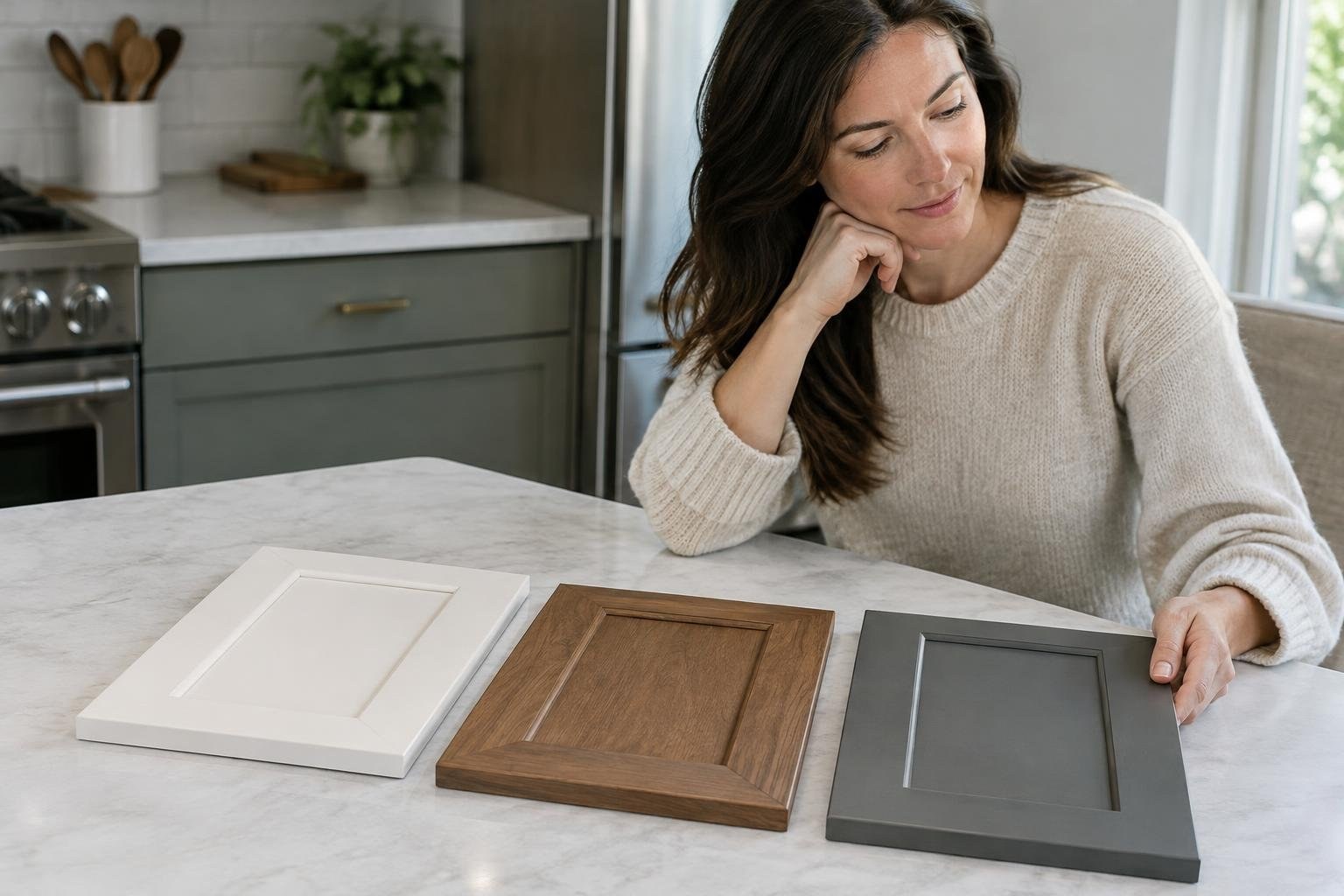
1. What kitchen cabinet style includes
Begin by deciding what you mean by “style.” Homeowners and providers may use the word for the door design, the overall room aesthetic, or even the cabinet product category. Those are related but different decisions.
- Door style: the visible design of the cabinet door and drawer front.
- Construction: whether cabinets use framed or frameless construction.
- Product type: whether the cabinets are stock, semi-custom, or custom.
The door design helps set the tone of a kitchen, but it is only one part of the decision. Treating these categories separately helps you ask clearer questions and compare like with like. For example, two quotes may show similar-looking doors while offering different cabinet construction or product choices. Ask the provider to spell out each category in writing.
A useful first step is to collect a few reference images, then identify what you actually like about each one: the door profile, color, finish, hardware, or overall combination. That turns a broad style preference into a more practical conversation.
2. Signs it may be time to reconsider your cabinet style
Consider a cabinet-style update when the appearance of the doors no longer suits the kitchen you want, or when you are planning other changes that will alter the room’s overall look. A style refresh may also be worth discussing when the existing doors and the new finishes you are considering seem difficult to coordinate.
These are design prompts, not proof that you need a full cabinet replacement. First clarify the scope of your goal. Are you changing the visible look, changing the cabinet product, or reworking the kitchen? Those goals can lead to different decisions and quotes.
Before shopping, write down what is not working and what you want to improve. Examples include wanting a more contemporary impression, preferring a more traditional door, or seeking a simpler visual treatment. Then look at the existing kitchen as a whole. A new cabinet style should be considered alongside countertops, backsplash, flooring, appliances, lighting, and hardware, rather than selected in isolation.
If you are satisfied with the general layout and cabinet function, ask providers what options can address the appearance goal without expanding the work unnecessarily. If the project also involves a new layout or other major changes, describe the full scope before requesting a cabinet quote.
3. Kitchen cabinet style cost and pricing considerations
There is no single reliable price for a kitchen cabinet style based on the style label alone. The research here does not establish current, location-specific prices, so use written local estimates rather than a generic online figure as your project budget.
When comparing costs, ask providers to identify the cabinet product type, construction, door style, finish, sizes, and included accessories. Stock cabinets are described as a budget-conscious option for standard-sized kitchens. Semi-custom cabinets offer more choice in sizes, finishes, accessories, and door styles. These categories help frame the comparison, but the exact quote depends on the product and project being proposed.
Request an itemized estimate that separates the cabinet order from other work. Confirm whether delivery, installation, removal of existing cabinets, and any changes to the kitchen are included or quoted separately. Ask what assumptions the estimate makes about measurements, layout, and final selections.
Compare bids with the same scope and product details. A lower total is not a meaningful comparison if one proposal leaves out work or describes a different cabinet package. If a quote is difficult to understand, ask for a revised written breakdown before you make a decision.
4. Factors that can change the cabinet project
Cabinet selections can affect both the design conversation and the estimate. The product type, available sizes, finish choices, accessories, door style, and construction should all be identified before you compare proposals. Custom work may be discussed when standard product options do not match the project, but ask the provider to explain what is actually being made or adjusted rather than assuming the label means a particular specification.
Room conditions and other renovation work also matter to the scope you need to communicate. Give each provider the same project description and any available measurements or plans. Note appliances and other elements that could influence cabinet placement, and tell the provider about intended changes elsewhere in the room.
Design combinations can affect how a style reads. Flat-front cabinets with coordinated counters and hardware can contribute to a contemporary look, while a wood shelf or a contrasting finish can add a different visual element. Treat inspiration photos as examples, not a promise that identical materials or results are included in a quote.
Before ordering, make sure the written selection matches your approved sample and the product description. A style name is not a substitute for documenting the door, finish, construction, and product type.
5. Kitchen cabinet styles and product options compared
Each style has a different visual character, but there is no universally best choice. Use this comparison to narrow the look, then verify the actual door sample and product options with the provider.
| Option | Typical design direction | Useful consideration |
|---|---|---|
| Shaker | Classic and understated | A flexible starting point when you want a look that can coordinate with more than one design direction. |
| Flat-front | Contemporary | Review how the broad, simple appearance works with the room’s other chosen finishes. |
| Raised panel | Formal or traditional | Consider whether its more traditional visual language fits the kitchen you are planning. |
| Other named looks | Can range across traditional, retro, and contemporary influences | Ask for a sample and a clear product description; a style label alone may not explain the specific door. |
Shaker is commonly described as versatile across traditional farmhouse and modern kitchen designs. Flat-front doors are associated with a contemporary impression, and raised-panel cabinetry may suit formal or traditional homes. Those are helpful guides, not strict design rules.
Keep construction separate from this comparison. Frameless cabinets are a construction option, not a door profile, though they can be chosen to support a modern aesthetic. A framed cabinet can also have a door style that suits a contemporary room. Compare the construction and the visible door as distinct parts of the proposal.
Likewise, stock, semi-custom, and custom describe product categories rather than door styles. Stock may fit a standard-sized kitchen and a budget-conscious project; semi-custom offers a wider range of sizes, finishes, accessories, and door styles. Ask which options are available in the specific collection you are considering.
6. Explore cabinet options before choosing a style
Explore cabinet options at CabinetSupply.com as you narrow your preferred look. Bring your project notes and reference images into the comparison. Focus on matching the door style, construction, product category, and finish rather than choosing from a style name alone.
As you browse, note which options you want to ask about. Verify that the available cabinet sizes and finishes suit your plans, and request product information or samples before treating an image as a final selection.
7. What to expect from selection through ordering
Expect the selection process to involve more than choosing a door from a photograph. First clarify the desired appearance and project scope. Next, compare samples and identify the cabinet construction and product category. Then confirm the specific finish, sizes, accessories, and other selections in the written proposal before approving an order.
- Gather inspiration. Save images that show the kind of door and overall room mood you prefer.
- Separate the categories. Record door style, framed or frameless construction, and stock, semi-custom, or custom product type independently.
- Review samples. Compare real samples with the other kitchen finishes you intend to use.
- Confirm product details. Ask the provider to identify the selected door, finish, available sizes, and included options in writing.
- Review the proposal. Check that the estimate describes the same scope and product choices you discussed.
Timing varies by provider, selected product, project scope, and scheduling. Ask for the current estimated schedule, what events it depends on, and how changes to selections could affect it. Get the response in writing and confirm who will communicate schedule updates.
Do not approve an order while important choices remain unclear. A little extra time spent confirming the specifications can help prevent avoidable confusion about what was selected.
8. How to choose a qualified cabinet provider
Choose a provider who can explain the differences among the proposed door styles, construction methods, and product categories in plain language. Ask for product samples or documentation and check that the written estimate uses the same selections you reviewed.
Before committing, discuss:
- Which cabinet line, construction, door style, finish, sizes, and accessories are included?
- What work is part of the proposal, and what is outside its scope?
- Who is responsible for confirming measurements and selections?
- What is the estimated schedule, and how will schedule changes be communicated?
- What written warranty terms apply to the cabinets and any installation work?
- How will questions, changes, or a product concern be handled?
Review examples of work and references when available, and check any licensing or insurance requirements that apply in your area. Do not assume a provider has a particular qualification or warranty; ask for documentation and read the terms. A confident explanation and a detailed proposal are more useful than a style recommendation without supporting product details.
Compare the complete scope, not just the bottom-line amount. If two estimates differ, ask each provider to clarify product specifications, included work, and exclusions before weighing the options.
9. Permits, credentials, warranties, and safety
Cabinet style selection itself does not establish what permits or credentials a broader kitchen project requires. Requirements depend on the work and location, so confirm applicable local rules with the relevant authority or qualified professional before starting work that may be regulated.
Ask who will perform each part of the project and who is responsible for coordinating any work beyond the cabinet order. Do not assume that a cabinet quote includes changes to other parts of the kitchen. Have the provider state the scope and responsibilities clearly.
For warranties, request the written terms before ordering. Confirm what product or work the document covers, how long the stated coverage applies, and how to make a claim. Avoid relying on a verbal summary when the written terms are available.
For a straightforward style-selection discussion, you can compare samples and specifications. Work involving regulated trades, structural changes, or other safety-sensitive tasks should be handled by appropriately qualified people and checked against local requirements.
10. Ways to control cost without compromising the decision
Save money safely by keeping the project scope clear and comparing options that genuinely meet your needs. Stock cabinets may be worth comparing when the kitchen uses standard sizes and the project is budget-conscious. Semi-custom cabinets offer more choice, which may help if the additional options are important to your plans. Do not pay for flexibility you do not need, but do not assume a lower quote covers the same selection or work.
- Compare written estimates with matching cabinet specifications and scope.
- Ask which options are included before adding accessories or upgrades.
- Make selections carefully and confirm them in writing before ordering.
- Ask whether an available product range can meet the design goal before requesting a more tailored option.
- Keep contingency decisions and changes documented rather than relying on informal conversations.
Use these steps to control uncertainty, not to bypass safe project planning. Confirm who is responsible for measurements, installation, and any work outside the cabinet selection. If an estimate seems unusually incomplete, ask for the missing scope rather than assuming it will be handled later.
11. Mistakes to avoid and a final selection checklist
Before approving a cabinet order, use this checklist to catch common decision and communication problems:
- Do not confuse categories. Record the door style, framed or frameless construction, and stock, semi-custom, or custom product type separately.
- Do not choose from a label alone. Review the actual sample and written product description.
- Do not judge a color or finish only from a screen. Compare available samples with the other finishes you intend to use.
- Do not compare unlike estimates. Confirm the cabinet selections, included work, and exclusions in each bid.
- Do not assume flexibility. Ask which sizes, finishes, accessories, and door styles the selected product actually offers.
- Do not rely on verbal promises. Get product details, schedule expectations, responsibilities, and warranty terms in writing.
- Do not let appearance be the only project question. Make sure the cabinet choices fit the broader plans for the kitchen.
A red flag is a proposal that uses broad style labels but will not identify the product, construction, finish, or scope. Ask for clarification before comparing or approving it. A clear, documented selection makes it easier to discuss what you are buying and what remains outside the estimate.
Frequently asked questions
What are the main kitchen cabinet styles?
Kitchen cabinet style usually describes the visible door and drawer-front design, such as Shaker, flat-front, or raised panel. Framed or frameless describes cabinet construction, while stock, semi-custom, and custom describe product options. Keep those categories separate when comparing choices.
Which kitchen cabinet style is the most versatile?
Shaker is a useful starting point if you want a classic, understated look that can coordinate with different design aesthetics. Compare actual door samples with your counters, flooring, and lighting before deciding, because the surrounding finishes affect the overall impression.
Are flat-front cabinets more modern than raised-panel cabinets?
Flat-front doors are associated with a contemporary look, while raised-panel doors may suit formal or traditional rooms. These are starting points rather than rules; review samples in the context of the rest of your kitchen.
Are frameless cabinets a style?
Not necessarily. Frameless describes cabinet construction, not a door style. Frameless cabinets can support a modern aesthetic, but the visible door design, finish, and hardware also shape the room’s look.
Are stock or semi-custom cabinets better?
Stock cabinets are described as a budget-conscious choice for standard-sized kitchens. Semi-custom options offer a wider selection of sizes, finishes, accessories, and door styles. Compare the actual product specifications and quote rather than relying on the category name alone.
How do I choose a cabinet style that will not look dated?
No single door style is best for every kitchen. Consider the room’s design, the other finishes you plan to use, the cabinet options available, and how much flexibility you need in sizes and finishes.
What affects the cost of kitchen cabinets?
Costs depend on the cabinet selections and the project scope. Request an itemized estimate that identifies cabinet type, door and finish choices, included accessories, delivery, installation, and any work outside the cabinet order. Compare matching scopes before judging bids.
What should I ask a cabinet provider before ordering?
Ask what cabinet construction, sizes, finishes, door styles, accessories, delivery, installation, and warranty terms are included. Request samples or product documentation, and have the provider explain any differences between the options being quoted.
People Also Ask
What does kitchen cabinet style mean?
A kitchen cabinet style generally refers to the appearance of the door and drawer front. Framed or frameless refers to construction, and stock, semi-custom, or custom refers to the range of product choices. Ask providers to identify each category separately.
What cabinet style works with different kitchen designs?
Shaker is a classic, understated option that can work with a range of design aesthetics. Check real samples alongside the kitchen’s other finishes before deciding whether it fits your particular room.
What cabinet doors make a kitchen look contemporary?
Flat-front cabinet doors can create a contemporary impression. The overall effect also depends on the finish, hardware, counters, and other choices, so assess a sample as part of the complete palette.
What cabinet doors suit a traditional kitchen?
Raised-panel cabinetry may be appropriate for formal or traditional homes. Compare door samples with your intended finishes and the character you want the room to have.
What is the difference between stock and semi-custom kitchen cabinets?
Stock cabinets may suit standard-sized kitchens and budget-conscious projects. Semi-custom choices generally offer more options for sizes, finishes, accessories, and door styles, according to the available research. Compare specific products and quotes.
How do I compare kitchen cabinet styles?
Start by deciding what visual character you want, then compare door samples and cabinet product options. Check how the chosen style relates to counters, flooring, appliances, and hardware before placing an order.
Is frameless a cabinet door style?
No. Frameless is a construction category, while a cabinet door style describes the visible design. Frameless cabinets can support a modern aesthetic, but construction and appearance are different decisions.
Choosing kitchen cabinet styles is easier when you separate three decisions: the door look, the cabinet construction, and the range of sizes or finishes available. Compare complete samples in your kitchen, consider how the design will work with counters and appliances, and get written quotes before committing. A thoughtful style choice should suit both the room you want and the choices you are prepared to make.
Your next step
Explore cabinet options at CabinetSupply.com for your next project.
Last reviewed and updated October 15, 2026 by the CabinetSupple Editorial Team.
Sources
- Ultimate Guide to Kitchen Cabinet Styles | Family Handyman
- The Most Popular Styles of Kitchen Cabinets: A Guide
- Kitchen Cabinet Types & Styles Explained – Vanityart
- Kitchen Cabinet Style Guide: 3 Types of Cabinets Explained
- Guide to Popular Kitchen Cabinet Styles – Star Lumber
- Kitchen Cabinet Styles: Pictures, Options, Tips & Ideas | HGTV
- 13 Types of Kitchen Cabinets [Must-Know Guide]
- 38 Kitchen Cabinet Ideas for Every Design Style