
A kitchen cabinet makeover can mean anything from changing the pulls to repainting doors or replacing the visible cabinet surfaces. The best choice depends on the condition of the cabinet boxes, the look you want, and whether the current layout still works. Before choosing a color or shopping for hardware, inspect the cabinets and decide what needs to change: appearance, storage, function, or all three. This guide explains the main makeover options, what affects project cost and timing, how to compare professional help, and where a small update may not be enough.
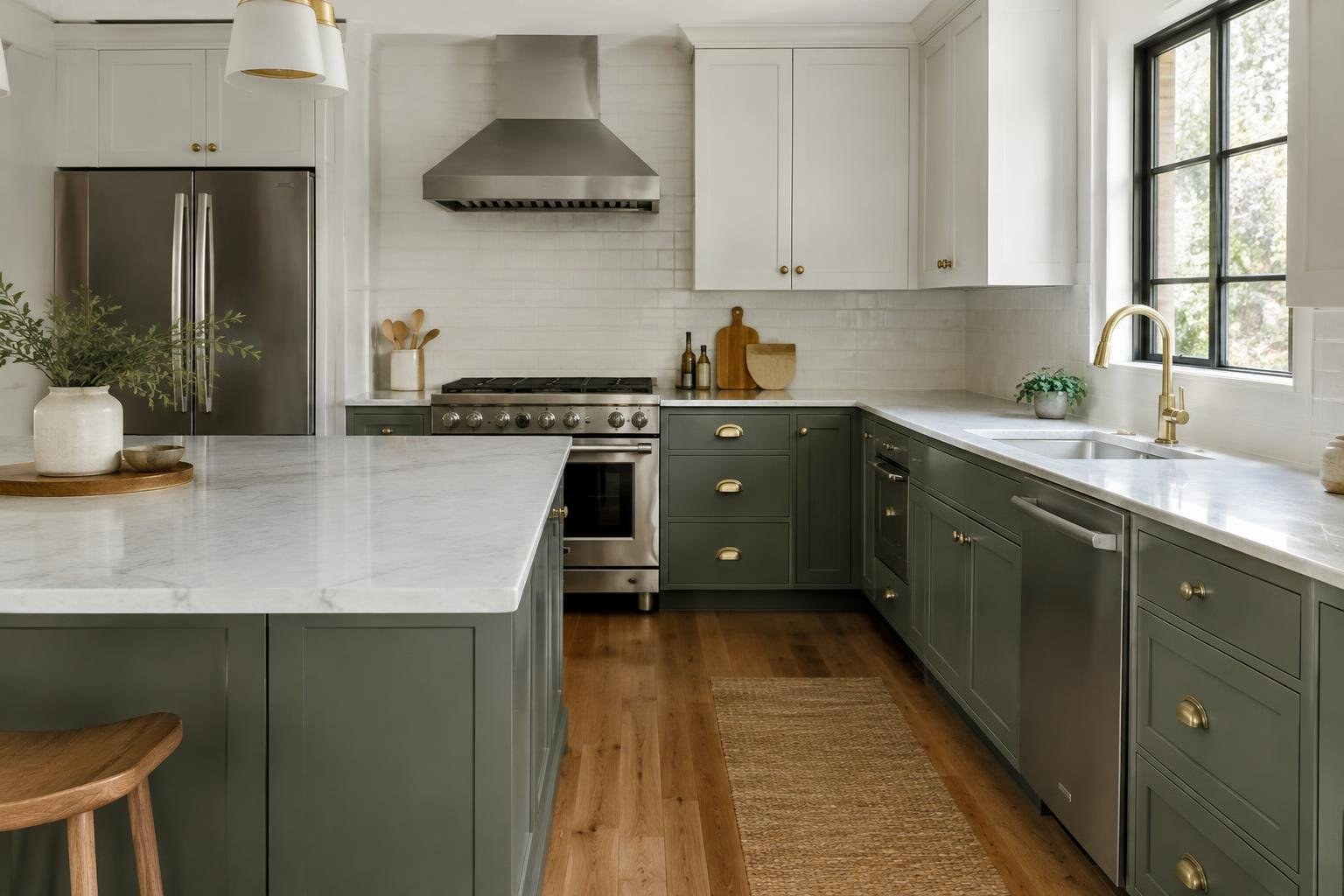
What does a kitchen cabinet makeover include?
A kitchen cabinet makeover is a set of updates to existing cabinets. It can be limited to new pulls or knobs, or involve painting, molding, interior inserts, selected glass-front doors, open shelving, replacement doors and drawer fronts, or new veneer on visible surfaces. These approaches give you different degrees of change; they are not interchangeable.
Begin by separating the project into three goals:
- Appearance: change color, surface, door detail, or hardware.
- Function: improve access or organize cabinet interiors with inserts or other storage changes.
- Configuration: change the arrangement or replace cabinets because the existing setup no longer works.
Make a list of what you want to keep and what you want to change. For example, if the layout works but the color feels dated, a surface update may be enough. If doors are damaged or storage is awkward, include those needs in your comparison rather than choosing a paint color first. Cabinet updates can include paint, molding, inserts, and hardware; other visual choices include glass doors or open shelving.
What signs suggest your kitchen cabinets may need an update?
A makeover is worth considering when the cabinets still serve their purpose but the visible surfaces or details no longer suit the kitchen. Signs that an update may help include dated color, worn-looking finishes, hardware you want to replace, or a desire for a lighter or more open appearance. These are design concerns, not proof that the cabinet structure is sound.
Inspect before deciding. Look at the cabinet boxes, doors, drawer fronts, edges, and areas around sinks and other sources of routine moisture. Note loose or damaged components, surfaces that may need repair, and anything that prevents doors or drawers from operating as intended. A new finish can change appearance, but it does not correct a poor layout or resolve structural damage.
Make two lists: visible issues and functional issues. A makeover may address the first list while leaving the second unchanged. If both lists are substantial, compare a cosmetic update with a larger cabinet project before committing.
Which cabinet makeover options should you compare?
Choose an update based on how much of the cabinet needs to change. Painting changes color on suitable existing surfaces. Refacing changes visible exterior surfaces rather than simply covering them with paint. New doors or drawer fronts can change the cabinet's look while retaining other parts, if the existing boxes and the proposed components are compatible. Hardware, molding, inserts, glass, and open shelving can be used as narrower or complementary updates.
| Option | What changes | Consider it when | Tradeoff to weigh |
|---|---|---|---|
| New hardware | Pulls or knobs | You want a focused detail change | It will not change the cabinet color or layout |
| Paint | Color and surface appearance | The existing surfaces are suitable for the planned finish | Preparation and product compatibility matter |
| Doors, drawer fronts, or molding | Selected visible components or details | You want a different door appearance or added definition | Fit and coordination with existing cabinets need to be checked |
| Glass-front doors or open shelving | Visibility and visual openness | You want to display selected contents or create a more open look | Visible contents need to suit the intended appearance |
| Refacing | Visible cabinet surfaces, typically beyond a paint-only change | You want a more extensive exterior update | Clarify exactly which components and surfaces are included |
| Replacement | Cabinet components or the overall cabinet arrangement | The boxes, layout, or storage needs call for a larger change | It is a broader project than a cosmetic makeover |
Open shelving can be created by removing selected doors. Glass doors, accent lighting, or a painted cabinet back are other ways to change the display. Treat these as design choices, and think through how you will use and maintain the visible space.
What affects kitchen cabinet makeover cost?
Start with the cabinet condition and desired scope, then compare prices only among proposals that cover the same work. A makeover quote may vary with the number of doors and drawers, surface condition, preparation and repair needs, chosen finish or replacement surfaces, hardware, decorative details, and whether labor and cleanup are included.
Ask for a written breakdown that identifies:
- Which cabinet boxes, doors, drawer fronts, and exposed sides are included.
- Whether the work is painting, refacing, component replacement, or a combination.
- Preparation, repairs, materials, hardware, and finish details.
- Any exclusions, such as changes to counters, appliances, lighting, plumbing, or the cabinet layout.
- Labor, delivery or disposal if applicable, cleanup, payment schedule, and how changes are priced.
Do not compare a paint-only price with a refacing proposal as though they provide the same result. Ask each provider to describe the finished scope in plain language. Without a confirmed location, project measurements, and defined scope, a single price would be misleading; request estimates based on your actual cabinets instead.
How should you plan color, finish, and design details?
Color is only one part of the finished look. Consider how door style, hardware, sheen, cabinet interiors, counters, backsplash, floor, and lighting will work together. Bring samples or photographs to selection discussions, and review choices in the kitchen's actual lighting before making a large commitment.
Paint can refresh existing cabinets, while a new veneer changes visible surfaces in a different way. A high-gloss clear acrylic varnish over a selected paint color is one finish idea described for cabinet updates; the suitability of a product and finish depends on the surface and product directions. Do not assume a particular sheen is right for every cabinet or household. Ask what preparation and care the selected finish requires.
For a more distinctive update, consider a two-tone approach, new pulls, selected glass-front doors, or a deliberate open shelf. Removable wallpaper can add pattern to a cabinet interior or back where appropriate. These choices can make contents more visible, so use them selectively and decide what will be stored or displayed there.
Choose durable-looking details for the way you use the kitchen, not only for photographs. Ask to see how the proposed finish, hardware, and door treatment relate to one another before approving the final selection.
What should you measure and expect during the project?
Before you commit, take a room-level inventory. Record cabinet runs, the number of doors and drawers, exposed ends, and the areas you want changed. Note nearby counters and appliances, and identify any parts of the kitchen that should remain untouched. Accurate measurements and a clear scope help you compare replacement components and professional proposals.
For hardware, measure existing hole spacing and check the dimensions of doors and drawer fronts before ordering. For new doors or refacing, ask how the provider will confirm fit and account for visible ends and transitions. Do not assume that a photo or rough count is enough to establish a final order.
Plan the work sequence with the person doing the project. Ask when the kitchen or cabinet contents need to be cleared, what surfaces or areas must be protected, whether doors will be removed, and when access to the kitchen may be affected. The schedule depends on the scope, preparation, materials, and provider plan; get a project-specific schedule rather than relying on a general promise.
Confirm who is responsible for moving, labeling, storing, reinstalling, and adjusting doors and hardware. Write down decisions and approved changes so that everyone is working from the same plan.
How do you choose a qualified cabinet makeover provider?
Hiring a provider makes sense when the scope involves extensive preparation, replacement surfaces, multiple finish treatments, or repairs you do not feel equipped to handle. Compare proposals based on the actual work, not only the headline total. Ask to see examples of similar cabinet updates and request references you can contact.
Before signing, ask:
- Who will perform the work and who is responsible for the finished installation?
- What surfaces and components are included, and what is excluded?
- How will the provider prepare, protect, and clean the work area?
- What products and finish steps are proposed, and what care do they require?
- What is the expected work sequence and schedule?
- How are changes, unexpected conditions, and payment milestones handled?
- What written warranty, if any, applies to the work and materials?
Verify any licensing or insurance that applies to the work in your area and ask for documentation when relevant. There is no universal credential that guarantees the right result for every cabinet makeover. Look for a clearly written scope, consistent communication, relevant project examples, and a process for resolving concerns.
What about permits, product safety, and warranties?
Rules and permit requirements depend on the location and scope of work. A cosmetic cabinet update may differ from a project that changes utilities, walls, or other building systems. Confirm local requirements with the appropriate local authority before work that may be regulated; do not assume that a project is exempt based on its name.
Use products as directed on their labels and follow the manufacturer's preparation, application, ventilation, and cleanup instructions. Protect the kitchen and nearby belongings as appropriate, and plan for safe handling and disposal of materials. If the project involves electrical, plumbing, structural, or other regulated work, use a qualified professional rather than treating it as a cabinet-finishing task.
Ask the provider to state the warranty terms in writing, including what work or materials are covered and how to raise a concern. Do not rely on an informal promise as a substitute for written terms.
How can you save money without sacrificing the result?
You can control scope without cutting corners on preparation or safety. Keep the existing layout if it works, update only the doors or areas that need a change, and compare hardware choices before placing an order. A focused change such as new pulls, selected molding, or a limited paint update may be a better fit than a larger makeover if the cabinets are otherwise acceptable.
Ask whether existing doors and drawer fronts can remain, whether the proposed change requires new components, and which repairs are essential to achieve the agreed result. Compare material and labor details across proposals. A lower price is not a saving if it excludes needed preparation, leaves out exposed surfaces you expected to be included, or depends on unclear allowances.
If doing part of the work yourself, choose tasks that match your skills and leave regulated or unfamiliar work to qualified professionals. Follow product instructions, test your design choices before committing to the full kitchen, and avoid ordering hardware or replacement components until fit has been confirmed.
Mistakes to avoid and a practical project checklist
Use this checklist before starting a kitchen cabinet makeover:
- Inspect the cabinet boxes, doors, drawer fronts, and visible surfaces.
- Separate cosmetic goals from storage, layout, or repair needs.
- Choose a defined approach: hardware, paint, new components, refacing, or replacement.
- Confirm measurements and component fit before purchasing.
- Review color, sheen, hardware, and visible cabinet interiors together.
- Get written estimates with matching scopes, exclusions, schedule, and payment terms.
- Confirm product directions, work-area protection, cleanup, and any applicable local requirements.
- Document approvals and changes before the work proceeds.
Common pitfalls include choosing a finish before checking the surface, overlooking exposed cabinet ends, buying hardware without measuring, and expecting a cosmetic update to fix a layout problem. Another red flag is a proposal that uses broad language such as “cabinet makeover” without listing the parts, preparation, finish, and exclusions. Ask for clarification before authorizing work.
Want to explore cabinet choices for a broader update? Explore cabinet options at CabinetSupply.com and compare what may fit your project goals.
Make a confident cabinet makeover decision
A successful makeover begins with a clear decision: do you need a new look, better access, a different layout, or some combination? Inspect the cabinets, compare paint and hardware with more extensive surface updates, and ask providers to price the same written scope. Confirm fit, product instructions, schedule, exclusions, and warranty terms before work begins.
When you are ready to compare cabinet options, explore CabinetSupply.com as a next step for your project planning.
Factors that affect the project
The project scope depends on which cabinet features you want to change. A focused update might use new hardware, paint, molding, or inserts. Refacing changes visible cabinet surfaces with veneer, while selected glass-front doors or open shelving change how cabinet contents are displayed.
Design choices also shape the result. Two-tone finishes, painted cabinet backs, accent lighting, and removable wallpaper can add visual detail. Decide which changes fit your goals, then describe the selected components clearly when planning the work.
Frequently asked questions
What is included in a kitchen cabinet makeover?
A kitchen cabinet makeover updates some or all of the visible cabinet surfaces or details without necessarily replacing the cabinet boxes. It may involve paint, new hardware, molding, inserts, glass or open shelving, new doors, or refacing. The appropriate scope depends on the condition of the cabinets and the result you want.
Is painting cabinets the same as refacing?
Painting can change the color while keeping the existing doors and cabinet boxes. Refacing replaces or covers visible exterior surfaces, often including doors and drawer fronts, while retaining the boxes. Confirm exactly which components are included in any refacing proposal.
How much does a kitchen cabinet makeover cost?
There is no single price that applies to every makeover. Costs depend on the number and condition of cabinets, the selected update, preparation, materials, hardware, and whether labor is included. Compare written estimates with the same scope rather than judging by the total alone.
How do I know if my cabinets can be made over?
Consider a makeover when the cabinet boxes are in usable condition and you mainly want a visual update. If the boxes are damaged, the layout does not work, or you need substantially different storage, compare the cost and disruption of broader replacement with a surface-focused update.
How long does a cabinet makeover take?
The timing depends on the scope, preparation, materials, and who is doing the work. A small hardware change is different from a project involving extensive surface preparation, painting, replacement doors, or refacing. Ask the provider to explain the schedule, work sequence, and what could delay completion.
Can I do a kitchen cabinet makeover myself?
Often, yes, if you can prepare surfaces carefully, use products according to their labels, and work safely. Painting and hardware changes require patience and careful fitting. For extensive repairs, unfamiliar tools, or work that affects utilities or other regulated systems, consult a qualified professional.
People Also Ask
What is the difference between cabinet painting and cabinet refacing?
Paint is a surface update; refacing changes the visible exterior surfaces and commonly includes new doors or drawer fronts. Check the proposed scope because providers may define included components differently.
Can you update kitchen cabinets without replacing them?
Yes. Changing pulls, adding molding, painting, using inserts, or updating selected doors can refresh existing cabinets. First confirm the cabinet boxes and doors are suitable for the changes you plan.
Can new cabinet hardware make a noticeable difference?
New hardware can change the appearance with relatively little scope, but the new pulls or knobs must fit the doors and drawers. Measure existing hole spacing before selecting replacements.
Can I remove cabinet doors to create open shelving?
Removing selected doors can create open shelving, and glass-front doors can make cabinet contents visible. Consider what will be displayed and how you want to keep it organized before choosing either option.
What paint finish should I choose for kitchen cabinets?
Paint color, sheen, hardware, and surrounding finishes affect the overall look. Consider the whole kitchen and how much cleaning or visible wear you are comfortable with before settling on a finish.
Should I reface or replace my kitchen cabinets?
Keep the layout if it already meets your needs and the cabinet boxes are suitable for an update. If the layout or storage is the main problem, compare a makeover with options that change the cabinet configuration.
A kitchen cabinet makeover can refresh the room without replacing every cabinet, but the right approach depends on the condition of the cabinet boxes, the change you want, and the finish you can maintain. Start by inspecting the existing cabinets, then compare paint, hardware, door updates, refacing, and replacement as distinct options. Plan the work around preparation and safe product use, and get written details before hiring help. When you are ready to explore cabinet choices for a larger update, visit CabinetSupply.com.
Your next step
Explore cabinet options at CabinetSupply.com for your next project.
Last reviewed and updated October 12, 2026 by the CabinetSupple Editorial Team.
Sources
- Budget-Friendly Kitchen Makeover
- 26 DIY Kitchen Cabinet Updates So You Don’t Have to Replace Them
- Ideas for Updating Outdated Kitchen Cabinets
- 10 Kitchen Cabinet Makeover Ideas
- 25 Easy Ways to Upgrade Basic Kitchen Cabinets
- 21 DIY & Affordable Ways to Redo Kitchen Cabinets | Extra Space Storage
- 26 DIY Makeover Ideas for Redoing Kitchen Cabinets
- Kitchen Cabinet Makeovers