
Kitchen cabinet hardware affects how you open cabinets and drawers, and it contributes to the kitchen's overall look. The main choices include knobs, pulls, hinges and latches, with options ranging from simple, practical pieces to decorative designs. Start by deciding what feels comfortable in daily use, then check the style, finish, fit and project cost before ordering. This guide explains what to compare, what to ask a supplier or installer, and how to avoid common purchasing and installation problems.
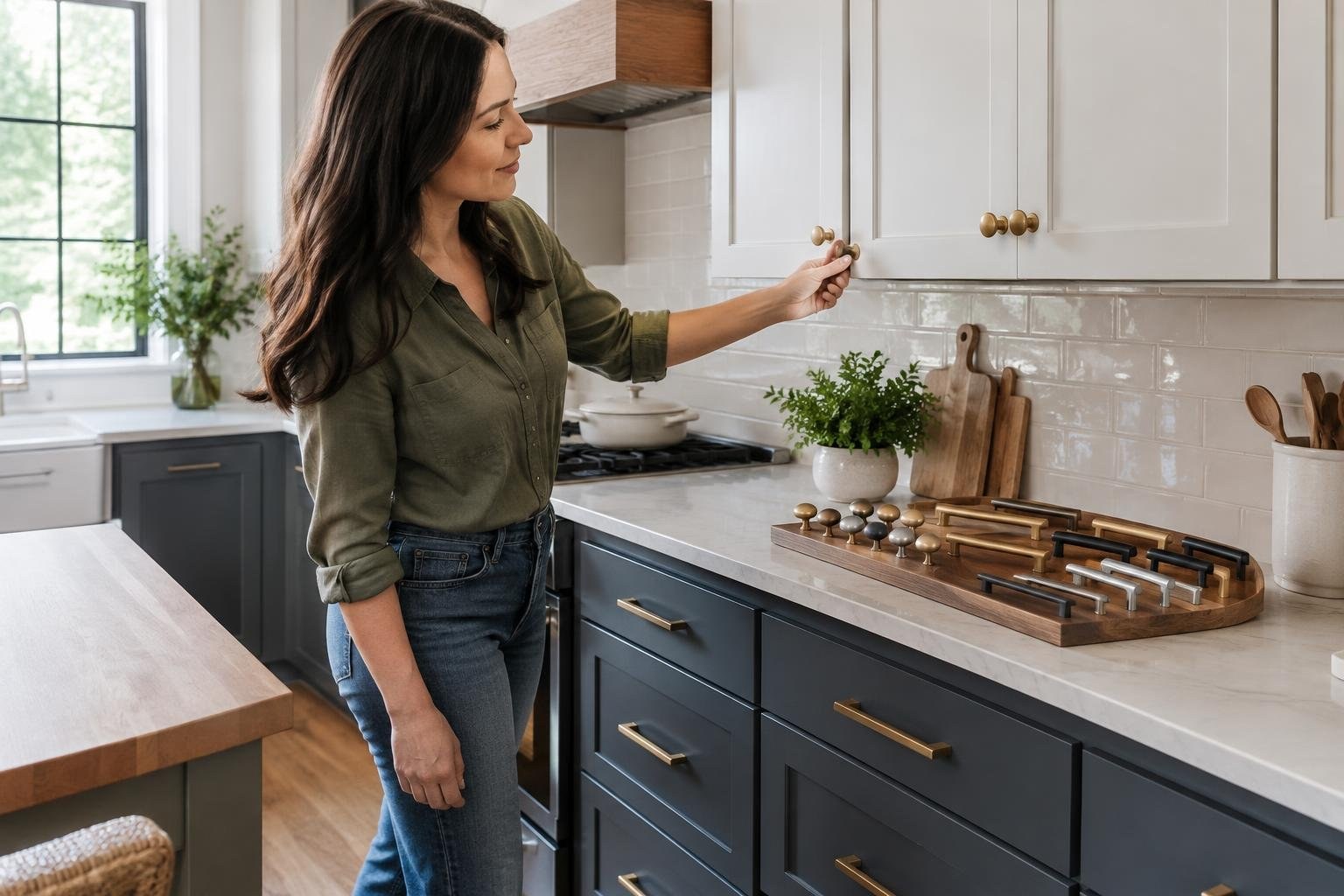
What kitchen cabinet hardware includes and why it matters
Kitchen cabinet hardware is the set of parts used to open, close or secure cabinet doors and drawers. It can include knobs, pulls, hinges, drawer slides and latches. Some pieces are visible and contribute to the room's style; others are chosen mainly for how they function.
For a basic update, you may be choosing only new knobs or pulls. For new cabinets or a broader renovation, you may also need to select hinges and drawer hardware. Make a list of every type of piece involved before comparing products, so you do not mistake a decorative choice for a complete hardware plan.
Good selection is a balance: hardware should feel comfortable, work with the cabinet, and suit the look you want. Product ranges include options for kitchens and other rooms, with both decorative and functional components available.
Signs your kitchen cabinet hardware may need attention
Consider a hardware update when existing pieces are loose, uncomfortable to grip, difficult to use, damaged, or no longer suit the kitchen. You may also be choosing hardware for new cabinets, replacing a missing piece, or refreshing the appearance without changing the cabinet itself.
Before shopping, identify the problem you want to solve. If the issue is appearance, compare shape and finish. If the issue is daily use, prioritize grip and ease of handling. If hardware is loose or a door or drawer is not operating properly, determine whether the problem is the visible knob or pull, the mounting, or another cabinet component. Replacing a handle may not resolve a problem with a hinge or slide.
Take note of which doors and drawers need attention, and photograph the existing hardware and its mounting. That information can help a retailer or installer assess compatibility. Do not assume that an item that looks similar will attach in the same way.
Kitchen cabinet hardware cost and what a quote should include
Hardware pricing depends on the products and quantity you select, and on whether installation or related work is part of the job.
Ask each seller or installer to separate, where applicable:
- The count and type of knobs, pulls, hinges, slides or latches.
- The product and finish selected, including any specialty or decorative pieces.
- Delivery or other order charges.
- Labor, removal of old pieces and installation of replacements.
- Any work needed to address a fit or mounting issue.
Compare quotes for the same product specifications and quantity. A low total may leave out installation, delivery or corrective work, while a higher total may include those items. Clarify what happens if the selected hardware does not fit as expected, and get any agreed extra work in writing.
For a large order, confirm the final count before purchasing. If the supplier offers samples or a way to inspect the finish, consider doing so before committing to pieces for the whole kitchen.
Factors that affect the project, price and result
Hardware project costs and complexity depend on more than the look of a handle. The main variables to clarify are the type and number of components, product selection, finish, delivery, existing mounting and the amount of installation work.
- Quantity and mix: Count doors and drawers separately, then list which need knobs, pulls or other parts.
- Product choice: Compare the exact product, material and finish rather than relying on a broad label such as “modern” or “premium.” Product ranges include many styles and finishes, so ask for the precise item details.
- Existing fit: Find out whether replacement pieces can use the current mounting or whether the plan involves changing it.
- Scope: Establish whether the quote covers measuring, installation, old-hardware removal, delivery and cleanup.
- Project timing: Ask the supplier to confirm availability and delivery estimates for the selected items before setting an installation date.
These details help turn a vague estimate into a useful comparison. They also reduce the risk of discovering after purchase that a quote covers only the hardware and not the work you expected.
Knobs, pulls and other hardware: options and tradeoffs
Knobs and pulls are the two main choices for opening cabinets and drawers. Knobs are compact pieces; pulls offer a longer grip and are commonly used on drawers, though they can also be used on cabinet doors. Neither is automatically right for every kitchen. Try the options where possible and judge them by comfort, cabinet style and the way the door or drawer is used.
| Option | Useful when | Consider before choosing |
|---|---|---|
| Knobs | You want a compact, simple grip or a restrained decorative detail. | Check that the shape is comfortable to grasp and fits the cabinet's appearance. |
| Pulls | You prefer a longer gripping surface, particularly on drawers. | Confirm the size, mounting and visual scale work on each door or drawer. |
| Cup pulls | You like a partly enclosed, hooded handle style for a drawer. | Try the grip and confirm that the shape suits the cabinet and intended use. |
| Hinges, slides or latches | You are addressing more than the visible handle or need other cabinet components. | Identify the specific function and confirm compatibility with the cabinet. |
There is no requirement to use one style everywhere, but consistency can help the room feel considered. If mixing knobs and pulls, decide on a clear plan for which doors and drawers get each type. Compare actual samples rather than relying on a finish name or a photograph alone.
How to coordinate hardware style and finish
Choose a finish by looking at the hardware alongside the cabinet color and the other visible finishes in the kitchen. Options represented in product ranges include oil-rubbed bronze, brushed nickel, matte black and polished brass, as well as other styles and finishes. Availability is product-specific, so verify the exact item rather than assuming every finish comes in every shape.
A finish can change how a handle reads in the room, but its name alone does not tell you how it will look under your lighting. If possible, take a sample home and view it near the cabinet at different times of day. Also check the product's care information and ask how the finish is described by the seller.
Think about the entire composition: cabinet color and door style, countertop, backsplash, lighting, faucet and appliances. Matching every metal exactly is one approach; coordinating different finishes is another. Either way, make the combination deliberate and check the actual pieces together before ordering.
Hardware styles range from modern to more traditional or handcrafted designs. Choose what fits the kitchen rather than selecting a trend in isolation. Consider whether the piece will still suit the room if you later change paint, accessories or other finishes.
What to expect: selection, ordering and installation
The work may be as simple as choosing replacement knobs or pulls, or may be part of a cabinet purchase involving multiple hardware types. A clear process helps prevent missing pieces and fit surprises.
- List the scope. Count doors and drawers and note the type of hardware each needs.
- Record what exists. Photograph the cabinets and current mounting, and note any loose, damaged or hard-to-use pieces.
- Choose candidates. Compare product type, dimensions, style, finish and intended use.
- Check fit before ordering. Confirm mounting details with the product information or seller. Ask how old holes will be handled if the replacement differs.
- Confirm the order and work. Verify quantities, product details, delivery, installation responsibilities and the plan for any problem.
- Inspect the result. Check that each piece is secure, aligned as agreed and comfortable to use.
Timing depends on product availability, delivery, the number of pieces and whether any additional cabinet work is required. Do not rely on a generic installation timeline. Ask the supplier or installer for a project-specific schedule and confirm when the hardware will be available before booking labor.
DIY or professional installation, safety and local requirements
For a straightforward replacement, some homeowners may choose to install their own knobs or pulls. A professional may be preferable when the project involves many pieces, uncertain fit, new mounting positions, cabinet repairs or a broader cabinet installation. The right choice depends on your comfort with careful layout and the consequences of an error on visible cabinet surfaces.
If doing the work yourself, follow the product instructions, verify placement before drilling and test the approach on one cabinet before proceeding. Check alignment and clearance as you go. If the hardware does not fit the cabinet or you are unsure how to protect the finish, pause and get product-specific guidance rather than forcing the installation.
When hiring help, ask who supplies the hardware, who verifies quantities and placement, and who is responsible for damage or corrections. Confirm whether removal of the old pieces, installation, cleanup and any work on existing holes are included. For work beyond a simple hardware swap, ask providers to identify any additional trades or approvals that may be needed for your project and location.
There is no universal permit or credential requirement for every hardware change. If the project expands into electrical, plumbing, structural or other regulated work, check local requirements and use appropriately qualified professionals. Do not assume that a hardware quote covers those services.
How to choose and compare a qualified provider
Choose a provider based on the work included and the ability to answer specific questions about the product and cabinet, not on price alone. A retailer, hardware supplier, cabinet professional or installer may handle different parts of the job, so establish who owns each responsibility before agreeing.
Ask prospective providers:
- Can you identify the exact product, finish and quantity in the quote?
- Who confirms that the selected hardware fits the existing cabinets?
- Does the price include delivery, removal, installation and cleanup?
- How will placement and alignment be agreed before work begins?
- What is the plan if a piece arrives damaged or does not fit?
- What schedule can you commit to, and what depends on product availability?
- What written warranty or remedy applies to the product and installation?
Review relevant project examples, references and customer feedback when available. Ask for a written scope and payment terms. Compare quotes that describe the same items and work, and get changes documented before they are carried out. The lowest bid is not necessarily the best value if it leaves out important steps or responsibilities.
Ways to control cost without creating avoidable problems
Save safely by making decisions before ordering, not by skipping checks that prevent an expensive mismatch. Count all doors and drawers, confirm which pieces each needs and compare products with the same specifications. Ask about samples or inspect a display when available. Confirm the exact finish and quantity on the order.
If the existing knobs or pulls are usable and the main goal is a visual update, compare replacement hardware with more extensive cabinet work before deciding. A hardware refresh may address an appearance preference, but it will not repair a damaged cabinet or solve a problem in a hinge or slide. Choose the work that addresses the actual issue.
For an installation quote, compare the complete scope and ask whether you can handle a clearly defined task yourself. Do not take on work that risks cabinet damage or requires skills you do not have just to reduce a bid. Avoid ordering based on a vague product description, omitting delivery from the budget, or selecting a finish without checking it alongside the kitchen's other surfaces.
Ask whether the seller has select in-stock options if availability matters, but verify the specific item's stock and delivery estimate. Product availability should be confirmed for the actual selection and location.
Common mistakes, red flags and a practical checklist
Use this checklist before placing an order or approving installation:
- Have you counted every door and drawer that needs hardware?
- Have you identified which items are knobs, pulls, hinges, slides or latches?
- Have you checked product details, intended use, finish and mounting requirements?
- Have you compared a sample or confirmed the finish against the cabinets and nearby surfaces?
- Does the written quote list quantities, products, delivery and labor separately?
- Have you agreed who verifies placement, removes old hardware and handles cleanup?
- Is there a plan if existing holes do not match the replacement?
- Have you confirmed product availability and a realistic project-specific schedule?
- Do you understand the applicable product and installation warranty terms?
Common avoidable mistakes include ordering from a finish name alone, miscounting pieces, assuming all pulls or knobs mount the same way, and treating a quote for products as a quote for installation. Another frequent planning error is changing the selection after quantities or work have been agreed. Confirm the final choices and scope in writing before work starts.
Red flags include vague product descriptions, unclear responsibility for fit, missing delivery or labor details, and pressure to approve changes without a written explanation. Ask for clarification before proceeding.
How to compare product quality, function and warranty terms
When comparing hardware, focus on the exact piece, not just a broad style label. Product collections can include knobs, pulls, hinges, drawer slides and latches, while suppliers may offer many decorative styles and finishes. A product intended for one function is not automatically a substitute for another component.
For each candidate, record the product name or identifier, type, finish, quantity and mounting information. Ask whether replacement parts or matching pieces are available if you later need one. Confirm the care instructions and any written product warranty directly with the seller or manufacturer; do not assume that two items with similar appearances have the same terms.
Compare the practical tradeoffs. A decorative design may better express a particular style, while a simpler shape may better suit a restrained look. A long pull can provide a different grip from a small knob. The appropriate choice depends on your cabinets, preferences and intended use, rather than a universal rule about which product is best.
Explore cabinet options for your project
Still comparing options? Explore cabinet options at CabinetSupply.com as you plan the hardware, cabinet style and broader scope of your kitchen project. Confirm product details, availability and installation responsibilities for the options you are considering.
Frequently asked questions
What counts as kitchen cabinet hardware?
Kitchen cabinet hardware includes the knobs, pulls, hinges, latches and other pieces used to open, close or secure cabinets and drawers. A selection may include decorative pieces as well as functional components.
Are knobs or pulls better for kitchen cabinets?
Knobs and pulls are both common choices. Knobs offer a compact grip, while pulls provide a longer gripping surface. Try each on the actual cabinet or drawer when possible and choose what feels comfortable and suits the design.
Can you use pulls on cabinet doors?
No. Pulls are often used on drawers, but they can also be installed on cabinet doors. Choose based on comfort, appearance, the cabinet's design and whether the hardware can be mounted securely.
What finishes are available for kitchen cabinet hardware?
Common finish choices shown in the research include oil-rubbed bronze, brushed nickel, matte black and polished brass. Check the actual sample alongside cabinet color, lighting and nearby finishes before committing.
How much does kitchen cabinet hardware cost?
There is no single price that applies to every kitchen. The total depends on the pieces selected, how many are needed, product characteristics and whether installation is included. Request an itemized quote for your specific project.
Should I install cabinet hardware myself or hire someone?
It depends on the project and the installer. Before hiring, ask who will confirm placement, drill the cabinets, fit the hardware, correct installation problems and handle cleanup. Compare written scopes and responsibilities.
Can I replace kitchen cabinet hardware without replacing cabinets?
You can often change the look of cabinets by replacing knobs or pulls without changing the cabinet boxes. Before ordering, confirm that new hardware will fit the existing holes or decide how old holes will be addressed.
How do I clean cabinet hardware?
Check the product information for cleaning and care instructions, and use those instructions for the hardware you buy. Avoid assuming that every finish responds to the same cleaners or maintenance routine.
People Also Ask
What are the main types of kitchen cabinet hardware?
The main categories include knobs and pulls for opening doors and drawers, along with hinges, slides and latches. Which pieces are needed depends on the cabinet and the job the hardware must do.
How do I choose the right cabinet pulls?
Start with comfortable handling, then compare the piece's shape, finish, scale and fit with your cabinets. If possible, test a sample on a door or drawer before ordering for the whole kitchen.
Is cabinet hardware only decorative?
No. Cabinet hardware can be decorative, functional or both. Knobs and pulls help open doors and drawers; hinges and other components serve different functions. Choose each item for its intended use as well as its appearance.
Which cabinet hardware finishes are popular?
The sources list oil-rubbed bronze, brushed nickel, matte black and polished brass among finish options. Availability varies by product, so confirm the finish on the exact item you plan to purchase.
What should I check before buying cabinet hardware?
Check the item dimensions, intended use, mounting requirements and finish. Then confirm quantities and any fit issues with the existing cabinets before buying.
Can new cabinet hardware go in the same holes as old hardware?
Usually, a hardware update involves selecting replacement pieces and fitting them to the doors or drawers. The work can be more involved if new pieces do not align with existing holes or require a different mounting approach.
How do I compare quotes for cabinet hardware installation?
Compare the number and type of pieces, product details, finish, delivery, installation and any follow-up work. Ask providers to show what is included so quotes can be compared on the same basis.
Kitchen cabinet hardware is a small part of a kitchen, but the right choice can make cabinets easier to use and help the room feel more cohesive. Compare knobs, pulls, hinges and other functional pieces in person when possible, check fit and finish against your cabinets, and get the total project cost and timing in writing before ordering. Explore cabinet options at CabinetSupply.com as you plan your next project.
Your next step
Explore cabinet options at CabinetSupply.com for your next project.
Last reviewed and updated October 12, 2026 by the CabinetSupple Editorial Team.
Sources
- Luxury Cabinet Hardware for Kitchen & Bath
- Cabinet Pulls, Cabinet Knobs & Hardware – Plank Hardware
- Cabinet Hardware | Shop Kitchen Cabinet Hardware
- Shop Cabinet Hardware | Rejuvenation
- Cabinet Hardware – The Home Depot
- Cabinet Hardware | Knobs, Pulls, & More for Kitchen & Bathroom Cabinets | Signature Hardware
- Cabinet Hardware | Cabinet Knobs and Pulls | Kitchen Cabinet Hardware- Hardware Resources
- Cabinet Hardware: Pulls, Knobs, Hinges & Slides | Lowe’s