
Custom kitchen cabinets can help when standard cabinet dimensions or available design choices do not match a kitchen plan. But “custom” is not a precise promise by itself: sellers may use the term for different combinations of sizing, styles, finishes, hardware, and ordering or delivery arrangements. Before committing, confirm which details can be changed, what the quote includes, and who is responsible for measuring, delivery, installation, and adjustments.
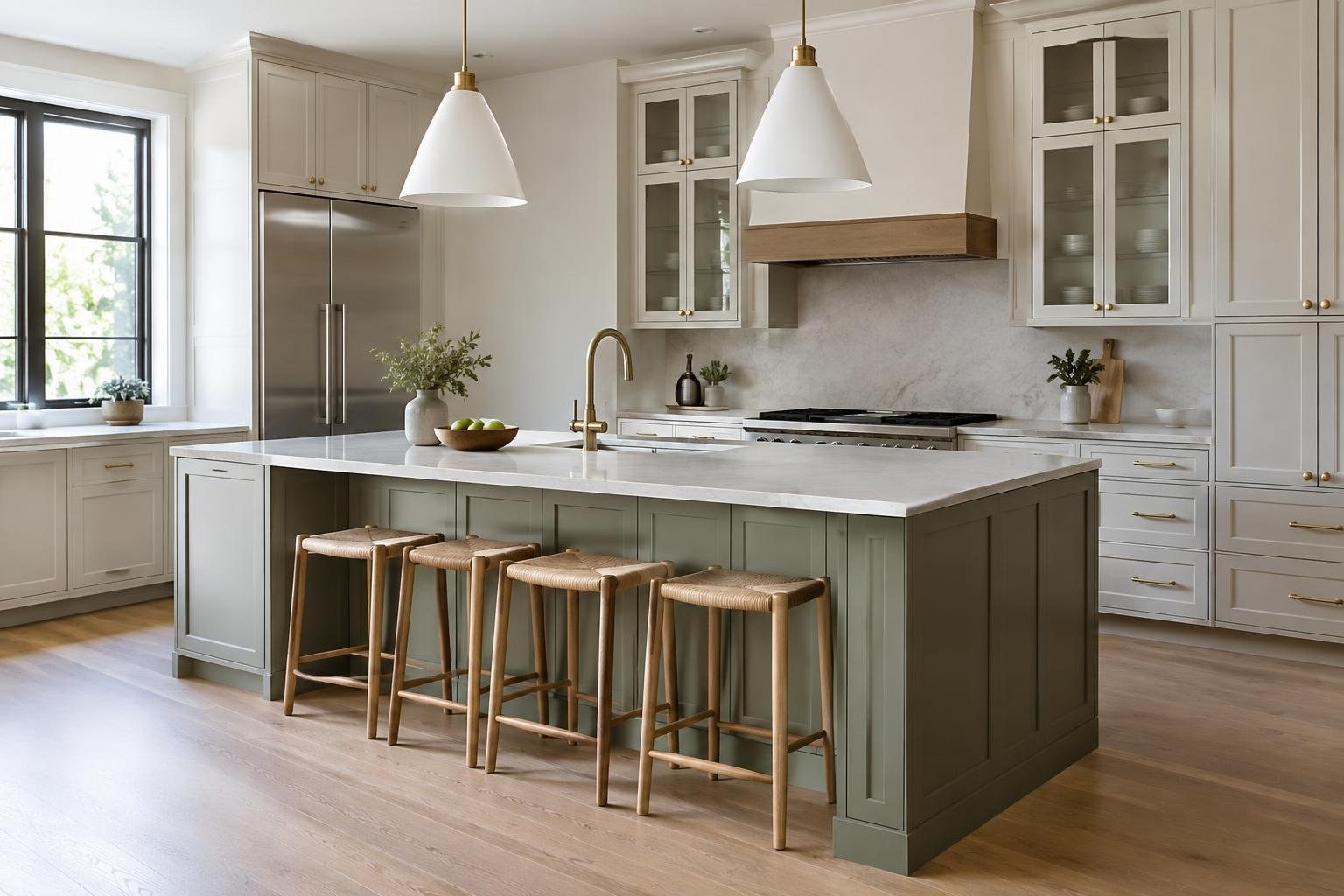
What custom kitchen cabinets include, and why the definition matters
Custom kitchen cabinets are cabinetry ordered or configured with project-specific dimensions or design selections. The term does not guarantee that every size, material, finish, or feature can be changed. For example, some sellers promote custom sizing with ready-to-ship convenience, while other listings describe custom-built sizes and hardware. Ask what the seller means and request the available options in writing.
The choice matters because cabinets shape storage, appliance fit, appearance, and the work required to complete a kitchen. A useful decision begins with the room plan and your priorities, not a label on a product page.
Signs you may need custom sizing or design choices
Custom sizing is worth exploring when the dimensions or selections available from a standard cabinet range do not match your plan. It may also help when you want to compare particular door styles, finishes, or wood species offered through more configurable lines.
Before assuming you need custom cabinets, list the actual mismatch: a cabinet width, height, finish, or storage choice. Then ask whether a standard or ready-to-ship option can solve it. A specific problem makes it easier to compare the cost and timing tradeoffs without paying for changes you do not need.
Custom kitchen cabinet cost: what to compare in estimates
There is no reliable single price for a custom kitchen cabinet project without a location, measured plan, and defined product and labor scope. Request estimates based on the same plan and written specifications instead of comparing headline prices.
Ask each provider to identify the cabinet count and dimensions, door style, finish, wood or other specified material, hardware, accessories, delivery, and installation. Have them list exclusions separately, including any demolition, utility work, countertop work, or repairs if those items are relevant to your project. This lets you distinguish a cabinet-only quote from a broader remodeling proposal.
Compare the whole package: what is being supplied, what work is included, who handles measurement and installation, and what happens if an item is delayed or arrives with a problem. A lower quote is not directly comparable if its scope or specifications differ.
Factors that affect a custom cabinet project
Project cost and complexity depend on what is specified and what the quote covers. Ask providers to explain how these factors affect your particular proposal:
- Dimensions and quantity: Identify each cabinet size and the total number of units. Custom-built sizes and hardware are offered by some sellers, while other product ranges combine custom sizing with selected standard features.
- Style and finish: Door styles, finishes, and wood species can be selection categories. Confirm which choices are included and whether a change affects the estimate.
- Configuration: Explain unusual room dimensions or design details on the plan and ask whether they require additional pieces or changes.
- Delivery and installation: Establish whether these are included, separate, or handled by someone else.
- Order changes: Confirm when dimensions and selections become final, how revisions are priced, and whether they can affect delivery.
Have providers price the same approved plan. Otherwise, differences may reflect different scopes rather than better value.
Custom vs. ready-to-ship vs. RTA cabinets
Custom, ready-to-ship, and RTA describe different aspects of cabinet selection and supply, and the terms may overlap. RTA refers to ready-to-assemble cabinets; some sellers advertise RTA and preassembled products, while other offerings emphasize customization or made-to-order sizing. Ask how the specific product will be supplied and what assembly, delivery, and fitting work remains.
| Option | Potential advantage | Questions to ask |
|---|---|---|
| Custom-sized or configurable | May offer dimensions or selections beyond a standard range. | Which dimensions and details can change? What is the production and delivery estimate? |
| Ready-to-ship | May offer a faster supply route for the listed products. | Which exact items are ready to ship? Does that timing cover the complete order? |
| RTA | Cabinets arrive ready to assemble, according to the product description. | Who assembles and installs them? What tools, skills, and support are expected? |
| Preassembled | The cabinets are described as assembled before delivery. | How are they delivered, handled, and installed, and what is excluded? |
These labels do not establish construction quality. Compare written construction details, hardware, finish, warranty, and service responsibilities for the exact products.
Measurements, cabinet heights, and kitchen planning
Build a plan before choosing finishes or approving an order. Record wall lengths, ceiling height, doors, windows, appliance locations, and visible plumbing or electrical locations. Note where a proposed cabinet might meet a doorway, window trim, appliance, or another cabinet. Have the person responsible for the final design verify measurements before production.
Check vertical fit as well as width. One RTA offering describes a 30-inch wall cabinet with a 12-inch stacker above it, for a total cabinet height of 42 inches, and notes that crown molding needs enough space between the cabinets and ceiling. Treat this as an example of a specific configuration, not a universal standard. Confirm your room’s dimensions and the exact product before planning around it.
Do not move plumbing, electrical, gas, or structural elements based on a cabinet sketch alone. Ask the relevant qualified trade professional to assess work that affects those systems or local requirements.
Design, storage, and finish decisions
Plan the kitchen around daily use as well as appearance. Mark appliances and the locations of frequently used items, then discuss where storage should go with the designer or installer. Review door and drawer positions on the plan to identify possible conflicts before ordering.
Compare door style, finish, and wood species as separate choices. Product lines may let shoppers browse by these categories, but the available combinations vary. Request samples or clear product information where available, and confirm that the finish and style you choose apply to the exact cabinet line in your quote.
Also agree on visible details such as cabinet height, any upper stackers, crown molding, fillers, and exposed sides. Put those decisions on the plan or selection sheet instead of relying on a verbal description.
What to expect: from plan approval to delivery and installation
Timelines depend on the chosen products, final plan approval, supply arrangement, delivery, and installation scheduling.
- Discuss goals, budget range, and the room plan.
- Confirm measurements and select cabinet sizes, styles, finishes, and hardware.
- Review the complete cabinet schedule and written estimate before approval.
- Confirm the expected production or ready-to-ship status, delivery plan, and installer.
- Before installation, verify that the site and relevant trades are ready for the agreed scope.
- At completion, review the delivered cabinets and installed work against the approved selections and scope; record unresolved issues in writing.
Ask what could shift the dates and who will communicate schedule changes. Do not treat a general product claim about speed as a promised delivery date for your particular order.
How to choose and compare a qualified cabinet provider
A cabinet provider may be a retailer, a manufacturer, a designer, an installer, or a business coordinating several parts of the project. Before signing, find out who is accountable at each stage. A seller’s product page may describe design tools or selection options, but that does not by itself establish that the seller will measure or install your kitchen.
- Ask for a project-specific drawing and cabinet schedule.
- Request exact product specifications and a written list of included selections.
- Confirm who verifies measurements, places the order, receives delivery, and installs the cabinets.
- Ask how damaged, missing, or incorrectly specified items are handled.
- Check references or examples of comparable completed work where available.
- Compare written estimates with the same plan, scope, and assumptions.
Evaluate communication and problem resolution as well as price. The lowest number is not the best comparison if responsibilities or products differ.
Permits, safety, credentials, and warranty questions
Before hiring, confirm which permits, inspections, licenses, and insurance apply to your location and the work being proposed. Requirements vary, so verify them with the relevant local authority and ask the contractor which approvals are included in the scope. Cabinet ordering alone does not answer what is required if the project also changes plumbing, electrical, ventilation, walls, or other building elements.
Ask for warranty documents for the cabinets and any separate installation work. Read what is covered, who handles a claim, and whether care instructions or exclusions apply. A product description or brand name is not a substitute for the written warranty on the exact products you are buying.
Keep safety in view: avoid unqualified work on utilities or structural components, and do not approve a cabinet layout until appliance and service locations have been considered.
Ways to reduce cost or save safely
Control spending by identifying which custom features solve a specific problem in your kitchen. If a ready-to-ship option offers the dimensions and selections you need, compare its complete scope and schedule with a custom alternative. Sellers vary in their sizing and style options, so compare the exact products rather than relying on labels.
- Use the same verified measurements and cabinet schedule when requesting estimates.
- Ask providers to price the same specifications and list optional upgrades separately.
- Compare available styles, finishes, and wood species before requesting exceptions.
- Confirm whether delivery, assembly, and installation are included or separate.
- Review the cost and schedule effect of proposed changes before approving them.
Save safely by keeping measurement verification and clear responsibility for installation in the plan. Do not base an order on an unverified sketch, or assign work affecting utilities or structural elements to someone who is not qualified. Custom sizing, available selections, and the scope of ready-to-ship offerings vary by seller, so get the details in writing.
Explore cabinet options at CabinetSupply.com for your next project.
Common mistakes, red flags, and an order checklist
Use this checklist before placing an order:
- Are the final room measurements and ceiling height verified?
- Does the plan show cabinet dimensions, appliances, doors, windows, and relevant service locations?
- Are the cabinet style, finish, species, hardware, and accessories identified in writing?
- Is it clear whether the order is custom-sized, ready-to-ship, RTA, or preassembled?
- Do you know who handles assembly, delivery, installation, and any adjustments?
- Does the estimate name exclusions, payment terms, schedule assumptions, and change procedures?
- Have you reviewed the written warranty and confirmed applicable local approvals?
Red flags include vague answers about what “custom” means, estimates that cannot be matched to a cabinet schedule, unclear installation responsibility, and pressure to approve a plan before measurements or selections are settled.
Conclusion: choose the cabinet option that fits the plan
Custom kitchen cabinets are not automatically the best option for every project. They are most useful when the available dimensions or design choices do not meet the plan. A ready-to-ship or RTA option may be worth comparing if it supplies the needed configuration and the responsibilities, specifications, and timing are clear.
Before deciding, compare the same measured plan across options. Confirm precisely what can be customized, what the product includes, and who is responsible from order through installation. Explore cabinet options at CabinetSupply.com as a next step in researching your project.
Frequently asked questions
What are custom kitchen cabinets?
Custom kitchen cabinets are specified or made to suit a project, but the meaning of “custom” varies by seller. Ask whether cabinet widths, heights, depths, door details, finishes, and storage features can actually be changed, and request those details in writing.
Are custom cabinets always made from scratch?
Not necessarily. Some sellers offer custom sizing alongside ready-to-ship convenience, while others describe made-to-fit cabinets and hardware. Compare the promised dimensions, available selections, production schedule, and installation responsibilities rather than relying on the label.
How much do custom kitchen cabinets cost?
There is no single price that applies to every custom kitchen. Ask for a written, itemized estimate and compare the cabinet specifications, number of cabinets, finish and hardware selections, delivery, installation, and any work excluded from the quote.
How long does it take to get custom kitchen cabinets?
Timing depends on the seller’s process, cabinet selections, design approval, availability, delivery, and installation scheduling. Get the current production and delivery estimates in writing, and ask what could delay the project before placing an order.
Are custom cabinets worth it for a kitchen?
It may make sense when you need dimensions or selections beyond the offered standard range. If ready-to-ship options already fit your plan, compare their timing and specifications with custom-sized alternatives before deciding.
What should I ask a cabinet provider before ordering?
Ask who measures, finalizes the cabinet plan, orders, delivers, installs, and handles adjustments or problems. Review the written scope, product specifications, schedule, payment terms, and warranty information before agreeing.
People Also Ask
When should I choose custom kitchen cabinets?
Custom cabinets may be a good option when standard or ready-to-ship dimensions and design choices do not fit your plan. If those options do fit, compare their specifications and timing before choosing customization.
What should a custom kitchen cabinet quote include?
Compare written estimates based on the same measured plan. Check cabinet dimensions and quantities, style, finish, hardware, delivery, installation, exclusions, and the process for changes so you can compare equivalent scopes.
Are ready-to-ship cabinets faster than custom cabinets?
Not necessarily. A ready-to-ship claim may apply only to listed products, not every item in a complete order. Ask which exact cabinets are available, whether the estimate covers the full order, and what delivery timing is expected.
What measurements do I need before ordering kitchen cabinets?
Record wall lengths, ceiling height, doors, windows, appliance locations, and visible plumbing or electrical locations. Have the person responsible for the final design verify the measurements before production.
What is the difference between RTA and preassembled cabinets?
RTA means ready to assemble, while preassembled cabinets are described as assembled before delivery. Ask who handles assembly, delivery, and installation, and what work remains for your specific order.
How can I compare the quality of kitchen cabinets?
Compare the written construction details, hardware, finish, warranty, and service responsibilities for the exact products. The label alone does not establish cabinet quality.
Custom kitchen cabinets can be a practical choice when standard sizes, storage layouts, or design selections do not suit your kitchen. The label alone does not tell you what is included or how the cabinets are built. Compare detailed plans, specifications, delivery and installation responsibilities, timelines, and warranty terms before choosing. Explore cabinet options at CabinetSupply.com for your next project.
Your next step
Explore cabinet options at CabinetSupply.com for your next project.
Last reviewed and updated October 12, 2026 by the CabinetSupple Editorial Team.
Sources
- Ready To Assemble Kitchen Cabinets – The RTA Store
- Custom kitchen cabinets – The Old Country Cupboard
- Wholesale Cabinets | Shop Custom Kitchen Cabinets & Factory Direct Cabinets Online – Discount Custom Cabinets
- Buy Custom Kitchen Cabinets Online at the Best Price | Cliqstudios
- Custom Kitchen Cabinets – The Home Depot
- KraftMaid Cabinetry | Custom Kitchen & Bathroom Cabinets
- Shop Custom Cabinets at Lowe’s
- Shop Kitchen Cabinets | Semi-Custom Styles & Free Design