
Choosing the best wood for kitchen cabinets starts with the appearance you want, but species is only one part of the decision. Oak has a pronounced grain, maple offers a smoother surface that can work well with paint, and cherry brings warm red undertones. Compare each wood in the finish you plan to use, then check exactly which cabinet parts are made from it. This guide explains the practical tradeoffs, cost questions, provider checks, and planning steps that can help you make a confident choice.
What does choosing cabinet wood include?
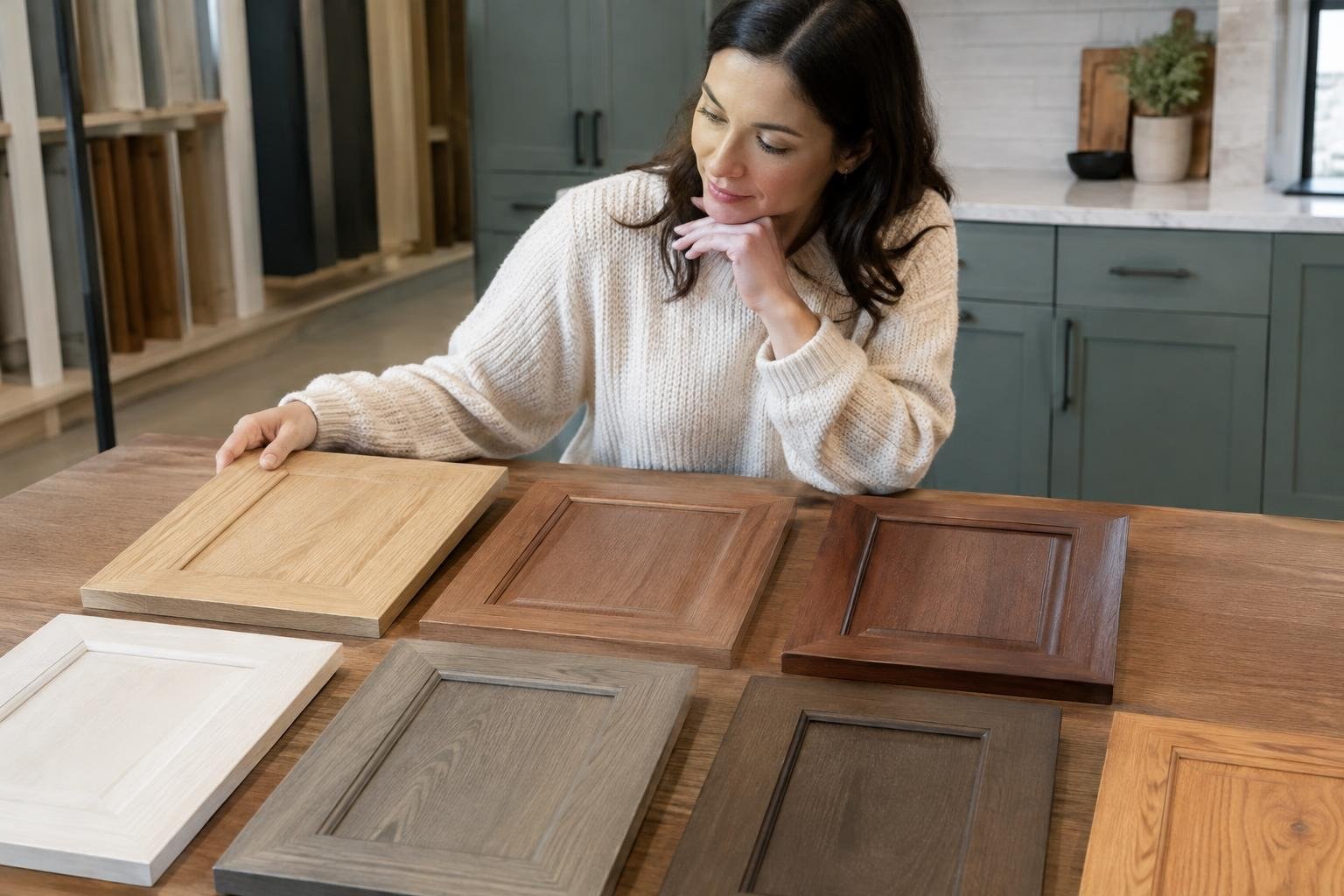
Choosing a wood species means deciding how the cabinet surfaces will look and how they will take the finish you want. Start by identifying whether you prefer visible grain, a quieter surface, a light natural appearance, or a richer color. Then compare actual door samples instead of relying on a wood name or color chip alone.
Ask what the quoted wood describes. A cabinet order includes more than doors: the provider should identify materials and finishes for doors, drawer fronts, exposed ends, frames, and cabinet boxes. Do not assume a quote for a wood species means every part is made from solid wood of that species. Request a written specification and ask questions about any material not identified.
Appearance is not the only consideration. Ask how the selected finish is maintained, what the warranty covers, and whether the provider can supply a sample that matches the proposed product. These steps let you compare appearance, scope, and service before making a commitment.
When might changing cabinet wood make sense?
Consider a new cabinet selection when the current kitchen no longer fits the look or use you want, or when a planned remodel already involves replacing cabinetry. A wood choice matters most when the cabinet surface will be visible and its grain or color is part of the design. If the cabinets will be painted, the subtlety of the grain may matter more than choosing a species for a distinctive stained pattern.
Existing damage or a disliked finish does not automatically mean the cabinets need replacement. First identify whether the problem is limited to appearance or whether the cabinet layout, construction, or condition is also part of the issue. A provider can assess whether new doors, a finish change, or replacement is appropriate, but do not assume every cabinet can be refinished or refaced without checking its condition and construction.
For a new kitchen, make a short list of what is not working: storage, layout, color, wear, or maintenance. That list helps you decide whether changing wood species will solve the actual problem or merely change the appearance.
How much do wood kitchen cabinets cost?
There is no reliable price to give for a wood species without a location, cabinet product, quantity, and project scope. Rather than compare an unsupported per-foot figure, request a quote for the same layout and specification from each provider. Separate cabinet costs from installation, delivery, hardware, removal, counters, and other remodeling work so you can see what is included.
Ask whether choosing a different species changes the price, and whether that change applies to all cabinet components or only visible fronts. Also ask whether the selected finish, door style, custom dimensions, interior accessories, or cabinet line changes the total. Compare complete proposals with the same scope; a lower total may reflect fewer included items rather than better value.
Get exclusions and change-order terms in writing. If a provider offers alternatives, ask for comparable versions of the same design in different woods and finishes. That is a more useful budget comparison than comparing differently sized or differently equipped cabinets.
Which factors affect cabinet price and appearance?
Project price and appearance depend on more than species. Cabinet quantity, layout, door style, finish, cabinet product, storage options, hardware, custom sizing, and the amount of installation or remodeling work can all change the proposal. Ask providers to identify which choices are driving the quote instead of treating the wood name as the sole price factor.
For the appearance, compare the grain and color of the exact species in the intended finish. Oak's defined grain can remain visible under stain, while maple's smooth grain can support a painted look. Cherry has red undertones and can range from lighter to deeper brown. Those differences affect design choices, so coordinate samples with counters, flooring, backsplash, and lighting before finalizing selections.
For scope, confirm the wood and finish for each visible component, how exposed cabinet sides will be handled, and whether fillers and panels are included. If the kitchen plan changes after approval, ask how the revision affects price and schedule before authorizing it.
Oak, maple, hickory, cherry, or walnut: which should you compare?
| Wood | Appearance and finish considerations | May suit |
|---|---|---|
| Oak | Defined, visible grain; white oak can suit a modern look. | Stained finishes, natural textures, or a grain-forward design. |
| Maple | Smoother grain; can be stained and is often shown with a clear or natural finish. | Painted cabinets or a light, restrained appearance. |
| Hickory | Strong wood with a distinctive grain and character. | Homeowners seeking a more pronounced, rustic look. |
| Cherry | Red undertones and color ranging from white to deep brown. | A warm, richer appearance. |
| Walnut | Often associated with a luxurious, formal style. | A more formal design direction. |
These are starting points, not guarantees of how every cabinet will look. Species, cut, door design, finish, and sample selection affect the appearance. Ask the provider to show the exact product and finish being quoted. Hickory is noted for hardness and everyday wear resistance, but those traits do not replace checking the cabinet's construction, finish, and warranty.
Also compare product categories, not just wood. A species description does not tell you whether the offer is stock, semi-custom, or custom, nor does it specify cabinet construction. Ask for a complete written description of the product and what is included.
How should you judge cabinet construction beyond the wood species?
Wood is only one part of cabinet quality. A cabinet quote should identify the material used for the box, back, shelves, doors, and drawer fronts, along with the finish, hardware, and installation responsibility. Ask the provider to explain how exposed edges and sides will be finished and what construction details are included. Do not treat a solid-wood label for one component as proof that the entire cabinet is solid wood.
Some cabinet boxes use sheet goods rather than solid wood. One cabinetry discussion describes veneer-core plywood as providing structural rigidity and screw holding power, with exposed edges finished using edge banding or a solid-wood face frame. That is an individual contributor's account, not a product standard or guarantee. Use it as a prompt to ask about the actual materials and joinery in your quote, not as proof that a particular sheet good is best for every kitchen.
Inspect drawers, glides, hinges, door alignment, finish coverage, and edges on a sample or display. Ask how the manufacturer handles repair or replacement if a part arrives damaged or develops a problem.
What to expect: planning, samples, and project timing
Plan for the wood decision to happen alongside the cabinet layout and finish selections, not in isolation. Measure the kitchen and record appliance locations, doors, windows, plumbing, outlets, and other fixed features. Confirm those measurements with the provider before ordering. A change to the layout can affect cabinet sizes, exposed sides, fillers, and what parts of the selected wood are visible.
Collect samples of the wood and finish, then view them with the kitchen's other planned materials. Look at the grain direction and color on a full door sample if one is available. A small chip may not communicate the same overall effect as a larger surface. Ask whether the sample represents the product and finish on the quote, and how the provider handles differences between a sample and delivered cabinets.
Timing depends on the particular product, order, and provider schedule, so do not assume a universal lead time. Before paying a deposit, request the anticipated ordering, delivery, and installation milestones in writing. Ask what approvals must happen first and how late selection changes affect those milestones.
How to choose a qualified cabinet provider
Choose a cabinet provider who can explain both the design and the written product specification. Ask for examples of comparable kitchen projects, references if available, and a clear account of who measures, orders, delivers, installs, and adjusts the cabinets. Confirm what happens if a measurement, finish, or delivered component is wrong.
Ask each provider to identify the species and finish by cabinet component and explain any material substitutions. Review the quote for cabinet quantity, sizes, door style, hardware, exposed ends, fillers, panels, accessories, installation, delivery, removal, and exclusions. The same details make bids easier to compare. Ask how revisions are priced and documented, and who approves a change before work proceeds.
Compare responsiveness and clarity as well as the bottom line. A provider who cannot explain what the wood description covers leaves you with an important unanswered question. Do not rely on a verbal promise about species, finish, warranty, or schedule; request the commitment in the contract or order documents.
Warranties, permits, credentials, and safety
Ask what warranty applies to the cabinets, finish, and hardware, and request the written terms before ordering. Confirm who handles claims and whether labor, replacement parts, or delivery are treated differently. A wood species name alone does not establish what a warranty covers, so review the actual documents.
Credential, licensing, insurance, and permit requirements depend on location and project scope. Confirm applicable local requirements with the relevant local authority and ask the contractor what approvals are included. A cabinet change that expands into plumbing, electrical, structural, or other regulated work may have requirements beyond choosing cabinet wood. Do not attempt work that requires qualified trades unless you are qualified and permitted to do it.
Clarify site protection, demolition, disposal, utility coordination, and cleanup in the agreement. Ask who is responsible for coordinating other trades and what must be completed before cabinet installation. These responsibilities can affect project readiness and the final cost even though they do not change the species itself.
How to save safely when selecting cabinet wood
To save without compromising the decision, compare several versions of the same cabinet plan. Ask for the same layout and scope in alternative species or finishes, and find out whether changing wood affects only visible fronts or more components. This reveals where a design preference changes the quote and where a less expensive alternative may meet your needs.
Keep the layout stable while you compare options. Late changes to cabinet dimensions, hardware, or finish can require a revised quote and schedule; ask the provider to document the impact before approving a change. You can also ask whether a simpler door style or fewer accessories meaningfully lowers the proposal, but do not assume an apparent saving is worthwhile without reviewing what is removed.
Do not cut costs by skipping accurate measurements, written specifications, sample review, or a clear installation plan. Those are useful safeguards for any species. Compare the full scope and warranty, not just the material label or initial price.
Mistakes to avoid and a pre-order checklist
Avoid choosing from a species label alone. Oak, maple, hickory, and cherry have different grain and color characteristics, but the exact door design and finish also shape the result. View finished samples and make sure the product shown is the one specified in the quote.
Use this checklist before signing:
- Is the wood species identified for doors, drawer fronts, frames, exposed ends, and other visible parts?
- Is the cabinet-box material separately identified?
- Does the quote name the finish and door style?
- Are hardware, fillers, panels, delivery, installation, and removal included or excluded?
- Are dimensions and appliance locations verified?
- Are the anticipated milestones, payment terms, change orders, and warranty in writing?
- Have you compared complete quotes for the same layout and scope?
Red flags include vague material descriptions, unclear installation responsibility, pressure to decide before the specifications are complete, and promises that are not reflected in the documents. Pause and request clarification before placing the order.
Compare options before choosing
Once you have a shortlist of woods and finishes, compare written specifications and ask the providers to resolve differences before you order. An oak sample may help illustrate visible grain, while maple can help you assess a smoother painted surface and cherry can show warm red undertones. But a good purchase decision also depends on the cabinet product, what each component is made from, the finish, the installation plan, and the terms of the order.
For another way to move forward, explore cabinet options at CabinetSupply.com. Use what you have learned to compare available choices and identify questions to ask before committing to a design or budget.
Frequently asked questions
What is the best wood for kitchen cabinets?
There is no single best wood for every kitchen. Oak is a strong option when you want visible grain, maple can suit a smooth painted look, and cherry offers warm red undertones. Choose based on the style and finish you want, then compare the full cabinet specification.
Is oak a good choice for kitchen cabinets?
Oak is recognized for its strength and pronounced grain, which remains visible through stain. White oak is also used for modern cabinetry looks. Ask to see the exact species and finish together because the grain is a major part of the result.
Is maple or oak better for painted cabinets?
Maple is a good option to consider for a painted finish because its grain is smooth. It can also be stained, though it is often shown with a clear or natural finish for a light look. Review a finished sample before ordering.
Are hickory cabinets durable?
Hickory is an option to consider when strength and a pronounced, rustic appearance matter. Its hardness and grain can make it a distinctive choice, so compare door samples and confirm the finish options with the cabinet provider.
What does cherry wood look like for kitchen cabinets?
Cherry has red undertones and can range in color from lighter to deeper brown. Ask the provider how the selected finish appears on the particular cherry sample and whether the sample represents the cabinet order.
Are solid wood kitchen cabinets more expensive?
Not necessarily. The total price depends on the cabinet line and project details as well as the selected wood. Ask for an itemized quote that identifies species, finish, cabinet components, hardware, delivery, installation, and any excluded work.
Which wood is best for painted kitchen cabinets?
It depends on the desired style and finish. Maple's smooth grain can suit painted cabinets, while oak's visible grain is part of its appeal under stain. Compare finished samples in your kitchen rather than choosing from a species name alone.
How long does it take to get wood kitchen cabinets?
Lead time varies by provider, cabinet line, order details, and schedule. Ask for an estimated production and delivery window in writing, and confirm how revisions, delayed selections, or installation scheduling could affect it.
People Also Ask
What wood is most commonly used for kitchen cabinets?
Oak, maple, hickory, cherry, and walnut are common species to compare. The right option depends on the desired grain, color, finish, and cabinet specification. Oak has visible grain; maple has a smoother grain suited to a painted look; cherry has red undertones.
What is the difference between oak and maple cabinets?
Oak has distinct grain that shows through stain, while maple has a smoother grain and is often considered for a light or painted look. Choose from finished samples, since stain and paint influence the final appearance.
What is the best wood for white kitchen cabinets?
Maple is a useful species to consider for painted cabinets because its grain is smooth. Confirm the cabinet maker's recommended material and finish, and inspect a sample before ordering.
What is the cheapest wood for kitchen cabinets?
Wood prices depend on the cabinet product, species, finish, order, and installation scope. Get a written quote that separates the cabinet price from delivery, hardware, installation, and other work before comparing offers.
Which wood is the hardest for kitchen cabinets?
Hickory is described as a hard, durable wood, while oak is also known for strength. Ask a provider to explain the cabinet construction and finish as well as the species, since the wood name alone does not describe the whole cabinet.
What makes a kitchen cabinet high quality?
A strong cabinet choice combines a suitable wood and finish with a clearly specified construction, hardware, and installation plan. Compare those details rather than selecting only by species or appearance.
The best wood for kitchen cabinets depends on the look you want, how you plan to finish the cabinets, and the complete cabinet construction and quote, not species alone. Compare real samples, ask providers to identify the wood used for each cabinet component, and review the finish and warranty before deciding. Explore cabinet options at CabinetSupply.com for your next project.
Your next step
Explore cabinet options at CabinetSupply.com for your next project.
Last reviewed and updated October 12, 2026 by the CabinetSupple Editorial Team.
Sources
- Most Durable Wood For Kitchen Cabinets – Cabinet Now
- r/cabinetry on Reddit: What type of wood is best for Cabinets?
- Wood Species: Best Wood for Kitchen Cabinets
- Kitchen Cabinet Wood Types: A Complete Guide
- Best Wood for Kitchen Cabinets – Cabinetmaker's Guide to Choosing the Right Wood Species
- Find the Best Wood for Kitchen Cabinets—From Maple and Ash to Alternatives
- The Best Wood Types for Durable and Attractive Cabinets
- Best Wood for Kitchen Cabinets: Compare Durability, Cost & Style