
Kitchen cabinet renovation can refresh a dated room without necessarily replacing every cabinet. Depending on the condition of the cabinet boxes and your goals, the work might involve paint, new doors and drawer fronts, updated hardware, storage additions, or a complete replacement. The important first step is to decide what needs to improve: appearance, storage, function, or all three. Then compare proposals by the work they include, not just by the label or bottom-line price.
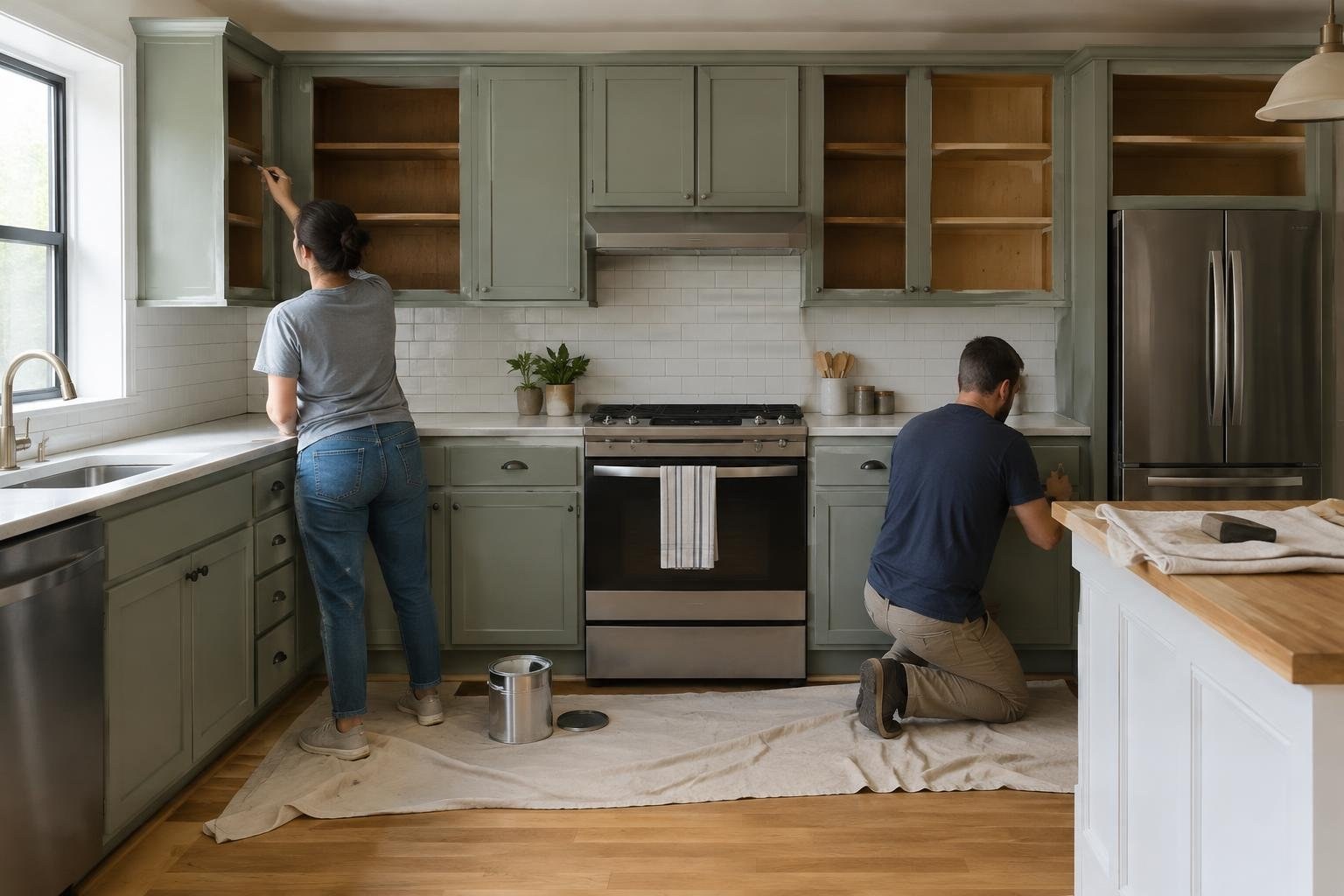
What does kitchen cabinet renovation include?
Kitchen cabinet renovation describes work that updates a kitchen's cabinets without automatically requiring a complete room remodel. The scope can be as small as changing hardware or painting suitable cabinet surfaces, or as extensive as replacing the cabinets and rethinking the layout. Research examples of lower-scope updates include adding color inside cabinets and changing cabinet appearance without removing them; other ideas include storage organizers and decorative details.
Before choosing a treatment, identify which problems you want to solve. A new color may address a dated look, but it will not create more storage or correct an inconvenient layout. A pull-out may improve access, but it will not repair a damaged cabinet box. Make a short list of must-fix problems and nice-to-have improvements, then ask providers to price the same priorities.
- Appearance: Consider paint or other finish changes, new doors or drawer fronts, hardware, trim, or cabinet lighting.
- Storage: Consider organizers, pull-outs, pegboard doors, or other features that suit what you keep in the kitchen.
- Layout or condition: Compare a broader cabinet replacement when the existing arrangement or cabinets do not meet your needs.
What signs suggest your kitchen cabinets need attention?
Renovation may be worth exploring when the kitchen looks dated, storage is hard to use, or the cabinet appearance no longer works with the room. Those are reasons to assess the cabinets, not proof that they must be replaced. Start by looking at the boxes, doors, drawers, and layout separately. If the boxes are in acceptable condition and the arrangement still functions, ask whether a focused refresh or refacing can meet your goals.
Pay attention to recurring problems: doors or drawers that do not work as intended, visibly damaged cabinet parts, storage that leaves frequently used items awkward to reach, or a layout that repeatedly interferes with how you use the kitchen. Note which cabinets are involved and take photos. Share those details with providers so their recommendations address actual needs rather than only surface appearance.
Cabinet photos and before-and-after examples can help you communicate the type of visual change you want. Treat them as inspiration, not as a promise that the same result, scope, or price applies to your kitchen.
How much does kitchen cabinet renovation cost?
There is no one price for kitchen cabinet renovation. Costs depend on the chosen scope and design, the number and condition of cabinets, the products selected, and the installation and related work included. For example, a cabinet refacing estimate is not directly comparable with a quote to paint existing cabinets or replace all cabinets. Ask each provider to describe exactly what the price covers.
A published Home Depot page gives a refacing range of $8,100 to $16,200 for an average-sized kitchen, with layout and design choices affecting the estimate. Treat that as one provider's stated range, not a universal quote or a guaranteed price for a particular home. Request a current, location-specific estimate before budgeting around any published figure.
Ask for costs to be broken out where applicable:
- Preparation and treatment of existing cabinet surfaces, or removal of old cabinets.
- Cabinet boxes, doors, drawer fronts, finish, hardware, and interior organizers.
- Delivery, installation, adjustments, cleanup, and disposal.
- Any separately proposed changes to counters, lighting, plumbing, electrical work, flooring, or walls.
Compare what is included and excluded before comparing totals. A lower estimate may not cover the same materials, preparation, installation responsibilities, or finishing details as a higher one.
What factors affect the project?
Project scope is the main comparison to make, but other decisions can affect both the work and the result. Design choices matter: a simple hardware change is not the same project as new cabinet fronts, interior organizers, decorative trim, or full replacement. Layout and design choices also affect published refacing estimates.
Before requesting proposals, decide whether you intend to keep the existing layout and which features matter most. Storage upgrades might include pull-outs, toe-kick drawers, pegboard doors, or interior organizers. Decorative options may include trim, cabinet lighting, feet, or other details. Ask whether a feature is compatible with the existing cabinets and whether it is included in the estimate.
Related work can also complicate the plan. If your renovation includes changes beyond cabinets, identify them early and ask who is responsible for coordinating and completing each part. Confirm which decisions need to be made before work or ordering begins, and how a late change affects cost or timing.
Refresh, reface, or replace: which option should you compare?
The best option depends on the condition of the existing cabinets and how much you want to change. Keep the cabinet boxes when they suit your needs and a visual refresh is enough; compare refacing when you want new visible cabinet fronts while retaining the existing boxes; consider replacement when the cabinets or layout need a broader overhaul.
| Approach | What changes | Best fit to investigate | Tradeoff to ask about |
|---|---|---|---|
| Cosmetic refresh | May involve paint, hardware, interior color, or decorative details. | Cabinets and layout that remain useful, with appearance as the main concern. | It changes selected surfaces or details, not necessarily storage capacity or layout. |
| Refacing | Typically updates doors, drawer fronts, hardware, and visible surfaces while retaining cabinet boxes. | Boxes and layout that are suitable, with a larger visible change desired. | Ask which surfaces are covered and whether the boxes are appropriate to retain. |
| Replacement | Removes existing cabinets and installs new cabinets; the broader scope may allow a layout change. | Cabinet condition or kitchen needs call for a more comprehensive change. | Clarify the full scope, related work, schedule, and exclusions. |
Examples show that kitchens can be refreshed without removing cabinets, while before-and-after galleries illustrate how a more extensive cabinet change can alter a room's appearance. Neither kind of example establishes what your project needs. Request side-by-side proposals if more than one approach could work.
Explore cabinet options at CabinetSupply.com for your next project. Use product browsing to clarify styles and possibilities, then check that any selection fits your measurements, renovation scope, and budget.
Plan appearance, storage, and kitchen lighting together
Cabinet renovation can improve the kitchen's appearance, but it is also an opportunity to consider how the space is used. Think about what needs to be stored, which items should be easy to reach, and whether a new feature would solve a daily inconvenience. Research-supported ideas include pull-outs, toe-kick drawers, pegboard doors, and interior organizers. Decorative additions can include cabinet lighting and trim.
Lighting deserves attention when planning a wider kitchen update. Research on kitchen remodeling ideas reports interest in natural and quality lighting, including under-cabinet lighting. Treat those findings as design context, not a requirement for every project. If lighting changes are part of your plan, confirm whether the provider includes them or coordinates with a qualified electrical professional.
Choose colors and finishes in relation to the room rather than in isolation. Look at samples with your counters, backsplash, floor, and lighting. A two-tone approach or a contrasting cabinet interior can add visual interest, but ask to see samples and understand which surfaces the proposal includes.
What to expect from planning through completion
The process typically begins with a review of your goals and existing cabinets, followed by selecting the scope, finishes, and any storage features. The provider should then document the work, materials, responsibilities, exclusions, and schedule before work begins. The exact sequence depends on whether the project is a surface refresh, refacing, or cabinet replacement.
- Set priorities. List appearance, storage, and function problems in order of importance.
- Assess the existing kitchen. Record the cabinet areas involved and share useful photos. Have the provider verify measurements and conditions relevant to the proposed work.
- Compare written scopes. Check products, preparation, installation, cleanup, related work, and exclusions.
- Confirm selections and timing. Ask when choices must be final and what events could shift the schedule.
- Review the finished work. Walk through the agreed scope with the provider, note unresolved items, and get care or warranty information in writing.
There is no reliable universal timeline in the supplied project information. Ask for a project-specific schedule that separates planning and product lead time from on-site work, and confirm how the kitchen can be used during each phase.
How to choose a qualified cabinet renovation provider
Choose a provider by comparing relevant project examples, a clear written scope, communication, and responsibility for installation. Ask who will perform each part of the work and who will handle a concern if the result differs from the agreement. A gallery can help you describe a desired appearance, but it does not replace checking whether the provider's proposed work suits your kitchen.
Ask each provider:
- What do you recommend changing, and what are you proposing to retain?
- Which preparation, materials, doors or fronts, hardware, organizers, and finish are included?
- Who measures, orders, installs, and completes adjustments?
- What work is excluded, and how are changes documented and priced?
- What is the expected schedule, and how will delays or problems be communicated?
- What warranty applies to the products and workmanship, and how do I request service?
- Can you provide references or examples of comparable completed work?
Compare written answers, not just sales conversations. A low bid is not necessarily the best value if it leaves out preparation, installation, disposal, or details that another bid includes.
Permits, credentials, warranties, and safety
Permit, licensing, and insurance requirements vary by location and by the work involved. Ask the provider which parts of the project, if any, require permits or regulated trade work, and verify local requirements with the appropriate authority. Cabinet-only work and a project that changes utilities may not have the same requirements, so avoid assuming that one answer applies to every renovation.
Confirm that the provider's written proposal identifies installation responsibility, product and workmanship warranty terms, and how damage or incomplete work will be handled. If the project includes electrical, plumbing, or other specialized work, clarify who is qualified and responsible for that portion. Do not attempt work that requires professional qualifications or local approval unless you are qualified and authorized to do it.
Do not rely on a verbal promise for a significant detail. Keep the estimate, selections, changes, schedule, and warranty information together so you can refer to the agreed scope.
How to reduce cost without creating avoidable problems
You can control spending most safely by matching the project scope to the problem. If cabinets and layout are suitable, ask whether selective updates can meet your priorities before pricing a complete replacement. Keep a ranked list of upgrades so you can separate essentials from optional details and compare proposals consistently.
- Ask for separate pricing for must-have work and optional features.
- Compare a cosmetic refresh, refacing, and replacement when each is a plausible fit.
- Keep the existing layout if it works for you, and ask what changing it would add to the scope.
- Choose organizers based on what you store rather than adding features without a clear use.
- Confirm product selections and exclusions before approving the work.
Avoid false savings from skipping necessary preparation, unclear installation responsibilities, or work that should be handled by a qualified professional. Saving safely means removing unnecessary scope, not leaving important work undefined.
Common mistakes and a pre-project checklist
Use this checklist before approving a cabinet renovation proposal:
- Have I identified the problems I want the project to solve?
- Have I checked whether the existing cabinets and layout should be retained?
- Does the written scope identify included cabinets, surfaces, products, and finish?
- Are storage features and hardware specified rather than described vaguely?
- Does the estimate list installation, preparation, cleanup, disposal, and exclusions?
- Have I confirmed who handles related work and whether local permits or qualified trades are needed?
- Are schedule, payment terms, changes, and warranty information documented?
Common avoidable mistakes include choosing a finish before deciding what the renovation must accomplish, comparing totals for different scopes, assuming an inspiration photo represents a guaranteed result, and adding features without checking whether they suit the existing cabinets. A proposal should make it possible to understand what will change and what will remain as it is.
Frequently asked questions
What does kitchen cabinet renovation include?
Kitchen cabinet renovation may include painting or refinishing existing cabinets, replacing doors and drawer fronts, changing hardware, adding storage features, or installing new cabinets. The right scope depends on the condition of the cabinet boxes, your layout, and the improvements you want.
Is cabinet refacing or replacement better?
Refacing keeps the cabinet boxes and updates visible surfaces, commonly with new doors, drawer fronts, and hardware. Replacement removes the existing cabinets and installs new ones, which allows more change but involves a broader project. Compare the exact scope rather than relying on the option name alone.
How much does kitchen cabinet renovation cost?
There is no single price that applies to every kitchen. Cost depends on the amount of work, cabinet condition, materials and finishes, design choices, storage additions, installation, and related work. Ask for an itemized estimate and compare identical scopes.
How long does a kitchen cabinet renovation take?
Timing depends on the selected work, product availability, preparation, installation, and whether other parts of the kitchen are changing. Ask the provider to separate ordering and preparation from on-site work and to explain what could delay the schedule.
Can I renovate kitchen cabinets without changing the layout?
Keeping the existing layout can avoid some design and coordination changes, while replacing cabinets may make sense when the boxes are damaged or the layout needs to change. Ask providers to explain what each approach would fix and what it would leave untouched.
Is painting kitchen cabinets a good idea?
Painting can change the appearance of sound cabinets, but it does not repair damaged boxes or improve a layout. Before choosing paint, check the condition of the surfaces and ask about preparation, finish, hardware, and which areas the work includes.
People Also Ask
How do I know if my kitchen cabinets can be renovated instead of replaced?
First inspect whether the cabinet boxes are sound and whether the current layout works. If both are acceptable, a surface-focused update may be worth comparing with replacement. If either is not, ask for a proposal that addresses those problems directly.
Can old kitchen cabinets be painted successfully?
It can, but the result depends on the condition of the cabinets, the preparation, and the finish selected. Ask what surfaces are included, how the work will be prepared, and whether damaged areas or interiors are part of the scope.
What upgrades can improve kitchen cabinet storage?
Pull-outs, toe-kick drawers, pegboard doors, and interior organizers can add or improve usable storage without changing the cabinet layout. Check that a proposed feature suits the items you store and fits the existing cabinet.
How can I reduce the cost of a cabinet renovation?
Potential savings come from keeping a workable layout, updating only what is needed, and comparing itemized proposals. Do not cut costs by skipping preparation, leaving the scope unclear, or overlooking work needed for safe installation and utility coordination.
What should a kitchen cabinet renovation estimate include?
Ask for a written scope, itemized costs, product and finish details, schedule, exclusions, installation responsibility, warranty information, and a process for changes or problems. Confirm relevant licensing and insurance requirements for your location and the work involved.
Kitchen cabinet renovation can mean anything from a focused cosmetic refresh to a complete cabinet replacement. Start by deciding whether the existing boxes and layout still serve you, then compare the work, materials, exclusions, schedule, and warranty behind each proposal. A clear scope makes it easier to protect your budget and choose changes that improve how your kitchen looks and works.
Your next step
Explore cabinet options at CabinetSupply.com for your next project.
Last reviewed and updated October 12, 2026 by the CabinetSupple Editorial Team.
Sources
- 110+ Before & After Kitchen Cabinet Transformations
- 25 Easy Ways to Upgrade Basic Kitchen Cabinets
- 26 DIY Makeover Ideas for Redoing Kitchen Cabinets
- Cabinet Refacing at The Home Depot
- How to Make Old Kitchen Cabinets Look New Again—Without a Full Renovation
- Dramatic Kitchen Renovation without Removing Cabinets
- 45 Kitchen Remodeling Ideas For 2026 | USA Cabinet Store
- 21 DIY & Affordable Ways to Redo Kitchen Cabinets | Extra Space Storage