
Maple kitchen cabinets are a popular option for people who want a wood-based cabinet look with choices that range from natural grain to painted color. But “maple cabinets” does not tell you how the box is built, which parts are maple, what finish is applied, or what installation includes. Compare the full specification, inspect samples in your kitchen, and get a clear written quote before choosing.
What maple kitchen cabinets are and what the label means
Maple kitchen cabinets combine a maple appearance with a specific cabinet product, construction method, and finish. The label alone does not establish whether every component is solid maple or whether the cabinet box uses another material. Verify the door, drawer-front, frame, box, and interior specifications separately.
Maple is offered in multiple finishes. A clear coat can show the natural grain, and products are also offered in stained, painted, and unfinished styles. Some maple may show bird’s-eye marks or mineral streaks, so a sample is useful when appearance consistency matters.
Why the cabinet specification matters
Choosing cabinets is more than selecting a wood species. The cabinet package shapes the kitchen’s storage, finish, and visual character, while the installation and surrounding work determine how the finished project fits together.
Maple is one available option for a range of kitchen styles. Product listings describe maple in traditional and other design schemes, and finishes can show the grain or add a painted color. Treat those as starting points, not a guarantee that a particular door, finish, or construction will suit your room.
When to consider changing your kitchen cabinets
Before shopping, decide what you want to improve. The following signs can help you define the project, but they do not prove that maple is the necessary solution:
- You want a different cabinet color, wood appearance, or overall kitchen style.
- Your current storage arrangement does not suit the items you need to store.
- You are planning a broader kitchen update and need cabinets coordinated with counters, backsplash, flooring, or appliances.
- You want to compare a natural wood look with painted or unfinished cabinet options.
If the cabinet boxes are in acceptable condition, ask whether a smaller-scope update could meet your goals before committing to full replacement. If you are comparing replacement products, judge construction and project scope as well as appearance.
Maple kitchen cabinet costs and what a quote should include
Ask local sellers and installers for current quotes based on your actual layout and selections. A wood label alone is not enough to compare prices.
Request an estimate that identifies cabinet quantities and sizes, cabinet-box and door materials, finish, hardware, delivery, installation, and any demolition or related work. Ask the provider to separate items that are included from optional or excluded work. If quotes differ substantially, check whether they describe the same product and project scope.
Price can change when you alter the cabinet configuration, finish, hardware, or installation scope. Get written pricing for upgrades and changes before approving them. Compare the final total and what it covers rather than assuming that two quotes for “maple cabinets” are equivalent.
Factors that affect the project and final selection
Several project choices affect what you order and how you compare bids. Focus on what is specified rather than making assumptions from a product name:
- Which components use maple: Ask about doors, drawer fronts, frames, cabinet boxes, shelves, and interiors.
- Finish: A clear finish shows grain; paint covers it; unfinished cabinets require a finishing plan. Confirm which treatment applies to each surface.
- Natural variation: Maple may include visible marks or streaks. Discuss what variation to expect and review a sample.
- Layout and quantities: The cabinet order must match the kitchen plan and required storage. Confirm sizes and locations before approving it.
- Included work: Delivery, installation, demolition, and related work may be treated differently in each proposal. Have each provider state the scope in writing.
Maple cabinet finishes: natural, stained, painted, or unfinished
Choose a finish by comparing what you want to see, how much work you want to take on, and how closely the sample matches your design. Maple is available in natural, stained, and painted finishes, while unfinished maple offers a blank slate for a later finish choice.
| Option | What it offers | What to confirm |
|---|---|---|
| Natural or clear-coated | Allows the wood grain to remain visible. | Ask for a sample and discuss natural variation. |
| Stained | Offers a wood-tone treatment while retaining a wood appearance. | Confirm the exact finish and review a sample. |
| Painted | Offers a colored surface rather than a visible natural grain look. | Confirm the product’s finish options and sample color. |
| Unfinished | Leaves finish selection to the buyer or project team. | Decide who will prepare and finish the cabinets and when. |
Finish names and available selections vary by product. Use physical samples where possible; a screen image cannot establish how a color will look in your kitchen.
Compare cabinet formats, not just wood species
Maple identifies the wood used in some cabinet components, not the overall quality tier or construction. A product may be stock, semi-custom, custom, ready-to-assemble, or already assembled. These purchasing formats can differ in available sizes, choices, assembly needs, and how the project is quoted.
| Cabinet approach | Questions to ask | Potential tradeoff |
|---|---|---|
| Stock or ready-to-assemble | What sizes, finishes, and components are included? Who assembles or installs them? | Choices may be tied to the product line; verify fit and labor scope. |
| Semi-custom | Which dimensions and selections can be adjusted, and how are changes priced? | Confirm what can actually be customized and when it will be delivered. |
| Custom | What drawings, materials, finish samples, and approval steps are included? | Get the full specification, price, schedule, and revision process in writing. |
Whichever route you choose, inspect details such as box material, drawer and door hardware, finish, and warranty terms. Do not infer these from the word “maple.”
Planning, measuring, and checking the kitchen layout
Before ordering, compare the cabinet plan with the room and the items that must fit. Verify wall dimensions, cabinet locations, appliance spaces, doors, windows, and relevant utility locations with the person responsible for the design and installation. Ask how the plan handles fillers, finished ends, and transitions so the delivered order matches the intended layout.
For a kitchen, discuss storage needs, work areas, and how cabinetry relates to counters and appliances. Review elevations or a clear cabinet schedule. Confirm dimensions and selections in writing before the order is finalized. If the room or utility layout will change, raise that before cabinets are ordered rather than assuming it can be resolved during installation.
Do not take on electrical, plumbing, structural, or other regulated work unless you are qualified and local requirements allow it. Coordinate those tasks with appropriately qualified professionals.
What to expect from ordering through installation
There is no single installation schedule that applies to every maple cabinet project. Ask the seller and installer for a project-specific sequence and dates for final measurements, order approval, production or fulfillment, delivery, finishing if applicable, installation, and any related work. Get updates and responsibilities in writing.
Unfinished products need a defined finishing plan. Confirm whether finishing occurs before installation or is handled separately, which surfaces are included, and who is responsible for protection and touch-ups. A clear finish may be intended to show the grain, so confirm the approved sample before the order is placed.
Before installation begins, ask what the room must be ready for, who removes old cabinets, where delivered cabinets will be stored, and who checks for damage or missing parts. Include expected cleanup and follow-up adjustments in the scope.
DIY or professional installation: decide by scope and capability
Cabinet installation involves more than setting boxes in place. Clarify who is responsible for confirming the layout, receiving the shipment, assembling cabinets if needed, installing and adjusting doors and drawers, and resolving damage or shortages. If counters, plumbing, or electrical work are part of the project, identify who coordinates each trade and when each task occurs.
Some experienced DIYers may prefer to assemble or install cabinets themselves, but the choice should reflect the product, tools, skills, room conditions, and consequences of an inaccurate fit. Unfinished cabinets add a separate finishing decision. If you hire an installer, request a detailed scope and verify that the installer is responsible for the specific cabinets being ordered.
Do not rely on a verbal assumption about who handles leveling, fillers, panels, trim, utility coordination, or cleanup. Put the agreed work in the estimate or contract.
How to choose a cabinet provider and compare estimates
Compare providers on the written plan, product knowledge, communication, and accountability. Ask each candidate:
- Which parts of the cabinets are maple, and what materials are used elsewhere?
- Can I review the door, finish, and construction specifications before ordering?
- Who measures, verifies the order, receives delivery, installs, and handles missing or damaged pieces?
- What work is excluded, and how are changes priced and approved?
- What warranty applies to the cabinets, finish, and installation, and who handles a claim?
- What is the estimated schedule, payment schedule, and process for resolving concerns?
Where applicable, check licensing and insurance, request references or relevant project examples, and read the contract before paying. Confirm local requirements rather than assuming a rule applies everywhere. The lowest quote may not offer the same materials, work, or protection as another bid.
Ways to manage cost without compromising the project
Reduce avoidable spending by making decisions before ordering, not by leaving essential work undefined. Compare like-for-like cabinet specifications, finishes, hardware, delivery, and installation. Ask whether a simpler layout or finish option meets your needs, and request the cost difference before changing selections.
Other practical steps include:
- Set priorities for storage, appearance, and must-have features before reviewing upgrades.
- Use samples to avoid choosing a finish that does not suit the room.
- Confirm measurements and the cabinet schedule before approving the order.
- Keep late changes to a minimum, and get their price and schedule impact in writing.
- Do not choose a product or installer solely because an advertised price appears low; check what is excluded.
Saving safely does not mean attempting work beyond your skills or bypassing local rules. Keep qualified trades involved where work requires them.
Mistakes to avoid and a pre-order checklist
Common avoidable problems include assuming all cabinet components are maple, selecting from a screen image alone, overlooking the finishing work for unfinished cabinets, and comparing quotes with different scopes. A natural-wood sample may also show variation that is not obvious in a small product image.
Use this checklist before approving an order:
- Confirm which cabinet parts are maple and list other materials.
- Choose the finish and approve a sample.
- Review the cabinet sizes and layout against the kitchen plan.
- Check the estimate for delivery, installation, assembly, removal, cleanup, and exclusions.
- Confirm responsibility for measuring, damage, shortages, changes, and follow-up.
- Read the warranty and written terms, and verify applicable local requirements.
Coordinate cabinet color, counters, and kitchen style
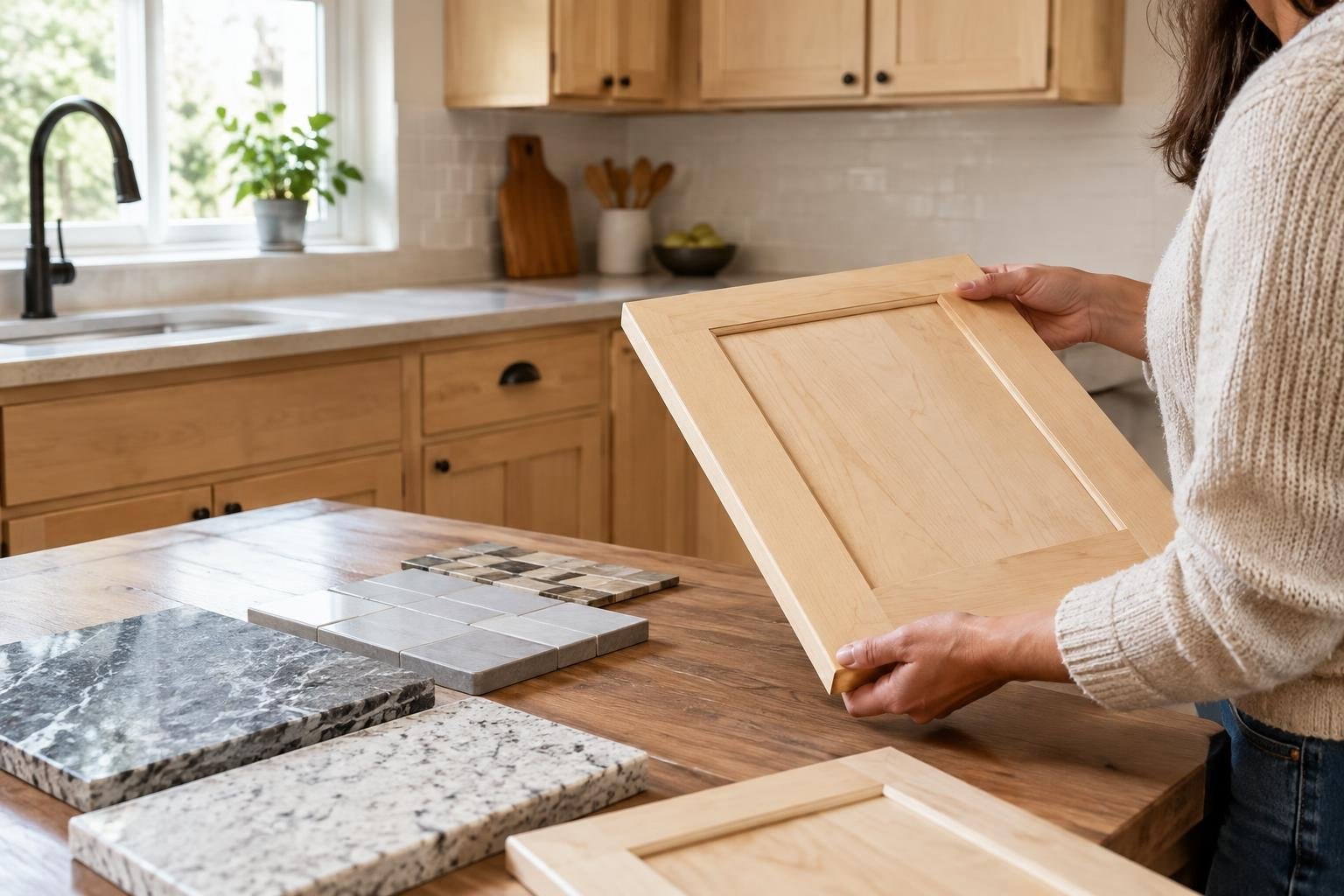
Maple can work with different design directions because it is available in natural, stained, and painted finishes. A clear coat is one way to show the grain; painted options provide another color treatment. Select countertops, backsplash, hardware, and flooring alongside a cabinet sample, rather than judging the cabinet in isolation.
Check the sample in the room and lighting where the cabinets will be used. If a uniform appearance is important, ask about natural variation and how the supplier handles selection. If the wood character is part of the appeal, confirm that the finish you choose allows the grain to remain visible.
Explore cabinet options for your project
Use Cabinet Supply’s site to explore cabinet options as you compare finishes and project requirements. Before choosing a maple product, identify the appearance you want, confirm its construction and finish specifications, and collect written estimates that include the work you need.
Frequently asked questions
What are maple kitchen cabinets made of?
Maple kitchen cabinets are cabinets made with maple wood on visible components such as doors, drawer fronts, or face frames. The cabinet box may use a different material, so check the product specifications rather than assuming every part is solid maple.
What finishes are available for maple cabinets?
Maple is available in natural, stained, painted, and unfinished options. A clear coat can leave the wood grain visible, while paint covers it. Look at a sample because the result depends on the product and finish.
How much do maple kitchen cabinets cost?
Costs depend on the cabinet configuration, materials, finish, hardware, delivery, installation, and related work. Request an itemized quote based on your layout and compare what each estimate includes.
Are unfinished maple cabinets a good choice for DIY projects?
Unfinished maple cabinets let you choose a finish, but you must plan for finishing work before or during installation. Confirm which surfaces are unfinished, what preparation is required, and whether your installer will handle the finishing.
Are maple cabinets good for painting?
Maple can suit painted or stained looks, and a clear coat can show the natural grain. Choose a finish based on your preferred appearance, then check samples alongside your counters, flooring, and lighting.
How long does it take to install maple kitchen cabinets?
Installation timelines vary by project. Ask the supplier and installer for separate estimates for ordering, delivery, finishing, installation, and any countertop or utility work.
What should I compare in maple cabinet estimates?
Compare what each bid includes, not just its total. Check cabinet materials, finish, hardware, delivery, demolition, installation, cleanup, warranty terms, and the process for handling changes or damage.
Does maple wood have a consistent grain?
Maple has a typically smooth grain, though some pieces can show bird’s-eye dots or mineral streaks. If consistency matters to you, ask how the supplier handles natural variation and review a sample or finish sample before ordering.
People Also Ask
What is the best finish for maple kitchen cabinets?
Maple cabinets can be ordered in a natural look, with stain, paint, or unfinished surfaces. The best choice depends on whether you want visible grain, a particular color, or control over the final finish.
What should I check in a kitchen cabinet layout before ordering?
Compare the cabinet plan with the room: check wall dimensions, cabinet locations, appliance spaces, doors, windows, and utility locations. Confirm how the plan handles fillers, finished ends, and transitions before approving the order.
What colors go with maple kitchen cabinets?
Maple works with several color directions, including natural wood tones and painted finishes. Coordinate a physical door sample with counters, backsplash, flooring, and lighting before finalizing selections.
Who should coordinate plumbing and electrical work during cabinet installation?
Identify who is responsible for coordinating each trade and when the work will happen. Use appropriately qualified professionals for electrical, plumbing, structural, or other regulated work, and check applicable local requirements.
Should I buy unfinished maple kitchen cabinets?
Unfinished cabinets provide a blank slate, but they require a finish plan. Confirm who will prepare and finish them, what surfaces are included, and how finishing affects the order and installation schedule.
What should I check in a maple cabinet warranty?
Ask for the written warranty terms for the cabinets, finish, and installation. Confirm what each covers and who handles a claim.
Maple kitchen cabinets offer a versatile wood look, with options ranging from clear-coated natural finishes to stained, painted, and unfinished styles. The right choice depends on the cabinet construction, finish, layout, budget, and the way you use your kitchen. Compare complete specifications and installation details, inspect a sample in your lighting, and get written estimates before deciding.
Your next step
Explore cabinet options at CabinetSupply.com for your next project.
Last reviewed and updated November 2, 2026 by the CabinetSupply Editorial Team.
Sources
- Maple Unfinished Kitchen Cabinets
- Buy Maple Cabinets Timeless Style for Your Kitchen | Lowe's
- Maple Kitchen Cabinets| In Stock | Shop online| Free Shipping |
- The Complete Guide to Maple Kitchen Cabinets | George Cabinetry
- Natural Maple Cabinet Finish – Kitchen Craft Cabinetry
- Maple – Kitchen Cabinets – The Home Depot
- Maple Kitchen Cabinets: All You Need to Know
- CliqStudios | Shop Maple Cabinets
- Best Wood for Kitchen Cabinets: How to Choose