
Two tone kitchen cabinets use two colors or finishes to give cabinetry more visual depth than a single-color scheme. The second tone might appear on an island, on the lower cabinets, or as a wood finish paired with painted cabinets. The best arrangement depends on the kitchen’s layout and the other finishes in the room, not simply on which colors look appealing in a sample. This guide explains how to choose a placement and palette, what can affect project cost and timing, how to compare update options, and what to confirm before ordering or hiring an installer.
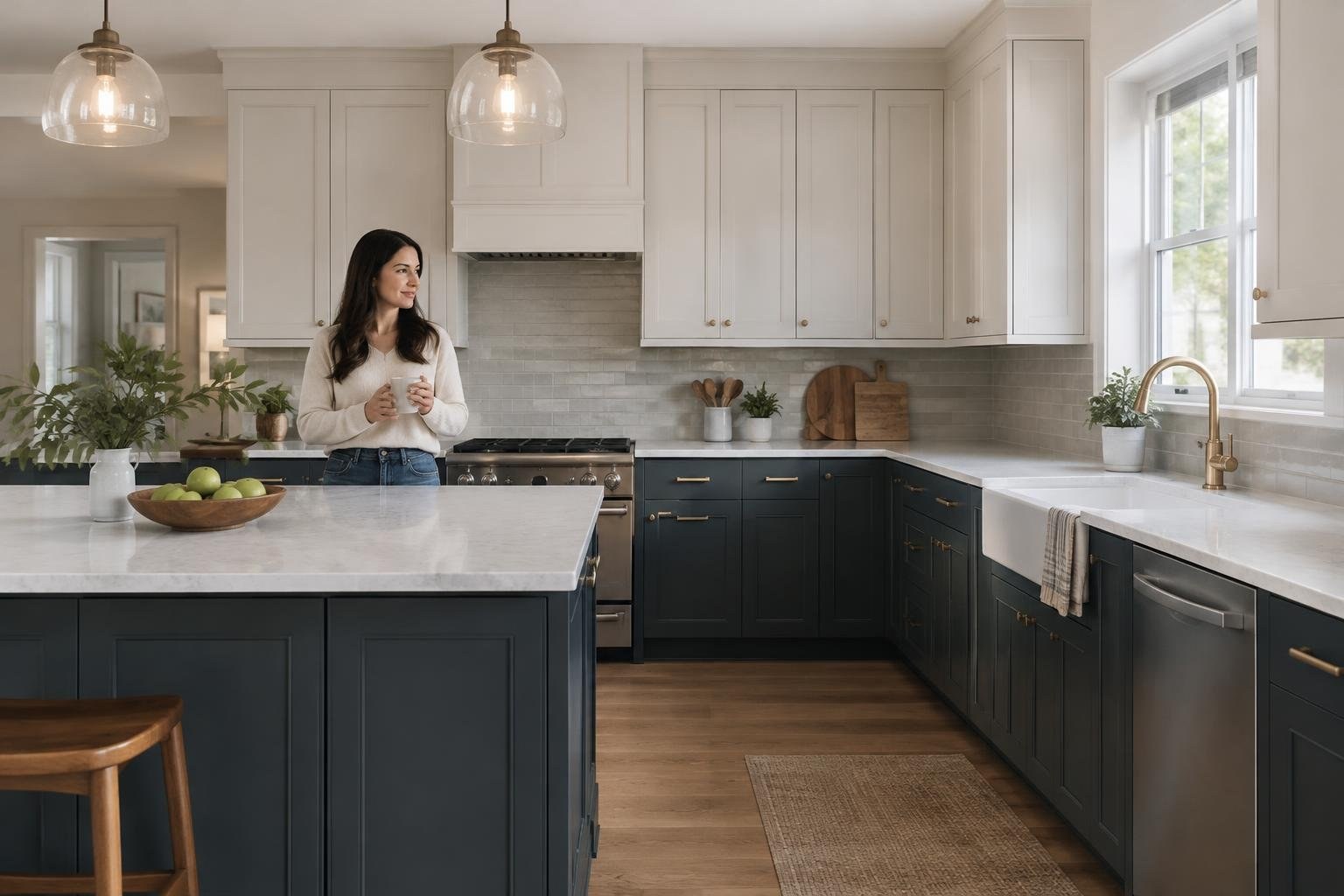
What Are Two Tone Kitchen Cabinets?
Two tone kitchen cabinets use two different cabinet colors or finishes in one kitchen. The change can separate upper cabinets from lowers, set an island apart from perimeter cabinets, or combine painted doors with wood cabinetry. Design examples show both high-contrast combinations and restrained differences in finish or material.
The goal is not simply to use two colors. A successful scheme makes the relationship between them feel deliberate and considers the cabinets alongside the counters, backsplash, flooring, appliances, and lighting.
How to Plan a Two Tone Cabinet Scheme
- Decide where the contrast belongs. Choose the cabinet group that should stand out, such as the island or the lower cabinets.
- Start with fixed finishes. Compare potential cabinet colors with existing or planned countertops, flooring, and backsplash.
- Test actual samples. Look at samples in the kitchen rather than making a final choice from a small screen image.
- Confirm the boundaries. Mark which cabinets receive each color before placing an order or approving a paint plan.
- Coordinate the details. Review hardware, visible cabinet sides, trim, and any open shelving as part of the same composition.
These decisions matter because a two tone treatment is most visible where the eye can read a clear relationship between cabinet groups. Photo examples include contrasting islands, lighter uppers with darker lowers, and combinations of painted and wood finishes.
Color and Placement Options: What to Compare
There is no single correct place for a second cabinet tone. Choose a placement that suits your layout and the amount of contrast you want to see.
| Placement | Design effect | Planning question |
|---|---|---|
| Light uppers and darker lowers | Creates a distinct upper-and-lower contrast; design examples pair lighter upper cabinets with darker lower cabinets. | Will the upper and lower colors sit comfortably with the backsplash and countertop? |
| Contrasting island | Focuses the second color on a central cabinet feature. A dark island against lighter cabinets is one documented approach. | Does the island already have enough visual presence, or would a contrast make it feel too prominent? |
| Paint plus wood | Pairs painted cabinetry with visible wood grain or a wood finish. Examples include painted cabinets alongside wood cabinetry or shelves. | Do the wood tone and grain work with the painted color and other finishes? |
| Closely related colors | Offers a quieter variation than a strong light-dark contrast. | Can you still see the intended distinction under the room’s lighting? |
Black and white, blue and white, and dark island colors are among the combinations shown in design examples. Treat these as starting points, not rules: the same colors can read differently depending on the other materials and the quantity of each tone.
Benefits and Tradeoffs of a Two Tone Look
Two tone cabinets can help a kitchen feel more layered and personalized, but the contrast also draws attention to how the cabinet groups meet. A small change in color or finish can be a lower-key way to explore the look; a pronounced contrast creates a stronger visual statement. Design examples include subtle variation between glass-front, solid wood, and painted island cabinetry, as well as more distinct color pairings.
Potential benefits
- Creates a clear focal area, such as a differently colored island.
- Lets you combine painted and wood finishes in one design.
- Allows a restrained accent or a more noticeable contrast, depending on placement and color.
Tradeoffs to consider
- More color decisions mean more combinations to coordinate with counters, backsplash, and flooring.
- A strong contrast can make cabinet group boundaries especially noticeable.
- Matching a later replacement door or finish may require careful identification of the original product and color.
Before choosing a bold combination, decide whether you want the cabinetry to be the main visual feature or to support other prominent elements in the kitchen.
Materials, Finishes, and Existing Cabinets
Two tones do not require two different cabinet construction types. You can apply the design to new cabinetry or, if the existing cabinets are suitable, explore changing their finishes. A material combination can also establish the second tone: kitchen examples pair painted cabinets with alder wood, wood shelving, or other wood details.
When comparing products, check construction and finish separately from color. Ask what the cabinet boxes, doors, and drawer fronts are made from; what finish is included; and whether both color groups use the same cabinet line and construction. The design examples illustrate different combinations but do not establish that one material or product is inherently more durable or better value than another. Request product specifications and warranty information from the seller or installer before deciding.
If you plan to repaint existing cabinets, have their condition and suitability assessed first. Repainting is a finish change, not a repair for damaged or poorly functioning cabinet boxes. Compare that option with refacing or replacing the cabinets when you receive estimates.
Two Tone Kitchen Cabinet Costs and Pricing Considerations
There is no supported universal price for a two tone cabinet project. The total depends on what is being changed and the specific products and work included. Two finishes alone do not determine the cost.
- Project scope: Painting existing cabinets, refacing them, and installing new cabinets are different approaches. Compare the work described, not just the proposed colors.
- Cabinet selection: Product line, construction, door style, sizes, and the number of cabinets can affect the estimate.
- Finish choices: Ask whether both colors are available in the selected line and what preparation or finish work is included.
- Layout and details: An island, exposed end panels, fillers, trim, or changes to cabinet dimensions may add work or materials.
- Related work: Demolition, disposal, delivery, wall or floor repairs, countertop work, and coordination with other trades can change the total project cost.
- Location and provider: Labor and delivery estimates vary by project and service area. Get local, itemized proposals rather than relying on a generic online figure.
Ask each provider to separate cabinet products, finish work, installation, removal, and related work in the written estimate. That makes it easier to see whether different bids cover the same scope.
Measurements, Samples, and Project Factors
Before ordering or refinishing cabinets, document the kitchen conditions that can affect fit and finish. Record wall lengths and ceiling height, and note doors, windows, appliances, outlets, plumbing, and other fixed features. Identify uneven walls or floors with the provider rather than assuming cabinets will meet a perfectly straight surface.
For a color plan, make a cabinet-by-cabinet schedule that identifies each finish. Include visible end panels, trim, open shelves, and the island if they are part of the design. Review samples beside countertop and backsplash selections in the room. Design examples pair two tone cabinetry with different counters and backsplash materials, reinforcing the need to consider the finishes together.
Ask the provider to verify measurements and explain who is responsible for final field measurements before cabinets are ordered. Confirm appliance openings, door and drawer operation, and any countertop-related decisions as part of the same review.
What to Expect: Process and Timing
Timing depends on the project type, product availability, preparation, and coordination with other work. A color refresh, cabinet refacing, and a full cabinet replacement do not follow the same process, so ask for a project-specific schedule rather than relying on a general duration.
- Design and scope: Select the cabinet layout, color boundaries, finishes, and work to be included.
- Measurements and ordering: Confirm dimensions and product details before materials are ordered.
- Site preparation: Coordinate removal or protection of existing finishes and prepare the work area.
- Cabinet or finish work: Install new cabinets or complete the agreed work on existing cabinets.
- Adjustments and completion: Review alignment, doors, drawers, visible panels, and any agreed follow-up work.
Ask when the kitchen will be unavailable, which decisions must be finalized before work begins, and how the provider will communicate delays or changes. If counters, plumbing, electrical work, or appliances are part of the project, confirm who coordinates each item.
How to Choose a Qualified Cabinet Provider
Choose a provider who can explain both the visual plan and the work behind the estimate. Review relevant project photos, references, written scope, and who will measure, supply, install, and address problems. Check licensing and insurance where required in your location, and ask for the product and workmanship warranty terms that apply to your project.
Useful questions include:
- Which cabinet line, construction, door style, and finishes are included?
- Can you show a finish sample and confirm which cabinets receive each tone?
- Who verifies measurements before the order is placed?
- Does the estimate include removal, disposal, delivery, installation, and cleanup?
- Who handles countertop, plumbing, electrical, or wall repairs if those are included?
- What is excluded, how are changes priced, and what is the payment schedule?
- What does the warranty cover, and how should a concern be reported?
Be cautious if a proposal lacks product details, leaves color boundaries unclear, or promises an outcome without explaining the scope. The lowest bid is not necessarily the best comparison if it excludes work another proposal includes.
Permits, Credentials, Warranties, and Safety
Permit requirements, contractor credentials, and rules for plumbing or electrical changes depend on the project and local jurisdiction. Confirm requirements with the appropriate local authority and qualified professionals before work begins, especially if the kitchen project moves or alters utilities. Do not assume that a cabinet-only estimate includes regulated trade work.
Ask who is responsible for permits when they apply, who will perform each part of the work, and what insurance and warranty documents are available. Keep the approved scope, color schedule, product selections, change orders, and payment terms in writing. Follow product-care guidance supplied for the actual cabinet finish rather than applying a generic cleaning or repair method.
Ways to Control Costs Without Cutting Corners
You can manage costs without choosing a color or product blindly. Keep the existing layout if it serves your needs, compare a focused accent with a full two tone scheme, and ask whether a suitable existing cabinet finish can be changed instead of replacing all cabinetry. These are options to price, not guaranteed savings; the cabinet condition and required work determine whether they make sense.
- Set a project budget and ask providers to identify which selections most affect it.
- Compare the same scope, cabinet specifications, finish, and installation responsibilities across bids.
- Consider limiting the second tone to an island or a defined cabinet group.
- Finalize colors, hardware, and cabinet schedules before ordering to reduce late changes.
- Do not skip measurement checks, product details, or qualified trade work to lower an initial bid.
For an existing kitchen, request separate estimates for repainting, refacing, and replacement when each approach is suitable. A clear comparison can reveal whether keeping the current cabinets is practical.
Common Mistakes and an Approval Checklist
Use this checklist before approving an order or project:
- Have you chosen which cabinets receive each color or finish?
- Have you compared samples with the countertop, backsplash, and flooring in the kitchen?
- Are cabinet construction, door style, product line, and finishes listed in the proposal?
- Are measurements, appliance openings, and visible end panels confirmed?
- Does the estimate spell out labor, removal, delivery, cleanup, related work, and exclusions?
- Have you confirmed timing, payment terms, change-order process, warranty, and responsibility for permits where applicable?
Common avoidable problems include choosing colors from a screen alone, leaving the boundary between tones vague, comparing bids with different scopes, and approving a cabinet order before measurements and selections are confirmed. A provider should be able to explain how the written plan translates into the finished kitchen.
Explore Cabinet Options for Your Kitchen
Use the Cabinet Supply site to explore cabinet options and consider which products and finishes may fit your kitchen plan. Bring your layout, measurements, finish preferences, and questions to any provider conversation, and compare recommendations against the written scope and budget.
Frequently asked questions
What are two tone kitchen cabinets?
Two tone kitchen cabinets use two distinct colors or finishes across the cabinetry in one kitchen. The difference might separate upper and lower cabinets, distinguish an island from perimeter cabinets, or combine painted cabinetry with a wood finish.
What is the best color combination for two tone cabinets?
A lighter upper cabinet color paired with darker lower cabinets is one widely shown approach. A contrasting island, a wood-and-paint combination, or a subtle shift between related neutrals can also create a two tone look. Choose based on the room’s other finishes and the contrast you want.
Do two tone cabinets work in a small kitchen?
They can work in a small kitchen, but the result depends on contrast, lighting, and how much of each color is visible. Consider a limited color change, such as a contrasting island, and review large samples in the actual room before committing.
Can I mix wood and painted cabinets?
Yes. A wood finish on one cabinet group and paint on another can introduce both color and material variation. Compare the wood tone and grain with the painted color, counters, flooring, and other finishes before choosing.
Do two tone kitchen cabinets cost more?
There is no universal added price for a two tone design. The total depends on cabinet selection, finish choices, project scope, and whether you are replacing, repainting, or refacing existing cabinets. Ask providers to itemize the options so you can compare equivalent work.
Can I create two tone cabinets by painting existing cabinets?
Yes, if the existing cabinets are suitable for painting and you want to change their color rather than replace them. Have a qualified provider assess cabinet condition and explain the preparation, finish, and warranty before comparing repainting with refacing or replacement.
How do I choose colors that work with my countertops?
Use finish samples beside the fixed elements in the kitchen, including counters, backsplash, and flooring. Check them in the room’s lighting and confirm exactly which cabinets receive each color before approving the order or paint plan.
Should the island or the upper cabinets be the contrasting color?
A contrasting island can provide a focused accent, while contrasting upper and lower cabinets distribute the color change across the kitchen. Decide which approach suits your layout and test the full combination before ordering.
People Also Ask
Why choose two tone kitchen cabinets?
Two tone cabinets can bring contrast to a kitchen without adding more colors to every surface. Keep the rest of the palette coordinated and decide which cabinet group should carry the accent.
Which cabinets should be the darker color?
A dark lower cabinet color with lighter uppers is one option. A contrasting island or a painted-and-wood combination can create a similar two tone effect in a different part of the room.
What should I compare when reviewing cabinet project estimates?
Compare itemized cabinet products, finish work, installation, removal, and related work. Check that bids cover the same scope before comparing totals.
Who should verify cabinet measurements before ordering?
Ask the provider who will verify final field measurements before ordering. Confirm appliance openings, door and drawer operation, and countertop-related decisions during the same review.
What should I ask about a cabinet warranty?
Ask what the product and workmanship warranties cover and how to report a concern. Request the terms that apply to your project from the provider.
How long does a two tone cabinet project take?
The timeline depends on whether you are painting, refacing, or replacing cabinets, as well as product availability, preparation, and installation coordination. Ask the provider for a project schedule that identifies decisions and dependencies.
Two tone kitchen cabinets can add contrast and personality without requiring a complicated palette. Start by deciding where the color change should happen, then test cabinet samples beside your counters, flooring, backsplash, and lighting. A clear plan for finishes, boundaries, and installation details will help the finished kitchen feel intentional and practical.
Your next step
Explore cabinet options at CabinetSupply.com for your next project.
Last reviewed and updated November 2, 2026 by the CabinetSupply Editorial Team.
Sources
- 18 Examples of Two-Toned Kitchen Cabinets From Designers
- Two Tone Kitchen Cabinets – Photos & Ideas | Houzz
- 16 Ideas for Two-Tone Kitchen Cabinets That Add Discerning Style
- Two-Tone Kitchen Cabinets: Ideas & Benefits
- 55 Two-Tone Kitchen Cabinet Ideas That Add Color, Contrast, and a Double Dose of Style
- 9 Two-Tone Kitchen Cabinet Color Ideas for 2026
- 26 Two-Tone Kitchen Cabinet Ideas That Make a Dazzling Duo
- 20 Two-Tone Kitchen Cabinet Ideas | HGTV