
Natural wood kitchen cabinets make the wood grain part of the room’s design rather than hiding it beneath an opaque paint color. That can create a warm, distinctive look, but “natural wood” does not tell you exactly what material is used throughout the cabinet, how the finish will look in your kitchen, or what the project will cost. Before choosing a door color or requesting a quote, identify the wood and finish, compare samples in your lighting, and ask what is included in the cabinet specification and installation estimate. This guide explains the main decisions, tradeoffs, planning questions, and provider checks that help you choose with confidence.
What natural wood kitchen cabinets are, and what the term does not tell you
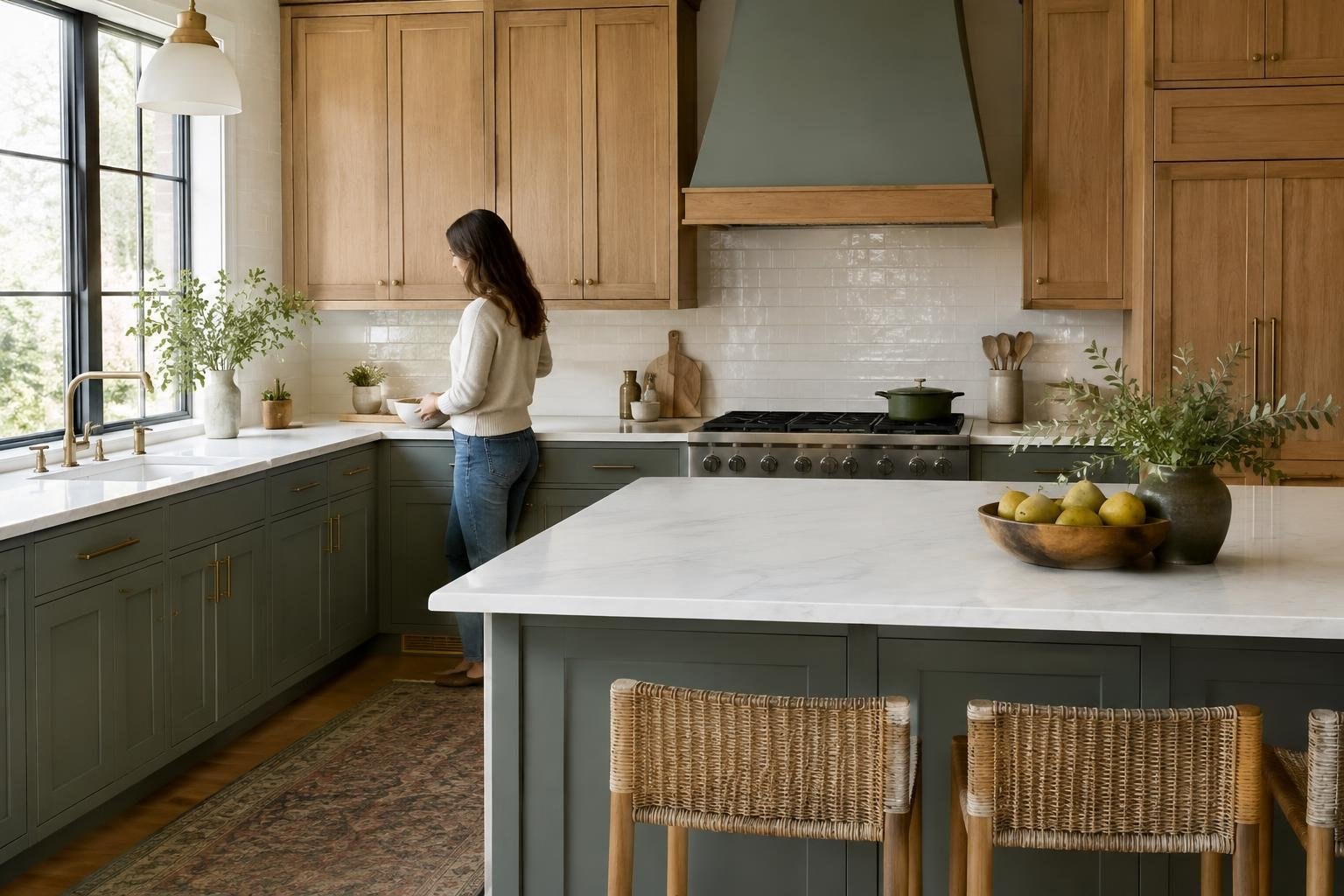
Natural wood cabinetry is a design choice in which the visible wood grain contributes to the kitchen’s character. It can be used in rustic, farmhouse, traditional, or more restrained contemporary schemes, depending on the door profile, stain, hardware, and surrounding finishes. A natural-looking kitchen does not have to use wood on every surface: a gallery example pairs stained hickory cabinetry with navy painted cabinets, showing how contrast can be part of the plan.
Before shopping, separate three decisions that are often blurred together:
- Appearance: The species or wood look, grain, color, and door style.
- Construction: The materials used for doors, drawer fronts, cabinet boxes, shelves, and exposed ends.
- Project scope: Which cabinets, accessories, delivery, installation, and related work the estimate includes.
Ask for those details in writing. A product label or sample color alone cannot answer all three questions.
Signs you may want to change your kitchen cabinets
Cabinets may be worth replacing, refinishing, or otherwise reconsidering when their appearance no longer works for you, the current layout fails to support how you use the kitchen, or a remodel already involves changing the room. These are reasons to investigate options, not proof that replacement is automatically the right answer.
Start with a practical assessment:
- Are the main storage areas awkward to access or poorly suited to the items you keep?
- Do the door style, color, or visible grain conflict with the kitchen look you want?
- Are you changing the appliances, counters, sink, or room layout?
- Are you interested in a different cabinet finish or in combining wood and painted cabinetry?
If the problem is mainly color or appearance, ask whether the existing cabinets are candidates for refinishing or another surface update. If the layout or cabinet specification needs to change, compare that work against replacement. Have a qualified provider inspect the actual cabinets before assuming they can be reused or refinished.
Natural wood may offer the warmth and visible character some homeowners want, but the choice should solve a real design or functional need, not simply follow a trend.
Natural wood cabinet costs and what to compare in estimates
Natural wood cabinetry has no single dependable price based on its name alone. The wood or wood-look specification can affect price, and the full project cost also depends on what is being purchased and installed. Request written, itemized estimates rather than relying on a broad label such as “wood cabinets.”
Ask each provider to state whether the quote includes:
- Cabinet doors, drawer fronts, boxes, shelves, exposed ends, and fillers.
- The identified wood, veneer, stain, or other finish specification.
- Interior storage features, drawer and door hardware, and modifications.
- Delivery, installation, removal of old cabinets, and cleanup.
- Countertop, sink, plumbing, electrical, appliance, flooring, or wall work, if applicable.
Compare quotes only after confirming that they describe the same room, cabinet quantities, materials, options, and responsibilities. Ask the provider to separate allowances or excluded items so you can see what may be added later.
Wood types can differ in price as well as appearance. That makes a sample and a clear product specification important: two estimates that use similar color words may not represent the same materials or finish.
Factors that affect the cabinet project
Price, appearance, and the final result depend on the exact cabinet selection and the extent of the work. A useful estimate should make the variables visible instead of hiding them behind a per-cabinet or per-room figure.
- Wood appearance and finish: Ask what wood or veneer is specified, how the grain and color will appear, and whether the finish is stained or painted.
- Cabinet design: Door profile, cabinet sizes, exposed ends, fillers, and custom dimensions may change the specification.
- Storage and hardware: Identify the included drawers, organizers, hinges, and other options rather than assuming they are standard.
- Room and layout: Changes to cabinet locations, appliances, or the island can change the work required.
- Installation and related work: Confirm whether removal, delivery, fitting, and work involving counters or utilities are included or handled by others.
These are comparison prompts, not a substitute for a site-specific quote. Ask providers to explain how a design choice changes their price and what assumptions they used to prepare it.
Options and tradeoffs: wood, stain, paint, and mixed finishes
There is no universally best wood species or cabinet finish. Choose by comparing the exact appearance, cost, and specification against your priorities. Cherry is one example with red undertones and an aging appearance associated with traditional kitchens; it is not a default recommendation for every room.
| Choice | Potential benefit | What to verify |
|---|---|---|
| Visible wood grain with a stain | Keeps grain prominent and adds color while retaining a wood-centered look. | Species, sample appearance, and how the finish coordinates with other surfaces. |
| Painted cabinets alongside wood | Creates contrast without making every cabinet the same visual treatment. | Whether the wood and paint samples harmonize in the room’s lighting. |
| Different wood species or tones | Offers alternatives in grain, color, and price. | Exact product specification, sample, and the provider’s stated finish details. |
Design examples show natural wood paired with blue-painted cabinets, gray countertops, white surfaces, farmhouse sinks, and different cabinet styles. Treat these as inspiration rather than a formula: a photo cannot guarantee that the same colors or materials will look alike in your kitchen.
How to judge materials, construction, and finish
Cabinet doors and drawer fronts are only part of the purchase. Ask the provider to describe what the cabinet is made of and how it is finished, component by component. In particular, confirm the materials for the visible doors, cabinet box, shelves, drawer parts, and any exposed panels. Do not infer that every part is solid wood from a “natural wood” description.
Review a physical door or finish sample if one is available. Check its grain, color, sheen, and the way the finish looks from more than one angle. Place it beside the actual or planned countertop, backsplash, flooring, and paint samples. A photo can help you gather ideas, but samples in the room are a stronger basis for coordinating selections.
Ask the provider to document the exact product, finish, and care information. Clarify what is covered by the product warranty and what is excluded. If the answer is vague, request a more specific description before paying a deposit or approving an order.
Visible grain is one of the defining design features of natural wood cabinetry. Whether it is the right choice depends on the grain and color you actually receive, not only a showroom name or online image.
Planning measurements, storage, appliances, and finishes
Plan cabinets as part of the whole kitchen, not as isolated doors. Before finalizing a design, record room dimensions, ceiling height, doors and windows, appliance locations, sink and plumbing, outlets, and any visible heating or ventilation features. Ask the designer or installer to verify measurements and identify conflicts before cabinets are ordered.
Bring the appliance specifications and your preferred storage uses into the design discussion. Explain what you need near the cooking area, sink, food storage, and any island or eating space. Ask to see where drawers, doors, pantry storage, and appliances will open, and whether any handles or door swings could interfere.
Coordinate cabinet color and grain with the counters, backsplash, flooring, fixtures, and lighting. Natural wood is often shown alongside contrasting counters and tile, or paired with painted cabinetry; the right balance depends on the room and the samples you select.
Do not approve a drawing that leaves key dimensions or responsibilities unclear. Have the provider identify who confirms final measurements and who resolves site conditions that differ from the plan.
What to expect from ordering through installation, including timing
Expect a project to move through selection, measurement, design confirmation, ordering or sourcing, site preparation, installation, and final review. Lead times and installation duration vary by cabinet selection, provider, and project scope. Ask for dates that apply to your particular project.
- Agree on the specification: Identify the cabinet style, finish, sizes, materials, and options.
- Confirm the plan: Review measurements, appliance locations, openings, and the cabinet layout.
- Clarify preparation: Ask who removes existing cabinets and coordinates any counter, utility, wall, or flooring work.
- Set schedule milestones: Request expected order, delivery, installation, and completion dates, including what could delay each step.
- Inspect the completed work: Compare installed cabinets with the approved plan and document unresolved issues with the provider.
Ask about the order and handoffs for any work performed by other trades. Confirm who is responsible for coordinating the schedule and tell the provider about changes before they affect an order or installation plan.
How to choose and compare a qualified cabinet provider
Choose a provider who can explain the proposed cabinet specification, measure and plan the project, and state clearly who will perform and coordinate each part of the work. Compare more than the finish sample or bottom-line price.
Ask prospective providers:
- Can you show examples of kitchen projects with a similar cabinet style or finish?
- Who will take and verify measurements, prepare the layout, and approve changes?
- Which materials and finish are included for each cabinet component?
- Who handles delivery, installation, removal, cleanup, and any needed adjustments?
- What is excluded from the estimate, and how are additions or changes approved and priced?
- What warranty information applies to the cabinets and installation, and who handles concerns?
- What schedule and payment milestones do you propose?
Check references and reviews, ask for a written scope, and confirm any licenses or insurance required for the work in your location. A low bid is not necessarily the better choice if it omits components or leaves installation responsibility unclear.
To explore cabinet options for your kitchen, visit CabinetSupply.com and compare possibilities before settling on a specification.
Permits, qualifications, warranties, and safety checks
Cabinet orders and kitchen work can involve multiple providers and parts of the home. Before work begins, establish who is responsible for measurement, delivery, installation, and any work involving plumbing, electrical systems, structural elements, or other regulated work. Do not take on work that requires a qualified or locally authorized professional unless you meet the applicable requirements.
Permit and licensing requirements vary by location and by the scope of the project. Ask the relevant local authority or a qualified local professional whether permits or credentials apply; do not assume that a cabinet-only purchase or a larger kitchen remodel has the same requirements everywhere.
Request written warranty information for the cabinets and installation, and ask who to contact if a concern arises. Confirm what the warranty covers, how to make a claim, and whether particular care or maintenance is required. Get product and finish care instructions before cleaning or treating cabinet surfaces.
These checks protect the clarity of the project agreement. They do not replace local code guidance, product documentation, or professional advice for work beyond cabinet selection and installation.
Ways to control costs without cutting important corners
You can control a project budget more safely by simplifying the design and comparing complete specifications, rather than selecting materials without understanding what is included. Start by deciding which visible features matter most to you, such as the wood appearance, cabinet style, or a particular storage feature. Ask for the cost effect of alternatives before approving the design.
- Compare two or more estimates with the same cabinet quantities, material description, finish, and installation scope.
- Ask whether a simpler layout or fewer custom sizes can meet your needs.
- Separate essential storage from optional organizers or decorative details.
- Confirm existing appliances and their locations before the cabinet plan is finalized.
- Ask how delivery, removal, installation, and related work are handled so omitted items do not appear as surprises.
- Keep selections and approvals documented, and raise proposed changes before work proceeds.
Do not save money by skipping measurement verification or leaving the cabinet materials and finish unspecified. A cheaper proposal may not be comparable if it describes a different product or excludes work you expect the provider to perform.
Wood choices can vary in price, so ask the provider to explain the cost difference between the actual options offered rather than relying on a general claim about “natural wood.”
Mistakes to avoid and a pre-order checklist
Use this checklist before approving a cabinet order or installation agreement:
- Have the wood or veneer, finish, and materials for visible and interior components been identified?
- Have you reviewed a sample beside the counters, flooring, backsplash, and paint?
- Does the final layout show cabinet dimensions, appliances, doors, windows, and key utilities?
- Does the estimate list included cabinets, storage options, delivery, installation, removal, and cleanup?
- Are exclusions, allowances, change approvals, schedule, and payment milestones clear?
- Have you asked who verifies measurements and who is responsible for each part of the work?
- Do you have written warranty and care details?
Common avoidable problems include choosing from a small photo without checking a sample, treating a broad wood label as a complete material specification, overlooking how the finish relates to the room, and comparing totals for projects with different scopes. Another risk is assuming that a provider includes removal, installation, or related work when the estimate does not say so.
Resolve open questions in writing before ordering. If a change is proposed later, ask what it changes in the specification, price, and schedule, and approve it through the agreed process.
Frequently asked questions
What are natural wood kitchen cabinets?
Natural wood kitchen cabinets have visible wood grain and a wood-based appearance, often achieved with a stain or clear-looking finish. Ask the seller exactly which parts are solid wood, veneer, or another material, because the phrase alone does not specify cabinet-box construction.
Which wood is best for kitchen cabinets?
There is no single best species for every kitchen. Compare samples for color, grain, budget, and the look you want, then ask the cabinet provider to identify the species and explain the finish. Cherry, for example, is associated with red undertones and a distinctive aging appearance, but that look may not suit every palette.
Are natural wood cabinets durable?
They can be, but the answer depends on the species, construction, finish, kitchen conditions, and care. Ask for written product and finish details, and compare how the specific cabinet is made rather than treating the words “natural wood” as a durability guarantee.
Can you mix natural wood cabinets with painted cabinets?
Yes. A design can pair stained wood cabinets with painted cabinets, such as a wood-grain finish alongside a blue painted finish. Review a sample combination in the actual room and coordinate the undertones with counters, flooring, backsplash, and lighting.
Do natural wood kitchen cabinets cost more?
There is no reliable universal price based on the phrase “natural wood.” Ask for an itemized estimate and compare cabinet type, species or veneer, finish, sizes, accessories, installation, and related work. Wood options can differ in price, so confirm the exact specification behind each quote.
What colors go with natural wood cabinets?
Keep a wood sample beside your countertop, backsplash, floor, and paint choices, and view them in the kitchen’s lighting. A lighter or visually quieter surface can help balance dark wood, while a restrained hardware choice can keep attention on the grain.
How do you clean natural wood kitchen cabinets?
Use the care instructions supplied for the specific cabinet finish. Confirm which cleaners and maintenance steps the manufacturer permits before using a product on a visible surface.
Should I refinish or replace my wood kitchen cabinets?
Not necessarily. Refinishing may be worth exploring if the existing cabinets are suitable for the planned work, while replacement may make more sense when the layout or cabinet specification needs to change. Ask providers to inspect the cabinets and compare written scopes before deciding.
People Also Ask
Do natural wood cabinets mean every cabinet part is solid wood?
The term describes a wood-grain look, but it does not by itself identify every cabinet component. Request a written specification listing the materials and finish for doors, drawer fronts, cabinet boxes, and exposed sides.
Can natural wood cabinets work with a painted island?
Yes. A combination of stained wood cabinets and painted cabinetry can add contrast. Compare actual samples together, since colors and grain can look different in your room than in photos.
How do I compare quotes for natural wood kitchen cabinets?
Compare the same details in every estimate: cabinet construction, wood or veneer specification, finish, sizes, interior options, delivery, installation, and any removal or related work. The lowest total may not describe the same project scope.
Are natural wood cabinets going out of style?
Not automatically. The visual result depends on the wood, stain, finish, cabinet style, and how those choices relate to the rest of the kitchen. Review samples and complete-room examples before selecting a color.
What should I measure before ordering kitchen cabinets?
Begin by measuring the room and documenting appliances, openings, utilities, and the existing layout. Have the cabinet provider verify field measurements and resolve any conflicts before an order is finalized.
How long does it take to install natural wood kitchen cabinets?
Ask how long the specific cabinets will take to produce or become available, when installation can begin, and what must be completed first. Get the expected milestones and any assumptions in writing.
Natural wood kitchen cabinets can bring visible grain, warmth, and character into a kitchen, but the right choice depends on more than appearance. Compare the actual wood and construction, look at full-size samples in your room, plan the layout and storage, and review complete written estimates before committing. Explore Cabinet Supply to consider cabinet options for your project.
Your next step
Explore cabinet options at CabinetSupply.com for your next project.
Last reviewed and updated November 2, 2026 by the CabinetSupply Editorial Team.
Sources
- Natural Wood Kitchen Cabinets: Elegant and Sustainable
- Natural Wood Kitchen Cabinets – Photos & Ideas | Houzz
- Natural Wood Kitchen Cabinets: Types + Ideas – Kitchen Cabinet Kings
- 20 Natural Wood Kitchen Cabinet Ideas for 2026 – Styli Casa
- Natural Wood Kitchen Cabinets | Showplace Cabinetry
- 53 Best Natural Wood Kitchen Cabinets ideas
- Natural Wood Kitchen Cabinets| In Stock | Shop online| Free Shipping
- 52+ Natural Wood Kitchen Cabinets ( NATURAL LOOK ) Wood Cabinets