
Raised panel kitchen cabinets have a shaped center panel that stands above the surrounding door frame. That added profile can bring depth and a more detailed look to a kitchen, but the style alone does not tell you what the cabinet is made of, how it is built, or what the complete project will cost. Compare the door profile, finish, cabinet construction, layout, and written estimate as separate decisions. This guide explains what to inspect, how to compare options, and what to ask before you order.
What Are Raised Panel Kitchen Cabinets?
Raised panel describes the profile of a cabinet door or drawer front: its center panel is shaped to sit higher than the surrounding frame. That relief creates shadow and detail compared with a plain, flat-looking front. Product descriptions may call the look traditional, elegant, or warm, but those are style judgments, not technical quality ratings.
Do not treat the door style as a complete cabinet specification. A raised panel door can be paired with different finishes and cabinet configurations. Retail listings also show that the label can apply to ready-to-assemble products, while other listings emphasize wood construction or particular hardware. Verify the exact product rather than assuming every cabinet with this profile shares the same materials or features.
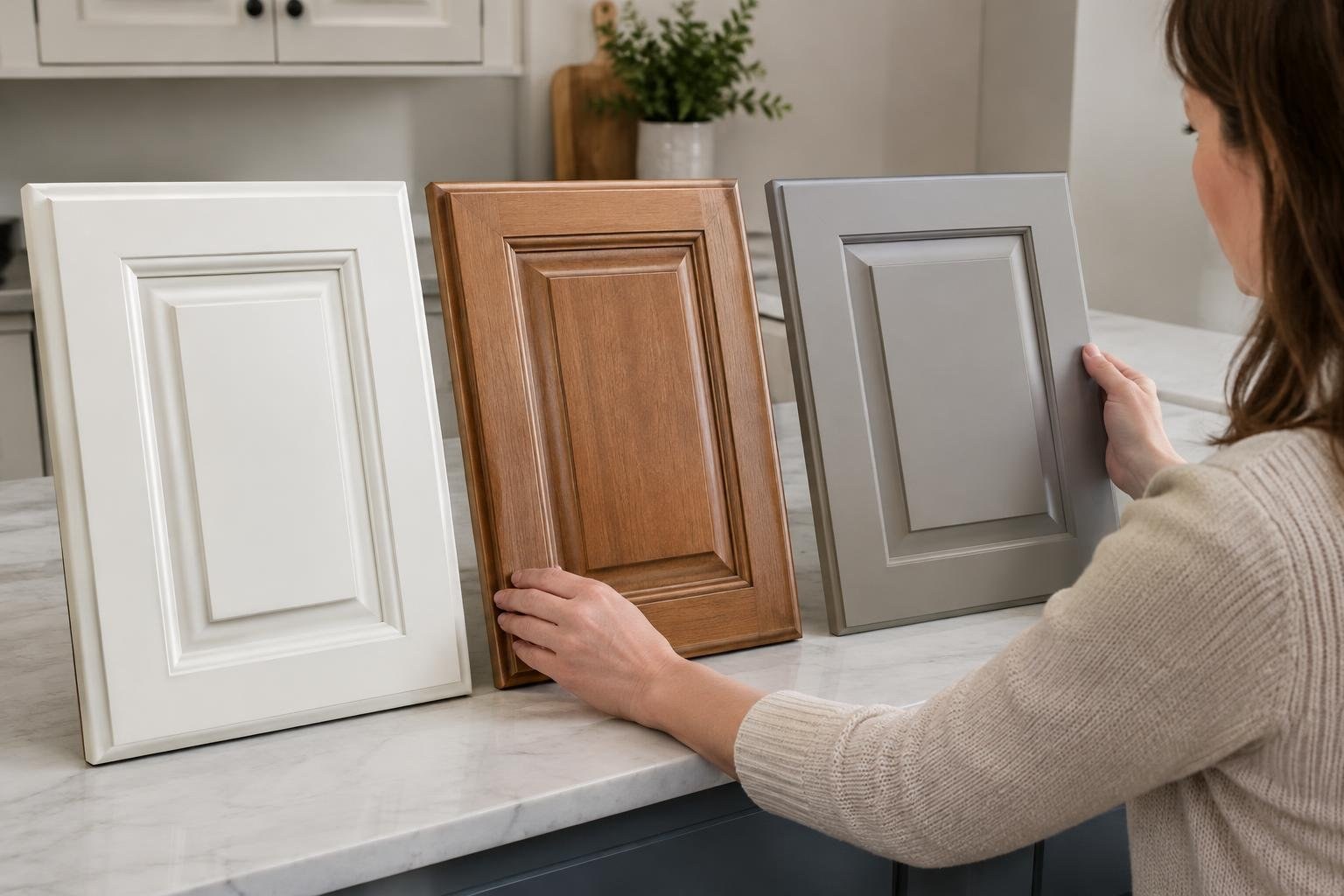
For a useful first comparison, request a door sample or inspect the product in person. Look at the profile from straight on and at an angle, and consider how its detail works with your countertop, backsplash, flooring, and other visible finishes.
Which Raised Panel Options and Features Should You Compare?
- Door profile: Compare the height and shape of the raised center and the width and contour of the surrounding frame. Ask whether the same profile is used on drawer fronts.
- Finish: Product selections may include painted or stained looks. Ask which finishes are available for the exact door and cabinet line, and request a sample before choosing a color.
- Inset or overlay: Raised panel describes the center-panel shape. Inset describes a door set inside a face frame. A product may combine both, so clarify the mounting style instead of treating the terms as alternatives.
- Cabinet format: Some raised panel options are marketed as ready-to-assemble. Confirm whether the price and delivery include assembled cabinets, assembly work, or installation.
- Construction and hardware: Check the specification sheet for box materials, shelves, drawer construction, hinges, glides, and included accessories. Features such as soft-close hardware or dovetailed drawers are listed for some products, but should not be assumed across all raised panel cabinets.
Use a written specification to compare products. A product photograph can communicate appearance, but it cannot answer every question about materials or what is included in the order.
Will Raised Panel Cabinets Work With Your Kitchen Design?
Raised panel doors may be worth considering when you want visible door detail and a kitchen with a more layered or formal character. A Houzz kitchen example pairs them with medium-tone wood cabinetry, an island, granite counters, a beige stone backsplash, and stainless steel appliances. That is one possible combination, not a rule: use it as a reminder to evaluate the cabinets alongside the rest of the room.
The profile can also feel visually prominent. If your kitchen already has strongly patterned counters, detailed backsplash tile, or several competing finishes, bring samples together before ordering. Consider how the door detail reads across a full run of cabinets, not only on a single sample.
For a quieter look, compare a simpler door profile with the same finish and room selections. For a more traditional effect, review the raised panel alongside the actual hardware and trim you intend to use. If you are uncertain, request a design rendering or marked-up elevation that shows the chosen cabinets in the proposed layout.
How Much Do Raised Panel Kitchen Cabinets Cost?
A raised panel label is not a price quote. Ask providers to price the same layout and scope so you can see what is driving differences.
Request separate amounts or clear descriptions for:
- Cabinet boxes, doors, drawer fronts, and selected finish.
- Fillers, finished ends, toe kicks, panels, trim, and any specialty-size pieces.
- Interior accessories and hardware, including which features are included versus optional.
- Delivery, assembly if applicable, installation, demolition, disposal, and cleanup.
- Countertops, plumbing, electrical, wall repair, flooring, or other work if the provider is including it.
Ask whether taxes, delivery conditions, and changes after approval are included or priced separately. A lower cabinet-only quote may not be comparable with an estimate that includes assembly, installation, and removal. Get the scope, exclusions, payment schedule, and process for approving extra work in writing.
What Factors Affect the Project Beyond the Door Style?
Project price and complexity depend on more than the door profile. The number and dimensions of cabinets, layout, finish, selected construction, storage accessories, and amount of installation work can all change the quote. So can whether the product is ready to assemble and whether delivery, assembly, and fitting are handled by separate parties.
Kitchen conditions can add decisions that a door-style listing does not resolve. Document appliance locations and dimensions, windows, doors, plumbing, electrical outlets, ventilation, ceiling height, and visible wall irregularities before finalizing a plan. Have the provider confirm clearances and how fillers, finished ends, and panels will be handled. Do not assume a standard cabinet will fit a particular opening without checking the actual measurements.
Ask the designer or installer to identify which dimensions they measured and which assumptions remain. If appliances, plumbing, or electrical locations may change, establish who coordinates that work and when those decisions must be final.
When Might It Be Time to Consider New Cabinetry?
There is no universal sign that a kitchen needs raised panel cabinets. The decision is usually about the look you want, a planned cabinet replacement, or whether your current doors and layout still meet your needs. Separate appearance concerns from functional problems before deciding what to change.
Make a short list of what you want to improve. Is the concern limited to door appearance, or do you also need different storage, cabinet dimensions, interior access, or a revised kitchen layout? If you are keeping existing cabinet boxes, ask a qualified provider whether the proposed doors and finish are compatible with them. If the boxes, layout, or fit need significant changes, compare the scope of a broader replacement rather than assuming a new door style solves every issue.
Bring photos and measurements to a consultation, and identify what must stay in place. This helps keep the conversation focused on the actual problem instead of starting with a style name and overlooking function.
What to Expect From Planning Through Installation
Expect several decisions: confirm the design, verify measurements, approve the cabinet and finish specifications, arrange delivery, and coordinate assembly or installation if those services are part of the project. Some sellers offer a design tool or design assistance, but confirm what is included and whether it covers the complete room plan.
- Define the project: Decide whether you are changing doors only, replacing cabinets, or changing the layout.
- Measure and document: Record room dimensions, openings, appliances, utilities, and features that affect cabinet placement. Have the responsible professional verify final dimensions before ordering.
- Review the plan: Check cabinet sizes, door and drawer swings, finishes, panels, fillers, and any appliance or countertop coordination.
- Approve the order and schedule: Confirm written specifications, delivery responsibilities, assembly, installation scope, and the process for reporting damaged or missing items.
- Inspect completed work: Compare the installation with the approved plan and note any adjustments or unresolved items in writing.
Do not rely on a general timeline without a project-specific schedule. Ask when measurements must be final, when changes become costly or unavailable, how delivery is coordinated, and what could delay the work. Timing depends on the selected product and the responsibilities assigned in your agreement.
DIY or Professional Installation: Which Makes Sense?
Raised panel cabinets are sold in different formats, including ready-to-assemble options. With an RTA product, confirm exactly what arrives, what assembly requires, and whether the quote includes installation. Compare that scope with a provider handling assembly and fitting, rather than judging the choice by cabinet price alone.
DIY assembly or installation may suit someone with the right tools, skills, time, and willingness to follow the product instructions and manage layout details. Professional help may be a better fit when accurate fitting, complex room conditions, utility coordination, or a single point of responsibility matters to you. Ask each provider what work they personally perform and what is assigned to someone else.
Whichever route you choose, do not take on electrical, plumbing, structural, or other regulated work unless qualified and permitted to do so. Confirm local requirements before starting. Have a professional resolve questions about safe fastening, utility locations, and conditions that are outside your experience.
How to Choose a Qualified Cabinet Provider
Compare providers by the clarity of their plan and written scope, not only by the total. Ask for examples of relevant completed work, references you can contact, and a written explanation of who is responsible for measuring, ordering, delivery, assembly, installation, and resolving product or fitting problems.
Before selecting a provider, ask:
- Which exact cabinet line, door profile, finish, materials, and hardware are in the quote?
- Who verifies final measurements and checks the layout against appliances and room conditions?
- Does the estimate include delivery, assembly, installation, removal, disposal, and cleanup?
- What is excluded, and how are added costs or changes approved?
- What written warranty applies to the cabinets, finish, hardware, and installation, and who handles a claim?
- What credentials or insurance are required for the work in your location, and can the provider document what applies?
- What payment schedule, delivery expectations, and completion milestones will be documented?
A low bid is difficult to evaluate if it omits important work or uses a different product specification. Compare matching scopes and keep approvals, drawings, and changes in writing.
Permits, Credentials, Warranties, and Safety Questions
Permit, licensing, and insurance requirements depend on location and the work being done. Confirm requirements with your local building department and ask the provider which parts of the project require qualified or licensed trades. Cabinet ordering by itself does not answer whether connected electrical, plumbing, structural, or other work has local requirements.
Read the warranty before purchase. Check what it covers, how long the coverage lasts, what care or installation conditions apply, who processes a claim, and whether labor is included. Do not infer warranty coverage from a product feature or sales description.
For safety, make sure the installation plan accounts for the actual wall and cabinet conditions and any nearby utilities. If a condition is uncertain, pause and have a qualified professional assess it before work proceeds. Ask who is responsible for coordinating other trades and protecting the finished surfaces during the project.
Ways to Manage Cost Without Taking Risky Shortcuts
You can control spending without choosing a cabinet on appearance alone. First, decide which parts of the project are essential, then compare compatible products and a complete installation scope. Ask suppliers whether simpler configurations, standard sizes, or fewer accessories are available for the same overall plan. Verify any savings against the actual specification and estimate.
- Finalize measurements and selections before ordering to reduce avoidable changes.
- Compare quotes with the same cabinet count, finish, hardware, delivery, and labor scope.
- Identify optional accessories and price them separately before deciding which are worthwhile.
- Ask whether an RTA option fits your skills and schedule, and include assembly and installation costs when comparing it with assembled cabinets.
- Request a sample before committing to a finish, especially when matching existing surfaces.
Avoid saving money by skipping necessary measurement checks, ignoring written care or installation requirements, or assigning regulated work to an unqualified person. A cheaper initial figure is useful only if the product and responsibilities still meet your needs.
Common Mistakes, Red Flags, and a Pre-Order Checklist
Before approving an order, use this checklist:
- Have you reviewed the actual raised panel profile, rather than choosing from a name or small photo alone?
- Are the door and drawer-front styles, finish, cabinet materials, hardware, and included features recorded in the specification?
- Is the layout checked against room measurements, appliances, doors, windows, and utilities?
- Does the quote state what is included and excluded, including delivery, assembly, installation, removal, and cleanup?
- Are timing, payment milestones, change approvals, warranty terms, and responsibility for resolving problems documented?
- Have you confirmed local requirements for any connected trade work?
Common red flags include a quote that does not identify the product, unclear responsibility for measurements or installation, pressure to approve before you have reviewed the drawings, and verbal promises that do not appear in the contract. Ask for clarification before paying or authorizing changes.
Once the cabinets are installed, use the care instructions for the specific finish. Product listings describe a range of painted and stained options, so do not assume one cleaning method applies to every surface.
Explore Cabinet Options for Your Project
If you are narrowing down raised panel options, start with the details that will shape the finished kitchen: profile, color or stain, cabinet specification, and installation scope. Review the estimate and layout together so the appearance you select matches the products and work actually being proposed.
Frequently asked questions
What are raised panel kitchen cabinets?
Raised panel refers to a door or drawer-front design with a center panel that sits higher than the surrounding frame, creating a shaped profile and added visual depth. The exact profile varies by product.
Are raised panel cabinets still in style?
They can suit traditional and transitional kitchens, as well as some more formal designs. Review the specific profile and finish in your room rather than relying on the style name alone.
Are raised panel cabinets always solid wood?
No. Raised panel describes the door style, not the cabinet box material or construction. Compare the box, shelves, drawers, hardware, finish, and warranty separately.
How much do raised panel kitchen cabinets cost?
There is no single price for the style. Ask for an itemized estimate based on your layout, cabinet construction, finish, accessories, delivery, and installation. Compare the same scope across bids.
Can I buy raised panel cabinets ready to assemble?
They may be sold as ready-to-assemble cabinets or as other product configurations. Confirm whether assembly and installation are included, and review the instructions and warranty before ordering.
How do I care for raised panel cabinets?
Ask the supplier or installer for written care instructions for the exact finish. Use those instructions rather than assuming every painted, stained, or coated surface should be cleaned the same way.
Do I need a permit to install kitchen cabinets?
Check local requirements with the relevant building department or qualified project professional before work begins, especially if the project changes utilities or the room layout.
What should a cabinet estimate include?
Compare a complete list of cabinets, panels, fillers, hardware, delivery, assembly, installation, demolition, and other agreed work. Ask each provider to identify exclusions and how changes will be priced.
People Also Ask
What measurements should be confirmed before ordering kitchen cabinets?
Record room dimensions, openings, appliances, utilities, and features that affect cabinet placement. Have the responsible professional verify final dimensions before ordering, and confirm clearances and how fillers, finished ends, and panels will be handled.
How do I know if raised panel cabinets will suit my kitchen?
Look at the actual door sample, cabinet finish, room style, and surrounding materials together. A profile that looks appealing by itself may feel too detailed or too formal in a particular kitchen.
How should I compare raised panel cabinet door samples?
View the profile straight on and at an angle, then compare the sample with your countertop, backsplash, flooring, and other visible finishes. Consider how the detail reads across a full run of cabinets, not only on a single sample.
Can raised panel cabinets be painted or stained?
A listing may describe a finish as painted, stained, or custom-colored, but options vary by supplier and product. Request a sample and written finish details before you commit.
What is the difference between inset and raised panel cabinets?
Inset describes how the door sits relative to the face frame, while raised panel describes the profile of the door's center panel. A product can combine these characteristics.
What should I check before ordering raised panel cabinets?
Ask for cabinet specifications, a measured layout, an itemized quote, delivery and installation details, and written warranty and care information. Confirm any exclusions before paying a deposit.
Raised panel kitchen cabinets are a door style, not a guarantee of a particular material, construction quality, price, or installation method. Choose them if their shaped center panels suit your kitchen and you are comfortable with the visual detail. Before ordering, compare complete cabinet specifications, finish samples, layout drawings, itemized estimates, and written delivery and warranty terms. Those details matter more than the door-style label alone.
Your next step
Explore cabinet options at CabinetSupply.com for your next project.
Last reviewed and updated November 2, 2026 by the CabinetSupply Editorial Team.
Sources
- Raised Panel Cabinets – Buy Raised Panel Kitchen Cabinets Online
- Vintage White Inset Raised Panel Style Kitchen Cabinets
- RTA Raised Panel Kitchen Cabinets | Buy Wholesale Cabinets
- 75 Kitchen with Raised-Panel Cabinets Ideas You'll Love – September, 2026 | Houzz
- Raised Panel Cabinets | Raised Panel Kitchen Cabinets | Kitchen Design
- Raised Panel – Kitchen Cabinets – The Home Depot
- Solid Wood Raised Panel Kitchen Cabinets -Wholesale Direct | Wholesale Cabinet Supply
- Raised Panel Kitchen Cabinets | Ready-to-Assemble | Kitchen Cabinet Depot
- Kitchen Cabinet Styles: How to Compare Looks, Options, and Costs