
Bathroom vanity cost can mean the price of the cabinet alone, a complete vanity with a top and sink, or the full installed replacement. Those are different budgets. Published U.S. estimates put premade vanity installation or replacement at $400 to $1,700 and custom vanity work at $1,000 to $4,000, while another source reports prefabricated vanity prices of $100 to $2,600. These figures describe different scopes, so they are useful as a starting point, not as a project quote. The best way to compare prices is to list exactly what you are buying and what the installer will do.
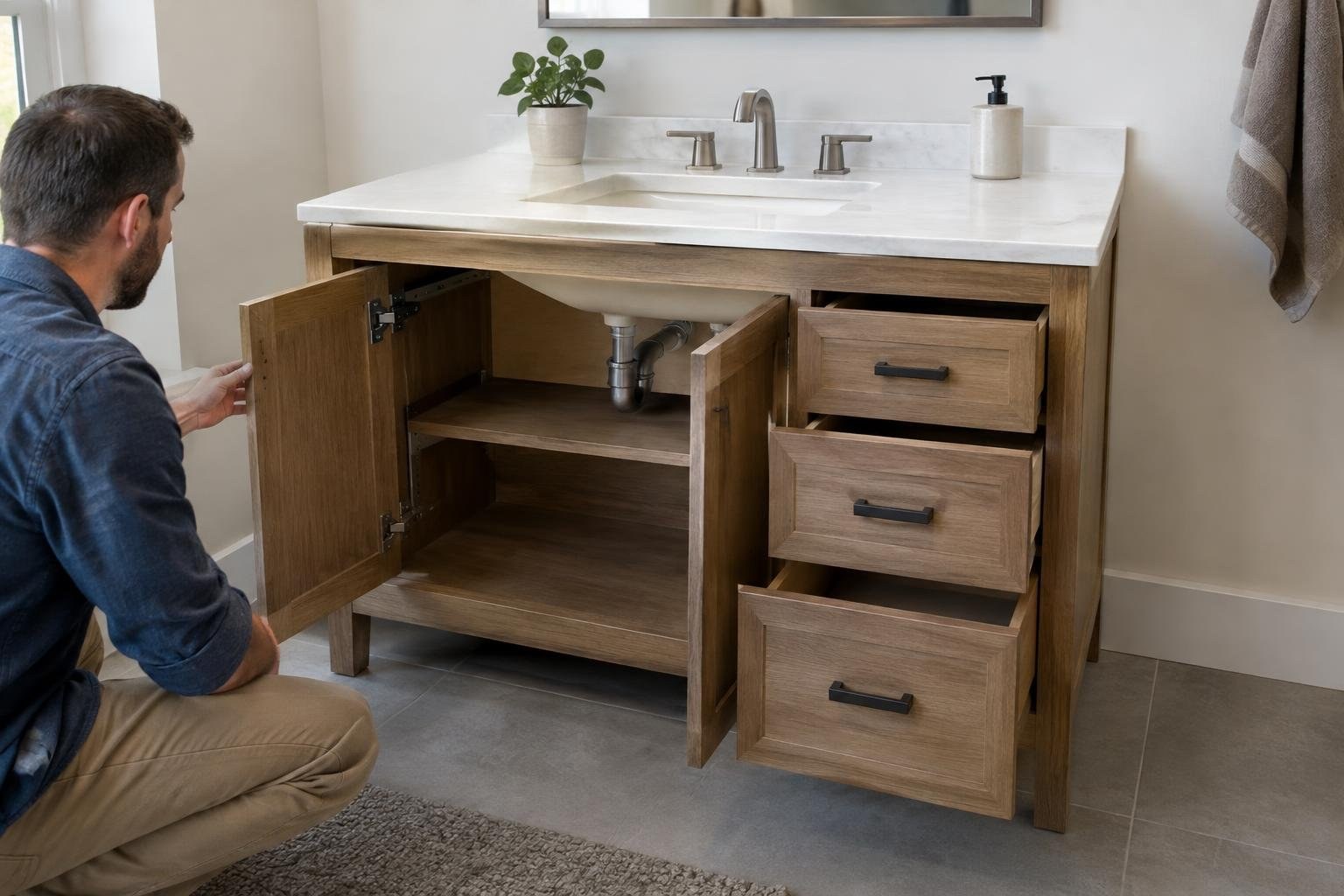
What does bathroom vanity cost include?
A bathroom vanity project can be as small as buying a cabinet or as involved as removing an existing unit, setting a new one, and coordinating work on the sink, faucet, or surrounding surfaces. Before comparing prices, decide which project you mean.
Write down whether you need:
- A vanity cabinet only, with the existing top and sink reused if compatible.
- A complete product that includes a cabinet, countertop, and sink.
- A new vanity plus removal and disposal of the old one.
- A broader update that may include plumbing, fixtures, wall repair, flooring, or electrical work.
Then ask each seller or installer to price the same scope. If one estimate is for a product and another is for product plus labor, the lower total does not show which is the better value. Treat the proposal as a list of defined tasks and materials, not a single number.
Signs it may be time to replace or update a vanity
Consider a replacement when the current vanity no longer serves your storage or layout needs, when you are planning a bathroom update, or when a visible problem makes repair worth investigating. A stained finish or dated appearance alone does not prove the cabinet needs replacement. First identify what is damaged and whether the cause is limited to the finish, hardware, countertop, or sink.
Before committing to a new unit, check the cabinet interior and the area around the sink for signs that merit closer inspection, such as softness, swelling, persistent dampness, or loose components. These observations are prompts to investigate, not a diagnosis of the cause. If water may be coming from plumbing or a wall, deal with the source before installing a new cabinet.
List what is not working: insufficient storage, difficult access, a poor fit, damaged parts, or a layout that interferes with daily use. That list helps you decide whether to repair, replace only part of the vanity, or plan a larger change. Ask a qualified professional to assess conditions you cannot confidently identify.
Bathroom vanity cost: published estimates and what they mean
Two published U.S. cost references illustrate why vanity estimates should be compared by scope. HomeGuide reports an average installation or replacement range of $400 to $1,700 for premade models and $1,000 to $4,000 for a custom vanity. HomeAdvisor reports prefabricated vanity prices of $100 to $2,600, with size, materials, and added features affecting the product price. The product range and installed-project range are not directly interchangeable.
| Published figure | What the source describes | How to use it |
|---|---|---|
| $400 to $1,700 | Premade vanity installation or replacement | Use as a broad comparison point, then verify what labor and products are included. |
| $1,000 to $4,000 | Custom vanity installation or replacement | Ask what custom work and related installation tasks the estimate covers. |
| $100 to $2,600 | Prefabricated vanity product price | Check whether the listed product includes a top, sink, and other selected features. |
These are sourced estimates, not guaranteed current prices for a particular address. Confirm the location, date, and scope behind any estimate you use, and obtain written local quotes before setting a firm budget.
Which factors affect the project price?
Price can move with the vanity type, dimensions, materials, and features. The cited prefabricated-product estimate specifically identifies size, materials, and added features as factors. The installation ranges also distinguish premade and custom projects. Beyond those broad categories, use your quote to determine which parts of the job are driving your particular total rather than assuming every project includes the same work.
Ask the provider to separate, where applicable:
- Cabinet, countertop, sink, faucet, and hardware selections.
- Delivery, removal, and disposal.
- Setting, securing, leveling, and fitting the vanity.
- Disconnecting or reconnecting plumbing, and any fixture changes.
- Changes to walls, floor, trim, or adjacent surfaces.
- Custom sizing, finish selections, storage features, and other specified upgrades.
Do not assume an item is included because it appears in a product photo or because a quote says “vanity installation.” Have the provider state what is included, what is excluded, and how additional work will be priced if an unexpected condition is found. This is the most useful way to explain a price difference between bids.
Prefabricated, custom, or repair: which option fits?
Prefabricated and custom vanities solve different problems. A prefabricated option can be a practical starting point when its dimensions, appearance, and included features suit the room. A custom option may be worth comparing when the space or desired configuration calls for a made-to-fit solution. The sources give separate price ranges for these categories, but the right choice depends on fit and scope, not the label alone.
| Option | Potential advantages | Questions to resolve |
|---|---|---|
| Prefabricated or premade | Clear product selection and a simpler comparison when a standard size works. | Does the product fit the room and plumbing? Are the top and sink included? |
| Custom | Can be considered when a standard unit does not meet the room or storage plan. | What design, materials, finish, and installation tasks are included in the proposal? |
| Keep or repair the existing vanity | May avoid buying a complete replacement when the problem is limited and repairable. | Can the specific damaged part be repaired, and has any moisture source been addressed? |
Compare finished, installed totals for the same scope. A product with a lower purchase price may not be the lowest project cost if it requires separate components or extra work. Conversely, custom construction is not automatically the best choice if a prefabricated unit fits your needs.
What to measure and decide before buying
Plan the vanity around how you use the room, not just the available wall length. Record the width and depth of the current space, the position of the sink plumbing, and nearby doors, drawers, fixtures, and obstacles. Note whether the floor or wall appears uneven, and photograph the existing setup for the person preparing the estimate.
Before ordering, confirm product dimensions against the room and the manufacturer’s installation information. Check that the sink, faucet, doors, and drawers can be used without conflicts, and ask how the vanity will meet adjacent walls or surfaces. If you are changing the sink location or moving plumbing, ask the relevant professional to assess the work before the cabinet is ordered.
Measurements are a planning aid, not a substitute for a site check when fit is uncertain. Have the installer verify critical dimensions and conditions before finalizing a custom order or making irreversible changes. Confirm which party is responsible for measuring, ordering, and checking the delivered product.
What to expect: project steps and timing
Project timing depends on product availability, the scope of work, delivery, and coordination with other trades. Because timing varies by project, be cautious about promises of a fixed number of hours or days before the installer has reviewed your specific work.
Ask for a schedule that separates the main milestones:
- Site measurement and final product selection.
- Ordering, delivery, and inspection of the vanity and included components.
- Removal of the existing unit, if applicable.
- Installation and any separately scoped plumbing or finish work.
- Final adjustments, cleanup, and review of the completed work.
Ask what could delay the schedule, how the bathroom can be used during the work, and who will coordinate delivery or other trades. Confirm whether the installer will stop and seek approval if the existing conditions differ from the estimate. A written sequence and change process are more useful than an unsupported time promise.
DIY or professional installation?
For a straightforward replacement, an experienced homeowner may be comfortable with product research, room measurements, finish selection, and comparing estimates. Physical removal, securing a cabinet, and reconnecting plumbing require the right tools and skill. Decide honestly whether you can complete the work safely and correct fitting problems, rather than basing the decision only on the quoted labor charge.
Professional help is sensible when the project changes plumbing, involves uncertain existing conditions, requires custom fitting, or includes work you are not qualified to perform. Electrical, plumbing, structural, and other regulated work should be handled by appropriately qualified people where required. Do not attempt work beyond your training or local legal requirements.
If considering DIY, first get a written list of what the professional would do and what the product requires. Compare the full DIY materials and delivery costs with the professional quote, and account for the possibility that a measuring or installation error may require correction. Keep plumbing and other utility work within safe, lawful limits.
How to choose a qualified vanity provider
Choose a provider based on the scope they can clearly explain, not just the headline price. Look for a written proposal that identifies the product, labor, exclusions, schedule, and responsibility for related work. Ask who will measure, order, deliver, install, and coordinate any plumbing or other trades.
Before agreeing, ask:
- Can you provide references or examples of comparable vanity projects?
- Who performs the work, and what relevant licensing or insurance applies in this location?
- Does your price include removal, disposal, installation, and cleanup?
- Who handles plumbing connections, and what work is outside your scope?
- What product and labor warranties apply, and where are their terms written?
- How are payment milestones, schedule changes, and added work handled?
Check references and review the contract before paying a deposit. A low bid may exclude important work, while a higher bid may include products or tasks another provider omitted. Ask each provider to price the same specifications and explain any differences. Do not rely on verbal assurances for scope, warranties, or changes.
Permits, credentials, warranties, and safety
Permit requirements and professional credential rules vary by location and by the work being done. A cabinet-only swap may raise different questions from a project that changes plumbing or electrical connections. Before work starts, ask your local building department or other relevant authority whether a permit or licensed trade professional is required for your specific project.
Ask the provider to identify which work they will perform and who is responsible for permits, inspections, and utility connections. Confirm licensing requirements and insurance directly where applicable; do not assume a contractor’s title alone establishes either. If the work involves plumbing, electrical, structural changes, or an unknown hazard, use an appropriately qualified professional and follow local requirements.
Keep product and labor warranty documents with the contract. Ask what is covered, what is excluded, how to report a problem, and whether installation conditions affect product coverage. Do not treat an informal promise as a warranty. A clear written record helps you understand who is responsible if an issue arises.
Ways to reduce cost without cutting corners
Control cost by making decisions early and comparing equivalent scopes, not by skipping steps that protect fit and safe installation. Start with the existing footprint and plumbing locations. If the current arrangement works, ask providers to price a replacement that preserves it before comparing a redesigned layout.
Other practical ways to keep the budget focused:
- Decide which storage features are essential and which are optional.
- Compare a complete prefabricated package with separately priced cabinet, top, and sink components.
- Request an itemized estimate and remove or revise optional upgrades before signing.
- Keep product specifications and finish selections consistent when comparing bids.
- Ask about repair or partial replacement if the problem appears limited to one component.
- Set aside a contingency appropriate to the uncertainty in the room, and clarify how unused funds or additional work will be handled.
Avoid savings that depend on inaccurate measurements, unqualified utility work, or unclear exclusions. A small apparent saving is not useful if it leaves essential work unresolved or creates a fit problem. Confirm the complete scope and change-order process in writing.
Common mistakes, red flags, and a buyer checklist
Before signing, use this checklist to catch common planning gaps:
- Confirm whether the quoted price is for a product, installation, or both.
- List every included component, including the cabinet, top, sink, faucet, and hardware.
- Verify dimensions, plumbing position, nearby clearances, and delivery access.
- Ask who removes and disposes of the old unit.
- Separate plumbing, electrical, wall, and floor work from cabinet installation where appropriate.
- Confirm product finish, storage features, and written warranty terms.
- Get the schedule, payment milestones, cleanup responsibility, and change process in writing.
- Check local requirements before regulated work begins.
Red flags include a quote that will not identify its exclusions, pressure to approve before the scope is clear, a refusal to document changes, or assurances about licensing and insurance that cannot be verified. Also be wary of comparing a product-only price with a complete installation bid as if they were equivalent.
Resolve open questions before placing a custom order or scheduling removal. Keep copies of the estimate, product details, payment records, and communications. If an unexpected condition changes the work, pause and request a written explanation and revised price before authorizing additional tasks.
How to compare estimates and avoid surprise charges
Published estimates are useful for framing a budget, but they do not tell you whether a proposal is complete. HomeGuide’s reported ranges distinguish premade and custom installation or replacement, while HomeAdvisor’s prefabricated range describes product pricing and notes size, material, and added features as price factors. Compare each estimate with those differences in mind.
For a fair comparison, prepare one shared specification for every provider: approximate dimensions, selected vanity style, required components, whether the existing unit must be removed, and known plumbing or finish work. Ask each provider to mark included, excluded, and uncertain items. Request separate amounts for optional work where possible.
When a bid is unusually low or high, ask what explains the difference. It may reflect different products, scope, custom work, or tasks that have not been included. Ask the provider to explain assumptions and list what could change the price after work begins. The aim is not to find the lowest number at any cost; it is to understand what you will receive for the amount quoted.
Explore cabinet options for your bathroom
Start your project with a clear idea of the cabinet style and configuration you want, then compare products against your measurements and budget. Cabinet Supply offers a place to explore cabinet options as you narrow your choices. Before purchasing, confirm product dimensions, what components are included, and who will handle installation and any related work.
Frequently asked questions
How much does it cost to install or replace a bathroom vanity?
A sourced U.S. estimate puts installation or replacement at $400 to $1,700 for premade models and $1,000 to $4,000 for custom vanities. The final quote depends on the products and work included, so compare itemized estimates rather than treating these ranges as a guaranteed price.
Does a bathroom vanity installation quote include the countertop and sink?
The vanity itself and installation are not always priced together. Ask whether the quote includes the cabinet, countertop, sink, faucet, removal and disposal, plumbing work, delivery, and any wall or floor repairs.
Is replacing a bathroom vanity a major project?
Not necessarily. A replacement that fits the existing space and plumbing may involve less work than a project that changes the layout. Ask the installer to identify any plumbing, electrical, or repair work separately, and confirm local permit requirements before work begins.
What is the best material for a bathroom vanity?
There is no single best material for every bathroom. Compare the product’s construction, finish, care instructions, and warranty, and consider how the vanity will be used. Get written product details rather than relying on a material label alone.
How do I choose the right size bathroom vanity?
The right size is the one that fits the room and leaves the sink, drawers, doors, and nearby fixtures usable. Measure the available area and record plumbing locations, door swings, and other obstacles before selecting a product.
What should I ask a bathroom vanity installer before hiring?
Ask for a written scope that names the vanity and included components, removal and disposal, installation tasks, plumbing responsibility, schedule, payment terms, warranty information, and how changes or unexpected conditions will be handled.
People Also Ask
What is a reasonable price for a bathroom vanity?
The cost depends on whether the estimate covers the vanity alone or includes installation and related work. Published U.S. ranges differ by scope: one source estimates $400 to $1,700 to install or replace a premade model and $1,000 to $4,000 for a custom vanity.
Are bathroom vanities sold with countertops?
A prefabricated vanity may be sold with or without its countertop and sink. Confirm the exact included components, then price installation and any plumbing work separately if they are not included.
How do I compare bathroom vanity installation quotes?
Ask for an itemized estimate and compare the same work in each bid. Differences in product, top, sink, removal, installation, and plumbing scope can make two headline prices misleading.
Does changing vanity size increase installation cost?
A change in vanity size or location can require additional planning and work. Before choosing a different layout, ask the installer to assess plumbing, clearances, and any other affected fixtures.
Is a custom bathroom vanity worth the extra cost?
A custom vanity may suit a nonstandard space or a specific storage plan, while a prefabricated model may simplify product selection. Compare the complete price, fit, included components, and schedule before deciding.
What should I measure before buying a bathroom vanity?
Have the room, existing vanity, plumbing locations, and access route checked before ordering. Confirm the product dimensions and installation responsibilities in writing so the selected unit can be evaluated against the actual space.
Bathroom vanity cost depends on more than the cabinet’s sticker price. Compare the vanity, top, sink, installation, plumbing work, removal, and finish details as one complete project. Use published cost ranges as a starting point, then ask for an itemized quote based on your room, selected products, and location. A clear scope helps you choose a vanity that fits your space and budget without paying for work you do not need.
Your next step
Explore cabinet options at CabinetSupply.com for your next project.
Last reviewed and updated November 2, 2026 by the CabinetSupply Editorial Team.
Sources
- How Much Does Bathroom Vanity Installation Cost? (2026)
- Bathroom Vanity Estimates – 2026 Bathroom Vanity Common Options and Example Cost Estimates for Your Area – Homewyse.com
- How Much Does It Really Cost to Install a Bathroom Vanity in the U.S.? – Tile & Top
- 2026 Cost of a Bathroom Vanity – Estimates and Prices Paid
- What Does Bathroom Vanity Installation Cost [2025 Data]
- Bathroom Vanity Cost (2026 Guide) | Fin Home Blog
- Cost to Install Bathroom Vanity – 2026 Cost Calculator (Customizable)