
Choosing among the best kitchen cabinet colors is less about finding a universally perfect shade and more about finding one that fits your kitchen. Cabinet color affects how the room feels and how the cabinets relate to counters, floors, walls, and other finishes. White, beige, taupe, green, blue, and darker hues can all be worth considering, but a color that looks appealing online may feel different in your own space. Start with the materials that are staying, compare real samples in the kitchen, and decide how much visual contrast you want before ordering cabinets or paint.
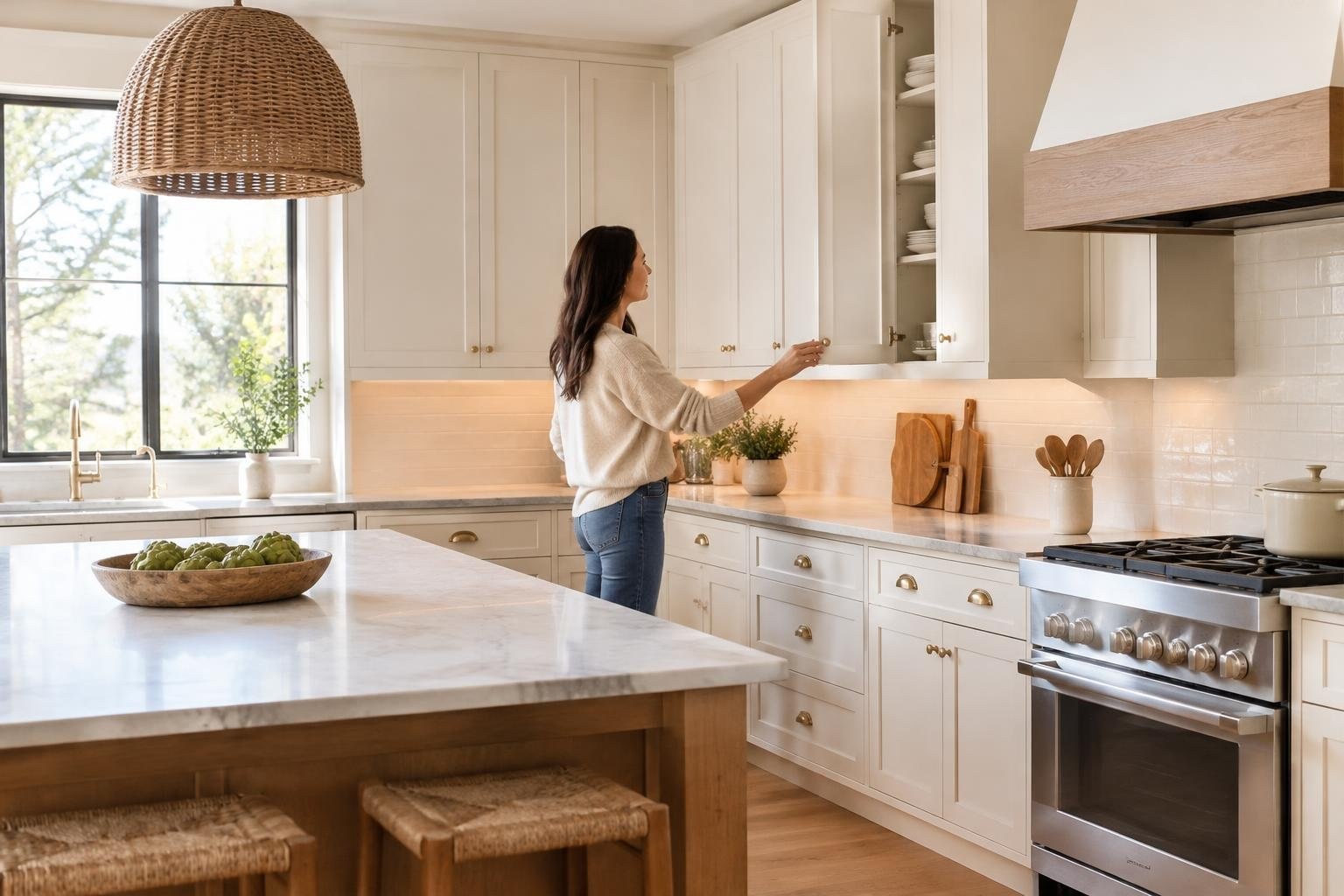
What makes a kitchen cabinet color the right choice?
There is no one best cabinet color for every kitchen. A good choice fits the room’s fixed materials, looks appealing in its actual light, and feels right for the level of color you want to live with. White remains a familiar option, while neutrals such as beige and taupe, earthy olive green, powder blue, and dramatic darker colors offer different moods.
Think of “best” as a match rather than a ranking. If your counters and floors are staying, use them as the starting point. If you are changing several finishes at once, compare them as a group instead of selecting each color in isolation. The goal is a coordinated kitchen, not a collection of individually attractive samples.
Design inspiration includes crisp white cabinetry, warm creamy whites, soft neutrals, and more expressive colors. Examples also show olive cabinetry used to bring in color without making the whole room feel dominated by a vivid shade. These are starting points, not rules: the same color can read differently depending on its surroundings.
Which kitchen cabinet colors should you compare?
Start by deciding what you want the cabinets to do visually. A lighter shade can support an airy, clean look; a mid-range neutral can add warmth; and a more saturated or dark shade can create a focal point. These are design directions, not guarantees about how large or bright a room will appear.
- Creamy white: A flexible direction for a clean, inviting palette. Compare warm whites with your counters and wall color so the combination feels intentional.
- Beige and taupe: Consider these if you want a neutral with more warmth or depth than a crisp white. Mushroom and related mid-range hues are also worth testing.
- Olive green: An earthy choice that introduces color while remaining relatively grounded beside neutral materials.
- Blue: Powder blue offers a softer, more playful alternative to a strong saturated color. Light wood and white accents are one documented pairing.
- Black or other deep colors: These can make a decisive visual statement. Test carefully against the room’s other materials before choosing them across the whole kitchen.
Color names and examples can help you build a shortlist, but they do not replace samples. A color reference from a designer or paint company is not a promise that the same named product, formula, or result will suit your project.
Options and tradeoffs: light, neutral, green, blue, or dark
Color families have different strengths and tradeoffs. Use this comparison to narrow your shortlist, then evaluate actual samples beside your kitchen’s permanent finishes.
| Color direction | Why consider it | What to check |
|---|---|---|
| Creamy white | Bright, classic-looking foundation with room to vary surrounding accents | Whether its warmth fits the counters, floor, and wall color |
| Beige or taupe | Warmth and a softer middle ground between pale and dark choices | Whether the undertone looks harmonious beside existing materials |
| Olive green | Earthy color that can feel distinctive without relying on a vivid primary shade | How much contrast it creates and whether the full palette stays balanced |
| Powder blue | A gentle color option that can pair with light wood and white accents | Whether the room’s other finishes support its character |
| Black or chartreuse | A strong, expressive choice for a more individual look | Whether you are comfortable with the shade as a dominant visual feature |
These are style comparisons, not a prediction of resale value or a guarantee that a color will remain fashionable. White and neutral palettes are frequently presented as enduring choices, while design coverage also features confident, colorful cabinets. Make the decision based on your own preferences and the room rather than treating trend coverage as a requirement.
How to choose a cabinet color: a practical process
Paint color selection is a comparison process: gather room details, build a shortlist, test samples, choose a coordinated palette, and confirm the product and work scope with the appropriate supplier or professional. If you are ordering new cabinets rather than repainting existing ones, check that the selected color and finish are available for the cabinet line you want before finalizing the design.
- List the finishes that will remain. Note the countertop, floor, backsplash, wall color, and any prominent wood or metal finishes.
- Choose a color direction. Decide whether the cabinets should blend with those materials or provide contrast.
- Shortlist a few shades. Compare samples from the same general color family before introducing a very different direction.
- View samples in the kitchen. Check them beside the fixed finishes and in the light where the cabinets will be seen.
- Confirm the exact selection. Record the chosen name and any product details with your cabinet supplier, painter, or designer to reduce misunderstandings.
For inspiration, examples range from creamy white and warm neutrals to olive, blue, and more dramatic colors. Specific named colors in articles are examples only. Verify current availability, the finish offered for your cabinets, and suitability for the project directly with the relevant provider.
Signs a cabinet color update may be worth considering
Consider changing color when the current cabinets feel disconnected from the rest of the kitchen, when you are planning a broader update, or when you want to change the room’s mood without choosing the same look again. A color refresh is only one part of a cabinet decision. First ask whether the cabinets themselves still meet your needs and whether repainting, ordering a different finish, or replacing the cabinetry makes sense for your project.
Color alone cannot resolve poor storage, an inconvenient layout, or cabinet damage. If those are the reasons you are considering a change, list them separately from appearance preferences. That helps you avoid paying for a cosmetic change while leaving a functional concern unaddressed.
When the cabinets are staying, use their existing finish and condition as part of the discussion with a qualified painter. When you are buying cabinets, compare the offered colors and finishes as part of the product selection. In either case, ask what preparation or work is included rather than assuming that every project described as a cabinet color update covers the same tasks.
Cost and pricing: what to ask before accepting an estimate
The price of a cabinet-color project depends on its scope and local quote. Request project-specific estimates rather than relying on a figure for a different kitchen.
When comparing quotes, ask providers to identify what is included and what is not. Clarify whether the proposal is for new cabinets or a finish change to existing ones, how the cabinet quantity and configuration are counted, which color and finish are specified, and whether related work is included. Ask about any additional charges, delivery or removal if applicable, and how changes to the scope affect the estimate.
For new cabinets, compare the full cabinet selection and the specified finish, not just a color label. For repainting, request a written scope describing the work the provider has agreed to perform. If quotes differ, ask each provider to explain the difference before comparing totals. A lower bid is not automatically equivalent if the work, product, or responsibilities differ.
Factors that affect the project, appearance, and estimate
Several practical choices shape a cabinet-color project. The color is only one of them. For a paint or finish change, the existing cabinets and the agreed work scope matter. For new cabinets, the product range and finish choices offered by the supplier matter. In both cases, the quantity of cabinetry and the complexity of the selected scope can affect what providers propose.
- Extent of work: Be clear about which cabinets or parts of the kitchen are included.
- Color selection: Confirm the exact shade and finish, not only a general description such as “warm white.”
- Existing materials: Share the finishes that will remain so the proposed color can be compared in context.
- Changes: Resolve color and scope decisions before work proceeds as far as practical, and ask how revisions are documented.
- Provider approach: Ask the provider to explain how the proposed work will achieve the appearance you selected and what the estimate covers.
Published examples show that kitchens can combine more than one cabinet color, such as a distinct pantry or lower-cabinet shade. A two-color plan is an option, not a requirement. Have the proposed shades viewed together before treating them as a finished palette.
What to expect, including planning and timing
Expect to make several decisions before a cabinet-color project is ready to proceed: establish which cabinets are included, select and approve the color, coordinate it with other finishes, receive a written scope, and confirm who is responsible for the agreed work. Ask the provider for a project-specific schedule.
If the cabinets are part of a larger kitchen update, ask how color approval fits with the other project decisions. Confirm when the final shade must be selected, how the approval is recorded, and what happens if a product or finish is unavailable. Do not assume that an inspiration image gives the provider enough information to identify the intended color.
Keep a written record of the selected color reference and the estimate. Before work begins, review the agreed scope and ask who to contact with questions. At completion, compare the result with the approved selection and raise any concerns with the responsible provider promptly.
How to choose a qualified cabinet or painting provider
Choose a provider based on the fit between their experience and your project, the clarity of the written scope, and how well they communicate. For new cabinets, understand who is supplying the cabinets and who is responsible for installation if installation is part of your project. For a color change, ask about relevant cabinet work and how the provider will handle the specific cabinets and finish in your kitchen.
Before agreeing, request a written estimate that identifies the work, selected color or finish, exclusions, payment schedule, expected timing, and process for documenting changes. Ask what warranty, if any, applies and who handles a concern after completion. Check references or examples of comparable work where available, and confirm any applicable credentials or insurance relevant to the work in your location.
Compare like with like. A proposal with a different scope or product is not directly comparable simply because both use the same color name. A good provider should be willing to explain the proposal and help you understand what you are buying.
Permits, credentials, warranties, and safety checks
Permit requirements, professional credentials, insurance rules, and warranty terms depend on the project and location. Do not assume a cabinet-color selection by itself determines whether other work requires approval. If the project also changes utilities, layout, or other parts of the home, check local requirements with the relevant authority or a qualified local professional before work starts.
Ask each provider to state what credentials and insurance apply to the work they are proposing and to provide warranty terms in writing. Confirm what the warranty covers, how long it applies, and whom to contact about a problem. Do not rely on a verbal assurance or infer a warranty from a color or product name.
Color selection has a practical safety dimension too: make decisions using the actual project information and the product instructions supplied by the responsible professional or manufacturer. Avoid taking on work beyond your competence, especially when a project extends beyond the cabinet finish into regulated or potentially hazardous work.
Ways to manage cost without cutting corners
Save carefully by narrowing your color choices before requesting final estimates and by keeping the agreed scope clear. If the kitchen has finishes that will remain, use them to eliminate shades that do not coordinate rather than ordering or approving several unrelated options. A focused shortlist can make discussions with a supplier or provider more useful.
- Compare the same color and scope across estimates.
- Ask whether a selected color is available for the cabinet product or finish you are considering.
- Record the approved color reference so the provider and household are working from the same selection.
- Separate must-have work from optional changes, and ask how each affects the proposal.
- Do not choose a provider on price alone if the scope or responsibilities are unclear.
Do not skip professional input when the project requires it, and do not assume that an inexpensive color or a quick visual change includes all needed work. Ask providers to explain the safe and suitable process for your specific cabinets. That is a better basis for saving than making assumptions about preparation, product compatibility, or labor.
Mistakes, red flags, and a cabinet-color checklist
Color decisions are easier to review before an order or project begins. Use this checklist to catch common planning gaps:
- Have you considered the finishes that will stay in the room?
- Have you seen a sample in the kitchen rather than choosing from a screen alone?
- Have you checked whether your selected color is available for the cabinets or finish you are buying?
- Does the written estimate identify the work, exclusions, and selected color?
- Do you know who is responsible for the work and how changes are documented?
- Have you asked for warranty terms and applicable credentials in writing?
- If you are choosing two cabinet colors, have you compared both together?
Common avoidable missteps include treating a trend list as a rule, selecting a shade without comparing it to the room, assuming all colors with similar names are interchangeable, and approving an unclear estimate. Design inspiration includes both white and strong colors; neither is automatically the right answer for every kitchen. Decide from the actual room and a clearly documented project plan.
Explore cabinet options for your kitchen
CabinetSupply.com is a place to explore cabinet options as you consider how color fits into a wider kitchen update. Compare the appearance you want with the cabinet choices available for your project, and confirm specific products, colors, and finishes with the relevant supplier before making a purchase.
Frequently asked questions
What is the best color for kitchen cabinets?
There is no single best color for every kitchen. Creamy white, beige, taupe, olive green, and blue are useful starting points, but the right choice depends on the room’s light, other finishes, and the look you want. Test samples in the actual kitchen before deciding.
What kitchen cabinet color is least likely to go out of style?
White and soft neutrals are flexible choices, while earthy greens, blues, and deeper colors bring more character. A color may feel timeless to one household and too bold to another, so judge it alongside your counters, flooring, backsplash, and lighting.
Are green kitchen cabinets a good idea?
Yes. Green can bring color while still reading as an earthy neutral, especially when you choose a muted olive tone. Check the sample in your kitchen and coordinate it with nearby materials before selecting a final shade.
What cabinet colors make a small kitchen look bigger?
Creamy white, beige, and other lighter shades are common options to consider when you want a bright, open look. The result depends on the whole room, so compare samples with the actual floor, counters, and light rather than relying on a color name alone.
Are dark kitchen cabinets a good choice?
They can work, but the finish should feel intentional alongside the room’s other colors and materials. Consider a small test area or sample first, and check the shade under the kitchen’s lighting before choosing it for every cabinet.
How do I choose a kitchen cabinet color I will not regret?
Sample the color in the kitchen and look at it at different times of day. Compare it with the countertop, flooring, backsplash, wall color, and hardware. Do not decide from a small online image or a color name alone.
People Also Ask
How do I match kitchen cabinet colors to countertops?
Begin with finishes that are staying, such as the floor and countertop. Then compare cabinet samples in the kitchen’s lighting and decide whether you prefer a coordinated palette or a clear contrast.
Which green is best for kitchen cabinets?
Olive green is one option for an earthy, colorful look. More saturated shades such as chartreuse make a stronger statement, so test a sample and consider how it relates to the rest of the room.
Do white cabinets make a kitchen look brighter?
Not necessarily. A bright, creamy white is one option for a lighter feel, but the full effect depends on lighting and surrounding colors. Test the shade in place before committing.
Can kitchen cabinets be two different colors?
Yes. Different cabinet colors can distinguish areas or add contrast, as seen in examples pairing different cabinet colors within one kitchen. Keep the palette coordinated by comparing all selected shades and finishes together.
Are beige or taupe kitchen cabinets a good choice?
Beige and taupe are useful mid-range choices to test when white feels too bright and a darker color feels too heavy. Compare samples against the room’s permanent finishes and lighting.
How should I test kitchen cabinet paint colors?
Look at the sample in the kitchen at different times of day and beside the finishes that will remain. A color’s appearance in a showroom or on a screen is not a substitute for seeing it in the room.
The best kitchen cabinet colors are the ones that work with your light, finishes, and appetite for color, not simply the ones appearing most often in trend lists. Compare real samples in your kitchen, choose a palette that suits the room, and confirm the product and project details before committing. For a next step, explore cabinet options at CabinetSupply.com for your next project.
Your next step
Explore cabinet options at CabinetSupply.com for your next project.
Last reviewed and updated November 2, 2026 by the CabinetSupply Editorial Team.
Sources
- The Best Kitchen Cabinet Colors That Still Look Great Years Later
- Our Favorite Kitchen Cabinet Paint Colors — Studio McGee
- Kitchen Cabinet Colors | Sherwin-Williams
- 35 Kitchen Cabinet Colors That Will Stand the Test of Time, According to Designers | Architectural Digest
- Most Popular Kitchen Cabinet Colors in 2026 | Plain & Fancy Cabinetry
- 7 Best Kitchen Cabinet Color Ideas to Consider in 2026
- 21 Kitchen Cabinet Ideas | Paint Colors & Inspiration | Benjamin Moore
- 31 Popular Kitchen Cabinet Colors with Long-Lasting …