
Wall kitchen cabinets, often called upper cabinets, use wall space for dishes, food, and everyday kitchen supplies. Choosing them is not simply a matter of picking a door style: dimensions, storage needs, nearby windows and appliances, installation responsibilities, and the full project quote all affect whether a cabinet plan will work. This guide explains what to compare, what to measure, and what to ask before ordering. Product dimensions and features vary, so treat published examples as a starting point and verify the specifications for the exact cabinets you are considering.
What Are Wall Kitchen Cabinets and What Do They Include?
Wall kitchen cabinets are storage units mounted to a kitchen wall. They are often positioned above counters and can hold dishes, food, or supplies, depending on the layout and cabinet configuration. They may be purchased as part of a larger kitchen plan or as individual units, but either way, the cabinets need to suit the available wall and the way you use the room.
Listings show that wall cabinets are sold in a range of styles and configurations, and some products offer adjustable shelves. These are product-specific features, not guarantees across every cabinet line. Check the specifications for the exact model, including its dimensions and what comes with it. Sources: product listings describe wall cabinets as kitchen storage and show varying options and features.
Signs You May Need Wall Kitchen Cabinets
Wall cabinets may be worth considering when counter-level storage is limited, frequently used items are taking up work surfaces, or the kitchen plan needs more storage. They can also be part of a broader kitchen update when existing cabinetry no longer suits how the room is used. These are planning signals, not proof that new cabinets are the only solution: first review what is stored, what can be reorganized, and whether the available wall can accommodate cabinets.
- Items crowding the counter: identify what needs a permanent home and whether wall storage is a practical place for it.
- Hard-to-use existing storage: note items that are difficult to reach or organize and decide whether a different shelf arrangement could help.
- A remodel or layout change: coordinate new wall cabinets with the rest of the proposed kitchen, rather than selecting them in isolation.
For each concern, write down the items you want to store and how often you use them. This turns a general wish for more storage into a specific brief for comparing cabinet sizes and interiors. Listings describe wall cabinets as a way to add storage for kitchen supplies and food, while available dimensions vary. Sources: wall-cabinet product descriptions and dimension information.
Wall Kitchen Cabinet Cost: What to Compare
The cost of wall kitchen cabinets depends on the products and work in the proposal.
Ask each provider to separate or clearly explain:
- Cabinet models, sizes, quantities, and finishes
- Shelves, accessories, and other included components
- Delivery and handling
- Installation and any stated preparation work
- Removal or disposal of existing cabinets, if applicable
- Any additional work or exclusions that could affect the final total
Two proposals are only comparable when they cover a similar scope and product. A lower cabinet price may not represent a lower project cost if delivery or installation is treated differently. Ask what could change the quoted total and how changes are approved. Product options and purchasing arrangements differ, so verify all terms directly with the seller or installer. Sources: retail and product listings show multiple wall-cabinet options and purchasing formats.
Factors That Affect a Wall Cabinet Project
Cabinet dimensions and configuration, the number of units, and the complexity of fitting them into the room all affect the project you need to plan. The product you select may also differ in finish, interior features, and whether it is supplied assembled. Those differences can change what is included in a quote and what work remains for the homeowner or installer.
Before comparing options, gather the information that can affect fit and scope: approximate wall dimensions, the location of windows and doors, nearby appliances, and the cabinet sizes you are considering. Confirm measurements against the actual product specifications. A published product range gives one example of varied width and height choices, but it should not be treated as a universal size standard. Sources: product information shows differing dimensions and assembled wall-cabinet options.
Wall Cabinet Options: What Should You Compare?
Compare wall cabinets by how they are supplied, how their dimensions fit your wall, and what features are included. Listings may include individual cabinets, assembled choices, or cabinets as part of a wider kitchen range. The terms used by sellers do not replace the need to check the product's own specifications and the proposed installation scope.
| Option to compare | Potential advantage | What to verify |
|---|---|---|
| Individual wall cabinets | May suit a targeted storage addition or a layout with specific gaps to fill. | Whether the finish and dimensions coordinate with existing cabinets, and what installation is included. |
| Wall cabinets within a larger range | Can make it easier to coordinate cabinet choices for a wider kitchen plan. | Which units, sizes, and finishes are available in the range. |
| Assembled cabinets | The listing identifies the option as assembled. | Exactly what assembly status means for delivery and installation in your project. |
| Cabinets with adjustable shelves | Can provide flexibility in arranging stored items if the specific model includes them. | How many positions are available and whether shelves are included. |
Retail listings demonstrate that consumers can browse different styles, sizes, and product formats, but they do not establish that every cabinet in a category has the same construction or value. Compare the details of the exact products under consideration. Sources: listings for wall-cabinet selections, assembled options, and adjustable-shelf products.
How to Measure and Plan Wall Kitchen Cabinets
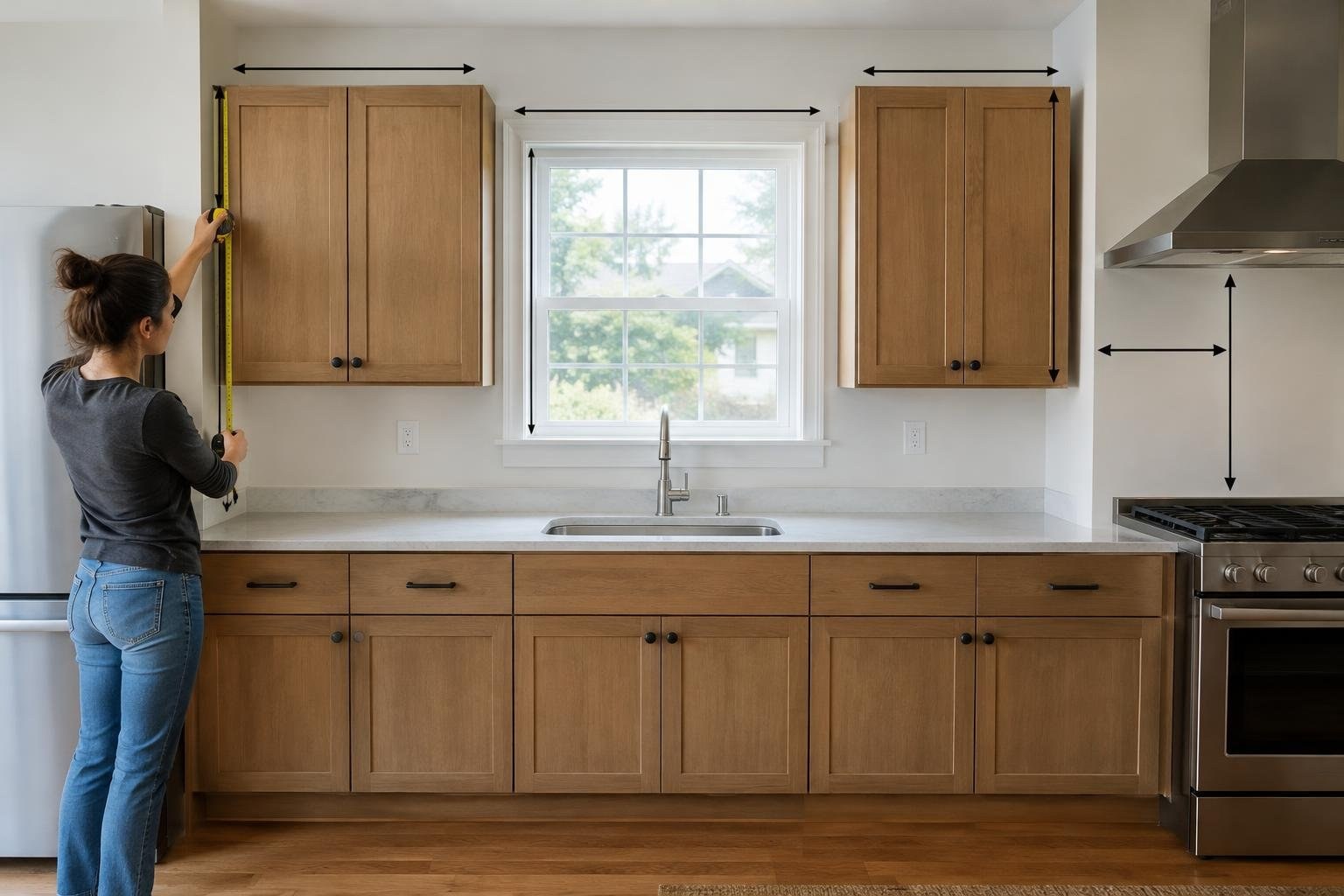
Before choosing a cabinet size, measure the usable wall and make a simple sketch. Record the locations of windows, doors, existing cabinets, and nearby appliances. Note the wall area available for cabinets and the items you expect to store. Then compare those measurements with the listed width, height, and depth of each product.
- Measure the wall area: note usable width and height, along with any features that interrupt the wall.
- Record what is nearby: show the counter, appliances, windows, doors, and existing cabinets on your sketch.
- List storage needs: group items by size and frequency of use before assigning them to a cabinet.
- Check product dimensions: use the exact listing or specification for the cabinets you plan to buy.
- Review the proposed layout: confirm the cabinet positions with the supplier or installer before ordering.
One manufacturer’s published range, for example, lists wall-cabinet widths of about 12 to 36 inches, heights of about 15 to 40 inches, and a depth around 15 inches. These figures describe that range, not a universal standard. Always check the chosen product’s actual measurements. Source: published wall-cabinet dimensions vary by product.
What to Expect: Ordering, Delivery, and Timing
Wall-cabinet installation timing depends on the project scope, product availability, delivery, site preparation, and the installer’s schedule.
Before committing, ask when measurements will be confirmed, when products are expected to arrive, what must be ready before installation, and how the team will handle delays or damaged items. If the work is part of a broader kitchen remodel, confirm how cabinet installation fits with the other planned work. Get the schedule and any important dependencies in writing, and ask whom to contact if the expected dates change.
Product listings show that wall cabinets may be available in different purchase formats, but a listing does not establish the delivery or installation timeline for a particular order. Confirm those details with the seller and installer. Sources: product listings identify a range of cabinet formats and purchasing options.
How to Choose a Qualified Cabinet Provider
Choose a provider who can explain the product, the proposed layout, what the price includes, and who is responsible for installation. Ask for a written estimate that identifies the cabinet selections and project scope. If a provider is designing or installing the cabinets, request examples of comparable work and references you can contact.
- Who takes and verifies the final measurements?
- Who supplies the cabinets, and who installs them?
- What preparation, delivery, and cleanup are included?
- What happens if a cabinet arrives damaged or a measurement needs correction?
- How are revisions, additional work, and schedule changes documented?
- Who handles questions or concerns after installation?
Compare providers on scope, communication, and responsibility, not only on the quoted amount. Retail listings sometimes describe design help or assembled options, but those statements do not verify a particular provider’s experience or define what that provider will do for your project. Ask for the actual commitments in writing. Sources: product and retailer listings describe design assistance and assembled cabinet options.
Explore cabinet options at CabinetSupply.com for your next project. Review your needs and product choices before you request or compare project proposals.
Safety, Local Requirements, and Warranty Questions
Wall cabinets must be installed in a way that is appropriate for the actual wall and the product. This guide does not establish a fastening method, structural capacity, permit requirement, or local rule for your home. Ask the installer how the installation will be planned and what conditions could change the work. If the project involves work beyond cabinet replacement, confirm applicable permit requirements with your local authority before proceeding.
Ask the supplier or installer for written product information, care instructions, and warranty terms. Check what is covered, how long coverage lasts, and whether the cabinet, hardware, delivery, and installation are treated separately. Do not assume that a product listing or a seller’s general description guarantees a particular warranty or installation service. Keep the purchase documents and any written scope together for reference.
Because the correct approach depends on the product and site, have a qualified professional assess uncertainties about wall conditions or safe installation rather than relying on assumptions. Sources: product listings identify individual cabinet products and features, but terms and installation responsibilities should be confirmed for the selected product.
Ways to Save Without Creating Avoidable Problems
You can control spending by defining the storage problem before selecting products. Decide which items need a new home, measure the available wall, and compare only cabinets that fit the brief. Avoid paying for features you will not use, but do not choose a cabinet solely because its listed price is lower if its dimensions or included components do not meet your needs.
- Compare equivalent cabinet sizes and included features.
- Ask whether the proposed quantity and layout can be adjusted to suit the wall.
- Request an itemized quote so you can see what is included and excluded.
- Check whether a product is supplied assembled and what work remains.
- Confirm measurements and selections before placing an order to reduce avoidable changes.
- Keep a written record of agreed selections, responsibilities, and any revisions.
Safe savings come from making deliberate choices and clarifying scope, not skipping necessary measurements or making assumptions about installation. Retail listings show that products and purchase formats vary, so compare the actual cabinet details and terms. Sources: wall-cabinet product listings show different sizes, features, and supply formats.
Mistakes, Red Flags, and a Before-You-Order Checklist
Common planning errors include ordering from an approximate measurement, choosing a cabinet before checking the space, and comparing quotes that include different products or work. Use this checklist before ordering:
- Have you measured the usable wall and noted nearby windows, doors, appliances, and existing cabinets?
- Have you checked the exact width, height, depth, and included features of each selected cabinet?
- Does the storage plan reflect the actual items you want to store?
- Have you confirmed whether the cabinet is supplied assembled and what installation involves?
- Does the estimate state what is included, excluded, and subject to change?
- Have you clarified who verifies measurements and who handles delivery, installation, and problems?
- Have you confirmed local requirements where applicable and reviewed warranty terms?
Pause if a provider will not explain what is included, asks you to approve an unclear scope, or cannot tell you who is responsible for resolving order or installation problems. Get answers and revisions in writing before committing. Product features and dimensions differ, so a careful check of the exact selection is essential. Sources: cabinet listings show product-specific dimensions and features.
Care, Product Information, and After-Installation Support
After installation, follow the care instructions provided for the specific cabinet and finish. Keep the product documents, warranty terms, and installation paperwork together. If a problem arises, record what you observe and contact the responsible seller or installer using the contact and process stated in your agreement.
Do not assume that cleaning methods, repair options, or warranty coverage are identical across cabinet products. Ask the supplier which care guidance applies to your selected model and what documentation is needed if you need support. Retail product listings do not establish a single maintenance schedule or lifespan for all wall cabinets, so avoid relying on a generic lifespan promise. Source: product offerings vary; care and warranty details must be confirmed for the selected cabinet.
Frequently asked questions
What are wall kitchen cabinets?
Wall kitchen cabinets are mounted on a kitchen wall, often above a counter or appliance area, to store items and use vertical space. Sizes and configurations vary by product and room.
What size wall cabinets should I choose?
There is no one best size. Measure the wall and nearby features, then choose dimensions that fit the items you plan to store and work with the rest of the kitchen. Available dimensions vary by product line.
Do kitchen wall cabinets have adjustable shelves?
Some wall-cabinet lines offer adjustable shelves, but features differ. Check the product specification and confirm the shelf positions will work for the items you plan to store.
How much do wall kitchen cabinets cost?
Compare the complete cost of the project, not just the listed cabinet price. Ask for itemized details covering cabinets, accessories, delivery, installation, and any related work included in the proposal.
Should I hire a professional to install wall cabinets?
A qualified installer should review your measurements, wall conditions, cabinet layout, and the proposed installation scope. Ask who is responsible for installation, corrections, and warranty issues before you commit.
Do I need a permit to install kitchen wall cabinets?
Confirm local permit requirements with the relevant local authority before work begins, especially if the project includes changes beyond replacing cabinets. Requirements depend on the work and location.
Can I buy wall cabinets separately from base cabinets?
Wall cabinets can be ordered as individual units or selected as part of a wider kitchen-cabinet project. Compare the full layout and finish so the pieces work together visually and practically.
What dimensions are available for wall kitchen cabinets?
Check the product's listed dimensions and verify them against your actual wall and storage needs. One product range, for example, lists widths from about 12 to 36 inches, heights from 15 to 40 inches, and depth around 15 inches; other products may differ.
People Also Ask
Where should wall kitchen cabinets go?
Wall kitchen cabinets add storage on the wall, commonly over counters. Plan their location around the kitchen layout and the items you want to keep within reach.
How do I measure for wall cabinets?
Start with the wall's usable width and height, then account for windows, doors, appliances, and other features. Verify the cabinet's listed dimensions before ordering.
How many wall cabinets do I need?
That depends on the wall space, cabinet dimensions, and items to store. Available products come in varied dimensions, so compare a layout against the actual room rather than relying on a single standard size.
Are all wall kitchen cabinets the same quality?
Wall cabinets are available in different configurations and dimensions. Check each product's construction, included features, finish, and installation requirements rather than assuming all lines are equivalent.
Can wall cabinet shelves be moved?
Some product lines offer adjustable shelves, but not every cabinet has the same features. Confirm the specific product listing before you buy.
What should a wall cabinet quote include?
Ask for an itemized proposal. It should make clear which cabinets and accessories are included and whether delivery, installation, and related work are part of the quote.
Wall kitchen cabinets can add useful storage and help a kitchen feel cohesive, but the right choice depends on what you need to store, the available wall space, and how the cabinets will fit with counters, appliances, and the rest of the room. Measure carefully, compare complete quotes rather than cabinet prices alone, and confirm installation and warranty responsibilities before ordering. Explore cabinet options at CabinetSupply.com for your next project.
Your next step
Explore cabinet options at CabinetSupply.com for your next project.
Last reviewed and updated October 15, 2026 by the CabinetSupple Editorial Team.
Sources
- Kitchen Wall Cabinets: Buy Upper Kitchen Wall Cabinets at Great Prices
- Amazon.com: Kitchen Wall Cabinets
- Wall Cabinets | Cabinets To Go
- Find Kitchen Wall Cabinet Options Optimize Kitchen Storage | Lowe's
- Wall – Kitchen Cabinets – The Home Depot
- Kitchen Wall Cabinets | CabinetSelect.com
- Wall Cabinets | Home Decorators Collection
- Kitchen Wall Cabinets – Wall Mounted Cabinets – IKEA