
Kitchen cabinet knobs do two jobs: they give you a point to grasp when opening a cabinet door or drawer, and they add a visible detail to the room. The right choice depends on more than color. Consider how the knob looks with your cabinets, how it feels in your hand, how it will be mounted, and what the complete set will cost. This guide explains how to compare options, plan a replacement, and avoid ordering hardware that looks right online but does not suit your cabinets.
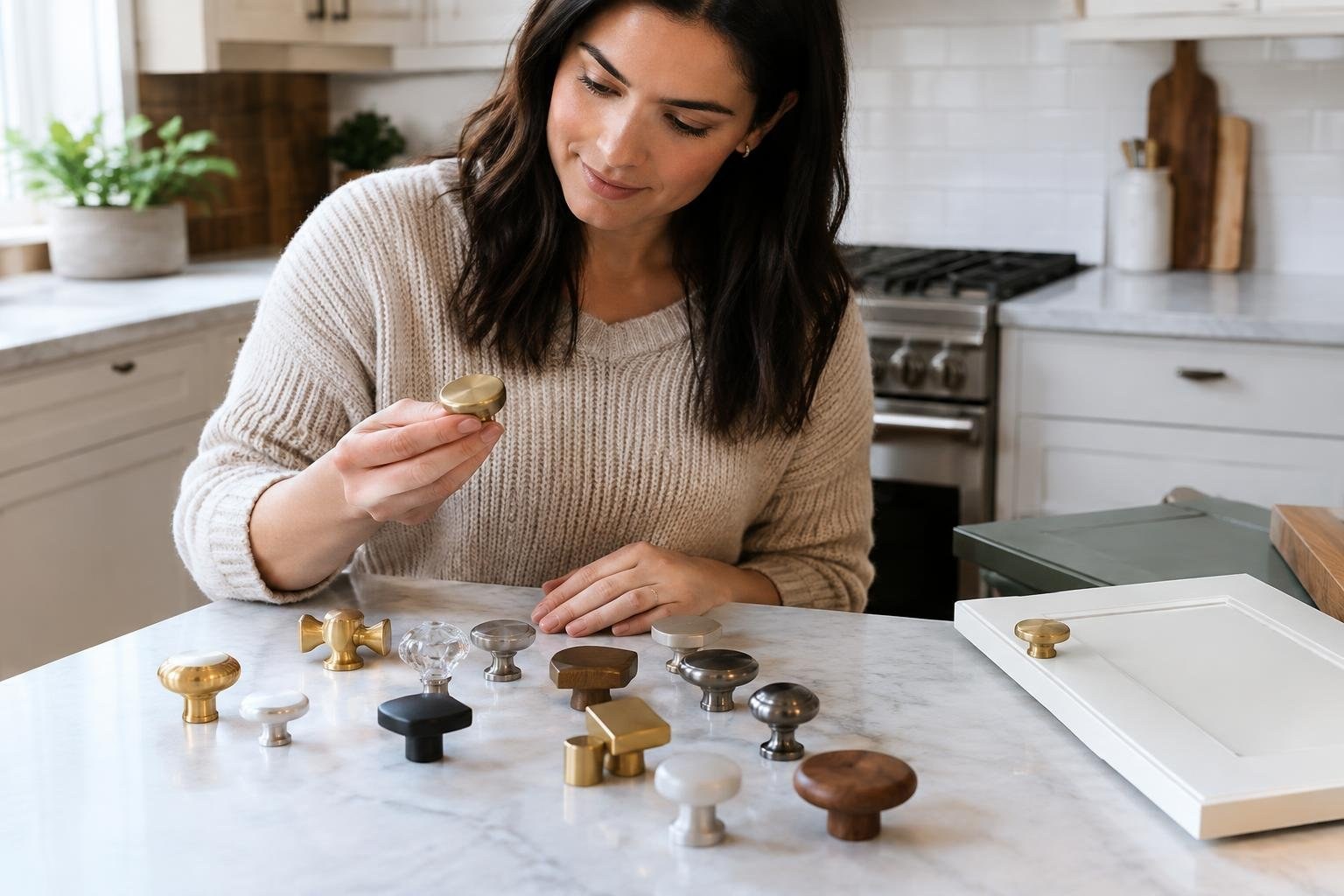
What to know about kitchen cabinet knobs
Kitchen cabinet knobs are small hardware pieces used to open and close cabinet doors and drawers. They can also act as a decorative accent. The key selection question is not simply which knob looks attractive, but whether its design, feel, finish, mounting arrangement, and price make sense for the cabinets and the people using them.
Start by identifying the scope: a few replacements, hardware for a new kitchen, or a coordinated update across several rooms. Count the doors and drawers involved, note any existing holes, and look at the surrounding finishes. These basics make it easier to compare products on equal terms and reduce the risk of buying a set that does not fit your plan.
Product collections offer a range of shapes and finishes, so avoid treating a finish name or photograph as a complete description of how a knob will look in your room. If you can, compare a sample against the cabinet in the actual lighting and handle it before committing to a full order.
Signs it may be time to replace or reconsider your knobs
Knobs provide a point to grasp when opening and closing doors and drawers. In daily use, an option that looks right but feels awkward may be less satisfying than one that balances appearance and handling. Think about who uses the kitchen, which cabinets are opened most often, and whether you can comfortably get a secure grip on the shape you are considering.
Consider replacement when existing knobs are loose, damaged, uncomfortable for the household, or no longer suit the look you want. These are decision prompts, not proof that every cabinet needs new hardware. If a knob is loose, inspect its fastener and the cabinet surface first; replacing the knob alone may not address damage at the mounting point.
Knobs are only one part of cabinet hardware. If your concern is that a door or drawer does not operate as expected, first identify whether the issue is the knob, the cabinet, or another component. A new decorative piece will not by itself correct a cabinet-door or drawer problem.
Kitchen cabinet knob cost and pricing considerations
There is no supported universal price range for kitchen cabinet knobs in the available product information. For a useful project budget, compare the price of the exact products you are considering and multiply by the number of knobs needed. Include any additional hardware or delivery charge shown by the seller, and check the return policy before placing a large order.
Product choice and quantity are the main items to compare in your own estimate. A more elaborate design, a particular finish, or a premium collection may carry a different price from a simpler option, but confirm the actual amount with the seller rather than assuming a category-wide cost. Current online listings may change, so use the price displayed for the product and date you are buying.
For a larger project, compare the total cost of a consistent set against the cost of mixing products. Make sure you are comparing the same number of pieces and the same type of item. Do not compare a single-knob price with a multi-piece package without adjusting for quantity.
Factors that affect the project and its price
Several choices affect the scope and total price of a knob project. These include how many doors and drawers you are updating, the product you choose, the finish and design, whether you need replacement screws, and whether installation is part of the work. Keep these variables separate when comparing options so you can tell whether a higher total comes from the product, the quantity, or installation.
Existing cabinet conditions also matter. A replacement intended for an old mounting location may not fit the hole or conceal its outline. New placement may require careful measuring and drilling. If the cabinet face is cracked, swollen, or otherwise damaged, pause before installing new hardware and decide how that surface will be repaired.
For a quote that includes installation, ask what the installer will do, whether the price includes the knobs and fasteners, and how the work will be handled if an existing hole or cabinet surface needs attention. Clear scope is more useful than a single total without an explanation.
Knob styles, finishes, and design tradeoffs
Knobs come in different styles and finishes, and the right selection depends on the look and use you want. Simple shapes can keep attention on the cabinet, while a more distinctive shape can become a visible accent. Consider the cabinet door style, room palette, and other hardware together rather than selecting a knob in isolation.
Think about finish as one element of the overall room. Dark, light, metallic, or other finishes may create different visual effects, but product names and photographs are not a substitute for seeing a sample beside your cabinet. Screen color, nearby surfaces, and lighting can influence how a finish appears to you.
Also compare the actual feel of the knob. Some people prefer a rounded form; others may prefer a flatter or more sculpted shape. Use a sample or display to see whether it is comfortable to grasp and whether it has edges you dislike. Product selection should reflect the household’s preferences rather than a trend alone.
Browse cabinet options at CabinetSupply.com as part of your broader project planning, then coordinate any hardware selection with the cabinets you plan to use.
Planning measurements, fit, and quantity before you buy
Before ordering, make a simple hardware schedule. List each cabinet door and drawer that will receive a knob, record the quantity, and note whether an existing hole will be reused. This turns an informal visual decision into a checkable plan and helps prevent ordering too few pieces or overlooking a different cabinet area.
- Count: Record the number of doors and drawers in scope.
- Check: Note existing holes and inspect the cabinet surfaces around them.
- Compare: Review the knob’s size, base, finish, and mounting information.
- Test: Handle a sample and compare it with the cabinet if possible.
- Confirm: Check quantities, screw requirements, delivery, and return terms before buying.
Do not assume a new knob will use an existing hole just because both products are called cabinet knobs. The supplied product guidance describes cabinet knobs as requiring one screw, but the exact mounting details should be checked for the individual product. Save the packaging and order details until you have confirmed the pieces work for your project.
What to expect during installation, including timing
For a simple replacement, the process is generally to remove the existing knob, check the mounting point, position the replacement, and secure it according to the product instructions. Cabinet knobs are commonly described as using a single screw, but verify the specific item’s supplied hardware and installation directions rather than relying on a general description.
Keep the work deliberate. Protect the cabinet face, use a tool that fits the fastener, and avoid overtightening. If you are drilling a new hole, first verify the planned position and alignment across the doors and drawers. An incorrectly placed hole is much harder to correct than a knob that can be repositioned before drilling.
A homeowner who is comfortable with careful measuring and basic hand tools may handle a straightforward replacement. Consider a cabinet professional if the cabinet surface is damaged, the position is uncertain, a new hole must be drilled in finished cabinetry, or you want consistent placement across a large set. Do not proceed if you cannot confidently follow the product directions.
DIY or professional installation: how to compare
For many homeowners, the decision is between doing a small replacement themselves and hiring someone for a larger or more complex job. DIY work avoids a separate installation arrangement, but it puts responsibility for measuring, placement, and careful fastening on you. Professional help can be useful when consistency across many cabinets matters or the existing cabinet faces need attention.
| Approach | May suit | Consider |
|---|---|---|
| DIY replacement | A small, straightforward change with clear existing mounting locations | Product instructions, careful alignment, and the condition of the cabinet surface |
| Professional installation | A larger project, uncertain placement, or cabinets needing assessment | Scope, installation cost, schedule, and responsibility for correcting problems |
There is no reliable installation-time estimate in the available research. The time depends on the number of knobs, whether old holes can be reused, and whether the work involves new placement or cabinet repairs. Ask an installer for a project-specific schedule rather than relying on a generic promise.
How to choose a qualified cabinet hardware provider
When hiring help, look for a provider who can explain the scope in plain language and identify who supplies the knobs, screws, and tools. Ask whether the estimate covers only installation or also removal of old hardware, new placement, cleanup, and any repair to damaged cabinet surfaces.
Ask for a written description of the work, expected schedule, payment terms, and how changes or unexpected conditions will be handled. Review relevant project examples and references, and confirm any license or insurance requirements that apply in your location. Requirements vary, so check with the appropriate local authority instead of assuming a credential is or is not required.
Ask what workmanship warranty, if any, applies to the installation and separately review the product seller’s terms. Do not assume the product and installation have the same coverage. Compare quotes on matching scope; the lowest price may exclude important work or use a different product.
Permits, credentials, warranties, and safe work
Replacing a knob is typically a small hardware task, but the condition of the cabinet and the proposed work still matter. If a project goes beyond replacing a fastener, such as requiring cabinet repair or work involving other building systems, ask the provider what work is included and whether local rules or permits apply. Do not assume a permit is needed for a basic knob swap, and do not assume broader remodeling work is exempt.
Confirm who is responsible for protecting cabinet finishes and addressing damage discovered during the work. Follow product installation and care instructions, and stop if a mounting point is loose or the cabinet face appears compromised. A new knob should not be used to mask a problem that affects the cabinet itself.
For contractor work, check local requirements for licensing and insurance and ask for applicable documentation. Review written warranty terms and keep receipts and product information. These steps help clarify responsibilities without relying on verbal assumptions.
Ways to save without creating avoidable problems
You can control spending without choosing a knob solely because it is the least expensive. First set a project budget and count the exact quantity. Compare products within that budget and evaluate samples before placing a full order, especially if you are unsure how the finish will look beside your cabinets.
- Keep existing holes when the replacement fits them and the location works for you.
- Compare the total for the full quantity, not just the listed price of one piece.
- Choose a consistent design where it meets your needs instead of paying for variation you do not want.
- Check package contents and screw requirements to avoid an incomplete order.
- Confirm delivery and return terms before buying.
- Do not drill or modify finished cabinets until placement has been checked.
Saving safely means reducing uncertainty and avoiding preventable rework. If you are not confident about drilling or cabinet repair, get advice before proceeding rather than risking visible damage to save on installation.
Mistakes, red flags, and a practical buying checklist
Common avoidable problems include ordering by appearance alone, miscounting the doors and drawers, assuming all knobs use identical mounting hardware, and drilling before checking the placement. A finish viewed on a screen may also differ from how you expect it to look beside your cabinets, so compare a sample when practical.
Use this checklist before you order:
- Have I counted every door and drawer included in the project?
- Have I checked existing holes and cabinet-face condition?
- Have I reviewed the specific product’s mounting directions and screw needs?
- Have I compared the knob’s shape, finish, and feel with the room?
- Have I calculated the full quantity cost and checked delivery and return terms?
- If hiring help, does the written estimate specify product supply, installation, cleanup, schedule, and repair responsibility?
Pause if the seller’s listing does not clearly identify the product or its mounting details, if a sample feels uncomfortable, or if an installer will not explain what the quote includes. Resolve questions before buying or authorizing work.
Frequently asked questions
What are kitchen cabinet knobs used for?
Knobs are compact hardware pieces attached to cabinet doors or drawers so you can open and close them. They can also add a decorative detail to the room. Choose them for both their appearance and how they feel in your hand.
How do I choose the right kitchen cabinet knobs?
There is no single best knob for every kitchen. Compare the knob’s shape, size, finish, and feel against your cabinet style and the way you use the doors and drawers. If possible, handle a sample before deciding.
How are cabinet knobs attached?
The supplied product information describes cabinet knobs as using one screw. Check the screw and mounting instructions for the specific knob you buy, and verify that its mounting arrangement works with your cabinet door or drawer front.
How much do kitchen cabinet knobs cost?
Knob prices vary by the product you select and the quantity you need. Compare the cost of each knob, any required screws or accessories, and the full quantity for the project.
Can I use knobs on kitchen drawers?
Yes. A knob can be used on a drawer as well as a cabinet door. Before choosing one for a drawer, consider whether the shape is comfortable to grasp and suits how you open that drawer.
Can I replace cabinet knobs without replacing my cabinets?
You can replace knobs as a focused update if the existing cabinets are staying in place and the new hardware can be mounted appropriately. Check the existing holes and the replacement’s mounting requirements before buying.
Should all kitchen cabinet knobs match?
Coordinate finishes if you want a consistent look, or deliberately mix them if the combinations feel balanced in the room. Compare actual samples with nearby cabinet finishes and other visible hardware rather than relying only on a screen image.
Should I install kitchen cabinet knobs myself?
For a small number of straightforward replacements, a homeowner who is comfortable with careful measuring and basic hand-tool work may be able to install knobs. If the cabinet material is damaged, the placement is uncertain, or you are uncomfortable drilling, ask a qualified professional for help.
People Also Ask
What is the difference between cabinet knobs and pulls?
Knobs generally use a single mounting point, while a pull is grasped across a longer shape. Compare how each feels and looks on your cabinets, and check the mounting requirements for the specific product.
How many cabinet knobs should I buy?
Count the doors and drawers where you plan to add knobs, then decide whether each opening will receive one. Add a small allowance only if you want spare pieces, and confirm the seller’s return terms before ordering extra.
Can you mix cabinet knobs in a kitchen?
Not necessarily. Mixing can work when the choices look intentional together. Compare the shapes and finishes in the room, and consider using a consistent approach across similar doors or drawers so the result feels coordinated.
Can I change the size of my cabinet knobs?
Do not assume that a replacement will cover or align with an existing hole. Check the old mounting location and the new knob’s base and screw arrangement before ordering. If the old hole will remain visible, plan how to address it.
What shape of cabinet knob is easiest to use?
Use your own touch test where possible. Think about whether the knob is easy for you to grasp, whether its edges feel comfortable, and whether its size suits the door or drawer. Product descriptions alone may not tell you how a knob feels in your hand.
What finishes are available for kitchen cabinet knobs?
Cabinet knobs are available in different styles and finishes. Compare them with the cabinet color, nearby hardware, and the look you want rather than choosing a finish in isolation.
Kitchen cabinet knobs are small choices with a daily job: opening doors and drawers while contributing to the room’s overall look. Compare the shape, finish, feel, and cost of the specific options you are considering, then check your selections against the cabinets before ordering. Explore Cabinet Supply for cabinet options as you plan your project.
Your next step
Explore cabinet options at CabinetSupply.com for your next project.
Last reviewed and updated October 15, 2026 by the CabinetSupple Editorial Team.
Sources
- Cabinet Knobs | Hardware for Cabinets in Kitchens, Bathrooms, & More | Signature Hardware
- Kitchen Cabinet Knobs – Solid Brass, Brushed Gold & More
- Cabinet Knobs available at MyKnobs.com everyday low prices.
- Cabinet Knobs – The Home Depot
- Cabinet Knobs Shop | Rejuvenation
- Cabinet Hardware: Pulls, Knobs, Hinges & Slides | Lowe’s
- TOP KNOBS | Top Knobs | Home
- Cabinet Knobs Available Here at The Knob Shop