
Kitchen cabinet organization ideas are most useful when they solve a specific daily problem: crowded shelves, hard-to-reach cookware, mismatched food containers, or small items that keep getting lost. Rather than buying a set of organizers first, take inventory, group items by task, and measure the storage you have. Then choose simple drawer, shelf, door, or pull-out solutions that fit your cabinets and routines.
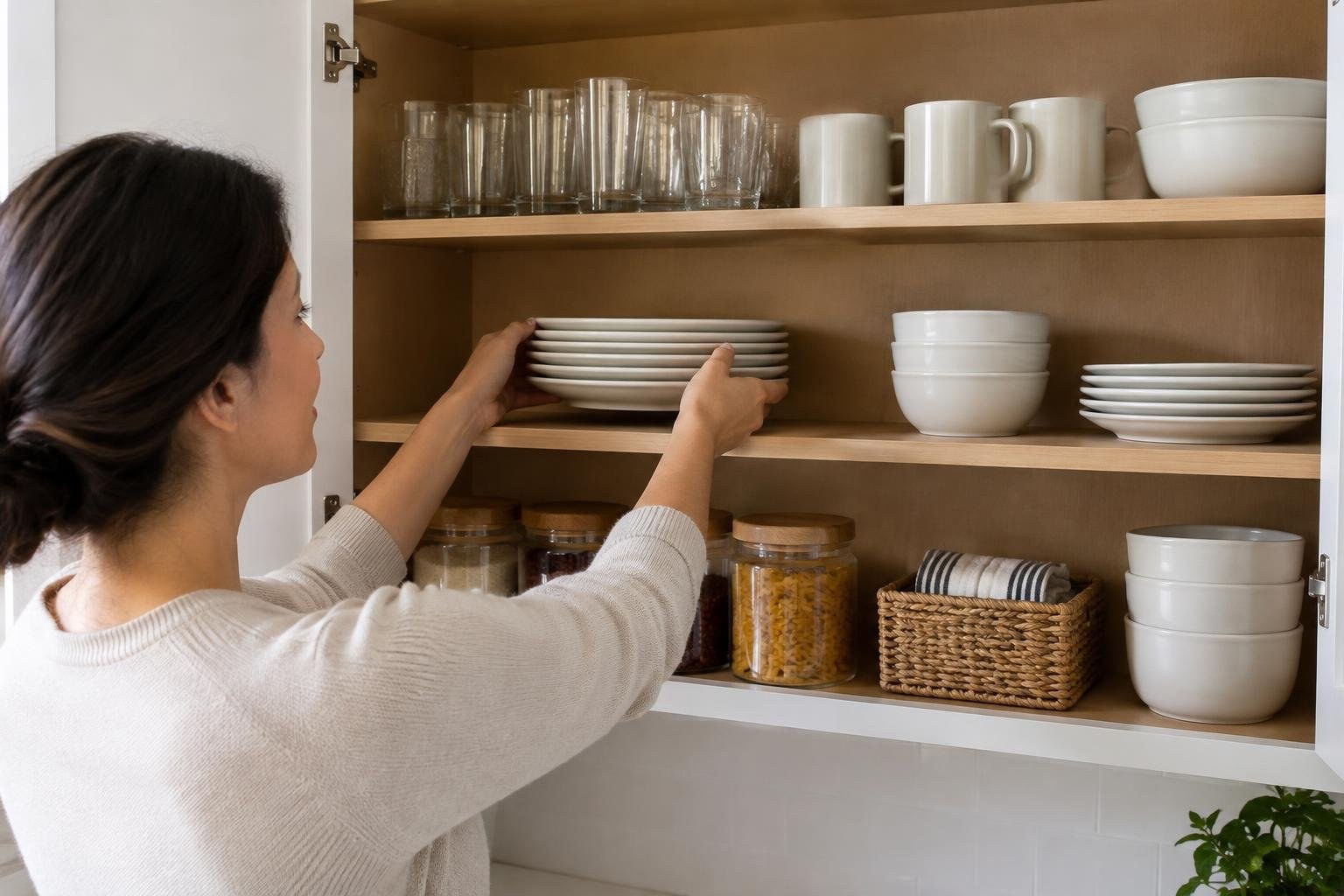
What kitchen cabinet organization includes and how to begin
Cabinet organization is the process of assigning items to practical locations and using storage aids, when helpful, to keep those groups accessible. It does not have to mean buying a full set of matching bins. First decide what belongs in each cabinet; then add only the organizers that address a specific problem.
Work by task as well as item type. Group baking supplies, cooking tools, food containers, tableware, and cleaning supplies into separate zones that make sense for your kitchen. Put the things used most often in the easiest-to-reach locations. Drawer organizers and shelf inserts can help contain groups and use available cabinet space more efficiently.
A useful test is whether someone else in your household could find and put away the item without asking. If not, simplify the category or make its location clearer. Labels can help when several people share a kitchen or when storage is tucked into pull-out bins.
Signs your kitchen cabinets need reorganizing
You may benefit from a cabinet reset when useful items are difficult to reach, drawers have become catchalls, or you repeatedly move one object to reach another. Other clues include food containers separated from their lids, baking tools scattered across several cabinets, and family members being unsure where everyday items belong.
These problems do not automatically mean the cabinets are too small. A shelf that is too tall for the items stored on it may have unused vertical space. A crowded cabinet may be holding rarely used items alongside daily essentials. Start by removing what does not belong in that zone and reconsidering the shelf arrangement before buying accessories.
If a cabinet is difficult to access because of its layout, an organizer may help, but confirm that the cabinet's opening and interior can accommodate it. Organization can improve how existing storage works; it cannot change the cabinet's physical dimensions.
Cost and pricing considerations for cabinet organizers
There is no single price that fits every kitchen organization project. The total depends on whether you are simply rearranging items, adding a few basic organizers, or fitting specialized pull-outs into existing cabinets.
Before spending, list each problem and the solution you are considering. A drawer divider may solve a cutlery problem at less cost and effort than replacing a cabinet. A pull-out bin is a more involved purchase than a loose shelf insert, and its suitability depends on the cabinet opening and product requirements. A door-hanging organizer may avoid installation work, but it still needs to fit and allow the door to close.
When comparing products, check whether the price includes mounting hardware or other required components, and whether installation is expected. For a larger cabinetry change, request an itemized proposal showing products, labor, delivery, removal, and any additional work that applies. Do not compare totals that cover different scopes.
Factors that affect the right organization plan
Fit, access, and how you use the kitchen affect which organization approach will work. Measure the usable interior of the cabinet or drawer, not just its outside dimensions. Account for the opening, shelf supports, hinges, door movement, and anything stored around the organizer. A product that fits on paper can still block a door, collide with another pull-out, or reduce useful shelf space.
Also consider what the organizer will hold and how often those items are used. Small utensils need different compartments from large food containers. A baking zone may benefit from grouped ingredients and tools, while frequently used dishes should remain convenient to reach. A lower cabinet dedicated to children's tableware can make plates, cups, bowls, and reusable bottles easier to locate.
Kitchen habits matter more than a uniform look. If several people cook, create categories that are easy for everyone to understand. If an item is used only occasionally, it does not need the most accessible spot.
Compare drawer, shelf, door, and pull-out solutions
Choose the simplest option that solves the problem. Use drawer dividers for small utensils, a shelf insert when vertical space is going unused, and a dedicated cabinet zone for supplies used together. These options can be rearranged more easily than a fitted pull-out, but may not provide the same access or containment.
A door-hanging organizer can be useful for lightweight items such as bags, but the hooks may show above the cabinet door. Confirm that the door closes fully and the added weight is appropriate for the door and hardware. A pull-out waste container can make a base cabinet function differently, but it is a fit-dependent retrofit rather than a universal accessory. One documented example requires a cabinet opening at least 15 inches wide; verify the exact product instructions and all dimensions before buying.
There are also ways to use less obvious spaces. Adjustable shelves can be reset to suit stored items. A magnetic strip attached under a cabinet has been used to hold spice jars, while the space above cabinets can be used for rarely needed kitchenware. Consider access and whether visible storage suits the room before adopting either idea.
What to expect: a practical organizing process and timing
Expect the work to take as long as needed to sort, measure, choose, and install the solutions you select. A simple reset of existing cabinets is different from fitting several accessories or modifying storage. The research available for this guide does not support a reliable standard completion time, so set expectations based on the scope rather than a general promise.
- Empty and sort: Group items by task, set aside things that do not belong in the kitchen, and identify what is used daily, occasionally, or rarely.
- Assign zones: Decide where each group belongs, keeping frequent-use items easy to reach.
- Measure: Record the usable opening and interior dimensions for any drawer or cabinet receiving an organizer.
- Choose and test: Select an organizer that matches the items and space. Before committing to several, try the arrangement in the most important cabinet.
- Load and adjust: Put items back by category and revise locations if a door, drawer, or routine is inconvenient.
For products requiring installation, follow the product instructions and allow time to check operation after fitting. For larger cabinet changes, confirm the installation scope and schedule with the person doing the work before ordering.
How to choose a qualified cabinet or installation provider
Many kitchen organization tasks are manageable without hiring a provider: sorting items, assigning zones, repositioning adjustable shelves, or placing a correctly sized loose organizer. More involved work may be appropriate when an accessory needs secure attachment, a cabinet opening must be altered, or the project includes cabinet replacement or other remodeling.
If you seek help, ask what the provider will supply and install, who checks fit, and who is responsible if an accessory does not operate as intended. For a cabinetry project, look for relevant project examples and references, confirm any licensing or insurance requirements that apply in your location, and get the scope and payment terms in writing. A low price is not meaningful if it leaves out installation, delivery, removal, or required materials.
Compare proposals on the same basis. Ask about the products included, measurements, installation responsibility, schedule, cleanup, warranty terms, and how changes are approved. Do not assume a warranty covers every part of a cabinet or organizer; read its stated coverage and exclusions.
Permits, product instructions, warranties, and safety
A basic organization reset usually does not involve building work, but changes to cabinets, plumbing, electrical service, or walls may raise different requirements. Rules depend on the project and location. Confirm local permit requirements with the relevant local authority before work that changes building systems or cabinet layout. Do not attempt electrical, plumbing, or structural work unless qualified and permitted to do so.
For organizers, use the manufacturer's directions and observe any stated fit, attachment, and load requirements. Make sure doors and drawers still move freely and that stored items cannot fall when the cabinet opens. Keep heavy or fragile objects in a location that is safe to access, rather than placing them where they may be knocked down while reaching.
For professional work, ask for written warranty information covering the products and installation, if provided. Clarify who handles a fit or adjustment issue and how to request service. Do not rely on verbal assumptions about coverage.
Ways to save on kitchen cabinet organization without risky shortcuts
Save money safely by organizing before you shop. Removing duplicates and assigning existing shelves or drawers to better-defined categories may solve the problem without a purchase. Buy only for a measured need, and avoid a large matching set if one or two organizers would address the specific bottleneck.
Try adjustable shelves or a movable insert before considering a permanent modification. A simple over-door solution may avoid drilling, though it can be visible and must not interfere with closing. Reuse sturdy containers you already own if their size and contents suit the cabinet. Keep regularly used items accessible instead of buying an organizer simply because it is advertised as space-saving.
For larger purchases, compare the complete scope rather than the headline price. Confirm dimensions, included components, installation needs, and return terms before ordering. Avoid cutting, drilling, or changing a cabinet to make an incompatible product fit; the apparent saving can create a repair or replacement problem.
Common mistakes and a shopping checklist
Use this checklist before buying or installing an organizer:
- Identify the specific item or routine that is causing frustration.
- Sort the cabinet before deciding you need more storage.
- Measure the interior and opening, including the space needed for doors, hinges, and neighboring drawers.
- Confirm the organizer suits the items it will hold and the way the cabinet is used.
- Check that a door-mounted product will not prevent the door from closing.
- For a pull-out, verify product-specific opening and installation requirements rather than relying on a general example.
- Keep everyday essentials accessible and group related items together.
- For paid work, compare written scopes, product details, labor, timing, cleanup, and warranty terms.
- Stop and seek qualified help if the plan involves electrical, plumbing, structural, or other regulated work.
Common mistakes include buying before measuring, organizing for appearance instead of daily use, putting frequently used items out of reach, and filling every cabinet with accessories. A good system should be easy to use and maintain, not just look orderly on the day it is installed.
A simple plan for putting the ideas into practice
Start with a cabinet that causes a recurring problem, not with the entire kitchen. Empty it, group the contents, choose convenient locations, and measure before adding a divider, shelf insert, door organizer, or pull-out. After using the new arrangement, check whether items are easy to reach and put away. Adjust the layout before assuming you need more products or new cabinetry.
If organization ideas lead you to consider changing cabinets, compare options carefully and make sure the proposed scope matches your storage goals. Explore Cabinet Supply's cabinet options as one next step in your planning.
Frequently asked questions
How can I organize my kitchen cabinets?
Sort items by task and frequency of use, then assign each group a practical cabinet or drawer zone. Keep everyday essentials easy to reach, use dividers or shelf inserts where they solve a specific problem, and measure before buying organizers.
What organizers are useful for kitchen cabinets?
Use drawer dividers or clear-compartment organizers for small items, and shelf inserts when a cabinet has unused vertical space. Check the organizer dimensions against the cabinet or drawer before buying.
Can I organize a cabinet without drilling?
An over-door bag holder can avoid drilling, but its hooks may show above the door. Check that the door closes freely and that the organizer does not interfere with shelves or stored items.
Can I add a pull-out waste bin to an existing cabinet?
A pull-out waste container can be a retrofit option for some base cabinets. Check the clear opening and the product's installation requirements before purchasing. One documented example calls for an opening of at least 15 inches, but fit depends on the specific product and cabinet.
How can I organize kitchen cabinets for kids?
Keep children's plates, cups, bowls, and reusable bottles together in a lower cabinet. Labeled pull-out bins or drawers can make the items easier to find; place heavier items where children can reach them safely.
What should I store above kitchen cabinets?
Store infrequently used kitchenware above cabinets if it is safe to reach and suits the room. Keep everyday items in more accessible storage.
People Also Ask
How can I get more usable space in kitchen cabinets?
Sort items by task and how often you use them, then keep everyday essentials within easy reach. Drawer dividers and shelf inserts can help keep groups in place and make cabinet storage more efficient.
Where should everyday kitchen items go?
Place the items you use most often where they are easiest for you to reach. Grouping items by task, such as baking tools near baking ingredients, can also make storage easier to follow.
How do I measure for a kitchen cabinet organizer?
Measure the usable interior, including width, depth, and height, and check for obstructions such as hinges or drawer hardware. Compare those measurements with the organizer's stated dimensions and clearance needs.
Are over-the-door cabinet organizers a good idea?
Choose an over-the-door organizer only if it clears the cabinet frame and lets the door close. Its hooks may show above the door, so consider whether the appearance and location suit your kitchen.
How do you organize kitchen cabinets for a family?
Keep children's plates, cups, bowls, and reusable bottles together in a lower cabinet. Labeled pull-out storage can help children find the items; place them at a height they can reach safely.
Is it practical to use the space above kitchen cabinets?
Use the space above cabinets for rarely used kitchenware if it is safe to reach and suits the room. Keep frequently used objects in more accessible storage.
Kitchen cabinet organization works best when storage follows your routines. Start by sorting what you own, placing everyday items within easy reach, and choosing organizers that fit your cabinets and the items they hold. Make one change at a time, then adjust the system as you use it. If your storage needs point to a cabinet change, explore cabinet options at CabinetSupply.com for your next project.
Your next step
Explore cabinet options at CabinetSupply.com for your next project.
Last reviewed and updated October 15, 2026 by the CabinetSupple Editorial Team.
Sources
- 10 Kitchen Cabinet Organization Ideas – Driven by Decor
- Easy kitchen organization ideas – IKEA
- Easy DIY Kitchen Cabinet Organization Ideas – Angela Marie Made
- 25 Smart Ideas to Organize Kitchen Cabinets
- 60 Clever Kitchen Cabinet Organization Ideas
- 390 Kitchen Organizing ideas | modern red …
- The 38 Best Kitchen Cabinet Organization Ideas of All Time
- 33 Kitchen Cabinet Organization Ideas