
Luxury kitchen cabinets can mean handcrafted details, extensive design choices, custom dimensions, or simply a polished look. The label alone does not tell you what is inside the cabinet, what is included in the price, or whether the design will suit your daily routine. Start by separating appearance from construction and service: define the storage and layout you need, then compare materials, finish, customization, hardware, warranty, and installation scope in writing. Custom and near-custom options can make a specific kitchen vision possible, but the best choice is the one that fits both your priorities and your project plan.
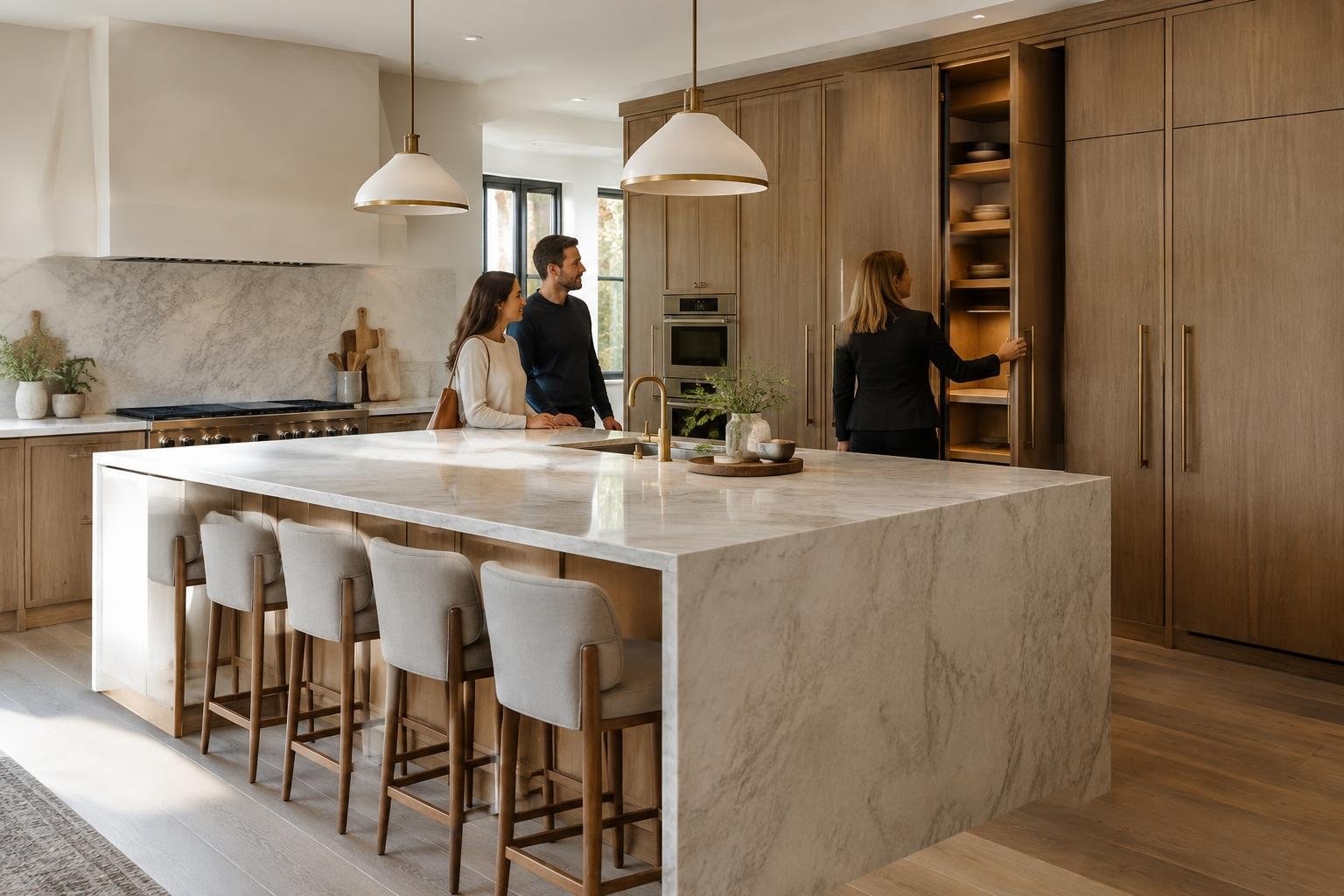
What luxury kitchen cabinets include, and what the label does not tell you
The phrase luxury kitchen cabinets describes a design and product category, not a complete specification. Luxury-focused offerings may emphasize careful design, a broad range of styles, handcrafted appearance, or personalization. Some providers describe their work as custom or near-custom; others present specific lines and finishes as high-end choices.
That range makes direct comparison essential. Two proposals may both use the word luxury while offering different levels of customization, different cabinet details, or different amounts of project support. Ask the provider to explain exactly what the quoted product includes.
For each cabinet line, gather the same basic information:
- Cabinet type and whether sizes or configurations can be changed
- Box, back, shelf, drawer, door, and finish specifications
- Hardware and storage accessories included in the quote
- Available samples, finish choices, and approved design drawings
- Delivery, installation, warranty, exclusions, and change procedures
Use this information to assess fit, not just prestige. A kitchen with a particular island or tall pantry in mind may benefit from custom design flexibility. If your plan works with offered sizes and styles, a more limited program may deliver the appearance and function you want without requiring every detail to be individually designed.
Signs your kitchen may benefit from luxury or custom cabinetry
Luxury cabinetry matters most when it solves a real design or storage problem while supporting the look you want. Before shopping, list the friction points in the current kitchen. You may need a different cabinet plan if the existing arrangement cannot accommodate the storage, dimensions, or focal features you are seeking.
Consider whether your goals include:
- A particular island size or configuration that standard layouts do not accommodate
- A pantry extending to the ceiling or a coordinated run of tall storage
- A distinctive style or finish that you have not found in ready-made choices
- Cabinet dimensions or transitions that need to be designed around the room
- A more unified appearance across the kitchen's cabinet components
These are reasons to investigate customization, not proof that a luxury line is necessary. First confirm whether the desired result can be achieved through layout changes, a different cabinet program, or a smaller number of custom pieces. Make a priority list separating must-haves from visual preferences. That helps prevent the project from becoming a collection of upgrades without a clear purpose.
For example, a large island and a full-height pantry are cited as design possibilities for bespoke or custom cabinetry. If either is central to your plan, ask a designer or cabinet provider to show how the proposed dimensions and storage work in your actual layout before you approve an order.
Luxury kitchen cabinet cost: what to compare in a quote
Luxury cabinet prices vary by the product and the work included, so avoid choosing from a broad label or a single total. Request itemized proposals for your own kitchen, then compare the same scope of work.
Ask providers to separate or clearly describe:
- Cabinet boxes, doors, drawer fronts, and finish
- Custom sizing, design work, and any special configurations
- Interior storage, decorative panels, fillers, trim, and hardware
- Delivery, installation, removal, and disposal responsibilities
- Any related work that is included, excluded, or priced separately
Customization, selection breadth, finish choices, and design complexity are useful subjects to discuss when evaluating differences between quotes. Ask the provider to identify which specific selections or design requests account for a price difference. Do not assume that a higher price proves better construction or that a lower price includes the same service.
Before comparing totals, check whether the proposals use the same cabinet plan, product specifications, accessories, installation scope, and warranty terms. If one estimate leaves out delivery or installation, for example, its headline figure cannot be compared fairly with a proposal that includes those items. Get exclusions and possible additional charges in writing.
Factors that affect the project
Several project choices affect what you receive and what a provider must plan. Think through the full cabinet design before asking for a final proposal, and identify which details are fixed and which are open to adjustment.
Customization and room-specific design
Custom or bespoke cabinetry is presented as a way to select a particular kitchen design, including a large island or floor-to-ceiling pantry. Ask whether your requested dimensions, layout, and finish are genuinely available for the selected program. Confirm that the drawing reflects the actual room and the chosen appliances before approving it.
Style and finish
Cabinet offerings range from classic to contemporary. Finish can shape the room's overall character, so compare samples and review the complete design together rather than selecting a cabinet color in isolation. One available design example pairs a relaxed, sand-toned maple look with visible wood grain; treat it as inspiration, not a universal performance claim or a promise about every maple cabinet.
Design coordination
Share the cabinet plan with the people responsible for the broader kitchen design. Ask how the proposal relates to counters, appliances, lighting, and other selected finishes. The purpose is not to buy every component from one provider, but to confirm that the parts work as a coordinated plan before decisions become difficult to change.
Custom, near-custom, and stock cabinets: which option fits?
Choose cabinet options by comparing what they let you specify, what remains standardized, and how much coordination you want. The names used for product programs can vary, so ask each provider for a clear explanation of the actual limits.
| Option | What to ask | Potential fit |
|---|---|---|
| Stock or ready-made | Which sizes, styles, and finishes are available, and which details cannot change? | A project that can use the offered configurations |
| Semi-custom or near-custom | Which dimensions, finishes, or features can be adjusted within the program? | A design that needs some personalization without requiring every element to be bespoke |
| Custom or bespoke | What is designed specifically for the project, and what approval drawings and specifications will be provided? | A plan with specific dimensions or design goals not met by available configurations |
These are decision categories, not guarantees of construction quality. A custom label alone does not tell you what materials or joinery are used, and a less customized product is not automatically unsuitable. Ask for the same construction, finish, hardware, warranty, and installation details whichever route you consider.
Some luxury-oriented providers also show different styles or lines, including frameless options. Ask what the chosen construction means for your design, storage, and installation, and have the provider document the selected product rather than relying on a showroom description.
How to evaluate cabinet construction, materials, and finish
Assess cabinetry as a complete product. Ask for written specifications rather than assuming that a premium look or price means a particular material or construction method. The research describes luxury cabinets broadly in terms of design, materials, and functionality, but does not establish that every product shares the same components.
Use a product checklist and request clear answers about:
- Cabinet box and back materials, thicknesses, and construction
- Shelf material, support, and any stated load guidance
- Drawer construction, bottom attachment, and glides
- Door and drawer-front material, edge treatment, and finish
- Hinge and drawer hardware, including any soft-close features
- How finished surfaces and interiors are treated
- What the written warranty covers and excludes
Then inspect a representative sample or display unit if available. Open and close drawers, look at edges and joints, and verify that the finish and interior match the description in the quote. These checks help you compare the actual choices on offer; they do not replace the written specification or warranty.
Separate appearance decisions from performance questions. A distinctive door style or color may shape the room's character, while component details tell you more about what you are buying. Ask the provider to identify which features are included and which are optional upgrades.
Planning and measuring before you order
Good cabinet planning starts with the room and the way you expect to use it. Before asking for a final design, gather the information the provider needs and ask them to verify it. Do not rely on approximate room dimensions for a made-to-order plan.
- Record wall lengths and ceiling height, and note doors, windows, and fixed features.
- Identify the locations of appliances and any plumbing, electrical, heating, or ventilation features that affect the design.
- List the storage problems you want the new plan to solve and any island or pantry goals.
- Share appliance specifications and confirm clearances and access with the appropriate project professionals.
- Review the cabinet drawing, finish selections, and written product schedule together before approval.
A proposed large island or floor-to-ceiling pantry can change the plan substantially. Ask for a drawing that shows these features in relation to the rest of the room, not just a cabinet elevation or an inspiration image. Confirm how the design handles corners, end panels, transitions, and the relationship to appliances.
Document who takes final field measurements and when. If another part of the remodel changes the room, communicate that before cabinet production or ordering moves forward. Changes made after approval may affect coordination, so agree on how revisions are documented and priced.
What to expect from design through delivery and installation
Expect a sequence of design and approval decisions rather than a single cabinet selection. Ask for dates and milestones specific to your proposal.
- Define priorities. Decide what storage, style, finish, and custom features matter most.
- Develop the plan. Share room measurements and project requirements, then review the proposed layout and cabinet schedule.
- Confirm selections. Approve written specifications, finish choices, hardware, and included accessories.
- Coordinate the project. Clarify delivery, installation responsibility, and how the cabinet work relates to other trades and site preparation.
- Inspect and resolve. Compare delivered items with the approved order and document concerns promptly with the responsible provider.
Ask for a written schedule that identifies design approval, order placement, delivery expectations, installation dates, and dependencies. Find out what could change the schedule and who will notify you. Do not treat an informal estimate as a guaranteed date unless the provider explicitly puts that commitment in writing.
Before work begins, confirm who handles site preparation, removal of existing cabinetry, delivery access, installation, cleanup, and follow-up adjustments. The cabinet purchase and the full kitchen project may have different responsible parties, so make the handoffs clear.
How to choose a qualified cabinet provider
Choose a provider based on evidence that they can deliver the product and project scope you need. A polished showroom or portfolio can help you assess style, but it does not replace a detailed proposal, clear responsibilities, and a process for resolving problems.
Ask prospective providers:
- Which projects in your portfolio are similar in scope or design?
- Who develops the layout, confirms measurements, and approves revisions?
- What exact product line, construction, finish, and hardware are quoted?
- Who orders, delivers, installs, and checks the cabinets?
- What is excluded, and how are changes or added costs approved?
- What written warranty applies, and whom do I contact about a problem?
- What schedule, payment milestones, and cleanup arrangements are proposed?
Check references and reviews where available, and verify any applicable licensing and insurance requirements for the work in your location. Request the provider's documentation rather than assuming credentials from a website or sales conversation. Compare the answers and the written scope, not simply the bottom-line number.
A useful proposal should make it possible to understand what you are buying, what the provider is responsible for, and what could create an additional charge. If important details remain verbal or unclear, ask for revisions before signing or placing an order.
Permits, warranties, credentials, and project safety
Before committing, confirm local requirements and project responsibilities. Permit rules, contractor requirements, and other regulations depend on where you live and on the work involved.
Cabinet selection can overlap with work on plumbing, electrical systems, appliances, or building elements. Do not treat cabinet plans as permission to relocate utilities or change structural components yourself. Have the appropriate qualified professional review work that falls within their trade or local requirements.
For product protection, obtain the written warranty and read its coverage, exclusions, claim process, and any care instructions before buying. Ask who is responsible if an issue concerns the cabinet product, delivery, or installation, especially when different companies handle those parts.
Keep a project file with approved drawings, product details, finish selections, contract, payment records, warranty, and change approvals. This gives you a shared reference if the delivered product or completed work does not match the agreed scope.
Ways to control costs without sacrificing important details
You can manage cost without making undocumented compromises. Begin with the kitchen requirements that matter most, then decide where flexibility is acceptable. If a particular custom feature is driving the scope, ask whether a standard or near-custom configuration can meet the same need.
- Separate essential storage and layout requirements from decorative preferences.
- Ask for a base proposal and clearly itemized optional upgrades.
- Compare more than one cabinet program using matching specifications.
- Consider reserving customization for the areas where dimensions or design require it.
- Keep finish, hardware, and accessory choices within a defined plan rather than adding options late.
- Confirm delivery, installation, exclusions, and warranty before comparing totals.
Do not save money by skipping measurement verification, written product details, or qualified review of work that involves utilities or other regulated tasks. A lower initial quote can be misleading if important responsibilities or items are left out. Ask the provider to explain a lower price in terms of differences in product, customization, or included work.
Another useful step is to request alternatives for the same design goal. For example, if custom dimensions are proposed, ask whether available cabinet sizes or a limited set of custom pieces could achieve the plan. Compare the drawings and the complete proposal before deciding.
Common mistakes and a practical pre-order checklist
Avoid preventable problems by reviewing the plan and order as a homeowner would use them. Look beyond the finished-room image and check dimensions, storage, product details, responsibilities, and approvals.
- Do not rely on the luxury label. Verify materials, construction, finish, hardware, and warranty in writing.
- Do not approve from an inspiration image alone. Review a project-specific drawing and cabinet schedule.
- Do not assume every feature is custom. Confirm what can be changed within the selected line.
- Do not compare unlike estimates. Check product, accessories, delivery, installation, and exclusions.
- Do not postpone finish decisions. Approve samples and selections before the order is finalized.
- Do not leave responsibilities vague. Identify who measures, installs, handles changes, and resolves issues.
- Do not make late changes casually. Get any revision, schedule effect, and price adjustment documented.
Before you commit: confirm the measurements, layout, appliance information, cabinet specifications, finish, hardware, delivery and installation scope, payment terms, schedule, warranty, and change-order process. If any answer is missing, pause and get it in writing.
Explore options for your kitchen project
Luxury cabinetry is a meaningful design choice, but there is no need to decide from a label or sales pitch. Compare the product details, customization limits, finish, storage plan, and written project scope against the needs of your own kitchen. Ask questions until you can explain what is included and what remains your responsibility.
Browse the available cabinet options at CabinetSupply.com as you develop your priorities. Use the information to prepare questions and compare choices for your project.
Frequently asked questions
What makes kitchen cabinets luxury?
There is no single construction standard implied by the word luxury. Compare the actual cabinet specifications, materials, finish, customization, hardware, warranty, and installation scope rather than relying on the label alone.
Are custom kitchen cabinets worth the cost?
Custom cabinetry is made around a project's chosen dimensions and design, while near-custom and semi-custom programs offer a defined range of configurations and selections. Ask what can be changed and what remains fixed before choosing.
Do luxury cabinets always use solid wood?
Do not assume the term guarantees solid wood, plywood boxes, a particular finish, or premium hardware. Request written specifications for each component and confirm which details apply to the quoted product.
How should I compare luxury cabinet quotes?
Ask for an itemized proposal with cabinet specifications, included accessories, delivery, installation responsibilities, exclusions, payment schedule, warranty information, and the process for changes. Compare identical scopes wherever possible.
How long do luxury kitchen cabinets take to arrive?
Lead time depends on the selected cabinet program, design approvals, production, delivery, and project coordination. Ask the provider for a written schedule with ordering milestones and a plan for delays rather than relying on a general estimate.
Are custom cabinets better than stock cabinets?
Not necessarily. A thoughtfully selected ready-made or semi-custom line may satisfy the design and storage needs. Custom work is most useful when specific dimensions, layouts, or design details cannot be met by available configurations.
People Also Ask
What is the difference between luxury and regular kitchen cabinets?
The label can describe design, customization, finish, materials, or a combination of these. Ask for exact product specifications instead of treating luxury as a defined construction grade.
Can luxury cabinets be made to fit an unusual kitchen?
A custom design can accommodate a particular plan, such as a large island or a floor-to-ceiling pantry. Confirm which dimensions and details are genuinely made to order and which follow standard options.
How do I choose a cabinet finish for a luxury kitchen?
Request samples or approved finish references and review them alongside the rest of the kitchen selections. A named finish by itself does not show how it will look in your room or with your other materials.
What should a kitchen cabinet estimate include?
Compare the quoted cabinet scope, customization, accessories, finish, delivery, installation, and warranty. A lower total is not directly comparable if it leaves out items included in another proposal.
How do I find a qualified luxury cabinet provider?
Choose a cabinet provider or installer whose documented scope matches your project. Review their relevant project examples, written specifications, responsibilities, schedule, and process for handling changes.
Luxury kitchen cabinets are best judged by how well their design, storage, finish, customization, and project details work together. Decide what matters most in your kitchen, compare complete written proposals, and verify the choices before ordering. Explore cabinet options at CabinetSupply.com for your next project.
Your next step
Explore cabinet options at CabinetSupply.com for your next project.
Last reviewed and updated October 12, 2026 by the CabinetSupple Editorial Team.
Sources
- Top High-End Luxury Kitchen Cabinets For Your Next Project
- Luxury custom kitchen cabinets
- Complete Guide To Luxury Kitchen Cabinets | Lewis Alderson
- Handcrafted Cabinetry & Luxury Kitchen Design
- Luxury Kitchen Cabinets
- What Are Luxury Kitchen Cabinets? A Complete Guide to High-End Design
- Medallion Cabinetry – Homepage 2026
- Luxury Kitchen Cabinets | Custom High-End Designs for Homes| George Cabinetry