
Kitchen cabinet drawers can make everyday items easier to reach and help organize utensils, cookware, and pantry staples. The right upgrade might be as simple as replacing a damaged drawer box, or it might involve choosing a new drawer-base cabinet as part of a larger kitchen project. Before buying, check the cabinet opening, drawer dimensions, slides, and intended use. This guide explains the main options, what affects cost and timing, how to compare construction, and when professional help makes sense.
What kitchen cabinet drawers include and how an upgrade works
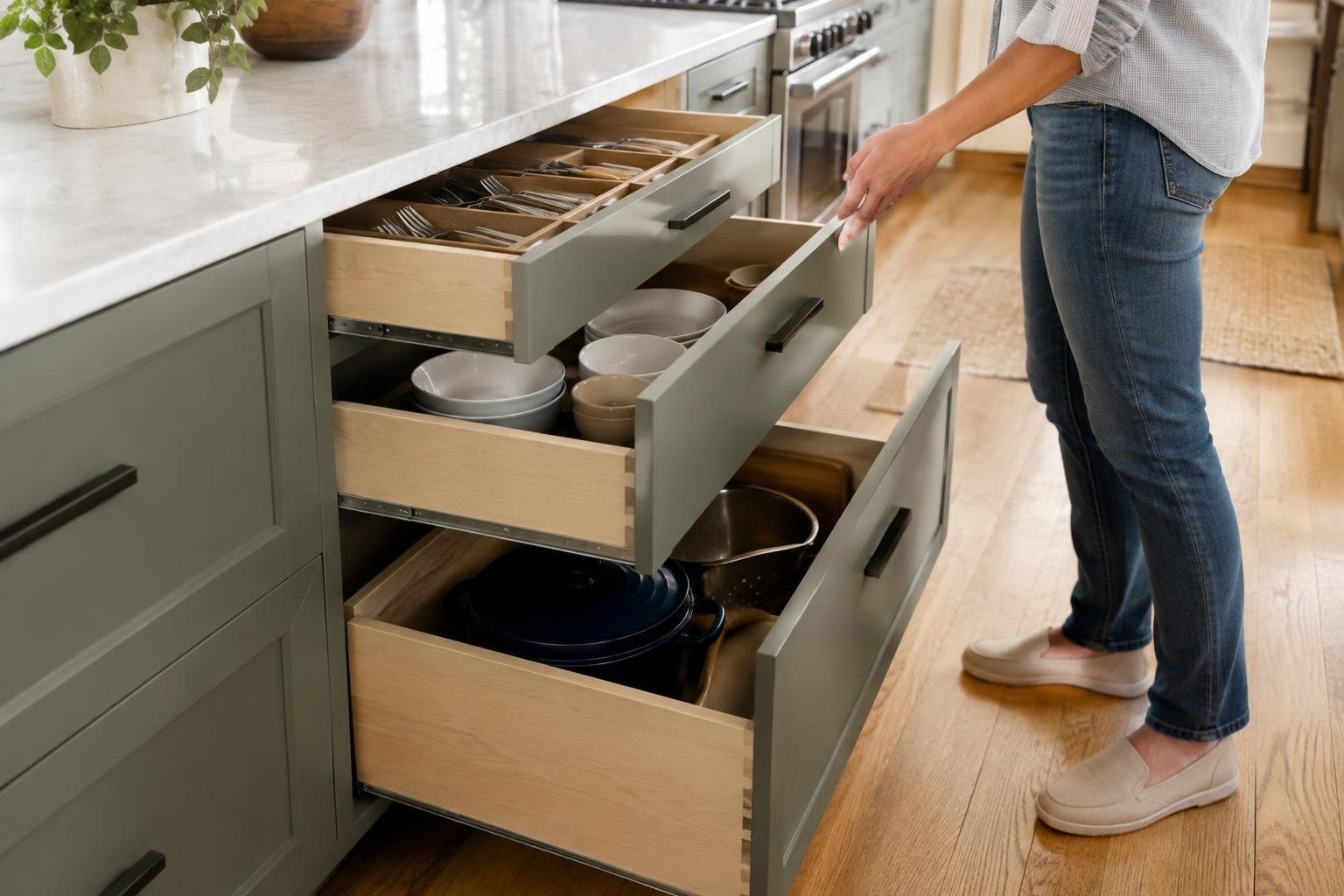
Kitchen cabinet drawers are pull-out storage built into base cabinets. They can hold utensils, cookware, food staples, and other supplies, making stored items easier to reach than when they are placed at the back of a cabinet behind a door. A drawer upgrade may mean replacing a worn drawer box, reorganizing the interior, or selecting a new drawer-base cabinet.
Start by identifying the problem you want to solve. Is a drawer broken, hard to open, or the wrong size for what you store? Or are you planning a kitchen update and deciding between drawer bases and cabinets with shelves? The answer affects what to measure, what to buy, and whether you need an installer.
Signs a drawer replacement or cabinet change may be needed
Consider a drawer repair or upgrade if a drawer box is damaged, slides are not functioning properly, the drawer repeatedly binds, or the current arrangement makes common items difficult to access. These symptoms can have more than one cause. A drawer may be obstructed or misaligned, or the box, slides, or cabinet itself may need attention.
Before deciding to replace it, remove the contents and look for an obstruction or loose items. Check whether the drawer sits evenly and whether its front attachment, box, and slides appear intact. Do not force a drawer that is jammed; forcing it can worsen damage. If the cabinet opening is distorted or the cabinet is loose or damaged, get the underlying issue assessed rather than buying a drawer based only on the old one.
A replacement can be a relatively focused way to update a cabinet when the cabinet is otherwise suitable. It is not a fix for every problem: a damaged cabinet, incompatible slides, or a poorly planned storage layout may call for a different solution.
Kitchen cabinet drawer cost and pricing considerations
There is no general drawer price that fits every kitchen. A replacement drawer box, an in-stock drawer-base cabinet, and a made-to-fit cabinet are different products and scopes. The research available for this guide does not establish a current, broadly applicable price for a replacement kitchen drawer, so request itemized estimates for the product and work you actually need.
Ask whether the price covers the drawer box, drawer front, slides, handles, finish, delivery, removal of the old parts, and installation. If the purchase is part of a larger kitchen job, clarify which costs apply to the drawer cabinet and which cover other work. A cabinet estimate should distinguish product cost from labor and related project items rather than presenting an unclear total.
For custom cabinet work, pricing is location- and project-specific. Do not apply a price quoted for a different city, cabinet scope, or date to a drawer-only purchase. Compare current, local quotes with matching dimensions and inclusions.
Factors that affect drawer fit, price, and project scope
Price and project complexity vary with the dimensions, quantity, construction, finish, hardware, and how the drawers fit the existing cabinetry. A replacement product may need to match a specific cabinet opening or slide arrangement. A new drawer-base cabinet involves a different scope than swapping a drawer box, and installation can add work beyond the product itself.
When comparing options, look at the whole configuration. Product listings show that drawer-base cabinets and drawer components are sold in multiple sizes, and some cabinet systems offer drawers in more than one height and width. That variety is useful, but it also means the product name alone is not enough to verify compatibility.
For a full kitchen project, the cabinet layout and adjacent doors, appliances, and countertops may constrain the available drawer sizes. Have the installer or cabinet provider confirm the measurements and clearances before ordering. Do not treat an online listed dimension as a guarantee that a drawer will fit an existing cabinet.
Drawer options and tradeoffs to compare
Choose a drawer arrangement around the items you use and the cabinet space available. A shallow top drawer can be convenient for small, frequently used items; deeper drawers can hold larger items when cabinet dimensions and the intended load allow. For a mix of needs, a cabinet with drawers at more than one height may be worth comparing with a cabinet made up of similar-sized drawers.
| Option | Potential advantage | What to check |
|---|---|---|
| Replacement drawer box | Can address a damaged or unsuitable drawer while retaining an otherwise serviceable cabinet. | Opening size, box dimensions, slide type and position, and front attachment. |
| Drawer-base cabinet | Provides storage organized into pull-out drawers rather than relying only on shelves behind doors. | Cabinet footprint, drawer heights, adjacent clearances, and installation scope. |
| In-stock cabinet | May offer a ready-to-buy configuration in a listed size. | Whether the available dimensions and layout suit the kitchen. |
| Custom or made-to-fit option | May address a less-standard size or a specific storage plan. | Lead time, construction details, measurement responsibility, and total quote. |
Drawer-front appearance is a separate choice from drawer-box construction. Coordinate visible fronts with the surrounding cabinets, but do not let appearance replace a check of fit, usable storage, and hardware. Retail and manufacturer catalogs show varied sizes and styles; verify the current product details directly before ordering.
How to judge drawer-box construction and hardware
Assess the drawer box and the moving hardware as separate parts. Look at how the sides meet, how the bottom is supported, whether the front is attached securely, and whether the slides are appropriate for the planned use. Dovetail joints are one construction feature available on some drawer boxes. They may be worth comparing with other joinery, but the joint alone does not tell you the full quality or fit of a drawer.
Ask the seller or cabinet provider for the drawer-box material, construction details, slide type, any stated load guidance, and the terms that apply to the product. Open and close a display drawer if available. Check whether it travels smoothly, sits level, and closes as expected. Do not assume that soft-close hardware or a particular joinery method is included unless the quote or product description confirms it.
Product claims about durability or opening-cycle performance are not a substitute for checking the actual item, its fit, and the conditions of its warranty. Compare like-for-like specifications rather than relying on a single premium-sounding feature.
How to measure for kitchen cabinet drawers
Accurate measurement is essential when reusing a cabinet. Record the cabinet opening’s width and height, the available depth, the existing drawer’s outside dimensions, and the position and type of slides. Also note how the drawer front connects to the box. Confirm which dimensions a seller requires; a product’s stated size may describe the box or a cabinet system, not the clear opening you measured.
- Empty the drawer and remove it carefully if you can do so without forcing the slides.
- Measure the drawer box and cabinet opening separately, recording width, height, and depth.
- Photograph the slides, their mounting positions, and the drawer-front attachment.
- Check for obstacles, damage, or signs that the cabinet is out of alignment.
- Share the measurements and photos with the provider and get written confirmation of fit before ordering.
If the replacement is part of a remodel, record the whole cabinet run and the location of nearby doors, appliances, and work surfaces as well. A provider can use that information to check whether proposed drawers will operate without conflicts.
What to expect, including ordering and installation timing
Timing depends on whether you are replacing a single compatible drawer, ordering a special size, buying a cabinet, or coordinating the work with a kitchen remodel. Product availability, measurement confirmation, delivery, installation, and any related countertop or cabinet work can all affect the schedule.
Before committing, have the provider explain when measurements are final, when the order will be placed, what delivery window is expected, and when installation can happen. Ask what happens if a delivered drawer does not fit or arrives damaged, and whether installation is included. For a broader remodel, confirm the sequence of cabinet work and related trades with the project lead.
Retail listings may identify in-stock products or shopping and delivery options, but availability and terms can vary. Verify the current item, location, and delivery details at the time of purchase.
DIY or professional installation: how to choose help
Some experienced DIYers may be comfortable replacing a drawer when the cabinet is sound, the replacement has confirmed dimensions, and the installation is limited to fitting compatible components. Follow the product instructions and stop if the drawer binds, the cabinet is damaged, or the slides do not align.
Hire a cabinet professional when measurements are uncertain, the opening is unusual, the cabinet needs modification, or the work is part of a larger kitchen installation. A professional can assess compatibility and coordinate the drawer with the cabinet layout. For electrical, plumbing, structural, or other regulated work beyond the drawer itself, use appropriately qualified professionals and confirm local requirements.
Compare providers based on relevant cabinet project experience, a clear written scope, references or project examples, insurance, licensing where required, who is responsible for measurement and installation, and how problems are handled. Ask for product details and warranty terms in writing. The lowest bid is not necessarily the best value if it excludes delivery, fitting, removal, or corrections.
Permits, qualifications, warranties, and safe work
A drawer-only replacement does not necessarily involve a permit, but requirements depend on the location and the work being performed. If the project expands to include electrical, plumbing, structural changes, or other regulated work, check with the local authority or a qualified contractor about applicable rules before work begins. Do not assume another project’s permit requirements apply to yours.
Ask the provider what product warranty applies, what installation work is covered, and how defects or fit problems are addressed. Obtain the terms in writing and keep the order documents, measurements, and installation details. Confirm who is responsible if a product arrives damaged or a confirmed replacement does not fit.
For safe handling, avoid forcing jammed or misaligned drawers and use caution when removing heavy drawer boxes or cabinet components. Do not modify a cabinet or slide arrangement unless you understand the product requirements and can do the work safely.
Ways to reduce cost without compromising fit or safety
You can control avoidable expense by defining the problem before shopping. If one drawer is damaged and the rest of the cabinet works properly, compare a compatible replacement drawer with a full cabinet replacement rather than assuming you need a larger remodel. If storage is the main issue, compare drawer configurations before purchasing organizers or changing multiple cabinets.
- Measure carefully and confirm fit before ordering to reduce the risk of buying an incompatible part.
- Compare the complete delivered and installed cost, not just the listed product price.
- Choose features that solve a real storage problem; do not pay for options you will not use.
- Ask whether an in-stock size can meet the need before commissioning a special configuration.
- Keep existing cabinets only when they are suitable and serviceable; do not conceal damage that could affect the replacement.
Saving safely means avoiding rushed orders and improvised cabinet modifications. If a low price excludes essential hardware, fitting, or delivery, it may not be a lower-cost solution once the missing work is included.
Common mistakes and a practical buying checklist
Use this checklist before buying or booking installation:
- Define whether the need is a replacement drawer, a new drawer-base cabinet, or a wider storage redesign.
- Measure the cabinet opening and drawer box separately, then confirm which dimensions the seller uses.
- Identify the slides, front attachment, and any obstacles or cabinet damage.
- Decide what the drawer will hold and select a suitable height and arrangement.
- Compare box construction, hardware, finish, and product terms, not just the appearance.
- Get a written estimate that identifies product, delivery, removal, installation, and any excluded work.
- Confirm measurement responsibility, schedule, fit resolution, and warranty coverage.
- Check local requirements if the project includes work beyond the drawer.
Common mistakes include ordering by eye, confusing cabinet dimensions with drawer dimensions, overlooking the slide position, and assuming a replacement drawer will correct a damaged cabinet. Another frequent planning error is choosing an attractive front without considering what needs to fit inside. If a provider cannot explain how the product will fit or what the quote includes, pause and get clarification before paying.
Compare cabinet options before you order
Compare products and providers rather than selecting a drawer based only on a photo or a single advertised feature. CabinetSupply.com is a place to explore cabinet options for your project. As you compare, keep your measurements, preferred drawer use, and questions about delivery and installation at hand.
For any option you consider, verify the dimensions, construction, hardware, price inclusions, availability, and applicable terms with the provider. A product page can help you identify choices, but it cannot replace confirming that a specific drawer fits your cabinet.
Frequently asked questions
What are kitchen cabinet drawers used for?
Kitchen cabinet drawers provide accessible storage for utensils, cookware, pantry items, and other frequently used supplies. Their usefulness depends on choosing a size and configuration that fits the cabinet and the items you plan to store.
Can I replace just the drawers in my kitchen cabinets?
Sometimes. Replacement drawer boxes are available, but compatibility depends on the cabinet opening, drawer dimensions, slide arrangement, and front attachment. Measure the existing parts and confirm fit before ordering.
What depth should kitchen cabinet drawers be?
There is no single best drawer depth. Choose a configuration based on the cabinet opening and what you intend to store. Shallow drawers suit smaller items; deeper drawers may accommodate larger cookware if the cabinet and layout allow.
Are dovetail kitchen drawers worth it?
Dovetail joints are one construction detail to compare, along with the drawer sides, bottom, slides, load guidance, and fit. A joint style alone does not establish that a drawer will suit your cabinet or intended use.
How much do kitchen cabinet drawers cost?
Costs depend on whether you are replacing a drawer box, buying a drawer-base cabinet, or changing a larger cabinet run. Size, construction, finish, hardware, quantity, delivery, and installation can all affect the estimate.
How long does it take to replace kitchen cabinet drawers?
It depends on the scope, product availability, measurements, and whether cabinet installation or kitchen work is involved. Ask for a project schedule that separates ordering, delivery, installation, and any countertop or trade work.
Can I install replacement cabinet drawers myself?
Often, yes, but fit must be confirmed. Measure the opening and existing drawer, identify the slide type and mounting position, and verify how the drawer front attaches. If the cabinet is damaged or out of square, get professional advice first.
Why do my kitchen cabinet drawers stick or sag?
Inspect the slides, drawer box, joints, front attachment, and cabinet opening. If the drawer still binds after checking for obstruction and alignment, or if the box or cabinet is damaged, ask a qualified cabinet professional to diagnose it.
People Also Ask
What is a drawer-base kitchen cabinet?
A drawer-base cabinet has one or more drawers built into the cabinet instead of relying only on doors and shelves. It can be useful for items you want to reach without bending into a deep cabinet.
How do I measure for a replacement kitchen drawer?
Start with the existing drawer and opening, then confirm the replacement’s width, height, depth, slides, and front attachment. Product dimensions and the usable opening are not always interchangeable, so verify fit before purchase.
Are dovetail drawers better than other drawer joints?
Not necessarily. Compare the drawer box, hardware, fit, and expected use. Dovetail joinery is one feature to assess, but it should be considered alongside the rest of the drawer construction.
Are drawers better than kitchen cabinet shelves?
They can make stored items more accessible, but they may not suit every cabinet layout or budget. Consider the items you use most and whether the cabinet can accommodate the drawer configuration you want.
Can I add drawers to an existing kitchen cabinet?
It may be possible if the existing cabinet is sound and a compatible drawer can be fitted. Check the measurements and slides first; a damaged, misaligned, or unusual cabinet may need a custom solution or professional assessment.
What should I compare when buying kitchen drawers?
Compare the number and size of drawers, construction, slides, finish, delivery, and installation scope. An in-stock cabinet and a made-to-fit replacement drawer are different purchases, so compare like with like.
Kitchen cabinet drawers can make everyday storage easier to reach and organize, but the right choice depends on the existing cabinet, how you use the kitchen, and whether you need a drawer replacement or a larger cabinet change. Measure carefully, compare construction and hardware, and ask providers to spell out what their estimates include. When you are ready to explore cabinet options, visit CabinetSupply.com.
Your next step
Explore cabinet options at CabinetSupply.com for your next project.
Last reviewed and updated October 12, 2026 by the CabinetSupple Editorial Team.
Sources
- Get Replacement Kitchen Drawers for Easy Cabinet Upgrades | Lowe's
- Custom Drawer Boxes | Drawer Base | Replacement Cabinet Drawers
- Kitchen Cabinet Shelves and Drawers – Cabinet Storage – IKEA
- Drawer Base – Kitchen Cabinets – The Home Depot
- A Practical Guide to the Different Types of Kitchen Cabinet Drawers
- Kitchen Base Cabinets with Drawers | Lanae®
- Drawer Base – In Stock Kitchen Cabinets – The Home Depot
- Explore Drawer Cabinet Options for Organized Kitchens | Lowe's